Connect with us

LNG Bunkering

CLPe and CNOOC form joint venture to offer LNG bunkering in Hong Kong

Joint venture will sell and supply LNG as bunker fuel to ships in port of Hong Kong, supporting the development of the LNG fuel bunkering sector in Guangdong-Hong Kong-Macao Greater Bay Area.

Admin

Published

on

CLPe and CNOOC form joint venture to offer LNG bunkering in Hong Kong

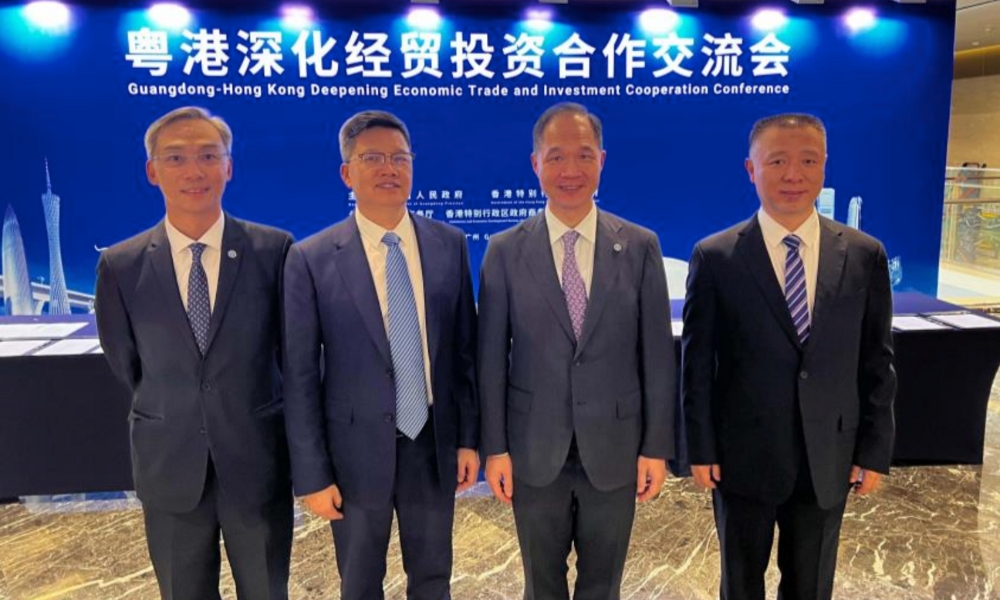
CLPe Holdings (CLPe), CLP Group’s wholly-owned subsidiary, recently signed a Cooperation Framework Agreement with China National Offshore Oil Company Guangdong Water Transport Clean Energy Company Limited (CNOOC) on the formation of a joint venture to provide liquefied natural gas (LNG) fuel bunkering services in the port of Hong Kong.

Under the agreement between CLPe and CNOOC, the planned joint venture will sell and supply LNG as bunker fuel to ships in the port of Hong Kong, supporting the development of the LNG fuel bunkering sector in the Guangdong-Hong Kong-Macao Greater Bay Area (GBA) and further consolidating Hong Kong’s position as a leading international maritime centre.

Separately, CLPe signed an agreement to extend its partnership with TELD New Energy Company Limited (TELD) on electric vehicle (EV) charging and other innovative energy services in the GBA.

“The two agreements will bring together the industry-leading expertise and experience of CLP and our partners to enable the transportation sector’s low-carbon development in the GBA, aligning with the Action Plan on Green Maritime Fuel Bunkering recently issued by the Hong Kong Government, which promotes the city’s growth as a high-quality green maritime fuel bunkering centre to steer the shipping industry’s smart and green transformation,” said CLP Holdings Limited Chief Executive Officer and Executive Director T.K. Chiang. 

Hong Kong-listed CLP Holdings Limited is the holding company for the CLP Group, which has a diversified portfolio of generating assets that uses a wide range of fuels including coal, gas, nuclear and renewable sources

“The superior capabilities of CNOOC and TELD will help CLP expand our energy infrastructure and solutions business in the GBA, and deliver the best technologies and services to LNG fuel bunkering and EV charging customers.”

Related: Hong Kong unveils action plan to become green maritime bunkering centre


Photo credit: CLP Group
Published: 4 December, 2024

Continue Reading

Bunker Fuel

Singapore: Bunker fuel sales drops by 6.8% on year in May 2026

4.55 million mt of various marine fuel grades were delivered at the world’s largest bunkering port in May, down from 4.88 million mt recorded during the similar month in 2025, according to MPA data.

Admin

Published

on

By

Singapore: Bunker fuel sales drops by 6.8% on year in May 2026

Sales of marine fuel at Singapore port dropped by 6.8% on year in May 2026, according to data from the Maritime and Port Authority of Singapore (MPA).

In total, 4.55 million metric tonnes (mt) (exact 4,548,000 mt) of various marine fuel grades were delivered at the world’s largest bunkering port in May, down from 4.88 million mt (4,878,100 mt) recorded during the similar month in 2025.

Deliveries of marine fuel oil, low sulphur fuel oil, ultra low sulphur fuel oil, marine gas oil and marine diesel oil in May (against on year) recorded respectively 1.79 million mt (-5.3% from 1.89 million mt), 2.29 million mt (-6.5% from 2.45 million mt), zero (-100% from 1,200 mt), 600 (35.2% from 1,700 mt) and zero (from zero).

Singapore: Bunker fuel sales drops by 6.8% on year in May 2026

Bio-blended variants of marine fuel oil, low sulphur fuel oil, ultra low sulphur fuel oil, marine gas oil and marine diesel oil in May, (against on year) recorded respectively 11,600 mt (-71.6% from 40,900 mt), 36,400 mt (-62.1% from 96,100 mt), zero (from zero), zero (from zero) and zero (from zero). B100 biofuel bunkers, introduced in February last year, recorded 12,800 mt (+573.7% from 1,900 mt). 

LNG and methanol sales were 70,300 mt (+56.2% from 45,000 mt) and zero (from zero) respectively. There were no recorded sales of ammonia for the month and so far since 2025.


Photo credit: Maritime and Port Authority of Singapore
Published: 15 June, 2026

Continue Reading

Alternative Fuels

Gasum locks in LNG capacity at Klaipeda terminal for next decade of supply

Gasum uses the Klaipeda terminal primarily as a reloading point for its own carrier and bunker vessels, but also to support the company’s natural gas operations in Finland and the Baltic countries.

Admin

Published

on

By

Gasum secures long-term LNG capacity at Klaipeda terminal from 2033 to 2040

Nordic energy company Gasum on Wednesday (10 June) said it has secured LNG terminal capacity at the Klaipeda LNG terminal in Lithuania for the period of 2033 to 2040. 

The long-term capacity reservation supports Gasum’s ability to supply the Northwestern European market with liquefied natural gas (LNG) and liquefied biomethane (bio-LNG) over the coming decade.

The Klaipeda terminal has been a part of Gasum’s supply chain for some time already. Gasum uses the Klaipeda terminal primarily as a reloading point for its own carrier and bunker vessels, but also to support the company’s natural gas operations in Finland and the Baltic countries.

Klaipeda is well located regarding the company’s own LNG terminal network in Finland, Sweden, and Norway. Gasum will also utilise the capacity to serve its maritime customers directly in and around the Danish straits.

“Securing capacity at Klaipeda supports Gasum’s strategic long-term supply capability and gives us flexibility in optimizing deliveries to our terminal network and maritime customers. It also underpins our commitment to being a dependable partner in the energy transition”, said Anders Malm, Senior Vice President, Supply & Trading, Gasum.

The capacity at Klaipeda can additionally be used for virtual liquefaction of pipeline fed biomethane into bio-LNG, through mass balancing and biomethane certificates. 

“Gasum believes this to be an important capability going forward, as a growing number of the company’s customers are seeking to reduce the lifecycle emissions of fuel further than what LNG alone can offer,” it added. 


Photo credit: KN Energies
Published: 11 June, 2026

Continue Reading

Decarbonisation

Aderco: Sustainable shipping without the spin

Esteve Servajean says maritime industry commitment must extend to delivering greater data transparency and measurable action to prevent decarb projects from becoming mere exercises in optics.

Admin

Published

on

By

Esteve Servajean, Head of Marine, Aderco

To meet the IMO’s emissions reduction targets, maritime industry commitment must extend to delivering greater data transparency and measurable action to prevent decarb projects from becoming mere exercises in optics, writes Esteve Servajean, Head of Marine at fuel treatment technology specialist Aderco:

While the maritime sector often expresses its commitment to the International Maritime Organization’s (IMO’s) Net Zero ambitions and 2030/2050 targets, rhetoric and reality also frequently diverge. In many respects, our sector is a laggard among global industries where emissions are concerned and needs to take a hard, honest look at itself  – or risk falling even further behind by clinging to outdated concepts, strategies and technologies.

Conventionally, ship ‘efficiency’ has been measured in fuel cost per tonne-mile. However, although many have yet to grasp the fact,  this metric is becoming obsolete. Today, the true efficiency of a ship is measured in multiple parameters, which encompass fuel cost and emissions from the stack but also include lifecycle emissions (plus upstream fuel production and vessel disposal), real-time carbon transparency, and the social and regulatory requirements for navigating relationships with ports, financial institutions and cargo owners.

At Aderco, we see this transformation daily. Five years ago, operators primarily spoke to us about fuel savings; today, they demand proven emissions reduction solutions, compatibility with future fuels and verifiable contributions to ESG performance. Companies still measuring efficiency on a single axis are already falling behind.

The future is multi-fuel

Let’s dispel another outdated misperception causing more harm than good: the belief that a single, specific alt-fuel will deliver Net Zero for maritime within the next two decades. The future is multi-fuel, and shipowners must accept and plan for that, ensuring a high degree of flexibility when assessing their options.

Accepting this proposition, it is still fair to ask what the point is of investing in a specific fuel if the ship may operate in regions where the portside infrastructure for that fuel is lacking. The truth is, the availability of green methanol, bio-LNG and ammonia at scale is years behind schedule, even at the major ports that drive global trade. For this reason, shipowners should lean towards investments into dual-fuel configurations where commercially viable and avoid long-term supply contracts tied to a single fuel.

It is not all about fuel selection; operational optimisation remains the most actionable lever today, from engine condition management and real-time fuel consumption monitoring to efficient voyage planning. Even simpler measures, including the application of high-performance anti-fouling coatings, wind-assisted propulsion systems and underwater turbines, are now part of the conversation. Various practical and complementary solutions can be implemented immediately without waiting for new fuel infrastructure to catch up.

The industry must therefore resist the temptation to standardise too early. Instead, it should build flexible, adaptive strategies that can evolve as the landscape changes. Most importantly, while some uncertainty regarding future fuels is natural, it must never become an excuse for inaction.

Regulatory fragmentation

On the regulatory side, FuelEU Maritime, the Carbon Intensity Indicator (CII) and the IMO’s revised greenhouse gas reduction strategy have created a framework shipowners cannot ignore. However, while shipowners are pragmatic investors, they need a clear regulatory framework and a long-term vision before they commit capital with confidence.

At present, regulatory fragmentation is a serious obstacle. The IMO sets global ambitions, but the EU is advancing on its own timeline and with its own instruments. This is forcing shipowners operating under multiple jurisdictions to navigate numerous, sometimes contradictory regulatory frameworks simultaneously.

The skills and data gap is also severely underestimated. Achieving 2030 and 2050 milestones will require not just new hardware, but new competencies in fleet management, data analytics and carbon accounting. The maritime sector is only starting to take this human capital challenge seriously.

Equally important is investment in data infrastructure. Reliable energy consumption, emissions and performance data is a crucial competitive asset, regardless of the alt-fuel selected. Unavoidably, the answer must make economic sense.

Get off the sidelines

To resolve regulatory fragmentation, only IMO can implement a carbon levy framework on a global basis. A credible, maritime-specific carbon credit scoring system could unlock capital, reward early adopters and create genuine behavioural incentives across the supply chain.

To be credible, though, this system must be built on real, verifiable data, not theoretical models, and must connect meaningfully to financial instruments to have actual market impact. We have seen too much greenwashing in other sectors, with initiatives often prioritising optics over actual emissions reductions. Maritime must therefore acknowledge its historically poor emissions data quality, get off the sidelines and take urgent action to fix it.

Fortunately, European green finance is proving a major accelerator. Instruments such as green bonds, sustainability-linked loans and the Poseidon Principles have moved into the mainstream and are now influencing key boardroom decisions. While stranded asset risk is real, so is the danger of losing competitive ground. The best approach is to focus on what can be actioned today, build flexibility into investment choices and stay closely aligned with regulatory and customer expectations. Any successful drive towards Net Zero relies on a fine balancing act between regulation and market forces.

The companies that help define credible standards will be far better positioned than those that react to them later. However, and it cannot be overemphasised, the bar for ‘credible’ must be high, incorporating transparency, independent verification and a direct link to measurable emissions outcome. Without that, we risk creating another layer of complexity with no clear impact.


Photo credit: Aderco
Published: 10 June, 2026

Continue Reading

Trending