Connect with us

LNG Bunkering

China: CNOOC achieves over 200,000 m3 of bonded LNG bunkering volume in 2026 so far

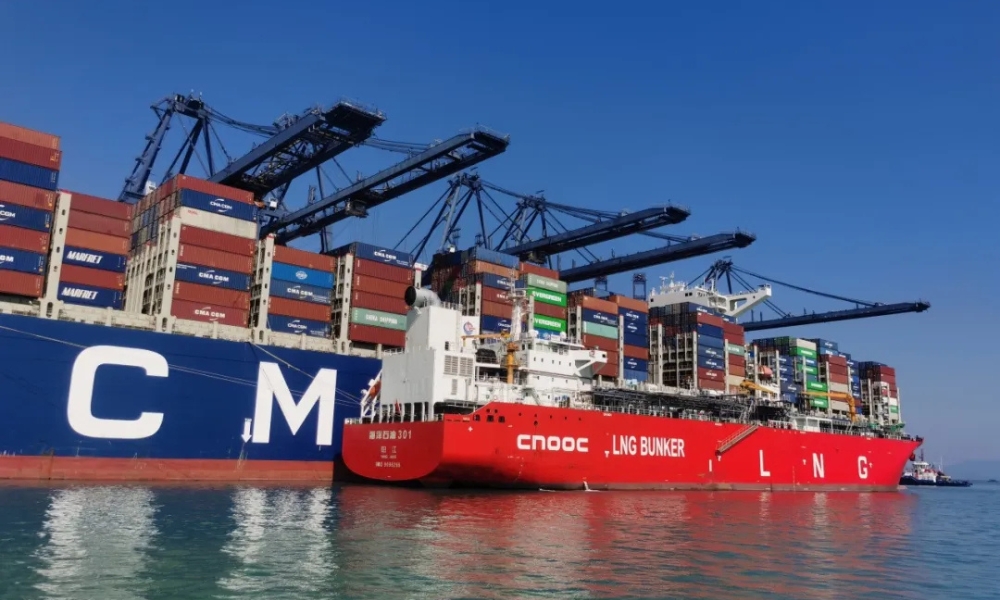
CNOOC’s two LNG bunkering vessels have completed 138 LNG bunkering operations since their commissioning, serving 138 international vessels and bunkering over 770,000 m3 of LNG.

Admin

Published

on

China: CNOOC achieves over 200,000 m3 of bonded LNG bunkering volume in 2026 so far

CNOOC Gas and Power Group on Thursday (4 June) said its bonded LNG bunkering volume has exceeded 200,000 cubic metres (m³) so far this year.

CNOOC’s two LNG bunkering vessels have completed 138 LNG bunkering operations since their commissioning, serving 138 international vessels and bunkering over 770,000 m³ of LNG.

The company has the world’s largest LNG bunkering and transport vessel, Hai Yang Shi You 301, and China’s first LNG transport and bunkering vessel capable of operating in both river and sea all year round, Hai Yang Shi You 302

The firm added that it has achieved milestones in both terminal bunkering and anchorage bunkering modes.

CNOOC Gas and Power Group said bonded LNG bunkering at anchorages offers better compatibility with international shipping schedules and enables on-demand bunkering, offering significant advantages in terms of space allocation, cost control, resource utilisation, and operational efficiency.

On 20 May, the Hai Yang Shi You 301 successfully refuelled two international vessels with LNG at the South Cheung Chau Anchorage in Hong Kong, marking a new stage in Hong Kong’s LNG bunkering operations.

CNOOC said it is continuing to expand its LNG bunkering operations, building an LNG bunkering network in ports including Shenzhen, Ningbo, Guangzhou, Hong Kong, Xiamen and other places.


Photo credit: CNOOC Gas and Power Group
Published: 8 June, 2026

Continue Reading

Technology

Singapore: MPA working with industry on next phase of digital bunkering, says Deputy CE

‘We are now working with industry on the next phase, trialling capabilities to further strengthen the integrity and quality of bunker data shared between stakeholders and MPA,’ says David Foo.
Admin

Published

on

By

Swapnil Bapat on Unsplash

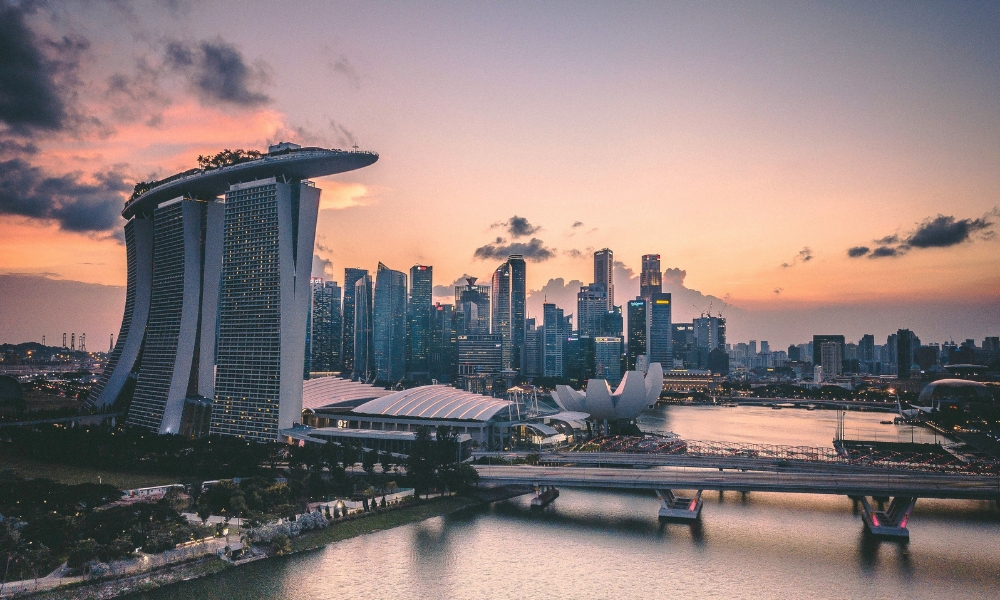
Secure systems, trusted data and reliable digital services are becoming as important to maritime operations as physical infrastructure, said Mr David Foo, Deputy Chief Executive (Operations & Technology), Maritime and Port Authority of Singapore (MPA), on Thursday (10 September). 

In his opening keynote speech at APPEC 2026 Shipping And Bunker Conference, Foo said OCEANS-X, Digital Bunkering and the Maritime Digital Twin are enabling trusted data sharing, better operational planning and the testing of new digital solutions.

Foo said since 2025, digital bunkering has strengthened the efficiency and transparency of bunker operations. 

“We are now working with industry on the next phase, trialling capabilities to further strengthen the integrity and quality of bunker data shared between stakeholders and MPA.” he said.

He also said MPA is taking a forward-looking approach to the energy transition.

“Over the coming decades, we are likely to see the most diverse marine fuel mix in shipping’s history. There may not be a single fuel of the future.”

“Our role as a global bunkering hub is therefore not to determine which fuel will prevail. Our role is to ensure that whichever fuels the industry adopts, Singapore is ready – with the infrastructure, standards and operational capabilities to support them.”

Foo said MPA is making concrete progress across the major alternative fuel pathways with the issuance of methanol bunkering licences and the commencement of methanol bunkering operations. 

“For ammonia, we are developing the regulatory and operational frameworks needed to support future commercial deployment. We are also facilitating greater use of sustainable biofuels,” he said.

At the same time, MPA continues to expand its LNG bunkering ecosystem, with additional licences issued this year. 

“This will broaden supply options as more LNG-fuelled vessels enter the global fleet. We have also just updated our LNG standards, while maintaining the high standards of safety and reliability that underpin Singapore’s reputation as a trusted bunkering hub,” Foo added.

Related: MPA Chief Executive: Port of Singapore begins digital bunkering initiative today
Related: Singapore: Golden Island, GET, and PetroChina to receive methanol bunkering licences
Related: Singapore: Equatorial Marine Fuel among eight selected for new LNG bunkering licences
Related: Singapore strengthens LNG bunkering framework with new SS 727 standard


Photo credit: Swapnil Bapat on Unsplash
Published: 10 September, 2026

Continue Reading

LNG Bunkering

DNV report: LNG bunker fleet may need to more than double by 2030 to meet demand

Global LNG bunker vessel fleet may need to more than double by 2030 as demand from LNG-fuelled ships grows faster than the infrastructure required to supply them, according to DNV white paper.

Admin

Published

on

By

DNV report: LNG bunker fleet may need to more than double by 2030 to meet demand

The global LNG bunker vessel fleet may need to more than double by 2030 as demand from LNG-fuelled ships grows faster than the infrastructure required to supply them, according to a new DNV white paper published on Wednesday (9 September). 

The report estimated that between 165 and 208 bunker vessels could be needed globally by the end of this decade.

As LNG-powered shipping continues to grow, demand for bunkering capacity is rising rapidly. Although the LNG bunker fleet is expanding steadily, demand from LNG-fuelled vessels is expected to grow even faster, placing increasing pressure on bunker vessels and the wider bunkering ecosystem. 

Without additional investment across this value chain, fuel supply could become a constraint on further LNG adoption in shipping. DNV’s white paper, Gas bunker vessels: facilitating the transition to alternative fuels, highlights how gas bunker vessels are evolving from specialist fuel delivery assets into critical infrastructure supporting shipping’s fuel transition.

Cristina Saenz de Santa Maria, CEO Maritime at DNV, said: “Shipping’s fuel transition depends on more than ships and fuel choices. It also depends on the infrastructure, supply chains, and operational capabilities needed to make alternative fuels available safely and at scale. As the fuel landscape continues to evolve, investment in flexible, reliable, and future-ready bunkering infrastructure will be essential.”

The white paper examined market developments, regulatory requirements, vessel design considerations, gas bunker vessel technical specialities, and operational best practices, while outlining the role gas bunker vessels will play in supporting both current LNG demand and the future adoption of alternative fuels.

The white paper also highlighted opportunities to accelerate market development through the conversion of suitable small-scale LNG carriers into bunker vessels. 

In addition, it examined the growing importance of operational readiness, structured safety management, and competence development as bunkering operations become more frequent and geographically widespread.

Martin Cartwright, Global Business Director, Gas Carriers & FSRUs at DNV, said: “LNG-fuelled shipping is growing faster than the bunkering network needed to support it. Closing this gap will require coordinated investment across the bunkering ecosystem, underpinned by robust safety standards, operational readiness and competence. These elements must advance together if gas bunkering is to scale safely and reliably, while also supporting future pathways, such as biomethane.”

While the white paper focused primarily on LNG, it also considers the emergence of ammonia as a potential marine fuel. The infrastructure, operational experience, and safety frameworks being developed for LNG bunkering today are expected to play an important role in supporting the future deployment of ammonia bunkering solutions.

Note: The report by DNV can be found here


Photo credit: DNV
Published: 10 September, 2026

Continue Reading

LNG Bunkering

“Titan Vision” LNG reload underscores Klaipėda’s Baltic bunkering role

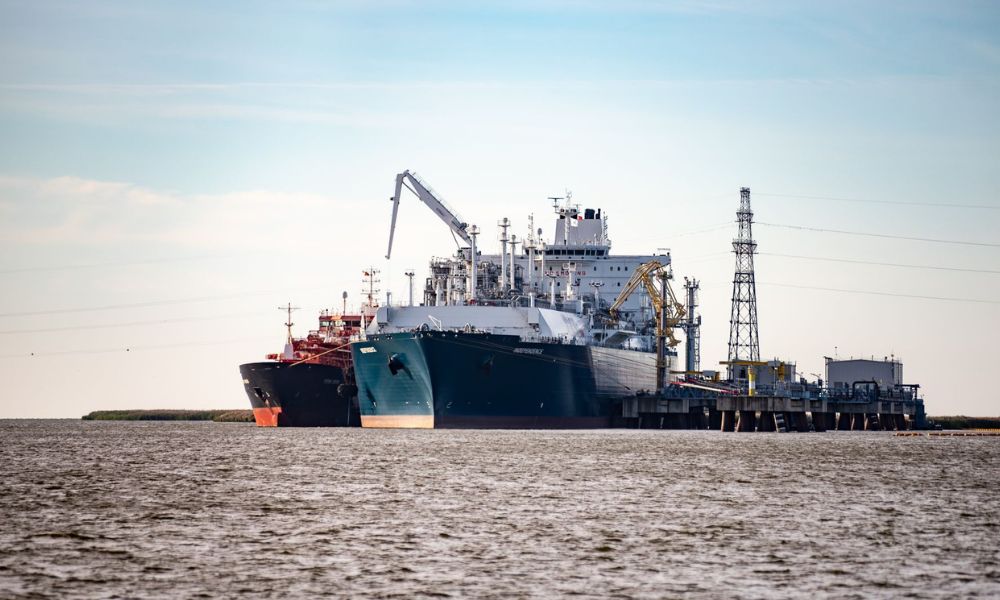
Growing activity at LNG terminal strengthens Klaipėda’s role as a regional LNG reloading hub, enabling LNG to be reloaded for further delivery to smaller terminals and for bunkering across Baltic Sea region.
Admin

Published

on

By

“Titan Vision” LNG reload underscores Klaipėda’s Baltic bunkering role

International energy terminal operator KN Energies on Tuesday (8 September) said bunker vessel Titan Vision arrived at the Klaipėda LNG terminal on the same day for the vessel’s first LNG reloading operation in Klaipėda. 

During the operation, more than 11,000 m³ of LNG will be reloaded to Titan Vision, a 12,000 m³ LNG bunker vessel designed for terminal runs and LNG bunkering operations across Europe.

KN Energies said Titan, part of Molgas, supplies LNG and BioLNG to the maritime sector and has been developing LNG bunkering solutions in Europe for more than a decade.

 “The operation is the result of continued cooperation between the KN Energies and Titan teams and reflects the flexibility of the Klaipėda LNG terminal in serving different LNG market needs,” the company said.

“So far this year, 65 ship-to-ship LNG operations have been carried out at the terminal, 36 of them involving small-scale LNG vessels.

“This growing activity strengthens Klaipėda’s role as a regional LNG reloading hub, enabling LNG to be reloaded for further delivery to smaller terminals and for bunkering across the Baltic Sea region.”


Photo credit: KN Energies
Published: 9 September, 2026

Continue Reading

Trending