Connect with us

Events

Singapore: Asia Pacific Maritime 2026 kicks off with product launches and collaborations

Keynote panel brought together industry leaders to discuss how maritime leaders are responding to rising geopolitical tensions, fuel and cost volatility, regulatory uncertainty, and long investment cycles of shipping assets.

Admin

Published

on

Singapore: Asia Pacific Maritime 2026 kicks off with product launches and collaborations

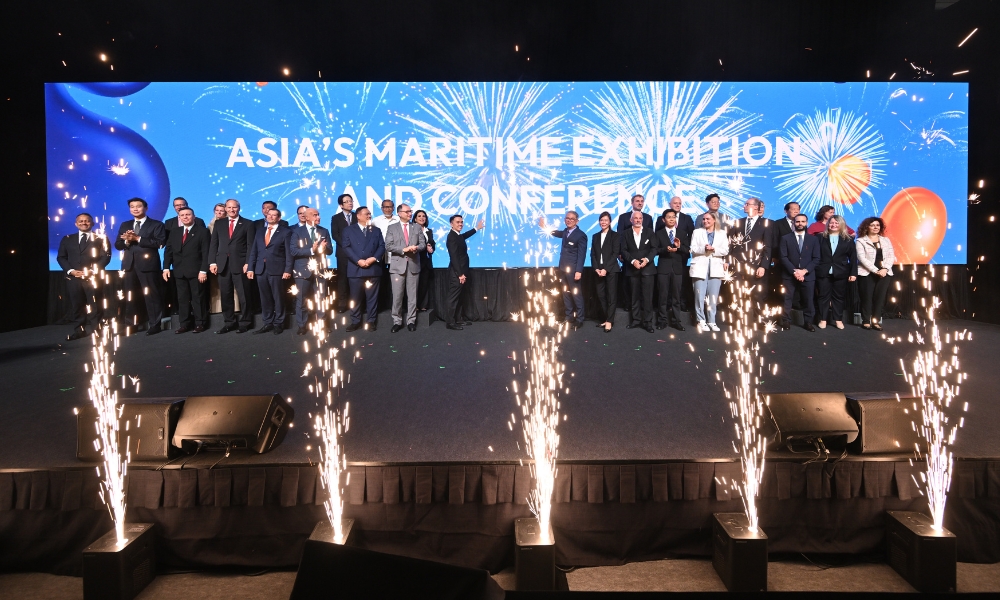
Asia Pacific Maritime (APM) 2026 kicked off on Wednesday (25 March) to a record-breaking turnout, with its largest-ever edition occupying 6 exhibition halls across 2 levels at the Sands Expo & Convention Centre, Marina Bay Sands Singapore. 

Bringing together 819 exhibitors, including 20 international pavilions, the 19th edition sets the stage for three days of industry dialogue, innovation & tech breakthroughs in maritime collaboration, under the theme “Future of Vessels, Solutions for Tomorrow”.

The event opened with a welcome address by Guest-of-Honour Ang Wee Keong, Chief Executive of the Maritime and Port Authority of Singapore (MPA), who emphasised the sector’s resilience and its ability to turn current challenges into opportunities for innovation and sustainable growth.

He said: “We’ve dealt with so many changes over the years, and apart from geopolitical uncertainties, we’ve also been working on things like supply chain disruptions, rapid technological advances. 

“These are all things we have been working together to prepare our sector and make sure we future-proof the maritime and marine sector. Today we are looking at things like automation, artificial intelligence, as well as alternative fuels and propulsion technologies, all while maintaining safety and reliability, which is a core mission for all of us.”

Setting the tone for Day 1 discussions, the keynote panel, “The Maritime State of Play & What’s Next for Asia”, brought together industry leaders to discuss how maritime leaders are responding to rising geopolitical tensions, fuel and cost volatility, regulatory uncertainty, and the long investment cycles of shipping assets. 

Highlighting the immediate impact of ongoing disruptions, SK Lim, Managing Director, Pacific, G2 Ocean, said: “For those out there who have not realised it yet, you are going to start paying more for everything that you buy, consume, and wear. Every carrier is imposing a surcharge from bunker to emergency.” 

While Ben Pike, COO, Swire Shipping, emphasised the importance of staying focused amid continued uncertainty, noting that “disruption and volatility is just the new norm. I think over the last five or six years, we’ve just got used to this now.” 

“We have our long-term strategies, our long-term goals and visions, and then we take sort of more of a tactical approach in terms of how we deal with the day-to-day issues,” he added.

Collaboration also took centre stage, with multiple agreements announced during the day. Among the highlights, Siemens Energy and Marco Polo Shipyard announced a collaboration to advance next-generation hybrid-electric fleet technology for offshore wind support vessels. The collaboration will see Siemens Energy’s integrated BlueDrive PlusC system deployed in a new class of hybrid-electric vessels, combining propulsion, energy storage and intelligent power management to deliver 20–30% reductions in fuel consumption and emissions. 

Designed as a first-of-its-kind CSOV Plus vessel supporting both offshore wind and oil & gas operations, the initiative underscores how cross-sector collaboration is accelerating the development of scalable, low-emission vessel solutions, while strengthening Asia’s capabilities in supporting the growing offshore renewables market.

Marking a significant launch at APM 2026, Electric & Hybrid Power is dedicated to spotlighting practical solutions and technologies driving electrification in vessels, a definitive step towards cleaner and more efficient vessel operation. Among the solution providers, several new product highlights include:

  • Korindo Energy will showcase its SCANIA E-Machine, a hybrid and fully electrified configuration designed to support vessel electrification. The compact, modular electric drive system can operate alongside combustion engines or function as a fully electric propulsion unit, enabling flexible transition pathways for shipowners. Live demonstrations of the SCANIA E-Machine took place at stand E-K12, on 25 March, allowing visitors to experience its integration capabilities and modular battery systems firsthand.
  • Volvo Penta introduced its IPS Professional Platform to the Southeast Asia market, marking the next evolution of its integrated propulsion system for larger commercial vessels. Designed with a future-ready dual-power-input concept, the platform also delivers up to a 30% reduction in fuel consumption and emissions. See it for yourself at booth B-J10.
  • Kuok Maritime Group is advancing the deployment of electric vessels through its development of Singapore’s first fully electric tug, with Coastal Sustainability Alliance (CSA). Albert Tsui, Head of Strategic & Corporate Development, Kuok Maritime Group, presented a case study at the Power Stage (Level 1, Hall C) on 26 March.

These developments build on wider progress in next energy solutions, including Weichai’s testing and certification ceremony following the successful 1,000-hour sea trial of Pinnacle Marine’s (Singapore) President 100, powered entirely by 100% biodiesel, signalling continued progress in the adoption of alternative fuels for commercial vessels. 

Future of electrification in Shipping was also discussed at the Power Stage on 26 March where industry leaders will examine how the sector can transition from pilot projects to large-scale deployment. 

Discussions will be led by DNV, Foreship (A RINA Company), Maersk Mc-Kinney Moller Center for Zero Carbon Shipping, Sea Forrest and Maritime Battery Forum as they discuss technology readiness, infrastructure development and regulatory frameworks needed to accelerate adoption across different vessel segments.

To further support the industry’s transition, a dedicated Expert Consultation Lounge will anchor the Electric & Hybrid Power segment. Specialists in this area will offer practical insights into the technical, operational and commercial considerations as shipowners, shipyards and operators embark on their journey towards vessel electrification. 

“Electrification is already moving from demonstration to real, operational deployment, particularly in Asia, where we’re seeing strong leadership in battery-electric vessels and supporting infrastructure. The next step is scaling these solutions, and that requires not just technology but alignment across the entire ecosystem. Platforms like the Electric & Hybrid Lounge are critical in bringing together the right stakeholders to have practical, solution-driven conversations on how we move from pilot projects to scaled adoption,” Madadh MacLaine, Secretary General, Zero Emissions Ship Technology Association (ZESTAs).

More key conversations across the programme

APM 2026 will also continue to address the commercial and risk considerations shaping maritime decision-making in these sessions:

  • The panel “What Will Unlock Capital for Shipowners in 2026?”, on 27 March, 10:30 – 11:20, will explore how financing priorities are evolving amid tightening decarbonisation targets and shifting market conditions. Industry leaders will examine how access to capital is being influenced by sustainability performance, regulatory compliance and digital transparency, as well as what shipowners must do to remain investable in an increasingly complex environment.
  • This will be followed by “Shipping Insurance in an Age of New Risks”, on 27 March, 11:20 – 12:10, which will examine how emerging risks, from cyber threats and climate-related disruptions to heightened geopolitical volatility and new vessel technologies, are reshaping traditional insurance models. The session will explore whether current frameworks remain fit for purpose and how stakeholders can adapt to a rapidly evolving risk landscape.

Note: More information on APM 2026, which will take place until 27 March, can be found here


Photo credit: RX Global
Published: 26 March, 2026
Continue Reading

FuelEU

Hafnia Pools surpasses 170 vessels, achieves FuelEU Maritime compliance

In announcing the company’s Q1 2026 financial results, it said five vessels joined Hafnia Pools during the first quarter of the year, bringing the total number of Pool Partners to 24 across segments.

Admin

Published

on

By

Hafnia Pools surpasses 170 vessels, achieves FuelEU Maritime compliance

Singapore-headquartered tanker operator Hafnia on Wednesday (24 June) the company closed Q1 2026 with more than 170 vessels trading across its pool platform.

In announcing the company’s Q1 2026 financial results, it said five vessels joined Hafnia Pools during the first quarter of the year, bringing the total number of Pool Partners to 24 across segments.

Since November 2025, vessels entering the Pools have had an average age of six years or younger, further strengthening the competitiveness and earnings capability of the platform. 

This continued inflow of modern tonnage supports Hafnia’s focus on maintaining an efficient and attractive fleet profile, while enhancing the long-term value proposition for Pool Partners.

In Hafnia’s MR Pool, six owners now each have three or more vessels committed.

During Q1 2026, Hafnia Pools successfully met the EU’s FuelEU Maritime requirements for 2025. Across the Pool, 108 vessels collectively exceeded the emissions limits; however, by working together under a “pooling” system, this was balanced out. By using cleaner vessels, biofuel, and purchased emissions credits, the Pools avoided penalties and achieved meaningful cost savings for partners.

This outcome reflects strong collaboration across Hafnia’s commercial, operational, and compliance teams, as well as constructive engagement with all Document of Compliance holders as regulations such as FuelEU come into full force.

In June 2026, Hafnia Pools further strengthened Partner engagement and alignment through its bi-annual Pool Board meeting, taking place during Posidonia in Greece.

Peter Kolding, VP Chartering Regional Trades & Pool Management, said: “As we move further into 2026, our focus remains on delivering consistent commercial results, strengthening the value proposition for all Pool Partners, and continuing to build on the close cooperation between our Chartering and Operations teams that underpins the success of the Hafnia Pools.

“I am encouraged to see that our commercial performance and efforts in staying close to our partners are paying off as we enjoy growing support from many of those same partners. It indicates that we are on the right path and energizes us to continue doing everything we can to improve even further.”


Photo credit: Hafnia
Published: 26 June, 2026

Continue Reading

Digital platform

VPS debuts VeriSphere Webshop, enhancing digital access to marine fuel solutions

Key addition is the MySurveys application, designed to support bunker quantity survey processes by providing detailed insights into quantity losses, density variations, and bunkering performance.

Admin

Published

on

By

VPS debuts VeriSphere Webshop, enhancing digital access to marine fuel solutions

Marine fuels testing company VPS on Thursday (25 June) announced the launch of its VeriSphere Webshop, a major step forward in the evolution of its digital platform and customer experience.

The new webshop provides customers with direct, self-service access to a growing portfolio of VPS products and services, including digital applications, Application Programming Interfaces (APIs) and sampling equipment; enabling faster, more flexible engagement with VPS’s global offerings.

The VeriSphere Webshop has been designed to simplify how shipowners, operators, and stakeholders across the marine fuel value chain, access critical tools and data. Through a streamlined interface, users can:

  • Browse and subscribe to VPS digital applications
  • Purchase services and products directly online
  • Discover complementary solutions tailored to their operational needs from VPS as well as its ecosystem partners

Alongside the launch of the webshop module, VPS continues to expand the capabilities of its VeriSphere platform, introducing new applications and enhancing existing solutions to deliver deeper operational insights.

A key addition is the MySurveys application, designed to support bunker quantity survey processes by providing detailed insights into quantity losses, density variations, and bunkering performance. This capability represents an important step in the digitalisation of traditionally manual survey processes, enabling greater transparency and benchmarking across operations.

Further enhancements across the platform reinforce VPS’s commitment to delivering actionable, data-driven insights across fuel quality, equipment performance, and operational risk management.

With continuous improvements to applications such as PortStats and the broader VeriSphere suite, VPS is enabling customers to move beyond static reporting toward pro-active operational intelligence.

By combining its extensive global fuel quality database with advanced analytics and digital delivery, VPS aims to empowere its customers to identify risks early, optimise fuel performance, simplify compliance and improve operational efficiency.

Dr. Malcolm Cooper, CEO at VPS, said: “The launch of the VeriSphere Webshop marks an important milestone in our digital journey.

“We are making it easier than ever for our customers to access the data, insights, and tools they need, when they need them. As the maritime industry continues to evolve, our focus is on delivering scalable, digital solutions that drive better decision-making, improve operational performance of vessels, prevent downtime and support the transition towards more sustainable maritime operations.”

VPS added that the VeriSphere Platform will continue to evolve with an expanding portfolio of products, services, and ecosystem partnerships.

Related: VPS unveils digital bunker fuel and emissions platform Verisphere


Photo credit: VPS
Published: 26 June, 2026

Continue Reading

Alternative Fuels

ICS report: LNG and biofuels seen as most viable marine fuels over next decade

This was followed closely by HFO combined with abatement technologies while methanol ranked in fourth place, according to ICS’s new Maritime Barometer Report.

Admin

Published

on

By

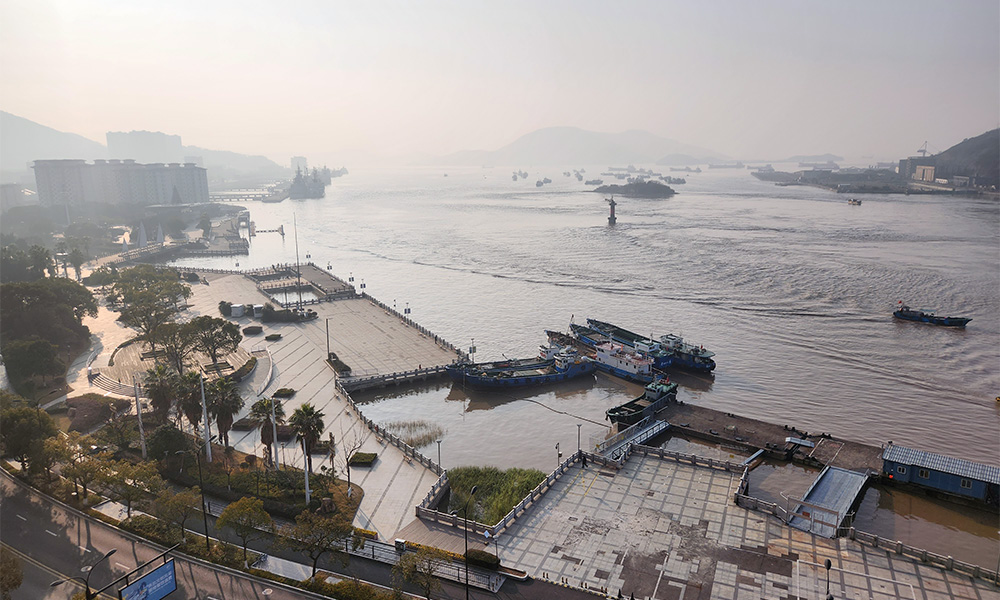
RESIZED william william on Unsplash

A new report by the International Chamber of Shipping (ICS), published on Tuesday (23 June) found that  LNG and biofuels are seen as the most viable marine fuels over the next decade.

This was followed closely by HFO (Heavy Fuel Oil) combined with abatement technologies while methanol ranked in fourth place. 

The report found that in 2025 to 2026, maritime leaders are displaying a preference for traditional fuels that have established supply mechanisms. 

The ICS Maritime Barometer Report 2025–2026 surveyed C-suite level leaders, shipowners, and operators worldwide to identify the key risk areas shaping shipping. 

Despite slight decline, LNG shared top spot with biofuels as one of three most viable future fuels over the next decade. 

LNG maintained its position as a joint leading fuel in the Barometer, with roughly 51.35% of leaders naming it as one of the most viable fuels over the next decade. 

“This is despite a marginal softening in sentiment amongst maritime leaders compared to last year’s survey, reflecting its continued role as the most immediately scalable alternative within the current fuel mix,” the report said. 

However, the report noted that this positioning is increasingly shaped not just by infrastructure maturity, but by how geopolitical instability translates into fuel-specific perceptions of security, routing exposure, and price volatility across global trade flows.

This is particularly evident in Asia-Pacific and the Middle East, where LNG’s role is reinforced through continued investment in import and bunkering infrastructure.

Singapore remains the world’s leading LNG bunkering hub, supported by expanding small-scale supply chains and vessel availability, while South Korea and China are rapidly scaling receiving and bunkering capacity to support both shipping and power demand growth.

Biofuels record one of the sharpest increases in sentiment across the future fuels landscape to match LNG at 51.35% in this year’s report.

“This could reflect a shift driven less by structural conviction and more by operational response to heightened uncertainty in global energy and trade systems,” it said. 

Their growing prominence could be closely linked to the increasing attractiveness of low-friction compliance options in a context where alternative fuels remain constrained by uneven infrastructure development, fragmented regulatory alignment, and delayed capital deployment across key regions.

Compared with LNG, which is shaped by infrastructure lock-in and geopolitical price exposure, biofuels offer immediate operational flexibility.

Japan has emerged as a key driver of marine biofuel adoption, with government-backed trials involving major shipping lines such as NYK testing biofuel blends on international routes. China has also expanded pilot programmes using biodiesel and waste-derived fuels in coastal shipping, reflecting a pragmatic approach to emissions reduction in regional trade flows.

Note: The ‘ICS Maritime Barometer Report 2025–2026’ can be viewed here


Photo credit: william william on Unsplash
Published: 26 June, 2026

Continue Reading

Trending