Connect with us
DNV Decarbonization Insight Series August 2026 - What maritime professionals should know about AI Training

Wind-assisted

DNV on wind-assisted propulsion: Managing safety while regulation takes shape

Georgios Kasimatis explains how wind-assisted propulsion systems safety is already being managed through the ISM Code, class standards, and flag state engagement.

Admin

Published

on

DNV on wind-assisted propulsion: Managing safety while regulation takes shape

In this Maritime Impact article, published on Monday (8 June), Georgios Kasimatis, Director of Regulatory Affairs at classification society DNV, explained how wind-assisted propulsion systems (WAPS) safety is already being managed through the ISM Code, class standards, and flag state engagement. 

The article explored current operational practices, emerging IMO guidance, and what shipowners can expect as safety frameworks continue to evolve alongside wider adoption of the technology:

Wind-assisted propulsion systems (WAPS) have moved beyond pilot projects. Today, ships equipped with rotors, wings, and sails are trading globally, helping owners cut fuel consumption and emissions while responding to increasingly stringent greenhouse gas requirements. Yet this rapid operational uptake is unfolding faster than binding international regulation is being finalized. 

This creates a familiar but critical tension. The technology is already in service and increasing in scale across the global fleet, but the International Maritime Organization (IMO) is still developing harmonized safety guidance. For operators in the space, that gap can feel like uncertainty or risk. In reality, the regulatory signals around WAPS are becoming clearer, and safety processes are already in place through the International Safety Management (ISM) Code, flag state engagement, and classification standards.  

WAPS are now firmly on the IMO safety agenda 

At the IMO level, wind propulsion and wind-assisted power are now clearly on the safety agenda. The subcommittee on ship design and construction has been formally tasked with developing interim safety guidelines, supported by correspondence group work and progressing towards consideration by the maritime safety committee. While timelines at IMO can be revised, these guidelines are expected to be developed and finalized within the next three to four years.    

Importantly, these discussions are not happening in a vacuum. They sit within a wider IMO effort to ensure that new and emerging technologies and fuels are addressed within a broader, coherent safety framework. For WAPS, key developments so far have included their identification as a technology which requires dedicated safety standards, as well as recognition that existing instruments, such as SOLAS, COLREG, stability codes, and other navigational safety provisions, may not fully capture safety hazards specific to the technologies. 

The prevailing view in discussions to date is that risks appear manageable when systematically identified and controlled. Attention has centred on well-known risks that can be managed with the right design assumptions, operational controls, and human element safeguards. These include visibility and sensor performance, manoeuvrability and controllability, air draft and port interfaces, stability effects, extreme weather exposure, and crew competence.

Existing frameworks already manage WAPS risks 

Crucially, the absence of finalized IMO guidance does not mean that WAPS safety is unmanaged. Far from it. Today’s operational safety baseline rests on three pillars: flag state engagement, class approval using established technical standards, and – most fundamentally – the Safety Management System (SMS) under the ISM Code, a mandatory requirement under SOLAS Chapter IX. 

Class frameworks – including DNV’s technical standard (DNV-ST-0511) – already address core technical aspects, including structural integrity, fatigue, extreme wind loading, system integration, and operational limits. For installations designed and approved against these standards, future IMO guidance is more likely to bring harmonization than to trigger fundamental changes, and existing WAPS installations are therefore unlikely to be significantly affected.  

Where WAPS installations affect visibility in ways that touch SOLAS Chapter V/22, acceptance of equivalent arrangements remains a flag state decision, typically supported by class technical assessments. In practice, guidance such as DNV’s recommended practice for CCTV-based solutions (DNV-CG-0662) is commonly used to support these evaluations. 

Note: The full article by DNV can be read here


Photo credit: DNV
Published: 10 June, 2026

Continue Reading

Alternative Fuels

BAR Technologies: Shipping must stop waiting for future bunker fuels to decarbonise

‘Shipping needs to stop treating decarbonisation as something that only begins when future fuels arrive or every detail of the IMO’s Net-Zero Framework is settled,’ says John Cooper, CEO of BAR Technologies.

Admin

Published

on

By

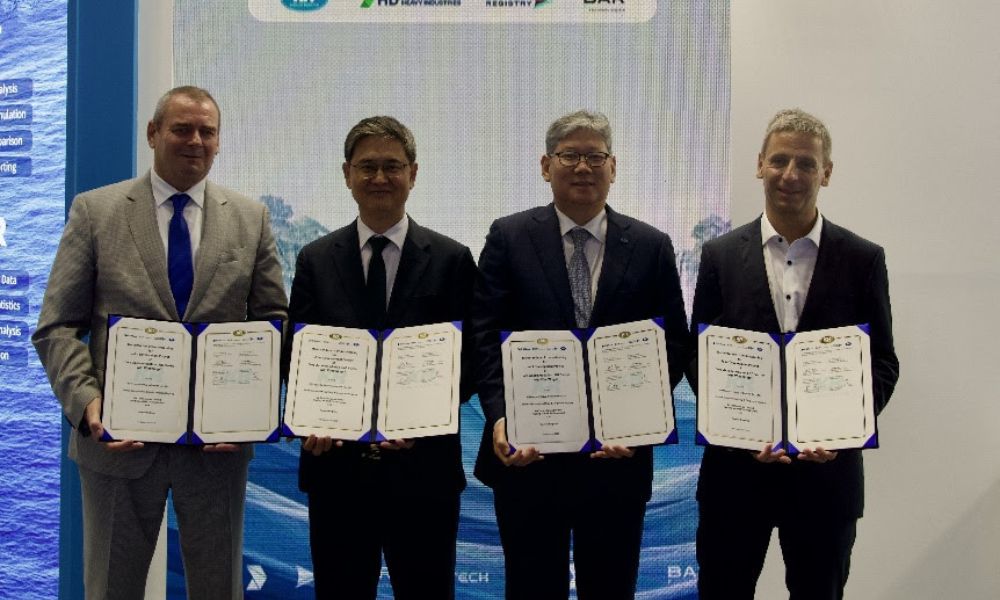
IMO move signals pivotal regulatory shift on wind propulsion, says BAR Technologies

BAR Technologies on Wednesday (29 July) said while the shipping industry is right to plan for long-term fuel pathways, too much of the decarbonisation debate remains focused on what may become available in the future rather than what can be deployed now.

The company said this in response to a new study by EY Greece warning that shipping’s transition to net zero will be uneven and capital intensive, constrained by factors including alternative fuel availability, infrastructure, shipyard capacity, access to finance and fragmented commercial incentives.

The EY study identifies energy efficiency and operational measures as among the most practical near-term actions available to shipping. BAR Technologies argued that wind propulsion, already delivering measurable fuel and emissions savings on commercial vessels, must be recognised as a proven part of that immediate response.

BAR Technologies said wind propulsion has also passed an important market milestone. 

According to the International Windship Association, more than 100 large commercial cargo ships, representing over five million tonnes of deadweight capacity, are now equipped to harness wind power. That is almost five times the number recorded in May 2022, clear evidence that the technology is moving into the commercial mainstream. 

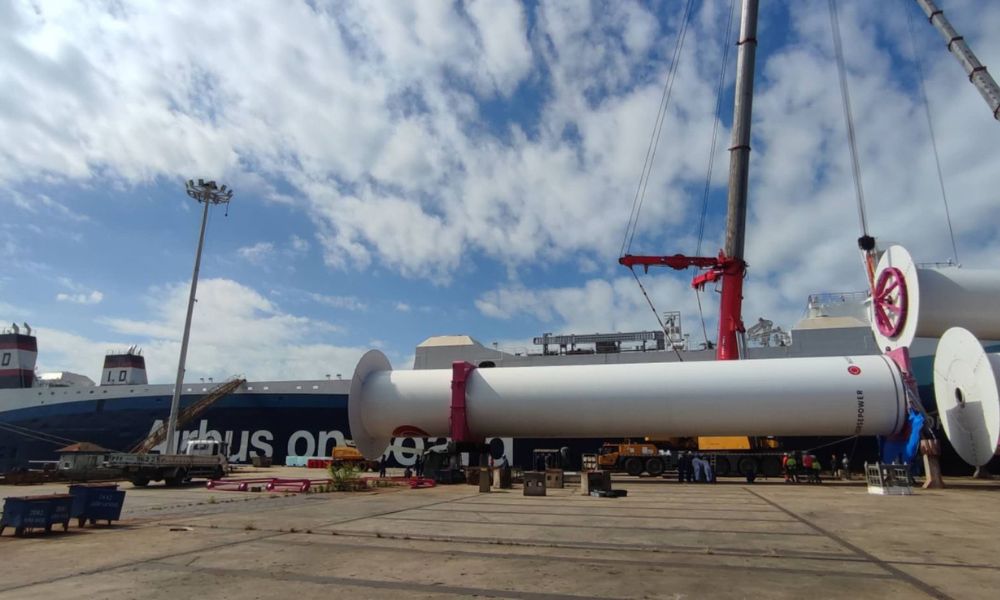
BAR Technologies are playing a significant part in this transition: By the end of 2026, 10 vessels will be operating with 23 WindWings® installed, giving a combined saving of approximately 100t of CO2 per day.

John Cooper, CEO of BAR Technologies, said: “Shipping needs to stop treating decarbonisation as something that only begins when future fuels arrive or every detail of the IMO’s Net-Zero Framework is settled. The industry cannot allow the absence of perfect policy certainty to become an excuse for inaction. Proven technologies are available now, and owners can act today.”

Unlike alternative fuels, wind requires no new fuel-production facilities, bunkering infrastructure or global supply chain. It is freely available as an energy source and can reduce a vessel’s dependence on whichever fuel it uses.

“Wind propulsion is not waiting to be invented or proven. It is already operating on commercial vessels and reducing the amount of fuel they need. The priority now should be to remove the barriers preventing more owners from investing,” he said. 

For wind propulsion, those barriers are increasingly commercial and financial rather than technical.

Under many chartering arrangements, the owner funds the technology while the charterer receives much of the benefit through lower fuel consumption. Until charterparty structures allow the costs, risks and savings to be shared more effectively, owners can be left carrying the investment and long-term performance risk.

Access to finance is another significant constraint. Without competitive green lending or blended finance, owners may have to fund emissions-reduction technology at conventional commercial borrowing rates. This can lengthen the payback period, particularly in the tramp, bulk and tanker markets, where routes, earnings and charter durations are less predictable.

The EY study concluded that the pace of shipping’s transition will depend on coordination, commercial bankability, access to finance and action across the maritime value chain.

Cooper added: “But the real way to unlock action now is to make green investment affordable. Shipowners need access to financing that makes proven emissions-reduction technologies commercially viable today, not at some point in the future. If we can lower the cost of capital and create funding structures that recognise both the fuel savings and the environmental value these technologies deliver, far more owners will be able to invest.

“Wind propulsion has already passed the technology test. Affordable finance, alongside charterparty structures that share the benefits fairly, is what will unlock deployment at scale.”


Photo credit: BAR Technologies
Published: 30 July, 2026

Continue Reading

Wind-assisted

Fairfield Maritime Japan, Neste ink charter deal for WAPS-equipped MR tanker duo

Vessels will utilise low-sulphur fuels and will be capable of being retrofitted to operate on methanol at some point in the future.

Admin

Published

on

By

RESIZED scott graham

Fairfield Maritime Japan (FMJ) on Wednesday (22 July) said it has signed a long-term charter contract with Neste for two vessels. 

The agreement enables FMJ to fund and manage the construction of two Ice Class 1A medium range (MR) oil and chemical tankers for Neste’s transports to and from its refinery in Porvoo, Finland. Neste is a producer of renewable diesel and sustainable aviation fuel (SAF), also refining a wide range of oil products in Porvoo. 

Fairfield Maritime Japan Ltd. is a portfolio company of Fairfield-Maxwell Ltd., a family office for the Sugahara family headquartered in New York City.

The two new ships will each have the capacity to ship 50,000 deadweight tons (DWT) and will be built by HD Hyundai Co., Ltd. of South Korea and delivered in the first and second quarters of 2029.

As Ice Class 1A certified ships, the two new vessels will be capable of navigating in ice conditions with the support of icebreakers, adhering to the Finnish Swedish Ice Class Rules.

These rules encompass the specific requirements for vessels navigating the Baltic Sea during the winter season. The highly ice-resistant ships will be able to approach and depart Porvoo in the winter months, contributing to operational continuity for Neste’s Porvoo facility.

The vessels will utilise low-sulphur fuels and will be capable of being retrofitted to operate on methanol at some point in the future. 

The vessels will be ready for the future with the possibility to connect to shore power when that is available. In addition, the ships will be equipped with wind-assisted propulsion systems (WAPS) to supplement the ships’ main engines. These technologies will reduce fuel consumption, emissions and operating costs.

“We’re pleased to partner with Fairfield Maritime Japan and Fairfield-Maxwell. With these new state-of-the-art vessels, we are continuing our efforts to deliver safe and efficient sea transport to and from our Porvoo refinery,” said Sander Wilgenhof, Head of Chartering, Neste.

“We are proud to be Neste’s long-term partner,” said Ryuichi Osonoe, President, Fairfield Maritime Japan. 

“We believe that our knowledge and expertise will significantly assist Neste in its sea transportation. We are looking forward to seeing these two new ships cross the sea to safely export out of Neste’s Porvoo refinery.”

“Fairfield has been a partner of choice for world-class shippers for nearly 70 years,” said Byron Sugahara, chairman of the board of Fairfield-Maxwell. 

“This agreement with Neste is  confirmation that our family’s legacy in the shipping industry remains strong and provides a solid foundation for continued growth and success.”


Photo credit: Scott Graham
Published: 24 July, 2026

Continue Reading

Wind-assisted

DNV awards TADC to Econowind for VentoFoil 3-Series

System actively harnesses wind power to generate forward thrust, helping to reduce bunker fuel consumption and mitigate FuelEU penalties.

Admin

Published

on

By

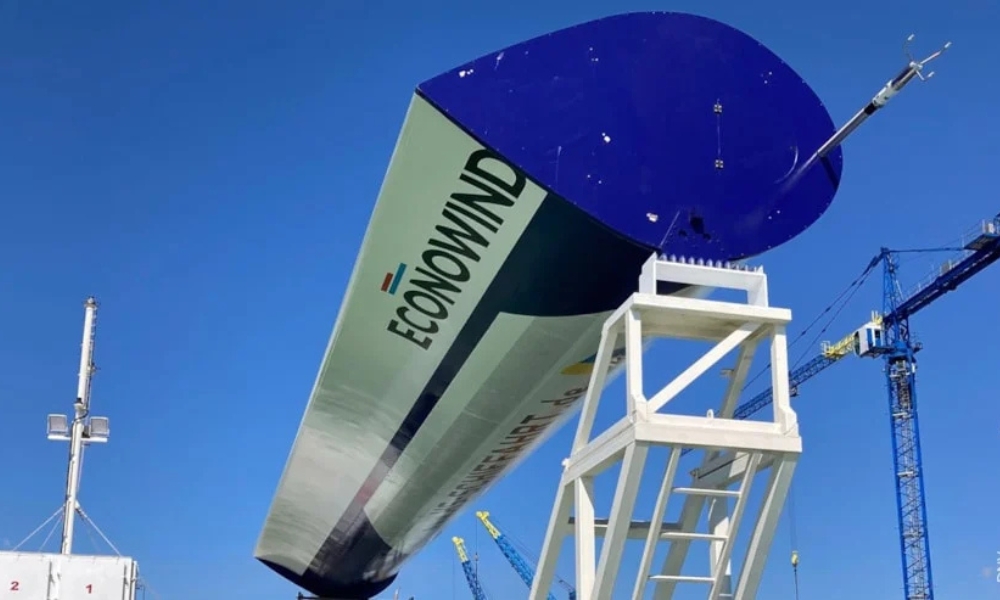
DNV awards TADC to Econowind for VentoFoil 3-Series

Dutch wind-assisted propulsion technology firm Econowind on Wednesday (15 July) said it has received a Type Approval Design Certificate (TADC) from classification society DNV for its VentoFoil 3-Series boundary layer suction wing. 

The company said the certification confirms compliance with DNV’s ST-0511 standard for Wind-Assisted Propulsion Systems and enables easier integration of VentoFoils on DNV-classed vessels worldwide. 

Econowind added that the approval accelerates the deployment of wind propulsion across the shipping industry.

“DNV is one of the world’s leading classification societies. This TADC gives DNV-classed shipowners confidence that VentoFoils meet the highest industry standards,” said Chiel de Leeuw, Chief Commercial Officer at Econowind. 

“It simplifies the approval process for both retrofits and newbuilds. VentoFoils are ideal for late-stage design integration and retrofit projects. This is an important milestone for Econowind and for the wider adoption of wind-assisted ship propulsion.”

The 3-Series VentoFoil is Econowind’s best-selling suction wing to date, with over 150 units sold. The system actively harnesses wind power to generate forward thrust, helping to reduce fuel consumption and mitigate FuelEU penalties. The system includes a tilting foundation, allowing the wings to be tilted down during port operations or in adverse weather conditions, making it a flexible solution.

The TADC applies to the 16-meter VentoFoil 3-Series product design and supports easy integration into DNV-classed vessels without repeating the full design assessment process. This enables shipowners, shipyards, and project teams to move more efficiently from concept to installation, reducing project complexity and accelerating deployment. 

Hasso Hoffmeister, Senior Principal Engineer at DNV Maritime, said: “It is a great pleasure to award Econowind this new certificate. WAPS have been going from strength to strength over the past few years, from 2022 the number of vessels in operation has increased five times, and we’ve now topped the century mark. 

“And with the current advances in technology, materials, and production capacity in the segment, we expect this to accelerate. So, while the wind always changes, the shipping industry is likely to be sailing strong for years to come.”

Econowind expects the DNV Type Approval Design Certificate to accelerate adoption of the VentoFoil, particularly among shipowners seeking proven, independently certified technology that can support fuel savings, emissions reductions, and decarbonization goals.

MS Heinz of HS Schiffahrt is among the first vessels to sail under this TADC.The company said the approval builds on Econowind’s growing installed base and further strengthens confidence in wind-assisted ship propulsion as a practical solution to address energy scarcity and high fuel prices. 

In addition to the 3-Series, Econowind offers the 5-Series for the deep-sea market.


Photo credit: Econowind
Published: 17 July, 2026

Continue Reading

Trending