Connect with us
DNV Decarbonization Insight Series August 2026 - What maritime professionals should know about AI Training

Interview

Interview: Alkagesta navigates risk from bunkering ops during turbulent times

As the industry navigates this period of uncertainty, the key question is no longer ‘what will fuel cost?’ but rather ‘will fuel be available?’, highlights Mithat Çiftçioğlu.

Admin

Published

on

Mithat MT

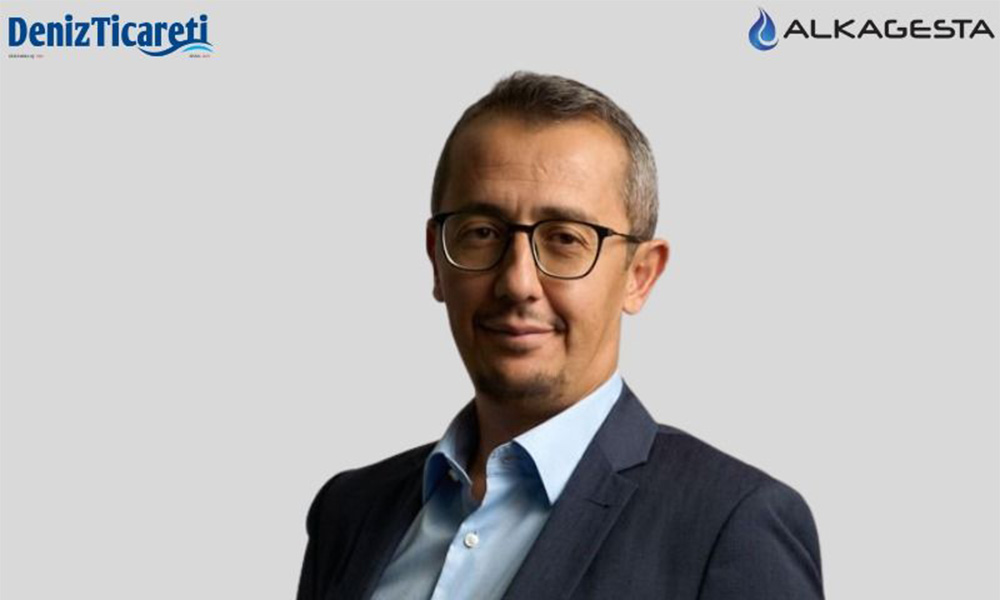
Mithat Çiftçioğlu, Marine Fuels Director at Alkagesta, shared his opinion on risk management for bunkering operations under current geopolitical tensions through the April edition of shipping magazine Deniz Ticaret.

The maritime publication, part of the Turkish Chamber of Shipping (İMEAK Deniz Ticaret Odası), has given Manifold Times permission to republish the article:

Fueling Ships in Turbulent Times

From Oil Shock to Fuel Access Crisis: A New Risk Map for Maritime 2026

The final weeks of the first quarter of 2026 mark one of the most complex periods in recent years for global energy and maritime markets. The sharp rise in oil and refined product prices since February 28 may look like a classic energy shock at first glance, but developments in the maritime sector point to a far deeper structural rupture.

What is being debated in the market today is no longer just oil prices. For traders and shipowners operating in the maritime sector and bunker market, the real issue is not the price of fuel — it is access to fuel. The fundamental question in the market has shifted: not what will the price of fuel be, but will fuel even be available?

In light of the Force Majeure cancellations at Asian ports over the past two weeks, another question must also be considered: Will pre-agreed bunker supply contracts actually be delivered?

From Oil Prices to Logistical Reality

Tensions in the Middle East have created a strong geopolitical risk premium in the oil market. Brent crude briefly surpassed the $100 per barrel mark, triggering a search for a new equilibrium across markets. This will inevitably bring inflation and recession back onto the global agenda in the months ahead.

But the rise in oil prices does not only reflect the risk of supply disruption — it also signals the return of one of the most fragile chokepoints in global energy trade:

The Strait of Hormuz

Approximately one-third of the world’s oil trade passes through this narrow waterway. Around 20 million barrels of oil and petroleum products transit Hormuz daily. Any disruption here would therefore affect not only oil prices, but also global refined product flows and the bunker market directly.

Why Strategic Oil Reserves Are Not the Solution

A commonly proposed solution in energy crises is the release of strategic petroleum reserves. However, releasing these reserves does not directly resolve a bunker crisis. Strategic reserves consist of crude oil. To produce bunker fuel, the following chain must be completed:

Crude oil → Refinery → Product logistics → Bunker port

This process takes time. Strategic reserves can temporarily stabilize oil prices, but they cannot solve the access problem in the bunker market in the short term.

Furthermore, the announced reserve release of 400 million barrels, to be drawn down at a rate of 2.5–3 million barrels per day, can only cover a small fraction of the estimated daily loss from the Middle East — optimistically 8–10 million barrels, pessimistically 18–20 million barrels per day.

A Historic Surge in Bunker Fuel Prices

The per-ton price of VLSFO (0.5% sulfur) bunker fuel has surpassed $1,000, reaching approximately double pre-war levels. This also represents some of the highest prices seen since July 2022.

While prices at bunker hubs such as Singapore and Fujairah are approaching $1,100 per ton, European markets have remained comparatively lower.

The Real Problem Is Not Price — It Is Fuel Access

Obtaining bunker quotes for April has become increasingly difficult, particularly at Asian ports. Even where shipowners and traders can secure quotes, the absence of supply guarantees makes pricing extremely challenging.

A senior executive at Oldendorff Carriers summarized the situation in these words:

“We cannot price cargo because we cannot calculate fuel costs; we cannot calculate fuel costs because there is no supply guarantee.”

The CEO of Maersk has compared the current situation to the pandemic era, stating that companies are attempting to source fuel through methods they have never tried before in order to keep global shipping networks supplied.

While supply is tight and prices are near their peak in Singapore and Fujairah, Rotterdam appears relatively more balanced. However, as the conflict drags on, risk perception in European markets is also rising.

The surge in bunker prices will not only increase costs — it will also affect global maritime transport capacity. Ships are expected to reduce their speeds to conserve fuel. This could lead to a reduction in effective carrying capacity, creating new logistical bottlenecks in global trade.

The importance of working with reliable, long-term partners has never been more apparent than during a crisis such as this.

The Widening Price Spread Between Fuel Types

A notable development in the bunker market in recent weeks is the rapid widening of price differentials between different fuel types. Two spreads in particular have expanded significantly:

  • Marine Gas Oil (MGO) – VLSFO
  • VLSFO – HSFO

Rising demand for distillate products, refinery production balances, and regional supply tightness are all contributing to this widening. As a result, bunker purchases have become not merely a matter of price level, but a strategic decision tied to product type and port selection.

An Unexpected Development: Biofuels Becoming Competitive

Another noteworthy development in the bunker market is that biofuels have remained at relatively competitive price levels. This creates two important opportunities for shipowners.

On one hand, biofuels remain competitively priced in certain markets. On the other, they offer a means of compliance with new regulations entering into force in Europe — particularly the FuelEU Maritime and EU ETS frameworks, which require reductions in carbon intensity. In this context, biofuels have become a strategic option for many shipowners.

Conclusion: Active Bunker Management Is The New Normal

The 2026 bunker market presents one of the most complex energy trading environments in recent years. The rise in oil prices, geopolitical risk at the Strait of Hormuz, tightness in physical fuel supply, and widening price spreads between fuel types have made bunker fuel management more critical than ever.

The prevailing view in energy markets is that as long as the risk at the Strait of Hormuz persists, turbulence in the bunker market will persist with it. As time passes, the depletion of commercial stocks may deepen the existing supply tightness further.

For this reason, the current situation is viewed not merely as an energy crisis, but as a new stress scenario testing the logistical infrastructure of global trade.

The view increasingly heard across energy markets is this:

“As long as Hormuz remains closed, it will not be oil prices but fuel access that constitutes the defining risk for global shipping.”

Finally, for shipowners and operators, bunker strategies are shifting away from a passive purchasing approach toward a model grounded in active risk management.


Photo and article credit: Deniz Ticaret
Published: 7 May 2026

Continue Reading

Interview

Exclusive: Caroline Yang takes helm on future of IBIA Asia

The newly appointed Chair of IBIA’s Regional Board – Asia, shares her plans to strengthen bunkering standards while promoting transparency and industry collaboration across key Asian maritime hubs.

Admin

Published

on

By

Exclusive: Caroline Yang takes helm on future of IBIA Asia

Caroline Yang, CEO of Hong Lam Marine Pte Ltd, outlines her plans for IBIA Asia in her first interview with Manifold Times since becoming Chair of the Regional Board – Asia:

MT: Why is IBIA important to the bunkering market in Asia?

IBIA Asia is amongst five regional boards operating under the umbrella of London-based IBIA Global. Its presence in Asia is vital because the region, excluding the Middle East, accounts for more than 50% of global bunkering volume.

While Singapore continues to maintain its strong lead as the world’s busiest bunkering port with almost 56 million mt of marine fuel delivered in 2025, several ports in China are showing to be strong bunkering ports as well; these developments take place on the back of a forecast for China to be amongst the leading suppliers of green fuels such as methanol.

Based on this alone, IBIA Asia has to play an important role in raising and addressing issues of suppliers and shipowners and the other parties in the regional bunkering eco-system.

MT: What is the overall state of bunkering standards at major Asian ports and how can IBIA elevate this?

Singapore is the clear leader in standards, acting as a “flag bearer” with established protocols including SS 600 for bunkering, SS 648 for bunker mass flow metering, SS 524 for quality management of bunker supply chain, TR 56 for LNG bunkering, and TR 80 for meter verification using master MFM.

While other Asian ports are adopting mass flow meters – a positive step – IBIA Asia’s role is to disseminate these best practices while maintaining deep respect for local operational realities and regulatory environments.

MT: As Chair of the Regional Board – Asia, what are your plans to make this happen? Are there any topics you will be focusing on?

The IBIA Asia regional board of 10 members from comes from a diverse group of suppliers, shipowners, bunker buyers, fuels testers and bunker tanker owners. Backed by a strong secretariat, we are committed to move the needle for bunkering in Asia.

Our initial strategy is outreach-driven, progressing beyond a Singapore-centric approach. For starters, the board will be concentrating on Hong Kong, Zhoushan, and Shanghai, with potential expansion to Japan and South Korea.

The core objective is to promote the quality, transparency, and integrity of bunkers lifted in Asia. This includes building on existing MOUs such as the collaboration with Hong Kong Shipowners Association (HKSOA) to explore alternative bunker fuels, and participation in regional maritime week programmes.

MT: Do you expect to encounter any challenges? What do you think are the solutions?

Challenges, without a doubt; these include macro-level standards and topical quality issues, such as those highlighted in a recent FOBAS report.

We are aware most solutions will not have instant results, but produce short-term, mid-term and long-term responses.

The solution lies in structured communication and feedback loops involving industry, regulators, and experts. Success requires an altruistic approach where stakeholders prioritise the health of the bunkering ecosystem to achieve win-win outcomes, even at the compromise of individual sectors.

MT: Is participation of local/regional IBIA members included within your plan? How will they be involved?

Member participation is the foundation of an association’s strength. The plan involves active outreach – meeting members where they operate and integrating them into meetings to ensure the board’s positions reflect representative industry views. We must push out credible, strong messages to encourage active engagement. If there is anyone in the maritime bunkering in these areas and reading this interview, reach out to us so we can start our conversations!

The Secretariat and some board members have scheduled to visit and attend bunkering events in Hong Kong and China. In November 2026, IBIA will participate in the Hong Kong Maritime Week by organising a one-day conference. We hope to be also participating in the Shanghai Pudong Maritime Conference and the 9th International Petroleum and Natural Gas Enterprises Conference (IPEC 2026), also known as the “Zhoushan Bunker Oil conference”, in late October.

MT: How will previous experience gained at SSA, ICS, MPA, SMF, and Hong Lam Marine contribute to your role at IBIA?

As CEO of Hong Lam Marine, our bunker tankers supply about 10% of bunkering volume in Singapore, so we are an involved and relevant stakeholder. My experiences in the above-mentioned organisations have taught me how to crystallise and articulate important issues, engage effectively with diverse stakeholders, and leverage on pre-existing professional connections to engage more effectively for IBIA Asia.

Related: IBIA announces Caroline Yang as new Regional Board Chair for Asia
Related: IBIA and Hong Kong Shipowners Association to collaborate on alternative bunker fuels
Related: FOBAS report warns of growing operational risks from ISO-compliant bunker fuels


Photo credit: Manifold Times
Published: 6 August 2026

Continue Reading

Technology

Q&A: DNV’s Piyush Raj on building AI capabilities for maritime professionals

In an interview, DNV Maritime Advisory’s Dr. Piyush Raj shares his perspectives on the industry’s evolving AI landscape and the skills maritime professionals will need in the years ahead.

Admin

Published

on

By

Q&A: DNV’s Piyush Raj on building AI capabilities for maritime professionals

As interest in artificial intelligence (AI) continues to grow across the maritime industry, many organizations are exploring how the technology can be applied in practice. At the same time, questions remain around data quality, workforce readiness, trust and the practical challenges of scaling AI beyond pilot projects.

In this Q&A, Dr. Piyush Raj, Head of Maritime Technology & Innovation, DNV Maritime Advisory, and trainer at DNV Maritime Academy (Singapore), shares his perspectives on the industry’s evolving AI landscape and the skills maritime professionals will need in the years ahead:

MT: AI has become an increasingly common topic across the maritime industry. Based on your interactions with maritime organizations, what are some of the key challenges they face when exploring or applying AI?

From my experience, the challenge when maritime organizations look to implement AI tools is building the foundation for it to produce useful results, rather than the implementation or use of the technology itself. Many organizations have large amounts of data, but struggle with data quality and standardization. On top of that, there are governance, cyber security, and control and assurance issues, both of the data and of the tools and systems themselves. Even when we have something that looks promising, there can be scaling challenges. Moving beyond a proof-of-concept or pilot project to a broader operational or fleet level requires a whole new approach in terms of organizational buy in, process integration, and trust within and beyond the organization itself.

This is because maritime is a safety critical industry and safety is the backbone of how shipping has created the modern global economy. If we lose confidence in the safety of our industry, we’ve lost everything. So, we need to be sure that as AI adoption increases, we have a firm basis for demonstrating that these systems are just as reliable, secure, transparent, and aligned with regulatory expectations as the systems we have today. Equivalent safety levels are a very familiar concept to us in the maritime industry – we have technologies that have been rolled out on that basis and enjoy great trust today. But building that trust is just as important as developing the technology itself.

MT: Singapore has established itself as a hub for maritime innovation and digitalization. How are these developments shaping the skills and capabilities maritime professionals need today?

Singapore has built a reputation for leadership in maritime innovation, especially as relates to digitalization, largely due to the efforts of the Maritime and Port Authority of Singapore (MPA) and cooperation with both industry and academia. At DNV for example, Singapore is home to our Maritime Decarbonization and Smart Shipping Centre of Excellence where we focus on working with partners to build in these areas, alongside enhancing sustainability and talent development. All these combined have resulted in a lot of expertise developing, as well as the associated rollout and adoption of technologies like predictive maintenance, vessel performance monitoring, decision support systems, smart port operations, the wider use of digital twins, and data-driven optimization, throughout the maritime value chain.

One thing these technologies tend to have in common is that they are data driven, and this has increased expectations that maritime professionals and crew in Singapore should be able to work with data-driven tools as part of their day-to-day responsibilities. Today, the rise of AI adds a new level of expectation, that professionals will need an understanding of AI, process and system automation, and the cybersecurity implications of these tools, and on top of that the ability to critically evaluate digital outputs, so that they can be applied in operational decision-making.

As a result, there is growing interest in training programmes that help maritime professionals build up these skills, and especially their understanding of AI and its practical applications.

MT: What can maritime professionals expect to gain from DNV Maritime Academy’s AI courses?

Our AI courses are designed to help maritime professionals understand where AI can deliver real value in maritime operations today, and where the potential is over the long term. Developed specifically for the industry, the trainings combine AI fundamentals with practical, maritime-specific, use cases that cover everything from operations, maintenance, safety, through to fleet management and decision support.

Beyond the technology itself, participants will gain insights into regulations and governance, cybersecurity, assurance and human factors – all of which are critical considerations in a safety-critical industry like shipping. We also like to think that a key differentiator of our courses is our focus on responsible AI adoption, and this is an area where we as DNV have a particular emphasis on developing recommended practices and guidance on AI-enabled systems and AI assurance.

Most importantly, we hope participants will leave with a practical framework to evaluate AI opportunities, identify high-value use cases, avoid common pitfalls, and be able to make more informed decisions about AI adoption and the ongoing digital transformation of shipping.

Note: Maritime Cluster Fund (MCF) Training Grant is available for eligible participants. Please refer to https://www.mpa.gov.sg/maritime-singapore/what-maritime-singapore-offers/developing-manpower/training@maritimesingapore for information on the MCF Training Grant.

Photo credit: DNV
Published: 1 August, 2026

Continue Reading

Lubricants

Lube Synergy becomes official authorised distributor and channel partner of Petronas Lubricants International

Authorisation covers the marketing, sale, storage and delivery of Petronas marine lubricant products, including but not limited to marine engine oils, hydraulic oils, gear oils, compressor oils and greases.

Admin

Published

on

By

Petronas Lubricants 1 MT

Independent European marine lubricants supplier Lube Synergy OÜ on 16 July became an authorised distributor and channel partner of Petronas Lubricants International for the supply and distribution of its marine engine lubricants and related secondary products, learned Manifold Times.

The authorisation covers the marketing, sale, storage and delivery of Petronas marine lubricant products, including but not limited to marine engine oils, hydraulic oils, gear oils, compressor oils and greases, to vessels operating within the designated ports and marine service locations: which includes:

  • Spain
  • Denmark
  • Panama
  • Egypt
  • Netherlands/Belgium/Germany
  • Las Palmas (Canary Islands)
  • Togo
  • South Africa

“We are honoured and deeply appreciative to have been selected as an official authorised distributor and channel partner of Petronas marine engine lubricants,” Aleksandr Antonov, General Manager, Lube Synergy, told the bunkering publication.

“This appointment reflects the confidence placed in Lube Synergy’s capabilities, service standards and commitment to supporting vessel operators with reliable, high-quality lubrication solutions across key marine markets.

“We look forward to working closely with Petronas Lubricants International to deliver value, responsiveness and technical support to our customers and grow the business.”

Petronas Hydraulic 1 MT

Interested parties may contact Lube Synergy below:

Aleksandr Antonov
Genera Manager / Lube Synergy OÜ
Phone: +372 5344 9690
Email: [email protected]
Website: www.lubesynergy.com


Photo credit: Lube Synergy
Published: 29 July 2026

Continue Reading

Trending