Connect with us

Classification Society

DNV reports record breaking 2023 results driven by decarbonization and digitalization

DNV said revenues in 2023 grew by 26.2% compared with 2022, driven by tighter regulations within industries it operates in, including increased attention among customers on decarbonization and digitalization.

Admin

Published

on

DNV flag

Classification society DNV on Tuesday (26 March) said DNV posted revenue of NOK 31,594 million for the year, a year-on-year growth of 26.2% (17.7% when considering currency effects).

2023 also saw record profits from strong performance across all business areas. These results were driven by tighter regulations within the industries DNV operates in, including an increased attention among customers on decarbonization and digitalization.

In its Annual Report 2023, DNV said it focused on providing tailored and practical solutions throughout the year, to challenges in decarbonization and digitalization, working together with customers and the industry to make sure this decade is a decisive success for them.

In 2023, DNV enhanced its Alternative Fuels Insight platform to accelerate the decarbonization of shipping. The upgrade includes the addition of new fuel types, improved fuel-price monitoring supported by Argus, and a crowdsourcing feature to gain input from users.

The Alternative Fuels Insight platform is an open and expanding platform for the latest information on alternative-fuel vessels, infrastructure, and bunkering.

DNV also published new guidelines for the safe installation of onboard carbon capture and storage (OCCS) systems on board ships. The guidelines were published amid growing pressure on the shipping industry to develop effective technologies to reduce emissions as part of the ongoing maritime energy transition.

Group President and CEO of DNV, Remi Eriksen, said: “Despite geopolitical instability and turbulent economic conditions, DNV has yet again delivered excellent results.”

“It demonstrates the resilience and relevance of our assurance and risk management position with our customers. I’m also glad to see that the growing demand for DNV’s services coincides with our customer satisfaction rates reaching a new high, demonstrating the excellent performance and expertise of our employees.” 

Six strategic acquisitions were made throughout the year within cyber security, aquaculture, and renewable energy. These new investments contributed to DNV’s record-breaking growth in 2023. 

“The acquisitions in 2023 are important for realising our strategy towards 2025, and we will see acquisitions high on our agenda also in 2024, Remi Eriksen said. 

DNV also grew the size of its workforce in 2023. The company has almost 15,000 employees from 122 nationalities delivering services in more than 100 countries. The increase in the number of employees represents a growth of around 15,5% from 2022.

Note: The full DNV Annual Report 2023 can be found here.


Photo credit: DNV
Published: 27 March 2024

Continue Reading

EU ETS

DNV: Making emissions data verification manageable at scale

DNV’s article features its customers sharing how a proactive, digital approach to emissions data verification is helping them manage reporting more efficiently and at scale to ensure compliance under FuelEU Maritime.

Admin

Published

on

By

DNV flag

Classification society DNV recently published a Maritime Impact article featuring its customers sharing how a proactive, digital approach to emissions data verification is helping them manage reporting more efficiently and at scale to ensure compliance under FuelEU Maritime: 

The FuelEU Maritime regulation has been in force since 1 January 2025, and the due date for verification of the first year’s emissions data at the end of April is imminent.

FuelEU Maritime adds reporting complexity

FuelEU Maritime (FEUM) has brought the number of emissions reporting obligations for ships operating in European waters to four, along with IMO DCS as well as EU MRV and ETS. The UK’s own MRV and ETS reports and any pooling arrangements under FEUM add further complexity. “Customers are finding it challenging to meet the verification due date,” says Conrad Golebski, Global Sales Manager, MRV, DCS, and FuelEU Maritime at DNV. “But non-compliance results in costs, which can be quite high for vessels that do not meet the emission targets.”

Data quality issues are widely underestimated

Preparing the document of compliance for the regulatory authorities has been an annual exercise – and a very stressful one, emphasizes Golebski. The annual verification process is often challenging, as the extent of data quality issues tends to be underestimated and only becomes apparent after year-end submissions, leading to a growing number of correction requests during verification for shipowners.

“Rectifying these issues can be a complex and time‑consuming process, involving an intense communication exchange before verification can proceed.”

There are two types of error that compromise data quality, says Golebski. “Human data entry errors must be corrected one by one. Systematic errors will affect the data of the entire fleet, and detecting and correcting them as early as possible will make a big difference towards minimizing the rectification effort.”

Continuous emissions data submission enables early, high quality verification

 “Clients who choose to upload their ships’ emissions data to the OVD Admin continuously throughout the year instead of waiting until January can benefit from our quality checking algorithms and make the necessary corrections as they go,” Golebski points out. “This will make the actual verification step the following spring much more comfortable and avoid missing the submission deadline.”

From DNV’s data warehouse, the data can be distributed to the client-requested services, such as Fleet Status, Emissions Insight, the DCS-, MRV-, and FEUM-specific applications, or Emissions Connect. 

“It is this centralized digital concept that makes our system so convenient,” says Golebski. 

“We maintain and update our infrastructure constantly to account for client needs and improve user-friendliness.

Note: The full DNV article can be found here


Photo credit: DNV
Published: 25 May, 2026

Continue Reading

Hydrogen

DNV launches new recommended practice for use of hydrogen as bunker fuel

New RP outlines the competence requirements for crew, inspectors, and technical personnel to support the proper handling of hydrogen systems on board ships.

Admin

Published

on

By

DNV study for EMSA backs design-based safety approach for hydrogen‑fuelled ships

Classification society DNV on Wednesday (20 May) said it has released a new recommended practice (RP) for hydrogen as ship fuel, outlining the competence requirements for crew, inspectors, and technical personnel to support the proper handling of hydrogen systems on board ships.

Hydrogen is gaining traction as a marine fuel, with seven vessels currently in operation and another 30 in the orderbook. However, several safety barriers like hydrogen leakage, low ignition energy, and management of high‑pressure or cryogenic storage, still limit its uptake. But with proper training and a strong safety culture, and with ship designs engineered to limit risk as much as possible, its use can be managed more safely and efficiently.

The DNV-RP-0703 “Competence related to use of hydrogen as fuel” addresses hydrogen’s specific risk profile by defining structured competence requirements. The RP can also be used as a basis for operational procedures and emergency preparedness planning. It builds on DNV’s existing competence framework for low‑GHG fuel, following RPs and Standards for LNG, ammonia, and methanol.

Cristina Saenz de Santa Maria, CEO Maritime at DNV, said: “Hydrogen represents one of several possible pathways in maritime decarbonization. The development of efficient safety regulations and guidelines is fundamental for hydrogen to evolve from large-scale demonstration to commercial use. 

“To get there it is essential that the industry develops competence levels among seafarers in parallel with technical solutions so that they can operate hydrogen‑fuelled vessels with confidence.”

DNV’s RP is designed to supplement existing regulatory frameworks such as the STCW Convention and ISM Code by providing hydrogen‑specific competence guidance for organizations considering using hydrogen as a marine fuel. 

It is also intended for use by shipowners and operators for onboard familiarization and competence management, by maritime academies and training institutions to develop curricula and courses, and by third parties as a reference for certification or verification of learning programs and competence assessments.

Kirsten Birgitte Strømsnes, Business Development Leader in DNV, said: “The use of hydrogen as a ship fuel requires that crew and shore-based personnel are trained on its specific hazards, and that organizations reflect these risks in their management systems and competence frameworks. It also means ensuring safer ship designs and implementing the necessary technical barriers.

“We have developed this recommended practice using DNV’s established methodology for competence standards, with input from industry partners and with reference to international regulations. As industry experience with hydrogen-fuelled vessels grows, this RP is intended to evolve in line with emerging best practices into a competence standard.” 

DNV has collaborated with industry partners Samskip, eCap Marine, Naval Dynamics, Chart Industries, LH2 Shipping, Torghatten, Shell, Everllence, and GreenH in developing the recommended practice. 

Note: More information on DNV’s new RP can be found here


Photo credit: DNV
Published: 21 May, 2026

Continue Reading

Technology

DNV gives nod to Kongsberg Maritime’s new ship engine room simulator

Kongsberg Maritime received a DNV Simulator Statement of Compliance for its new Engine Room Simulator model based on Höegh Aurora (CO₂ Pilot), a flagship vessel in Höegh Autoliners’ Aurora Class.

Admin

Published

on

By

DNV gives nod to Kongsberg Maritime’s new ship engine room simulator

Kongsberg Maritime on Wednesday (13 May) said it has received a DNV Simulator Statement of Compliance for its new Engine Room Simulator (ERS) model based on Höegh Aurora (CO₂ Pilot), a flagship vessel in Höegh Autoliners’ Aurora Class.

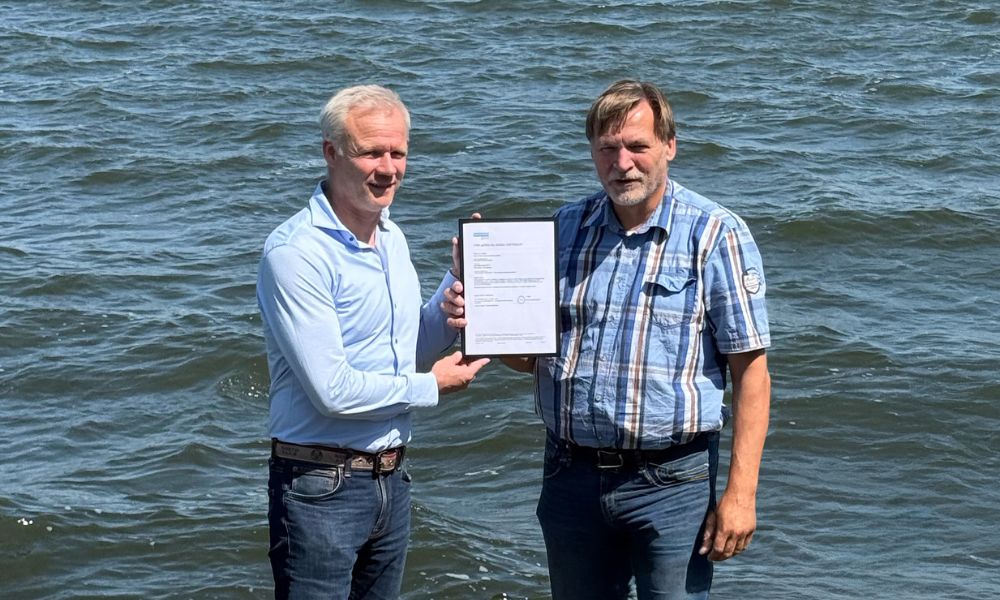
The approval follows a full demonstration and audit of the simulator model, confirming compliance with DNV’s maritime simulator requirements and validating the model’s fidelity for advanced training applications.

Designed to support Höegh Autoliners’ ambition to reach net-zero emissions by 2040, the vessels combine multi-fuel capability with readiness for zero-carbon fuels such as ammonia, alongside a suite of energy-efficient technologies and advanced onboard systems. 

With capacity for up to 9,100 vehicles and enhanced capabilities for electric vehicle transport, Höegh Aurora sets a new benchmark for future-ready car carriers.

“This achievement reflects close collaboration across teams and partners and underlines our commitment to delivering high-fidelity simulator models for the industry’s most advanced vessels,” said Leif Pentti Halvorsen, VP Engine Room and Cargo Handling, Maritime Simulation, Kongsberg Maritime.

“Independent verification from DNV demonstrates the accuracy and quality of our simulator models,” said Are Føllesdal Tjønn, Managing Director Maritime Simulation, Kongsberg Maritime. 

“At the same time, it strengthens our ability to support customers as they introduce new vessel designs and transition to more sustainable operations.”

Kongsberg Maritime has played a key role in enabling the Aurora Class through its integrated technology suite, including automation, propulsion optimisation and digital solutions that support more efficient and lower-emission operations throughout the vessel lifecycle. Extending this capability into simulation ensures that crews can fully understand and operate these systems from day one.

With the Statement of Compliance in place, the Höegh Aurora ERS model is now part of Kongsberg Maritime’s standard simulator portfolio and available for deployment across training centres worldwide.


Photo credit: Kongsberg Maritime
Published: 18 May, 2026

Continue Reading

Trending