
Business
Bunker Flash: Chemical contaminants in fuels from ARA Region
CTI-Maritec obtained feedback from vessels encountering rapid wear on fuel pumps on main propulsion engines and increased deposit formation in the exhaust system.

Marine fuel testing and marine surveying business Maritec Pte Ltd (CTI-Maritec) on Tuesday (5 July) issued an alert regarding presence of chemical contaminants in ARA region bunkers and its effects on fuel pumps and exhaust system.
Maritec has tested several VLSFOs delivered in the ARA region to be observed with the presence of chemical contaminants in the recent months. These VLSFOs also indicated elevated potassium content and acid number.
From these samples, CTI-Maritec has obtained feedback from vessels encountering rapid and excessive wear on fuel pumps on main propulsion engines and a tendency for increased deposit formation in the exhaust system.

Figure 1: Exhaust grid fouling

Figure 2: Turbocharger Nozzle Ring fouling

Figure 3: Fuel Pump Plunger wear down
Forensic analysis by Gas Chromatography and Mass Spectrometry techniques, specifically ASTM D7845 GC/MS and Solid Phase Extraction (SPE) GC/MS, on some of the samples revealed the presence of the following compound groups at abnormally high concentrations
- Fatty Acids and Monoglycerides (>1000ppm)
- Alkylresorcinols (>2000ppm)
- Phenolic compounds (>1000ppm)
Fatty acids and Monoglycerides are acidic compounds commonly found in fuels where the FAME content has broken down in the presence of water and have known to cause costly accelerated wear in fuel oil injection pumps. The presence of these compounds can also suggest an inclusion of substandard Bio-fuels into the blend. This also explains the high potassium content in the fuel as Potassium Hydroxide (KOH) is one of the possible catalysts used in the production of bio-diesel. The separation of the spent catalyst out from the final product is a complicated and expensive process. The increased potassium can also contribute towards the total ash forming tendency of the fuel leading to abnormal deposit formation in post combustion exhaust system components.
The presence of Alkylresorcinols and phenolic compounds suggests the inclusion of shale oil which is allowed as per the definition of ‘petroleum fuel’ in ISO 8217 standards. CTI-Maritec’s experience however has shown that the presence of these compounds tends to cause fuel instability leading to issues like filter blockages and purifier bowl overloading. This is despite the Total Sediment potential tests being within specification. Any sludge not capable of being removed by the fuel treatment system can cause combustion issues in the main engine.
If your vessel is expected to bunker in the ARA region; CTI Maritec advises to check the pre-bunkering certificate of quality or Manifold sample test results for signs of abnormally high potassium content (>110ppm) and/or high total acid number (>1.5mgkoh/g) and pre-emptively analyze the bunker fuels by Gas Chromatography and Mass Spectrometry (GC-MS) that can reveal the presence of undesirable compounds in the fuel thus safeguarding vessel operations.
In every case, CTI Maritec urges bunker fuel receivers to ensure thorough attention is given to the witnessing of correct sampling procedures during bunkering, counter-sealing and recording of seals in the bunker delivery note and any other documentation required to ensure correct representative samples are obtained during the bunkering process.
Collecting objective evidence on the storage, treatment and usage of the fuel is to be always given a high priority in the event an operational problem occurs to determine if the fuel used was one of the root causes for a machinery failure.
This document however does not reflect on the overall quality of fuel being supplied at ARA region.
The presence of off-spec marine fuels at the ARA region has been detected since late June:
Related: FOBAS: Off Specification Sediment (TSP) Fuels from ARA (Amsterdam, Rotterdam, Antwerp) Region
Related: FOBAS: Contaminated Fuels from ARA (Amsterdam, Rotterdam, Antwerp) Region
Photo credit and source: CTI-Maritec
Published: 6 July, 2022
Legal
Shell Singapore charged over Pulau Bukom oil leaks, reporting delays
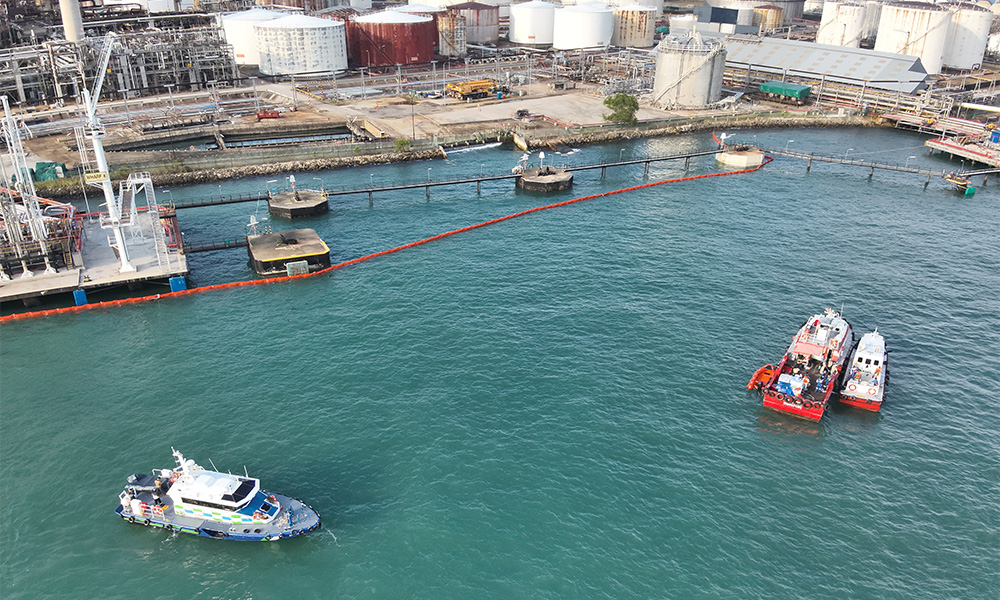
Shell faces four charges under Singapore’s Prevention of Pollution of the Sea Act over two 2024 oil discharge incidents at its Pulau Bukom facility.
Incident
MPA probes Singapore Strait collision involving fishing vessel, bulk carrier
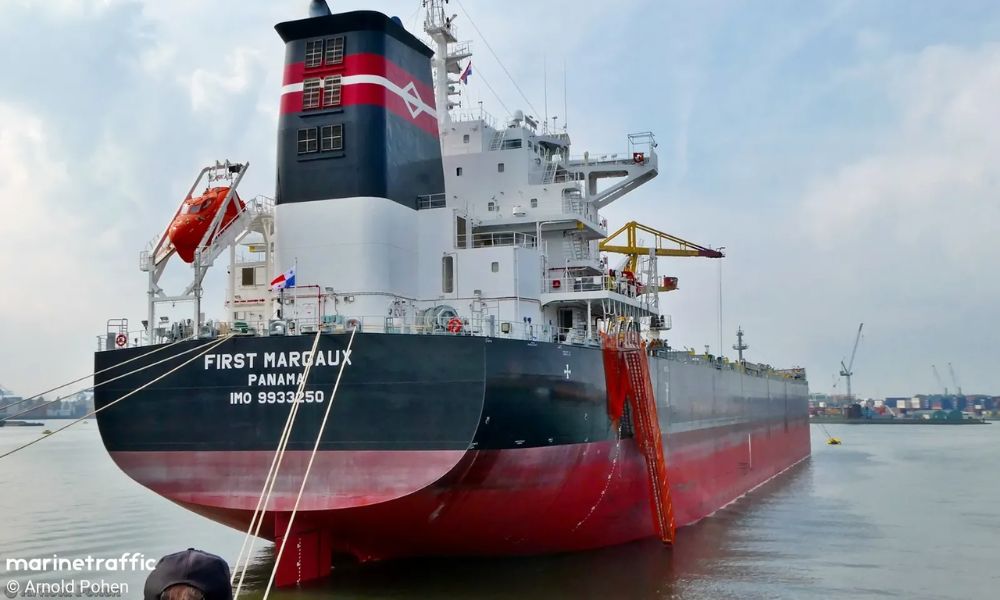
MPA says there were no reported injuries among the crew of either vessel in the incident involving China-registered fishing vessel “Lu Qing Yuan Yu” and Panama-registered bulk carrier “First Margaux” .
Mass Flowmeter
TFG Marine deploys first MFM-equipped bunker barge in Jamaica
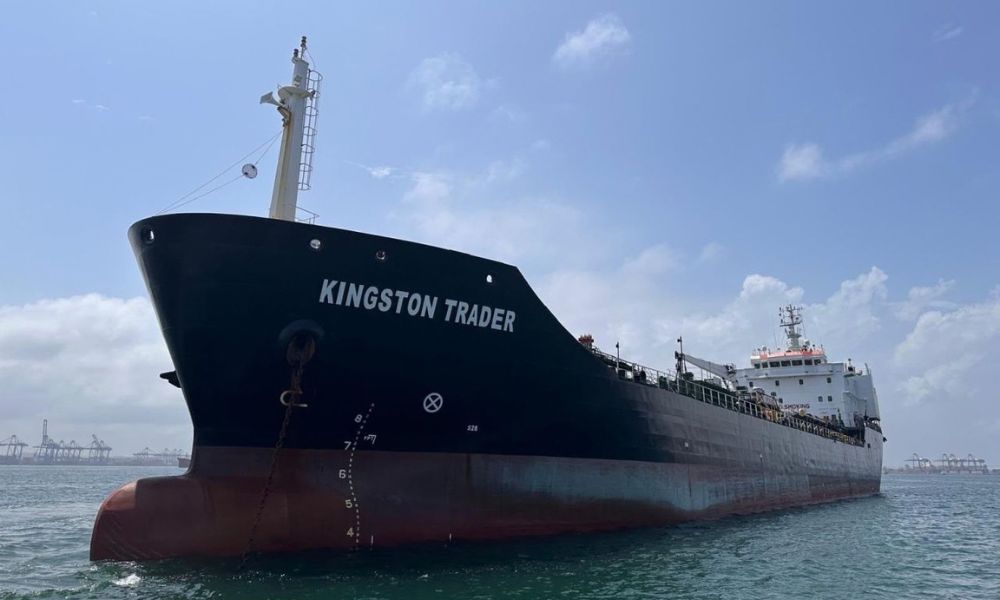
Bunker barge “Kingston Trader” is currently on its way to Jamaica following the successful installation of a Coriolis mass flow meter (MFM) system, certified to ISO 22192.

OUR INDUSTRY PARTNERS

Shell Singapore charged over Pulau Bukom oil leaks, reporting delays

MPA probes Singapore Strait collision involving fishing vessel, bulk carrier

TFG Marine deploys first MFM-equipped bunker barge in Jamaica

Seascale Energy names Gaetan Perret co-CEO as Olivier Josse prepares to retire

DNV: New research shows how regulation could reshape shipping

Stena Line orders two new hybrid ferries for Sweden – Denmark route

ENGINE: Americas Bunker Fuel Availability Outlook (24 Sep 2026)

Singapore: Marine fuel testing firm CCIC Singapore faces winding up application

High Court of Singapore issues winding up order against Hengli Petrochemical International

APPEC 2026: Digitalisation in bunkering not merely a ‘paper-to-screen’ swap, states panellists

APPEC 2026: Panellists navigate maritime decarbonisation and alternative marine fuel strategies

LDA’s methanol-powered “Spirit of Toulouse” gets Norsepower rotor sail in Shanghai

Goldwind green methanol facility completes trial production, ships first 500 mt

Singapore: Bunker fuel sales down by 4% on year in August 2026
-
 Winding up2 weeks ago
Singapore: Marine fuel testing firm CCIC Singapore faces winding up application
-
 Winding up2 weeks ago
High Court of Singapore issues winding up order against Hengli Petrochemical International
-
 Technology2 weeks ago
APPEC 2026: Digitalisation in bunkering not merely a ‘paper-to-screen’ swap, states panellists
-
 Alternative Fuels2 weeks ago
APPEC 2026: Panellists navigate maritime decarbonisation and alternative marine fuel strategies
-
 Wind-assisted2 weeks ago
LDA’s methanol-powered “Spirit of Toulouse” gets Norsepower rotor sail in Shanghai
-
 Methanol2 weeks ago
Goldwind green methanol facility completes trial production, ships first 500 mt
-
 Alternative Fuels2 weeks ago
Singapore: Bunker fuel sales down by 4% on year in August 2026
-
 Bunker Fuel2 weeks ago
APPEC 2026: Equatorial and Kuwait Petroleum Corporation discuss Middle East bunker market dynamics