Connect with us

Bunker Fuel

APPEC 2026: Equatorial and Kuwait Petroleum Corporation discuss Middle East bunker market dynamics

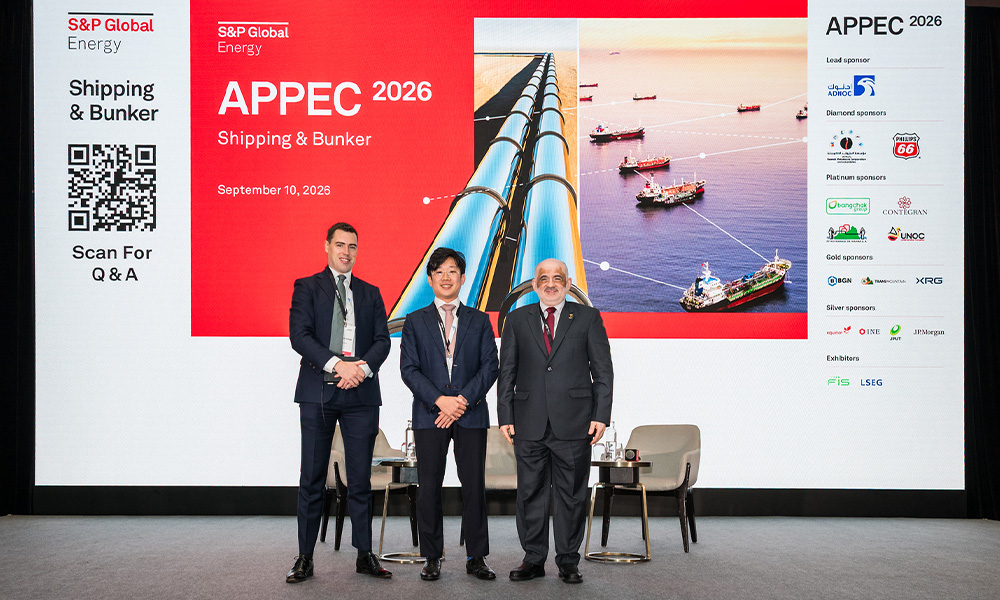
Choong Sheen Mao and Dr Salah Al-Awadhi were speaking at a Fireside Chat: Assessing Fuel Oil Trends and Resilience in Bunker Markets at APPEC 2026 on Thursday.

Admin

Published

on

APPEC 2026: Equatorial and Kuwait Petroleum Corporation discuss Middle East bunker market dynamics

Representatives of Singapore bunker supplier Equatorial Marine Fuel Management Services (Equatorial) and Kuwait state-owned oil company Kuwait Petroleum Corporation (KPC) met to discuss how developments in the Middle East affected bunker market dynamics at APPEC 2026 on Thursday (10 September).

Choong Sheen Mao, Chief Operating Officer, Equatorial and Dr Salah Al-Awadhi, Team Leader Market Research, KPC were speaking at the Fireside Chat: Assessing Fuel Oil Trends and Resilience in Bunker Markets moderated by John Morley, Global Director, Crude and Fuel Oil Markets, S&P Global Energy.

Equatorial Marine Fuel Management Services

The conversation saw Mr Choong identifying geopolitical events have distorted the East–West arbitrage, creating a volatile environment where market speculation – specifically regarding the potential reopening of the Strait of Hormuz – heavily influenced price movements.

He highlighted a “price ceiling” phenomenon where demand destruction occurred once prices reached certain thresholds.

Consequently, the development caused the industry to shift away from long-term planning toward short-term business strategies to navigate the heightened geopolitical volatility.

Regarding supply, Mr Choong noted while replacement barrels were theoretically available, commercial realities often prevented them from entering the market if price differentials were unattractive to customers.

He observed while ceasefire agreements between warring parties at the Strait of Hormuz initially brought large quantities of oil to the market, supply constraints subsequently re-emerged.

Kuwait Petroleum Corporation

Dr. Salah, meanwhile, characterised the 2026 marine fuels market as having evolved from an initial surplus of fuel oil – where prices hovered around USD 500 pmt – to a period of extreme volatility driven by geopolitical shocks.

The initial war shock in the Middle East region pushed fuel oil prices to USD 1,140 pmt, followed by sustained highs when conflict in the region spread to involve several oil and gas facilities, and a subsequent USD 300 to 400 pmt drop following US–EU relief efforts.

Dr. Salah pointed out the market is currently in a “sustained crisis” phase, reacting daily to positive and negative signals.

Looking ahead, he emphasised high uncertainty has made price forecasting unfeasible, as the market has been operating outside of ideal fundamental assumptions. Despite this, he expects HSFO and VLSFO to remain the dominant bunker fuels for the next 5 to 10 years.

Supply-wise, Dr. Salah noted while the Strait of Hormuz remains open, however it is currently unsafe for passage. This has resulted in a 70% reduction in regional fuel oil outflows, dropping from approximately 800,000 barrels per day to 200,000 barrels per day.

He argued moving forward, there are no adequate replacement barrels available due to three primary factors:

  • Supply/Demand Fundamentals: Inflows from Russia have dropped by 45 to 50% due to infrastructure attacks, regional refinery interflows are insufficient to cover the losses, and the traditional West-to-East arbitrage is currently non-viable.
  • Seasonality: During the summer, the Middle East region consumes a significant portion of its fuel oil locally for power generation, further reducing export availability.
  • Profitability: Elevated cracks for middle distillates have incentivised the diversion of bunker fuel oil feedstock into middle distillate production, further tightening supply.


Photo credit: Manifold Times
Published: 14 September 2026

Continue Reading

Methanol

Goldwind green methanol facility completes trial production, ships first 500 mt

Goldwind has also secured long-term offtake agreements with A.P. Moller – Maersk and Hapag-Lloyd, connecting planned production with demand from shipping.
Admin

Published

on

By

Goldwind green methanol facility completes trial production, ships first 500 mt

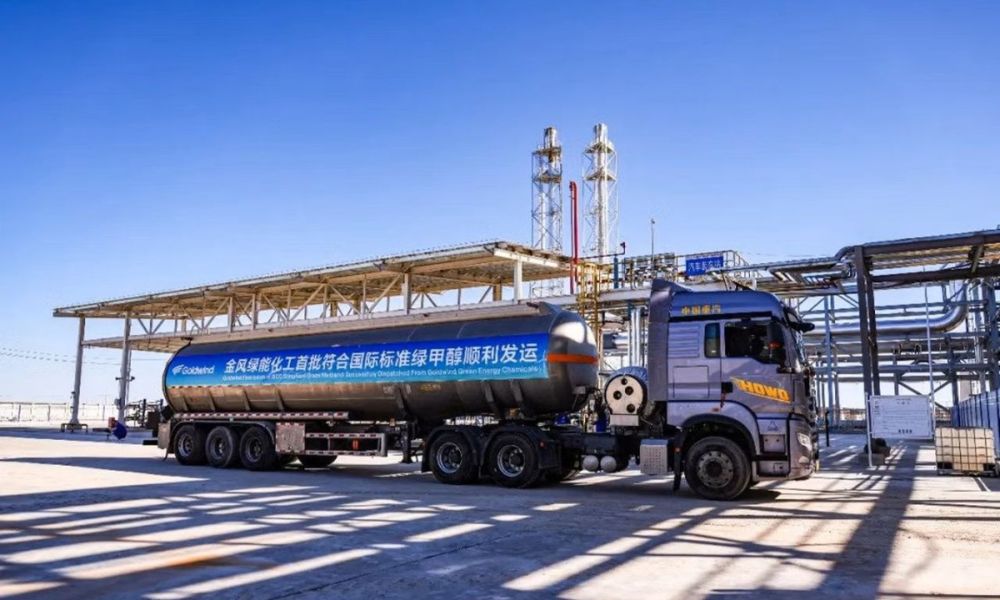
MI — The Global Methanol Alliance on Friday (11 September) said the world’s largest green methanol production facility to date has completed its first trial run. 

The alliance’s member Goldwind Green Energy has successfully produced biomethanol at its new 250,000 metric tonne (mt)/year facility in Inner Mongolia, with the first 500 mt of trial product now headed to South Korea.

“The facility uses wind-powered green hydrogen and locally sourced corn straw to produce biomethanol meeting EU RED III sustainability requirements. Commercial operations are expected to begin later this month,” it said. 

Goldwind has also secured long-term offtake agreements with A.P. Moller – Maersk and Hapag-Lloyd, connecting planned production with demand from shipping.

In 2024, Hapag-Lloyd reached a long-term agreement with Chinese energy firm Goldwind for the delivery of 250,000 mt of green methanol per year to ensure long-term supply for its vessels.

In 2023, Maersk signed a deal with Goldwind, marking the first large scale green methanol offtake agreement for the global shipping industry.

The commercially viable long-term offtake agreement for annual volumes of 500KT will enable low carbon operations for the first 12 large methanol-enabled Maersk vessels on order. The first volumes are expected in 2026.

Related: Hapag-Lloyd, Goldwind enter offtake deal for green methanol bunker fuel supply
Related: Maersk and China-based Goldwind sign landmark green methanol bunker fuel offtake deal


Photo credit: MI — The Global Methanol Alliance
Published: 14 September, 2026

Continue Reading

LNG Bunkering

Tenerife achieves first truck-to-ship LNG bunkering operation

With the latest operation, the Port of Santa Cruz de Tenerife is now capable of truck-to-ship and multi truck-to-ship bunkering operations, in addition to the ship-to-ship method.
Admin

Published

on

By

Tenerife achieves first truck-to-ship LNG bunkering operation

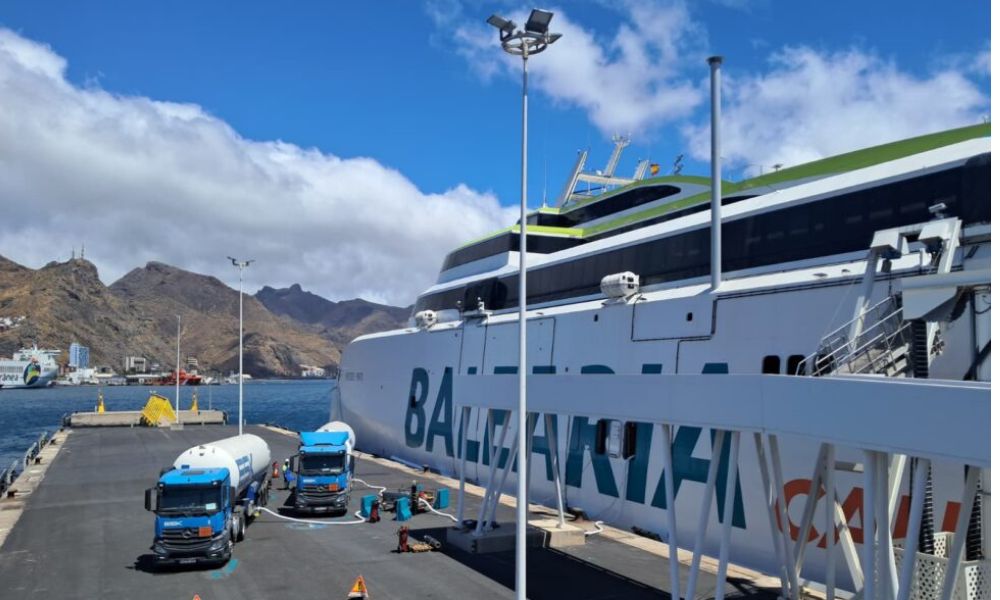
The Port Authority of Santa Cruz de Tenerife on Thursday (10 September) hosted its first LNG bunkering operation using tanker trucks, supplying fuel to a Baleària fast ferry Mercedes Pinto.

The operation began around 12.30pm at the Anaga Dock pier and was carried out by Spanish supplier ESK, the company in charge of providing this service. 

The port authority said a total of 600 MWh of LNG were supplied by two tanker trucks, with a total pumping flow of 700 liters per minute.

The port already supplies LNG using the ship-to-ship (STS) method, which allows fuel to be supplied directly between two ships. 

With the latest operation, the port is now capable of truck-to-ship (TTS) and multi truck-to-ship (MTTS), thus expanding the available options and adapting to the different operational needs of the ships.

“This new modality responds to the need raised by Baleària to have this supply alternative in Tenerife for its eco-efficient vessels and allows the port to advance in a line of work linked to sustainability, innovation and energy transition, facilitating safe and efficient solutions in the face of the evolution of fleets and fuels used by maritime transport,” the port authority added.

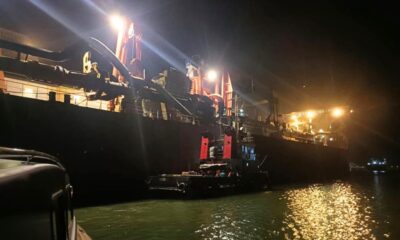
The Mercedes Pinto is Baleària’s 12th ship with dual engines prepared to run on natural gas and biogas, a CO₂-neutral fuel, in line with Baleària’s roadmap towards decarbonization.


Photo credit: Port Authority of Santa Cruz de Tenerife
Published: 14 September, 2026

Continue Reading

Ammonia

IMO technical seminar to focus on ammonia production, bunkering and safety

IMO announced its Future Fuels and Technology Project is organising a Technical Seminar on the use of ammonia as marine fuel on 17 September.
Admin

Published

on

By

IMO

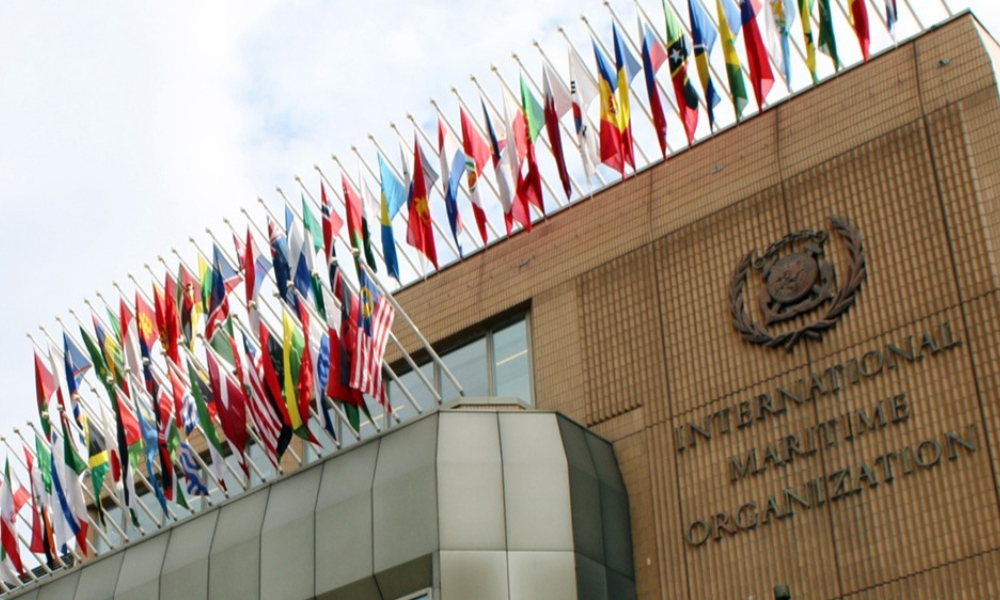
The International Maritime Organization (IMO) recently announced its Future Fuels and Technology (FFT) Project is organising a Technical Seminar on the use of ammonia as marine fuel on 17 September. 

The event will address developments in ammonia production for marine fuels, bunkering, onboard applications, engine technologies, spill response, safety considerations, ammonia effluents management and ongoing initiatives related to ammonia-fueled vessels.

The seminar will be held at IMO Headquarters in London and on IMO YouTube Channel. 

The event will take place in the margins of the Sub-Committee on Carriage of Cargoes and Containers (CCC 12) scheduled from 14-18 September 2026.

Sessions will include ammonia production pathways and supply outlook for shipping and infrastructure, developments in ammonia-fuelled vessels and onboard technologies as well as operational, spill response, safety and other considerations.

Note: Registration can be found here and is open until 15 September. Queries can be directed to [email protected].


Photo credit: International Maritime Organization
Published: 14 September, 2026

Continue Reading

Trending