Connect with us

Mass Flowmeter

TFG Marine installs first ISO-certified mass flow meter on US Gulf bunkering barge

Aims to equip 90% of its global bunkering fleet with MFMs by 2026.

Admin

Published

on

TFG Marine installs first MFM MT

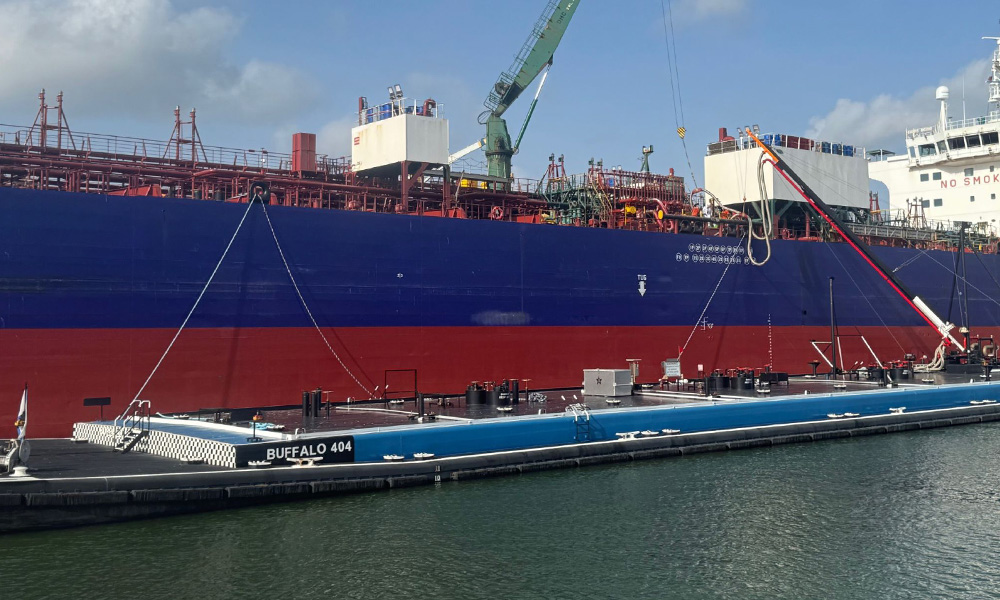
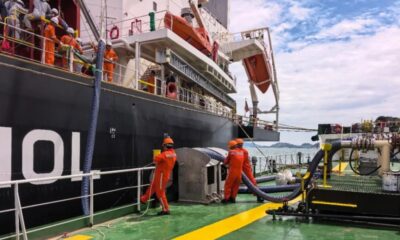
TFG Marine on Friday (11 July) said it has reached a key milestone in its global digitalisation programme with the installation of an ISO 22192-compliant mass flow meter (MFM) on the Buffalo 404, a barge on time charter from American bunker barge company Buffalo Marine Service Inc.

This is the first ISO-certified MFM-equipped bunkering barge operating in the US Gulf, setting a new benchmark for transparency, accuracy and operational efficiency in marine fuel delivery across the region, it notes.

The installation is part of TFG Marine’s wider strategy to equip close to 90% of its global bunkering fleet with MFMs by 2026 as a commitment towards improving data integrity, streamlining operations and strengthening trust in marine fuel transactions.

“Our continued investment in mass flow meter technology underlines our commitment to leading the modernisation of marine fuel supply chains,” said Kenneth Dam, Global Head of Bunkering at TFG Marine.

“I’m proud that more than 60% of our barge fleet already deploys mass flow meters, and we continue to build on this.

“By ensuring greater accuracy in delivered quantities and eliminating manual measurement discrepancies, we’re helping to create a more transparent, reliable and efficient bunkering process for shipowners and operators globally.”


Photo credit: TFG Marine
Published: 14 July 2025

Continue Reading

Technology

APPEC 2026: Digitalisation in bunkering not merely a ‘paper-to-screen’ swap, states panellists

Panel members discuss how digitalising bunkering enhances transparency and trust, though human relationships and data governance remain essential for success.
Admin

Published

on

By

i gsbNrHK X3 MT

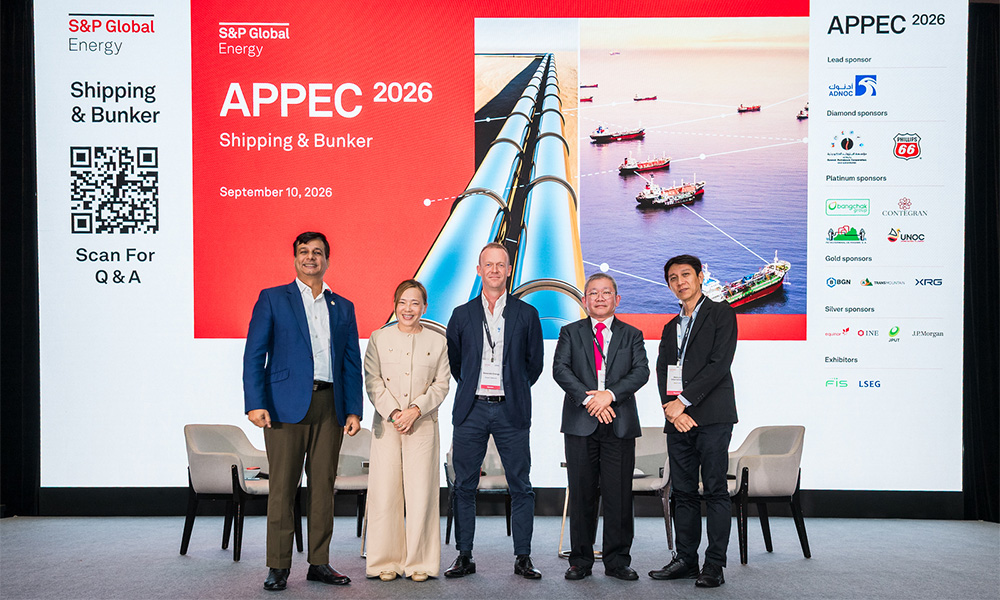
Representatives across the marine fuels supply chain consisting of Singapore bunker supplier Hong Lam Marine, shipowner and operator Ocean Network Express (ONE), bunker buyer Seascale Energy and mass flow meter (MFM) conformity assessment body Metcore International met at APPEC 2026 on Thursday (10 September) to examine the digitisation of bunkering.

The panel Addressing the Transition into Digital Bunker in APAC moderated by Saunak Rai, Member Marine Fuels Committee, Singapore Shipping Association, agreed bunkering’s digitalisation is not merely a paper-to-screen swap and must deliver transparency and trust.

They concluded technology is pivotal, but human relationships and judgement remain indispensable.

The following points were raised by panel members during discussion:

Caroline Yang, Chief Executive Officer, Hong Lam Marine, believed digitalisation in bunkering is a fundamental transformation, not merely a “paper-to-screen” shift.

She highlighted Singapore’s mandatory MFM system as a benchmark for success, noting its seven-year development – involving industry collaboration and strict enforcement – established a trusted, independent method for quantity measurement that levelled the playing field.

Building on the above, she explained electronic bunker delivery notes (eBDNs) extend this trust to documentation by ensuring authenticity, verification, and auditability.

She credited the Maritime and Port Authority of Singapore (MPA) for extensive industry consultation, emphasising success relies on stringent platform approval criteria, particularly regarding cybersecurity and controlled stakeholder access.

Addressing the commercial impact, Ms Yang clarified digitalisation does not directly increase revenue for bunker craft operators; in fact, it initially raised costs due to verification and testing requirements.

However, digitalisation significantly enhanced operational efficiency, saving approximately 2 to 3 hours per bunkering operation and reducing quantity disputes. She advocated for a “digital corridor” between ports to improve interoperability.

Looking ahead, Ms Yang predicted paper BDNs will be obsolete in Singapore within 36 months, though emphasising manual soundings must remain as a necessary fallback.

Richard Ho, Vice President, Fuel, ONE, emphasised the “GIGO” (Garbage In, Garbage Out) principle, asserting the value of digitalisation depended entirely on data integrity and robust regulatory frameworks.

Managing high volumes of bunkering transactions annually, Mr Ho pointed out ONE relies on established internal verification processes for bunker purchases. While he views eBDNs as a valuable, authoritative source for transparency, he notes the transition requires careful validation before automated verification can replace human checks.

Mr Ho highlighted the modern marine fuel market has been increasingly complex due to the introduction of new bunker fuel types, geopolitical instability, and port congestion.

Consequently, he argued that while digital tools enhance efficiency and enable potential auto-payment systems, bunker buyers must still actively balance leveraging scale with maintaining flexible, resilient supply partnerships.

Ultimately, he believed technology should support, rather than replace, the critical human oversight required to manage bunker fuel procurements effectively.

Kasper Sorensen, Head of Marine Fuels Sourcing, East, Seascale Energy, represents a major marine fuel procurement consolidator for more than 50 shipowners/operators.

He championed transparency, noting Singapore’s policed MFM system remains the global gold standard. To replicate this success, he helped launch a voluntary framework in Rotterdam, arguing that buyer-side consolidation is essential to match the consolidated seller market and drive best practices.

Mr Sorensen pointed out recent geopolitical instability has fundamentally shifted industry priorities from bunker prices alone to supply security and resilience.

He advocated for the “three R’s” – Risk, Resilience, and Relationships – as the framework for navigating modern challenges.

“We might buy bunkers for more than 3,000 vessels, but the most important ship is friendship,” he stated.

Moving forward, Mr Sorensen believed while digital tools are vital, true strength lies in collaborative partnerships, which are proven and solidified only when crises occur.

Daryl Lim, Quality Manager, Metcore International, provided the technical perspective on bunkering digitalisation, drawing on his experience in legal metrology and conformity assessment of marine fuel measurement systems.

He highlighted that MFM technology forms the foundation for generating reliable, traceable, and independently verifiable measurement data. While eBDNs create an efficient pathway for transmitting information among stakeholders, Mr Lim noted that data consistency, standardisation, and governance remain key areas requiring continued industry focus.

He emphasised that confidence in digitalisation depends not only on the accuracy of the measurement system, but also on the integrity and traceability of data throughout the entire digital value chain. Consistent data structures, verification mechanisms, and secure governance frameworks are therefore essential to maintaining trust among stakeholders.

Furthermore, he noted that interoperability between digital platforms will be critical to enabling seamless data exchange, reducing operational risks, and supporting a more transparent and verifiable bunkering ecosystem.

Looking ahead, Mr Lim expects the industry to progressively transition towards greater automation in validation and verification processes, supported by trusted measurement technologies, standardised digital frameworks, and robust conformity assessment practices.


Photo credit: S&P Global
Published: 14 September 2026

Continue Reading

Mass Flowmeter

TFG Marine advances global MFM rollout with two US Gulf bunker barges

“Buffalo B414” and “Buffalo B304”, were recently fitted with the equipment, with both supply barges receiving ISO 22192 certification for their newly installed MFMs last month.
Admin

Published

on

By

TFG Marine advances global MFM rollout with two US Gulf bunker barges

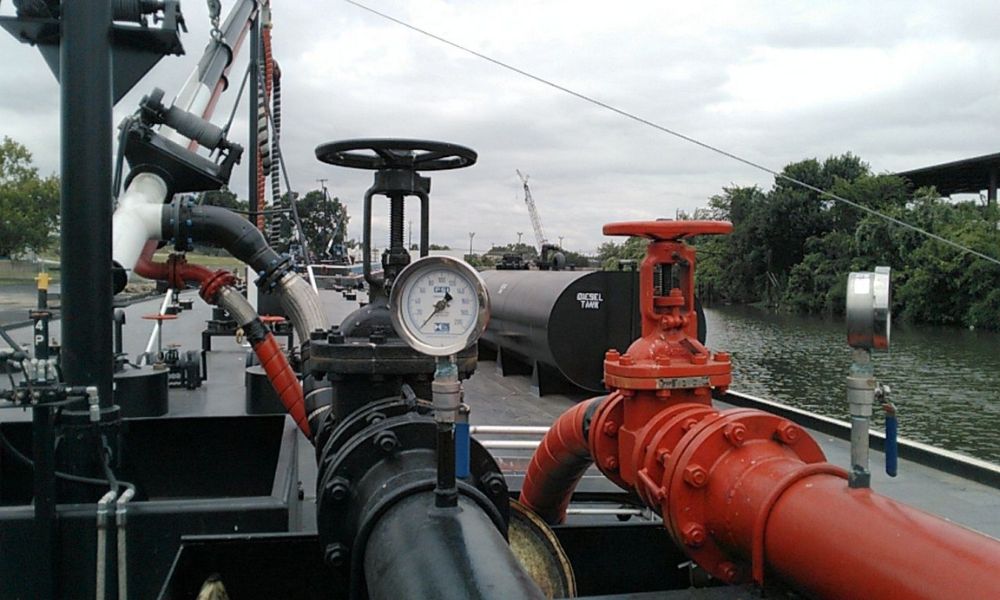
Global marine fuel supply and procurement firm TFG Marine on Wednesday (2 September) said it continued to expand mass flow meter (MFM) technology across its US Gulf Coast bunker fleet.

The company said two more vessels, Buffalo B414 and Buffalo B304, were recently fitted with the equipment.

“Both supply barges received ISO 22192 certification for their newly installed MFMs last month, giving customers greater confidence in bunker quantity measurement while supporting a more accurate, transparent and efficient delivery process,” TFG Marine said in a social media post. 

“This marks the latest step in TFG Marine’s ongoing investment in technology and best practice across its global bunkering operations, and forms part of a broader push by our North America team to help drive progress across the region’s bunkering industry.”

Last year, TFG Marine announced it reached a key milestone in its global digitalisation programme with the installation of an ISO 22192-compliant MFM on the Buffalo 404, a barge on time charter from American bunker barge company Buffalo Marine Service Inc.

This was the first ISO-certified MFM-equipped bunkering barge operating in the US Gulf.

The installation was part of TFG Marine’s wider strategy to equip close to 90% of its global bunkering fleet with MFMs by 2026 as a commitment towards improving data integrity, streamlining operations and strengthening trust in marine fuel transactions.

Related: TFG Marine installs first ISO-certified mass flow meter on US Gulf bunkering barge


Photo credit: TFG Marine
Published: 4 September, 2026

Continue Reading

Biofuel

Report: GCMD outlines practical approach to quantity assurance in marine biofuel supply chains

GCMD releases a new report, highlighting a practical approach to help shipowners verify that they receive both the total quantity of fuel and the renewable content contracted.
Admin

Published

on

By

Report: GCMD outlines practical approach to quantity assurance in marine biofuel supply chains

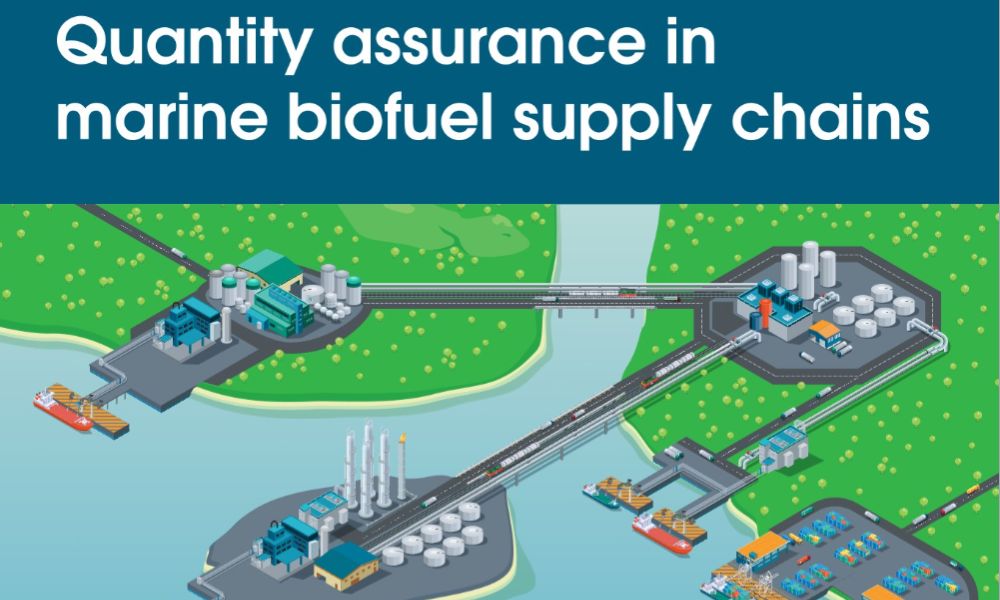
The Global Centre for Maritime Decarbonisation (GCMD) on Thursday (27 August) released its report, Quantity assurance in marine biofuel supply chains, outlining a practical approach to help shipowners verify that they receive both the total quantity of fuel and the renewable content contracted. 

The approach draws on evidence from GCMD’s end-to-end marine biofuel supply chain trials conducted under commercial operating conditions.

Biofuels are purchased not only for their energy content, but also for the renewable content and emissions reductions they represent. The renewable fraction determines the green premium and underpins GHG accounting and regulatory compliance, yet blend ratios, such as B24 or B30, are typically supplier-declared rather than independently verified. Closing this verification gap will strengthen confidence in marine biofuel transactions.

Ensuring reliable measurement of total quantity transferred

Mass flow meters (MFMs) have become the preferred method for custody transfer, as they provide a transparent and auditable basis for determining the quantity of fuel transferred.

However, adding fatty acid methyl ester (FAME) to conventional marine fuels, such as Very Low Sulphur Fuel Oil (VLSFO) or High Sulphur Fuel Oil (HSFO), can reduce the final blend’s viscosity, potentially pushing it outside the validated operating range of the MFM installed on the bunker barge. To maintain measurement integrity, the viscosity of the final blend should therefore be assessed under the actual transfer conditions against the applicable MFM operating range. This can be managed through appropriate transfer-temperature control or by using MFMs that have been validated for broader ranges.

Verifying the renewable fraction in biofuel blends

Verifying the renewable fraction requires appropriate analytical methods. FAME-based blends can be verified through compositional analysis, while hydrotreated vegetable oil (HVO)-based blends require radiocarbon analysis because renewable and fossil hydrocarbons cannot be distinguished through compositional testing. 

Interpreting analytical measurements, however, is not straightforward. Neat FAME may contain up to 3.5% non-ester material, so the measurable FAME content of a finished BXX blend may not exactly match its declared blend ratio.

Laboratory methods also have finite measurement precision. A difference between a measured result and a declared blend ratio therefore does not necessarily indicate incorrect blending or under-delivery.

Together, the three pillars of GCMD’s quality, quantity, and GHG emissions abatement assurance framework address whether the fuel is fit for use, delivers the claimed emissions reductions, and contains the contracted fuel quantity and renewable content. 

Professor Lynn Loo, CEO of GCMD, said: “Buyers need confidence that they have received both the fuel and the renewable content they paid for. This report provides a practical, evidence-backed basis for verifying renewable fuel claims, protecting commercial value and supporting credible GHG accounting as marine biofuel use scales.” 

Note: GCMD’s report can be found here


Photo credit: Global Centre for Maritime Decarbonisation
Published: 27 August, 2026

Continue Reading

Trending