Connect with us

Mass Flowmeter

Endress+Hauser TECH Centre in Singapore helps maritime customers master MFM bunkering

TECH Centre showcases technical knowledge, operational reliability, and transparency of MFM bunker fuel deliveries across Singapore’s maritime sector, states Jiang Jun Xuan, Head of Marketing.

Admin

Published

on

Endress+Hauser TECH Centre in Singapore helps maritime customers master MFM bunkering

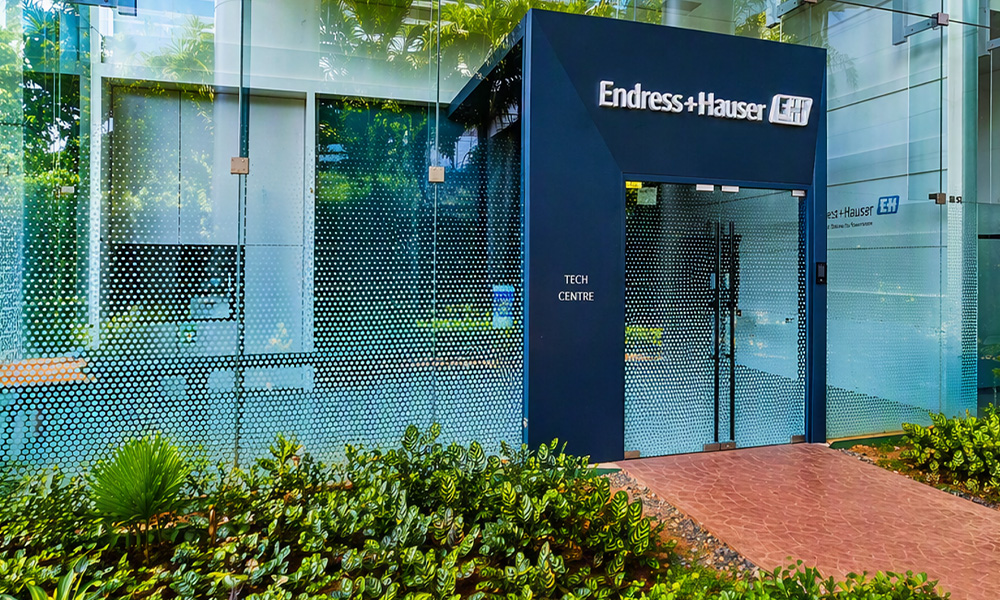
The Endress+Hauser Technological and Calibration Hub (TECH Centre) in Singapore helps maritime customers master Mass Flowmeter (MFM) bunkering by offering hands-on process training and real-world technology simulations under one roof, states Jiang Jun Xuan, Head of Marketing, Endress+Hauser.

“The use of MFM system for bunkering is not a ‘plug & play’ system,” Mr Jiang told Manifold Times in an interview.

“While the technology has become an important foundation for transparent fuel delivery, its effectiveness still depends heavily on how well users understand the installation requirements, operating procedures, data outputs, and limitations of the system in actual bunkering conditions.

“As a primary technology provider with more than half of bunker tankers operating in Singapore equipped with Endress+Hauser MFM bunker metering systems, our TECH Centre serves as a critical educational hub for suppliers, surveyors, and shipowners alike wishing to better understand MFM bunkering.”

According to Mr Jiang, a continuous stream of digital data, with enough information to detect changes in operating conditions, is captured during MFM bunkering operations.
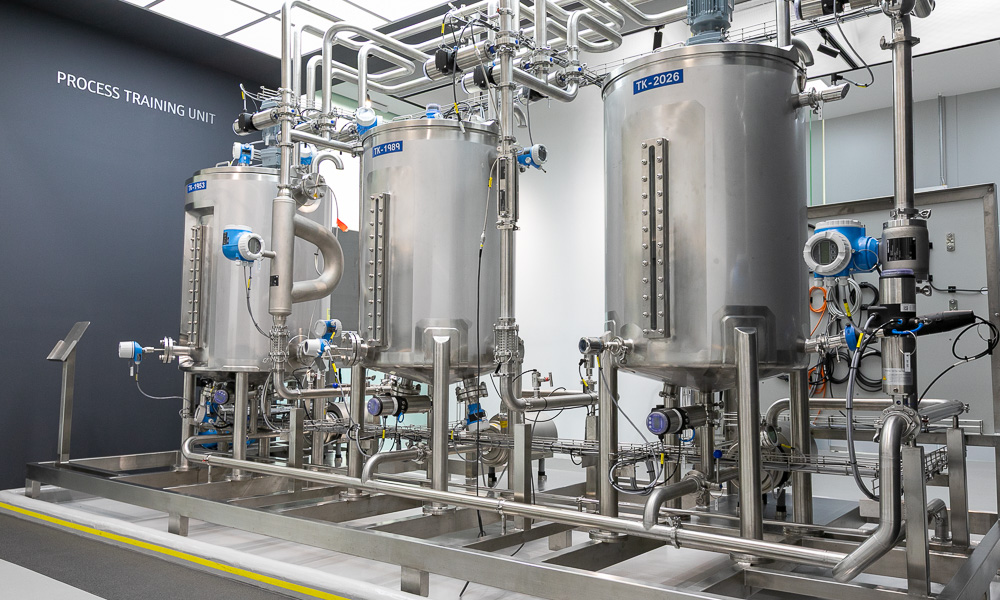
Endress+Hauser TECH Centre in Singapore helps maritime customers master MFM bunkering

“The TECH Centre offers visitors from the bunkering sector an opportunity to experience coriolis mass flow measurement technology in a practical setting and simulate processes under a controlled environment that closely reflects actual bunkering operations,” he added.

“Further, our experts on hand will be able to explain how the meter directly measures mass to eliminate traditional, error-prone volume-to-mass calculations during these demonstrations, while also showing how changes in flow conditions, entrained air, and operational practices can be identified through the data generated by the system.”

Looking ahead, Mr Jiang said the TECH Centre also gives stakeholders a structured environment to observe system behaviour, ask technical questions, and relate classroom learning to practical bunker delivery scenarios.

“This allows customers to better understand not only how MFM technology works, but why correct installation, operation, and interpretation of meter data are essential to achieving reliable, transparent, and dispute-free bunker deliveries,” he explained.

“The experience translates Endress+Hauser’s global expertise into local, application-specific value by connecting classroom-style learning with practical demonstrations that reflect the day-to-day realities faced by bunker suppliers, surveyors, and shipowners in Singapore’s bunkering ecosystem.”

Launched in March 2026, the Endress+Hauser TECH Centre supports closer collaboration with customers throughout the lifecycle of their processes, strengthening Endress+Hauser’s ability to address practical, industry-specific challenges across Singapore and Southeast Asia.

Note: Manifold Times readers may request for a guided tour at the TECH Centre here.

Related: Endress+Hauser launches new TECH Centre in Singapore


Photo credit: Manifold Times
Published: 25 September, 2026

Continue Reading

Mass Flowmeter

TFG Marine deploys first MFM-equipped bunker barge in Jamaica

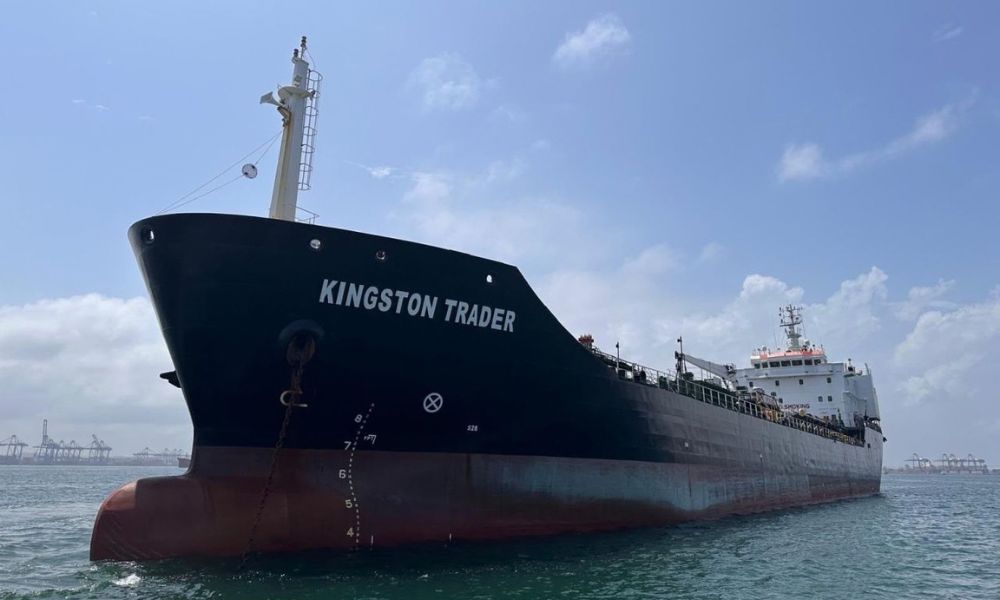
Bunker barge “Kingston Trader” is currently on its way to Jamaica following the successful installation of a Coriolis mass flow meter (MFM) system, certified to ISO 22192.
Admin

Published

on

By

TFG Marine deploys first MFM-equipped bunker barge in Jamaica

Global marine fuel supply and procurement firm TFG Marine on Thursday (24 September) said its bunker barge Kingston Trader is currently on its way to Jamaica following the successful installation of a Coriolis mass flow meter (MFM) system, certified to ISO 22192.

The company said the latest installation brings the proportion of TFG Marine’s fleet equipped with MFMs to approximately 88%, marking another step in the continued rollout of this technology across its global bunkering operations.

“The barge will operate in Jamaica through our local partnership with Scott Petroleum, becoming the first bunkering vessel in the region equipped with this technology and bringing greater accuracy, transparency and assurance to fuel measurement for customers across the Caribbean,” TFG Marine said in a social media post. 

“Together with Scott Petroleum, we look forward to working collaboratively with the Maritime Authority of Jamaica, the The Port Authority of Jamaica, Petrojam Limited and other stakeholders to share our experience of MFM technology, explore its wider benefits and support the continued development of bunkering standards across the region.” 

Manifold Times previously reported TFG Marine continuing to expand MFM technology across its US Gulf Coast bunker fleet with Buffalo B414 and Buffalo B304 being fitted with the equipment. 

Last year, TFG Marine announced it reached a key milestone in its global digitalisation programme with the installation of an ISO 22192-compliant MFM on the Buffalo 404, a barge on time charter from American bunker barge company Buffalo Marine Service Inc.

The installation was part of TFG Marine’s wider strategy to equip close to 90% of its global bunkering fleet with MFMs by 2026 as a commitment towards improving data integrity, streamlining operations and strengthening trust in marine fuel transactions.

Related: TFG Marine advances global MFM rollout with two US Gulf bunker barges
Related: TFG Marine installs first ISO-certified mass flow meter on US Gulf bunkering barge


Photo credit: TFG Marine
Published: 25 September, 2026

Continue Reading

Technology

APPEC 2026: Digitalisation in bunkering not merely a ‘paper-to-screen’ swap, states panellists

Panel members discuss how digitalising bunkering enhances transparency and trust, though human relationships and data governance remain essential for success.
Admin

Published

on

By

i gsbNrHK X3 MT

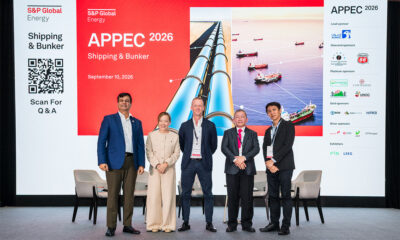
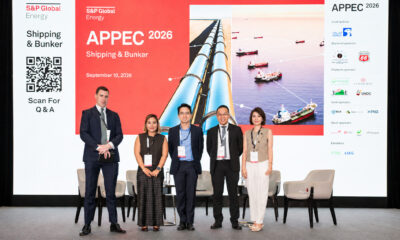
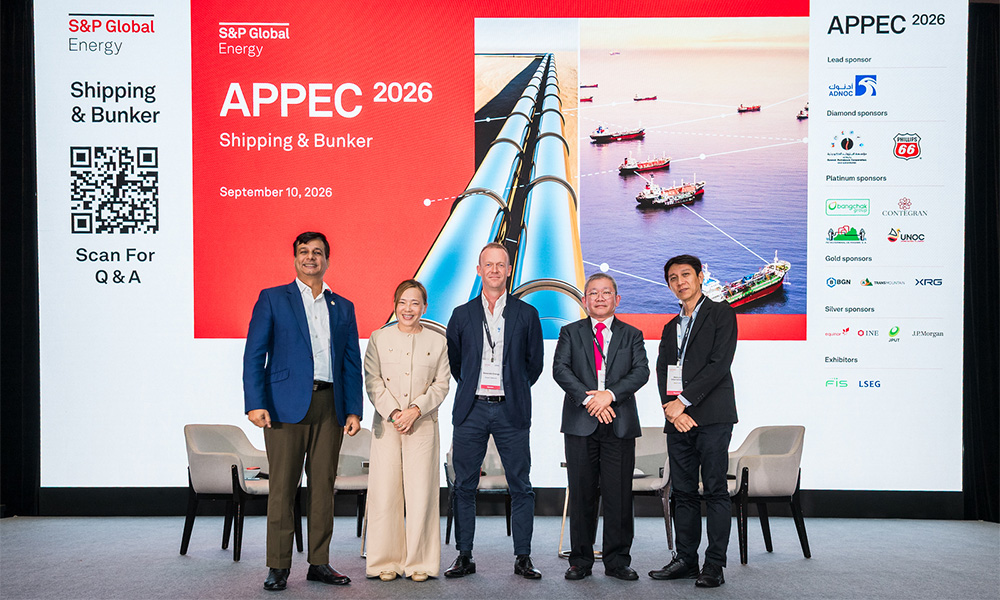
Representatives across the marine fuels supply chain consisting of Singapore bunker supplier Hong Lam Marine, shipowner and operator Ocean Network Express (ONE), bunker buyer Seascale Energy and mass flow meter (MFM) conformity assessment body Metcore International met at APPEC 2026 on Thursday (10 September) to examine the digitisation of bunkering.

The panel Addressing the Transition into Digital Bunker in APAC moderated by Saunak Rai, Member Marine Fuels Committee, Singapore Shipping Association, agreed bunkering’s digitalisation is not merely a paper-to-screen swap and must deliver transparency and trust.

They concluded technology is pivotal, but human relationships and judgement remain indispensable.

The following points were raised by panel members during discussion:

Caroline Yang, Chief Executive Officer, Hong Lam Marine, believed digitalisation in bunkering is a fundamental transformation, not merely a “paper-to-screen” shift.

She highlighted Singapore’s mandatory MFM system as a benchmark for success, noting its seven-year development – involving industry collaboration and strict enforcement – established a trusted, independent method for quantity measurement that levelled the playing field.

Building on the above, she explained electronic bunker delivery notes (eBDNs) extend this trust to documentation by ensuring authenticity, verification, and auditability.

She credited the Maritime and Port Authority of Singapore (MPA) for extensive industry consultation, emphasising success relies on stringent platform approval criteria, particularly regarding cybersecurity and controlled stakeholder access.

Addressing the commercial impact, Ms Yang clarified digitalisation does not directly increase revenue for bunker craft operators; in fact, it initially raised costs due to verification and testing requirements.

However, digitalisation significantly enhanced operational efficiency, saving approximately 2 to 3 hours per bunkering operation and reducing quantity disputes. She advocated for a “digital corridor” between ports to improve interoperability.

Looking ahead, Ms Yang predicted paper BDNs will be obsolete in Singapore within 36 months, though emphasising manual soundings must remain as a necessary fallback.

Richard Ho, Vice President, Fuel, ONE, emphasised the “GIGO” (Garbage In, Garbage Out) principle, asserting the value of digitalisation depended entirely on data integrity and robust regulatory frameworks.

Managing high volumes of bunkering transactions annually, Mr Ho pointed out ONE relies on established internal verification processes for bunker purchases. While he views eBDNs as a valuable, authoritative source for transparency, he notes the transition requires careful validation before automated verification can replace human checks.

Mr Ho highlighted the modern marine fuel market has been increasingly complex due to the introduction of new bunker fuel types, geopolitical instability, and port congestion.

Consequently, he argued that while digital tools enhance efficiency and enable potential auto-payment systems, bunker buyers must still actively balance leveraging scale with maintaining flexible, resilient supply partnerships.

Ultimately, he believed technology should support, rather than replace, the critical human oversight required to manage bunker fuel procurements effectively.

Kasper Sorensen, Head of Marine Fuels Sourcing, East, Seascale Energy, represents a major marine fuel procurement consolidator for more than 50 shipowners/operators.

He championed transparency, noting Singapore’s policed MFM system remains the global gold standard. To replicate this success, he helped launch a voluntary framework in Rotterdam, arguing that buyer-side consolidation is essential to match the consolidated seller market and drive best practices.

Mr Sorensen pointed out recent geopolitical instability has fundamentally shifted industry priorities from bunker prices alone to supply security and resilience.

He advocated for the “three R’s” – Risk, Resilience, and Relationships – as the framework for navigating modern challenges.

“We might buy bunkers for more than 3,000 vessels, but the most important ship is friendship,” he stated.

Moving forward, Mr Sorensen believed while digital tools are vital, true strength lies in collaborative partnerships, which are proven and solidified only when crises occur.

Daryl Lim, Quality Manager, Metcore International, provided the technical perspective on bunkering digitalisation, drawing on his experience in legal metrology and conformity assessment of marine fuel measurement systems.

He highlighted that MFM technology forms the foundation for generating reliable, traceable, and independently verifiable measurement data. While eBDNs create an efficient pathway for transmitting information among stakeholders, Mr Lim noted that data consistency, standardisation, and governance remain key areas requiring continued industry focus.

He emphasised that confidence in digitalisation depends not only on the accuracy of the measurement system, but also on the integrity and traceability of data throughout the entire digital value chain. Consistent data structures, verification mechanisms, and secure governance frameworks are therefore essential to maintaining trust among stakeholders.

Furthermore, he noted that interoperability between digital platforms will be critical to enabling seamless data exchange, reducing operational risks, and supporting a more transparent and verifiable bunkering ecosystem.

Looking ahead, Mr Lim expects the industry to progressively transition towards greater automation in validation and verification processes, supported by trusted measurement technologies, standardised digital frameworks, and robust conformity assessment practices.


Photo credit: S&P Global
Published: 14 September 2026

Continue Reading

Mass Flowmeter

TFG Marine advances global MFM rollout with two US Gulf bunker barges

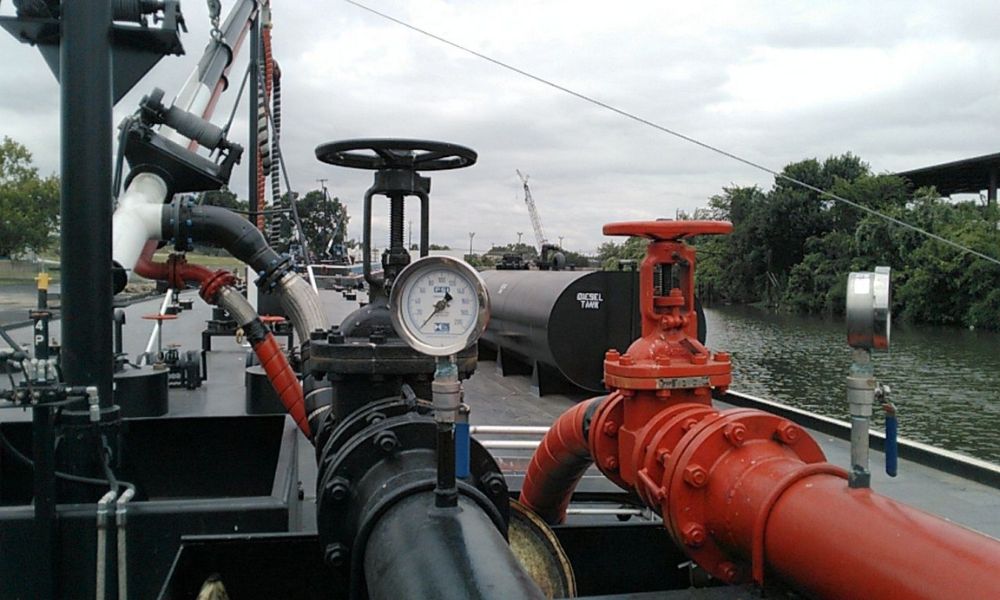
“Buffalo B414” and “Buffalo B304”, were recently fitted with the equipment, with both supply barges receiving ISO 22192 certification for their newly installed MFMs last month.
Admin

Published

on

By

TFG Marine advances global MFM rollout with two US Gulf bunker barges

Global marine fuel supply and procurement firm TFG Marine on Wednesday (2 September) said it continued to expand mass flow meter (MFM) technology across its US Gulf Coast bunker fleet.

The company said two more vessels, Buffalo B414 and Buffalo B304, were recently fitted with the equipment.

“Both supply barges received ISO 22192 certification for their newly installed MFMs last month, giving customers greater confidence in bunker quantity measurement while supporting a more accurate, transparent and efficient delivery process,” TFG Marine said in a social media post. 

“This marks the latest step in TFG Marine’s ongoing investment in technology and best practice across its global bunkering operations, and forms part of a broader push by our North America team to help drive progress across the region’s bunkering industry.”

Last year, TFG Marine announced it reached a key milestone in its global digitalisation programme with the installation of an ISO 22192-compliant MFM on the Buffalo 404, a barge on time charter from American bunker barge company Buffalo Marine Service Inc.

This was the first ISO-certified MFM-equipped bunkering barge operating in the US Gulf.

The installation was part of TFG Marine’s wider strategy to equip close to 90% of its global bunkering fleet with MFMs by 2026 as a commitment towards improving data integrity, streamlining operations and strengthening trust in marine fuel transactions.

Related: TFG Marine installs first ISO-certified mass flow meter on US Gulf bunkering barge


Photo credit: TFG Marine
Published: 4 September, 2026

Continue Reading

Trending