Connect with us

Business

ENGINE: East of Suez Bunker Fuel Availability Outlook

Singapore’s MPA traces contaminated HSFO origin to Khor Fakkan; two Korean refiners halt flows to bunker market amid low stocks; HSFO particularly tight major bunker hubs

Admin

Published

on

engine 1

The following article regarding regional bunker fuel availability outlook for the East of Suez region has been provided by online marine fuels procurement platform ENGINE for publication on Singapore bunkering publication Manifold Times:

10 May 2022

  • Singapore’s MPA traces contaminated HSFO origin to Khor Fakkan
  • Two Korean refiners halt flows to bunker market amid low stocks
  • HSFO particularly tight major bunker hubs

Singapore

HSFO availability remains “super tight” in Singapore. Recommended lead times are up to two weeks. Some suppliers can offer with shorter lead time but priced at a premium, a trader says. Recommended lead times for VLSFO are around 10-13 days, while LSMGO has a shorter lead time of 4-7 days.

Bunker demand is said to be normal in Singapore, sources say.

The Maritime and Port Authority of Singapore (MPA) launched an investigation into HSFO contamination in the port when alarms were raised in March. The MPA has now found that HSFO contaminated with organic chlorides was loaded at the UAE’s Port of Khor Fakkan before being shipped as cargo to Malaysia’s storage facility in Tanjong Pelepas, where it was further blended and later delivered to storage facilities in Singapore.

As a preventive measure, the MPA has made Chlorinated Organic Compounds testing mandatory as part of its fuel quality measures.

Singapore’s weekly middle distillate stocks plunged 11% lower in the week to 4 May, when they were only at half their levels of a year earlier, according to Enterprise Singapore. Residual fuel oil inventories, meanwhile, grew by 6% on the week.

Singapore increased its fuel oil imports from Brazil, Venezuela and Japan in the first week of May compared to the monthly average for April, according to cargo tracker Vortexa.

Nearly half of its fuel oil exports were bound for China in the first week. Cargoes have also increasingly departed for Saudi Arabia, ahead of its summer season and peak demand for fuel oil to power air-conditioning systems.

East Asia

Bunker demand has been stronger in Hong Kong in the weeks since quarantine restrictions were lifted. The flow of enquiries was good in April and that trend has continued into this month, a trader says. This contributed to tighten supply into May.

VLSFO availability has later improved in Hong Kong as suppliers have brought in replenishment cargoes to cater to the pickup in demand, sources say. Recommended lead times are around 5-7 days. A supplier expects a VLSFO replenishment cargo to arrive by 13 May, a source says.

HSFO is tight in Hong Kong as only available with some suppliers. LSMGO availability is good, and some suppliers can offer prompt deliveries.

In South Korean ports, bunker fuel availability is tight across all grades. Two refineries have stopped offering bunker fuels for the rest of the month due to low inventories and pressure to meet domestic fuel demand. Recommended lead times are around 7-10 days across all grades.

Demand is said to be normal in South Korean ports.

Availability of VLSFO and HSFO is tight in Zhoushan, sources say. Recommended lead times for VLSFO are around 10 days, while some supplier can offer limited prompt deliveries. LSMGO availability is better and prompt deliveries is possible. Bunker demand has picked up this month, sources say.

In the Philippines’ Manila, availability for LSMGO is normal with recommended lead times at around three days.

South Asia

Bunker fuel availability remains normal in India’s Mumbai. Some suppliers can offer prompt limited deliveries. In Mundra, VLSFO and HSFO availability is normal and recommended lead times are around 6-7 days. LSMGO still remains out of stock, a trader says. Bunker demand is said to be normal.

Bunker deliveries in Indian ports of Visakhapatnam and Kakinada were suspended on Tuesday morning due to Cyclone Asani.

In Colombo, availability is slightly tight across all grades. A supplier has run out of LSMGO, while VLSFO is in better stock. Another supplier can offer both grades, but prompt deliveries are made difficult by a busy barge schedule, sources say.

HSFO is tight due to lack of product availability in Colombo. A supplier expects a replenishment cargo to arrive next week, a source says.

Middle East

In Fujairah, prompt deliveries are slightly difficult to find, a trader says. Recommended lead times for VLSFO and LSMGO are around seven days.

HSFO remains tight in Fujairah, as in many other key regional ports. Recommended lead times are up to two weeks, with more prompt deliveries incurring higher price premiums, sources say.

Bunker fuel availability is normal in the Omani ports of Duqm and Sohar, where a supplier can offer prompt deliveries, sources say.


Photo credit and source: ENGINE
Published: 11 May, 2022

Continue Reading

Legal

Shell Singapore charged over Pulau Bukom oil leaks, reporting delays

Shell faces four charges under Singapore’s Prevention of Pollution of the Sea Act over two 2024 oil discharge incidents at its Pulau Bukom facility.
Admin

Published

on

By

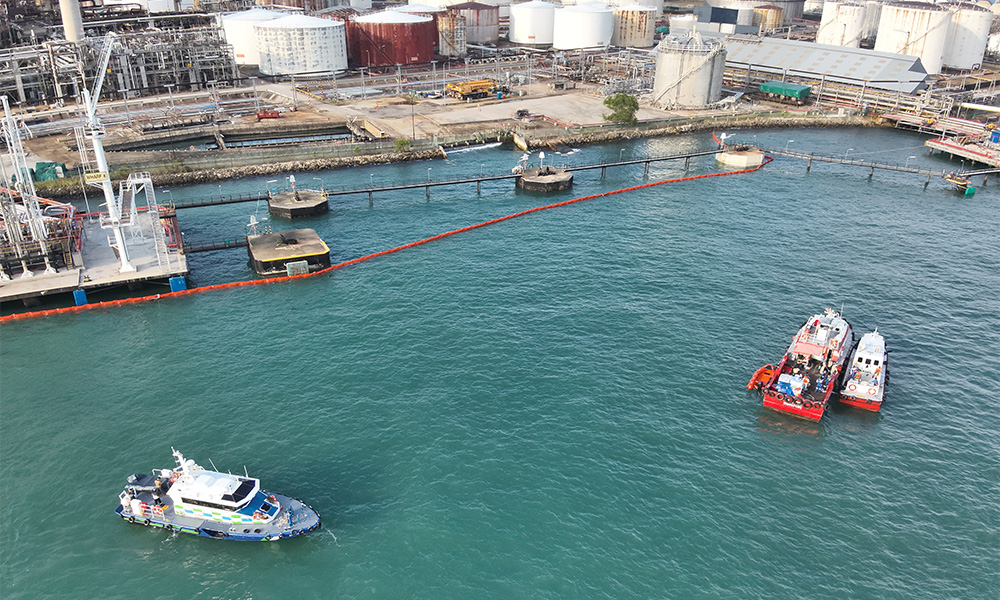
2 MPA craft (left) supporting Shell craft in the clean up operations of the oil sheens taken on 28 Dec 9am

Shell Singapore has been charged over two incidents in 2024 involving oily mixtures discharged into Singapore waters from its facilities at Pulau Bukom, according to media reports on Tuesday (22 September). 

The company faces four charges under the Prevention of Pollution of the Sea Act, including allegations that it failed to report the discharges to the port master immediately. 

The first incident occurred on 20 October 2024, when approximately 40 metric tonnes (mt) of oily mixture was discharged through a hole in a pipeline at the Shell Singapore Energy and Chemicals Park at about 8am.

Shell is accused of reporting the incident to the port master at about 12.55pm, several hours after the discharge occurred. 

The second incident took place between 26 and 28 December 2024. An estimated 485kg to 956kg of oil mixture was discharged into Singapore waters from the same facility.

Shell is accused of failing to report the incident immediately, with notification to the port master made at about 11.50am on 26 December 2024, according to the charges.

Singapore’s pollution-prevention regulations require occupiers of such facilities to report oil or oily-mixture discharges into Singapore waters “without delay and to the fullest extent possible”.

Shell’s representative requested an eight-week adjournment at the 22 September hearing, citing the need to obtain internal instructions, appoint counsel and locate historical records. The company said the business associated with the incidents had been divested in 2025.

The case was adjourned to October. Shell is also facing prosecution by Singapore’s National Environment Agency over the same incidents.

Related: Shell reports up to 40 mt of slop leaked from pipeline into Singapore waters
Related: Singapore: No new oil sightings after recent pipeline leak and bunkering incidents
Related: Singapore: Clean-up of oil from Shell pipeline leak to be completed in days
Related: Singapore: Oil leak at Pulau Bukom stopped; cleanup of oil sheens completed


Photo credit: Maritime and Port Authority of Singapore
Published: 25 September, 2026

Continue Reading

Incident

MPA probes Singapore Strait collision involving fishing vessel, bulk carrier

MPA says there were no reported injuries among the crew of either vessel in the incident involving China-registered fishing vessel “Lu Qing Yuan Yu” and Panama-registered bulk carrier “First Margaux” .
Admin

Published

on

By

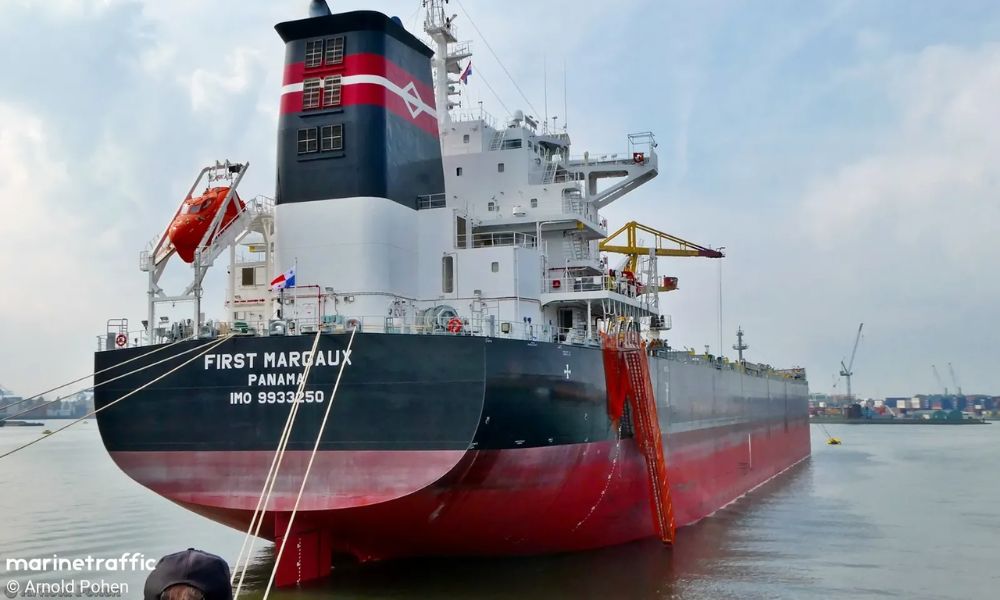
Panama-registered bulk carrier “First Margaux”

The Maritime and Port Authority of Singapore (MPA) on Tuesday (22 September) said it is investigating the incident involving the China-registered fishing vessel Lu Qing Yuan Yu and the Panama-registered bulk carrier First Margaux in the Singapore Strait on 17 September.

MPA said there were no reported injuries among the crew of either vessel or pollution arising from the incident and navigational traffic was not affected.

Videos circulating on social media showed the bulk carrier colliding with the fishing vessel.  

“The fishing vessel took on water during the incident but remained afloat and stable, with the crew taking measures to manage the situation onboard,” MPA said. 

The vessel was subsequently towed to Raffles Reserved Anchorage for assessment. 

Essential crew remained onboard to support the tow, while the Singapore Civil Defence Force supported the transfer of other crew to shore. 

MPA added it also issued navigational safety broadcasts to keep other vessels clear of the tow and escorted the vessel into port with a MPA craft.


Photo credit: MarineTraffic / Arnold Pohen
Published: 25 September, 2026

Continue Reading

Mass Flowmeter

TFG Marine deploys first MFM-equipped bunker barge in Jamaica

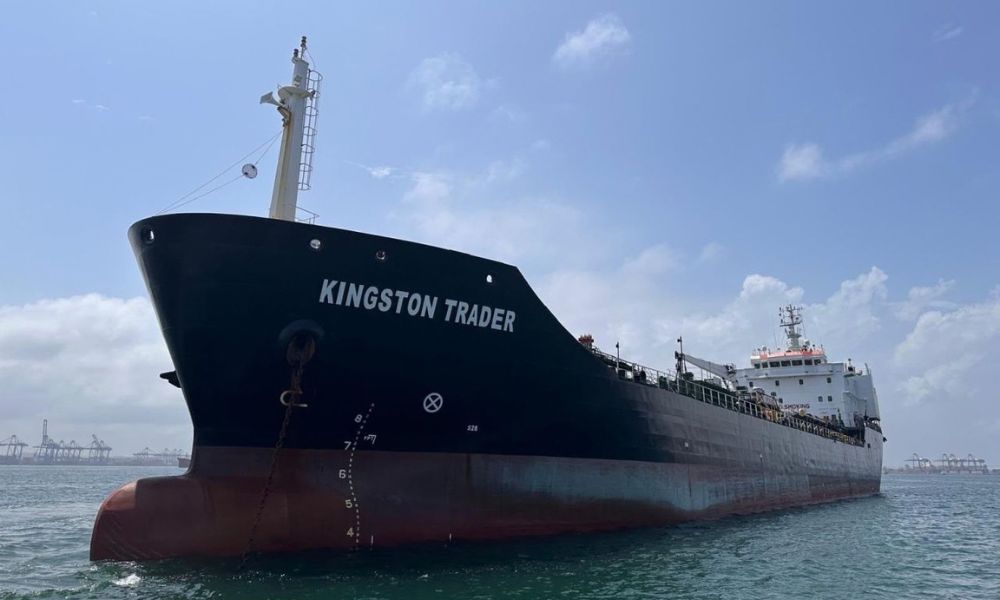
Bunker barge “Kingston Trader” is currently on its way to Jamaica following the successful installation of a Coriolis mass flow meter (MFM) system, certified to ISO 22192.
Admin

Published

on

By

TFG Marine deploys first MFM-equipped bunker barge in Jamaica

Global marine fuel supply and procurement firm TFG Marine on Thursday (24 September) said its bunker barge Kingston Trader is currently on its way to Jamaica following the successful installation of a Coriolis mass flow meter (MFM) system, certified to ISO 22192.

The company said the latest installation brings the proportion of TFG Marine’s fleet equipped with MFMs to approximately 88%, marking another step in the continued rollout of this technology across its global bunkering operations.

“The barge will operate in Jamaica through our local partnership with Scott Petroleum, becoming the first bunkering vessel in the region equipped with this technology and bringing greater accuracy, transparency and assurance to fuel measurement for customers across the Caribbean,” TFG Marine said in a social media post. 

“Together with Scott Petroleum, we look forward to working collaboratively with the Maritime Authority of Jamaica, the The Port Authority of Jamaica, Petrojam Limited and other stakeholders to share our experience of MFM technology, explore its wider benefits and support the continued development of bunkering standards across the region.” 

Manifold Times previously reported TFG Marine continuing to expand MFM technology across its US Gulf Coast bunker fleet with Buffalo B414 and Buffalo B304 being fitted with the equipment. 

Last year, TFG Marine announced it reached a key milestone in its global digitalisation programme with the installation of an ISO 22192-compliant MFM on the Buffalo 404, a barge on time charter from American bunker barge company Buffalo Marine Service Inc.

The installation was part of TFG Marine’s wider strategy to equip close to 90% of its global bunkering fleet with MFMs by 2026 as a commitment towards improving data integrity, streamlining operations and strengthening trust in marine fuel transactions.

Related: TFG Marine advances global MFM rollout with two US Gulf bunker barges
Related: TFG Marine installs first ISO-certified mass flow meter on US Gulf bunkering barge


Photo credit: TFG Marine
Published: 25 September, 2026

Continue Reading

Trending