Connect with us

Technology

Victory Petroleum increases administrative productivity with e-Data Logger

‘We are currently the only bunker supplier using an e-Data Logger application,’ shares spokeswoman.

Admin

Published

on

5da030d23ccdd 1570779346

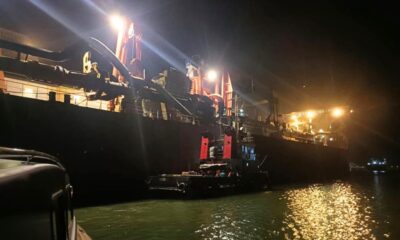
Singapore-based marine gas oil (MGO) supplier Victory Petroleum Trading Pte Ltd has experienced increased administrative productivity through the use of an e-Data Logger on board its bunkering tankers.

The system has done well to complement the transparency offered by mass flowmeters (MFMs) for bunkering, says its Business Development Manager.

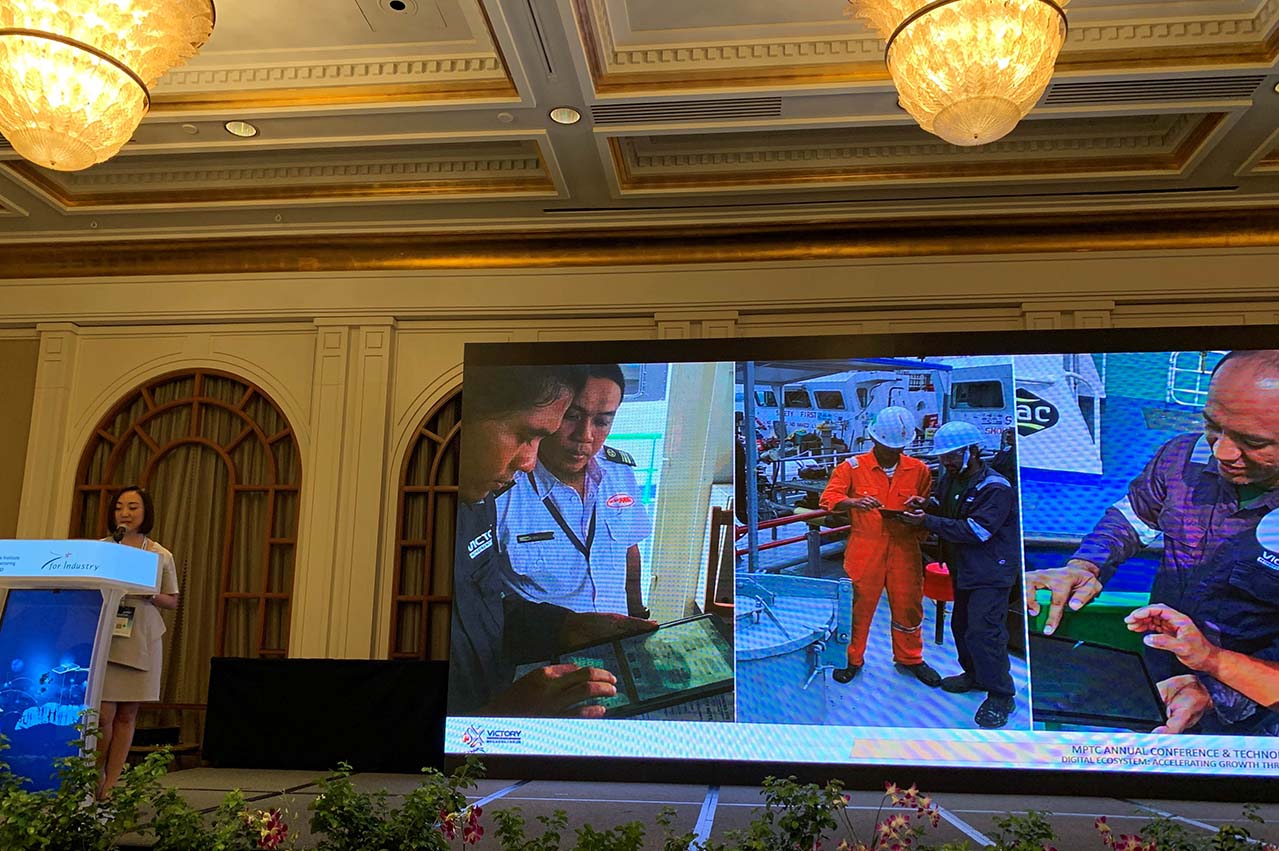
“We are currently the only bunker supplier using an e-Data Logger application,” Naomi Lee told delegates at the Manufacturing Productivity Technology Centre (MPTC) 2019 conference on Wednesday (9 October).

“The application has minimised the administrative processes encountered during our operations. We have very good feedback our customers who are very impressed with this initiative and our crew is much happier now that documentation processes have been simplified.”

Victory Petroleum started test-bedding the e-Data Logger in November 2018 and fully integrated the application in its company system in January 2019.

“Since July 2019, we started to use MFMs on all our tankers during bunker deliveries. With the new change there were amendments in the form but this was not an issue,” explained Lee.

“We have now pre-set certain repetitive fields (eg. seal numbers) so our guys need not spend time keying in the data for every bunker. Also, the e-Data Logger is able to capture the bunkering meter ticket within the bunker delivery note itself for traceability.”

Lee, meanwhile, notes Victory Petroleum’s backend office has also experienced positive changes through the use of the e-Data Logger.

“In the past, we experienced several incidents where forms were written wrongly and due to multiple forms needed to be filled up during a bunkering operation we also have to decipher different handwritings by crew members,” she notes.

“Most of time, this ended up with office staff having to verify reports through phone with crew on board.

“Now, invoices can be prepared based on softcopies and we do not need to go through a stack of paper anymore. Further, we are able to easily retrieve inventory and maintenance reports at any moment.”

Moving forward, Lee said Victory Petroleum is exploring the possibility for its e-Data Logger system to include a ‘live’ feed to customers during bunker delivery, and is planning to link the application to create a seamless workflow from delivery to billing.

“The biggest reward was starting a culture of learning and fostering closer ties between the office and ground staff during this process, not including being able to put time to better use to make work more meaningful for everyone,” she concludes.

Other related: Singapore: MFM bunkering systems for distillates take precision to another level

Photo credit: Victory Petroleum
Published: 11 October, 2019


Continue Reading

Wind-assisted

DNV on wind-assisted propulsion: Managing safety while regulation takes shape

Georgios Kasimatis explains how wind-assisted propulsion systems safety is already being managed through the ISM Code, class standards, and flag state engagement.

Admin

Published

on

By

DNV on wind-assisted propulsion: Managing safety while regulation takes shape

In this Maritime Impact article, published on Monday (8 June), Georgios Kasimatis, Director of Regulatory Affairs at classification society DNV, explained how wind-assisted propulsion systems (WAPS) safety is already being managed through the ISM Code, class standards, and flag state engagement. 

The article explored current operational practices, emerging IMO guidance, and what shipowners can expect as safety frameworks continue to evolve alongside wider adoption of the technology:

Wind-assisted propulsion systems (WAPS) have moved beyond pilot projects. Today, ships equipped with rotors, wings, and sails are trading globally, helping owners cut fuel consumption and emissions while responding to increasingly stringent greenhouse gas requirements. Yet this rapid operational uptake is unfolding faster than binding international regulation is being finalized. 

This creates a familiar but critical tension. The technology is already in service and increasing in scale across the global fleet, but the International Maritime Organization (IMO) is still developing harmonized safety guidance. For operators in the space, that gap can feel like uncertainty or risk. In reality, the regulatory signals around WAPS are becoming clearer, and safety processes are already in place through the International Safety Management (ISM) Code, flag state engagement, and classification standards.  

WAPS are now firmly on the IMO safety agenda 

At the IMO level, wind propulsion and wind-assisted power are now clearly on the safety agenda. The subcommittee on ship design and construction has been formally tasked with developing interim safety guidelines, supported by correspondence group work and progressing towards consideration by the maritime safety committee. While timelines at IMO can be revised, these guidelines are expected to be developed and finalized within the next three to four years.    

Importantly, these discussions are not happening in a vacuum. They sit within a wider IMO effort to ensure that new and emerging technologies and fuels are addressed within a broader, coherent safety framework. For WAPS, key developments so far have included their identification as a technology which requires dedicated safety standards, as well as recognition that existing instruments, such as SOLAS, COLREG, stability codes, and other navigational safety provisions, may not fully capture safety hazards specific to the technologies. 

The prevailing view in discussions to date is that risks appear manageable when systematically identified and controlled. Attention has centred on well-known risks that can be managed with the right design assumptions, operational controls, and human element safeguards. These include visibility and sensor performance, manoeuvrability and controllability, air draft and port interfaces, stability effects, extreme weather exposure, and crew competence.

Existing frameworks already manage WAPS risks 

Crucially, the absence of finalized IMO guidance does not mean that WAPS safety is unmanaged. Far from it. Today’s operational safety baseline rests on three pillars: flag state engagement, class approval using established technical standards, and – most fundamentally – the Safety Management System (SMS) under the ISM Code, a mandatory requirement under SOLAS Chapter IX. 

Class frameworks – including DNV’s technical standard (DNV-ST-0511) – already address core technical aspects, including structural integrity, fatigue, extreme wind loading, system integration, and operational limits. For installations designed and approved against these standards, future IMO guidance is more likely to bring harmonization than to trigger fundamental changes, and existing WAPS installations are therefore unlikely to be significantly affected.  

Where WAPS installations affect visibility in ways that touch SOLAS Chapter V/22, acceptance of equivalent arrangements remains a flag state decision, typically supported by class technical assessments. In practice, guidance such as DNV’s recommended practice for CCTV-based solutions (DNV-CG-0662) is commonly used to support these evaluations. 

Note: The full article by DNV can be read here


Photo credit: DNV
Published: 10 June, 2026

Continue Reading

Mass Flowmeter

Hong Kong backs MFM adoption with voluntary scheme to boost bunkering competitiveness

Hong Kong’s Marine Department launched the Quality Bunker Operator Scheme to encourage bunker operators to install and use mass flow meter systems on their bunker vessels.

Admin

Published

on

By

RESIZED EH dual mfm setup

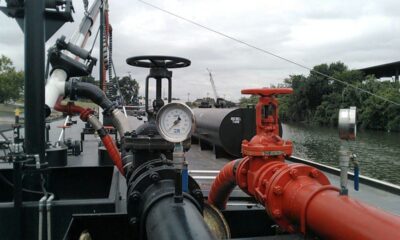
Hong Kong’s Marine Department (MD) on Wednesday (3 June) launched the Quality Bunker Operator Scheme to encourage bunker operators to install and use mass flow meter systems (MFM systems) on their bunker vessels.

MD said the scheme aims to enhance Hong Kong’s bunkering service quality and the competitiveness of Hong Kong ports, thereby further consolidating Hong Kong’s position as an international maritime centre and a major bunkering port.

Under the Scheme, bunker operators of traditional maritime fuel and biodiesel that install and use MFM systems on their bunker vessels, with the MFM systems inspected and certified by an accredited body in accordance with the International Organization for Standardization’s ISO 22192 Standard or equivalent requirements, can apply to the MD for inclusion in the scheme’s “List of Quality Bunker Vessels”, provided they meet the relevant technical and operational requirements. 

Details of the bunker vessels successfully included in the List will be published on a dedicated page on the MD’s website for reference by shipping companies and relevant stakeholders.

Participation in the Scheme is voluntary. In addition to receiving recognition from the MD, participating bunker operators will benefit from enhanced corporate image and competitiveness through the adoption of MFM systems, thereby boosting customers’ confidence and helping to create new business opportunities.

 A spokesman for the MD, said: “As an international maritime centre supported by our country, Hong Kong has a strategic location adjacent to major international fairways. Coupled with years of development in marine fuel bunkering, Hong Kong possesses rich experience and talent in the field. For many years, Hong Kong has consistently ranked as the seventh-largest bunkering port globally, the second-largest in our country, and the largest in the Greater Bay Area, providing reliable and competitive fuel bunkering services to ocean-going vessels from around the world. 

“As the international shipping industry has an increasing demand for accuracy and transparency in bunkering services, service quality and measurement precision in bunkering operations have become important indicators of a bunkering port’s competitiveness. The Scheme will enhance bunkering accuracy and transparency, further enhancing the quality of Hong Kong’s bunkering services.

The spokesman added that comprehensive port services are one of Hong Kong’s key advantages as an international maritime centre.

“We will also mandate the use of MFM systems on all methanol bunker vessels this year to ensure that Hong Kong continues to provide high-quality bunkering services in the era of green maritime fuels.” 

Note: The application form for the Scheme can be found on the MD’s website. Interested bunker operators can download the application form from the website or contact the MD’s Green Maritime Fuel Team via email ([email protected]) for details.


Photo credit: Manifold Times
Published: 4 June, 2026

Continue Reading

Emissions reporting

StormGeo and OceanScore link emissions data, compliance workflows

Cooperation combines StormGeo’s expertise in operational vessel and emissions data with OceanScore’s expertise in emissions compliance workflows across EU ETS, FuelEU Maritime and UK ETS requirements.

Admin

Published

on

By

StormGeo and OceanScore link emissions data, compliance workflows

Weather intelligence and decision support solutions provider StormGeo and Hamburg-based technology platform OceanScore on Wednesday (3 June) said they have deepened their ongoing cooperation through the signing of a collaboration agreement during Posidonia 2026 in Athens on 2 June.

The cooperation combines StormGeo’s expertise in operational vessel and emissions data with OceanScore’s expertise in emissions compliance workflows across EU ETS, FuelEU Maritime and upcoming UK ETS requirements.

Together, the companies aim to help shipping companies seamlessly navigate increasing regulatory complexity more efficiently — from emissions reporting and data validation to compliance exposure management, pooling and financial settlement.

As emissions regulation becomes an increasingly important part of commercial shipping operations, the need for reliable operational data and streamlined compliance processes continues to grow. The cooperation between StormGeo and OceanScore is designed to support shipping companies with more connected, transparent and actionable processes across operational and commercial teams.

“From the outside, companies like StormGeo and OceanScore may sometimes be perceived as competitors because both operate around emissions and compliance workflows,” said Albrecht Grell, Managing Director at OceanScore. 

“But in reality, the industry increasingly needs both perspectives working together: trusted operational emissions data on one side and commercial compliance execution on the other. Our cooperation reflects that shipping companies are no longer looking for isolated solutions — they need connected processes, automated across different systems and reliable decision-making throughout the full compliance chain.”

By connecting validated operational emissions data with commercial compliance management, the cooperation supports workflows across:

  • emissions reporting and validation 
  • compliance management across EU ETS, FuelEU Maritime and upcoming UK ETS requirements
  • exposure visibility and cost transparency
  • pooling, settlement and financial processes 

The cooperation also aims to improve commercial transparency and coordination across operational and commercial stakeholders.

“StormGeo plays a central role in helping shipping companies turn operational vessel and emissions data into trusted, decision-ready insights,” said Espen Martinsen, Chief Commercial Officer at StormGeo. 

“As emissions regulations become more complex, this data is essential for transparent and efficient compliance management. By working with OceanScore, we can help customers connect StormGeo’s validated operational data with commercial compliance processes, creating a more integrated and practical approach to emissions management.”

The signing ceremony took place at the StormGeo booth during Posidonia 2026 in Athens and was attended by representatives from both companies.

Both companies expect the cooperation to continue evolving alongside upcoming regulatory developments, including FuelEU Maritime, EU ETS, the upcoming UK ETS and future emissions-related frameworks affecting global shipping.


Photo credit: StormGeo
Published: 4 June, 2026

Continue Reading

Trending