Connect with us

Emissions reporting

StormGeo and OceanScore link emissions data, compliance workflows

Cooperation combines StormGeo’s expertise in operational vessel and emissions data with OceanScore’s expertise in emissions compliance workflows across EU ETS, FuelEU Maritime and UK ETS requirements.

Admin

Published

on

StormGeo and OceanScore link emissions data, compliance workflows

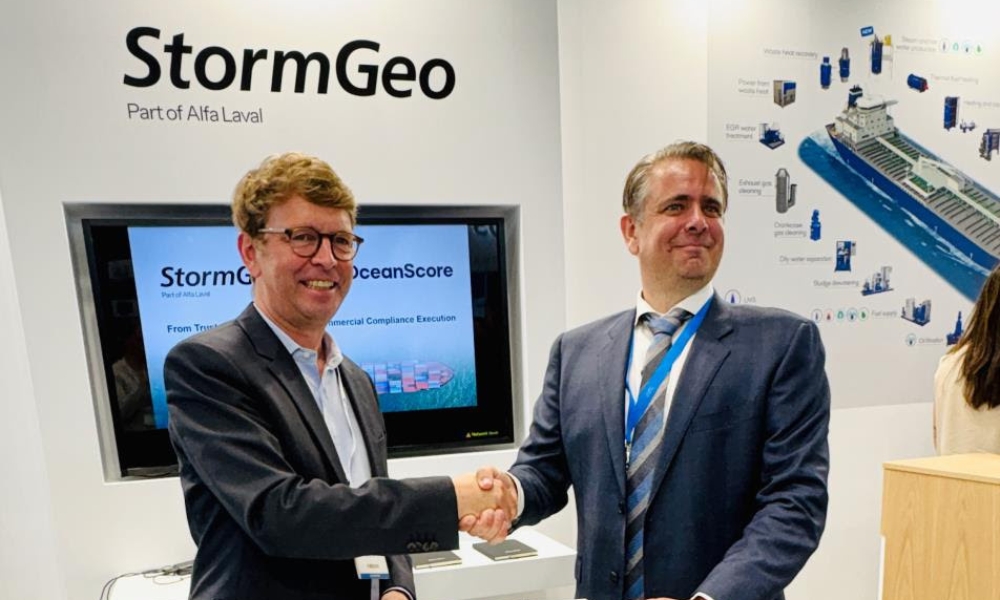
Weather intelligence and decision support solutions provider StormGeo and Hamburg-based technology platform OceanScore on Wednesday (3 June) said they have deepened their ongoing cooperation through the signing of a collaboration agreement during Posidonia 2026 in Athens on 2 June.

The cooperation combines StormGeo’s expertise in operational vessel and emissions data with OceanScore’s expertise in emissions compliance workflows across EU ETS, FuelEU Maritime and upcoming UK ETS requirements.

Together, the companies aim to help shipping companies seamlessly navigate increasing regulatory complexity more efficiently — from emissions reporting and data validation to compliance exposure management, pooling and financial settlement.

As emissions regulation becomes an increasingly important part of commercial shipping operations, the need for reliable operational data and streamlined compliance processes continues to grow. The cooperation between StormGeo and OceanScore is designed to support shipping companies with more connected, transparent and actionable processes across operational and commercial teams.

“From the outside, companies like StormGeo and OceanScore may sometimes be perceived as competitors because both operate around emissions and compliance workflows,” said Albrecht Grell, Managing Director at OceanScore. 

“But in reality, the industry increasingly needs both perspectives working together: trusted operational emissions data on one side and commercial compliance execution on the other. Our cooperation reflects that shipping companies are no longer looking for isolated solutions — they need connected processes, automated across different systems and reliable decision-making throughout the full compliance chain.”

By connecting validated operational emissions data with commercial compliance management, the cooperation supports workflows across:

  • emissions reporting and validation 
  • compliance management across EU ETS, FuelEU Maritime and upcoming UK ETS requirements
  • exposure visibility and cost transparency
  • pooling, settlement and financial processes 

The cooperation also aims to improve commercial transparency and coordination across operational and commercial stakeholders.

“StormGeo plays a central role in helping shipping companies turn operational vessel and emissions data into trusted, decision-ready insights,” said Espen Martinsen, Chief Commercial Officer at StormGeo. 

“As emissions regulations become more complex, this data is essential for transparent and efficient compliance management. By working with OceanScore, we can help customers connect StormGeo’s validated operational data with commercial compliance processes, creating a more integrated and practical approach to emissions management.”

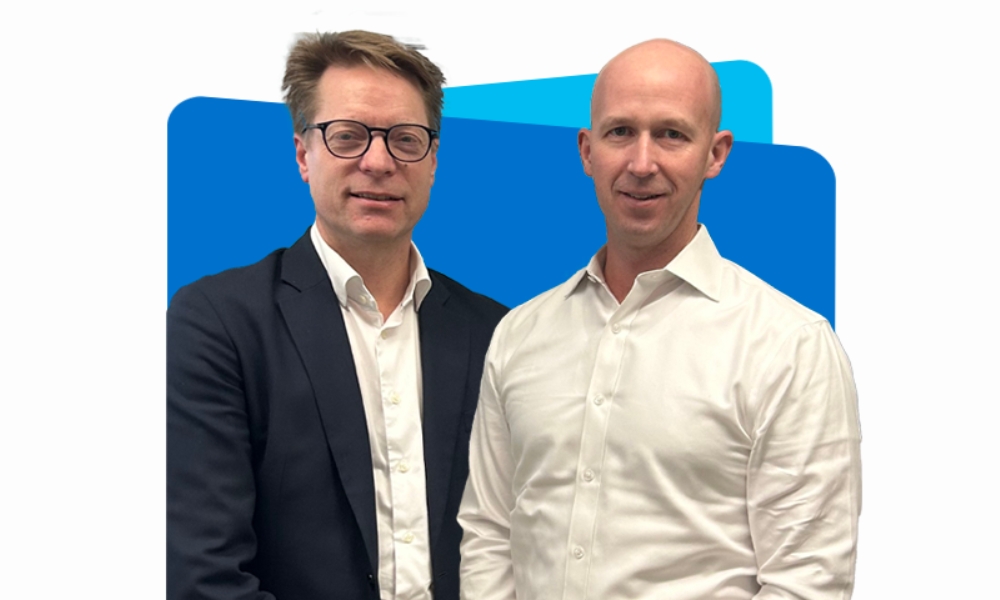
The signing ceremony took place at the StormGeo booth during Posidonia 2026 in Athens and was attended by representatives from both companies.

Both companies expect the cooperation to continue evolving alongside upcoming regulatory developments, including FuelEU Maritime, EU ETS, the upcoming UK ETS and future emissions-related frameworks affecting global shipping.


Photo credit: StormGeo
Published: 4 June, 2026

Continue Reading

Technology

StormGeo integrates Alfa Laval sensor data with Voyage Intelligence platform

Enhancing voyage efficiency is seen as the primary use case for sensor data in the short term, with the initial focus mainly on marine fuel consumption, according to StormGeo’s VP Shipping Petter Andersen.

Admin

Published

on

By

StormGeo launches new premium advisory offering with emission compliance reporting

Weather intelligence and decision support solutions provider StormGeo on Monday (1 June) said the company is expanding its Voyage Intelligence platform by integrating sensor data from shipboard energy consumers to deliver real-time insights for enhanced technical performance under a partnership with its parent Alfa Laval.

The joint project marked a significant advance in digitalisation of shipboard equipment through automated collection of engine and hull data and integration into a wider digital ecosystem to give a clearer overview and better understanding of vessel performance.

StormGeo and Alfa Laval are combining their resources to provide hardware installation, data collection and analysis, performance advice and client support as part of a unique, all-inclusive delivery from a single company.  

StormGeo’s VP Shipping Petter Andersen, said: “The goal is to provide a comprehensive, integrated solution for shipping companies to simplify data collection and harvest more value by using actionable insights from sensor data to enable faster and better-informed voyage decision-making.”

Enhanced data-driven insight into vessel performance represents an enabler for operational efficiencies and fuel savings to boost sustainability through more effective decisions, with AI-driven analytics seen as a tool to support rather than replace human judgment to maintain the focus on safety as top priority.

“Ship operators need actionable insights, not just data. Continuous real-time monitoring helps transform sensor and performance data into smarter operational decisions,” Andersen said.

Alfa Laval, a supplier of ship equipment and specialist in real-time monitoring, is taking advantage of recent advances in onboard connectivity to apply its expertise in sensor data collection to shipping through the tie-up with StormGeo, a global provider of weather intelligence and smart digital solutions for voyage optimization.

Enhancing voyage efficiency is seen as the primary use case for sensor data in the short term, with the initial focus mainly on fuel consumption, according to Andersen.

Real-time data increases visibility of hull and main/auxiliary engine performance to inform proactive efficiency measures such as hull cleaning or engine tuning, while also providing a basis for long-term analysis and benchmarking at both individual ship and fleet level.

“The innovative element of this integration is that we are assimilating equipment sensor data with an array of datasets covering weather, route optimization, voyage planning and navigation, emissions reporting, and bunker planning and procurement accessible via a unified user interface. This gives a more holistic overview for operational decisions,” according to Andersen.

StormGeo is the sole contracting party for the integrated solution, while accessing resources and technology from Alfa Laval’s global network. The company now sees the opportunity for future application of sensor data to a wide range of operational, safety, commercial and environmental use cases in maritime, in partnership with third-party data providers.

In particular, Andersen highlighted the potential for automation of noon reporting based on streaming of fuel consumption data to replace time-consuming manual processes – such as email and fax – for meeting SOLAS and other reporting requirements. A further possible application is condition-based monitoring of equipment for proactive maintenance.

This is part of Alfa Laval’s broader strategy to expand sensor data collection across multiple ship systems to realize an Internet of Things (IoT) onboard as part of its cloud-based ALIoT platform, in line with the trend towards increased connectivity in shipping and smarter vessel operations.

Alfa Laval’s Head of Vessel Operations, Jesper Boman, said: “There’s a lot of potential to further digitalize, giving operators real-time insights that help them make better decisions, reduce risk, improve reliability, and avoid unnecessary costs.

“At the same time, implementing and using digital tools needs to be done with robust cybersecurity measures in place. Aligned with the international standards, to keep our maritime assets safe.”


Photo credit: StormGeo
Published: 2 June, 2026

Continue Reading

EU ETS

DNV: Making emissions data verification manageable at scale

DNV’s article features its customers sharing how a proactive, digital approach to emissions data verification is helping them manage reporting more efficiently and at scale to ensure compliance under FuelEU Maritime.
Admin

Published

on

By

DNV flag

Classification society DNV recently published a Maritime Impact article featuring its customers sharing how a proactive, digital approach to emissions data verification is helping them manage reporting more efficiently and at scale to ensure compliance under FuelEU Maritime: 

The FuelEU Maritime regulation has been in force since 1 January 2025, and the due date for verification of the first year’s emissions data at the end of April is imminent.

FuelEU Maritime adds reporting complexity

FuelEU Maritime (FEUM) has brought the number of emissions reporting obligations for ships operating in European waters to four, along with IMO DCS as well as EU MRV and ETS. The UK’s own MRV and ETS reports and any pooling arrangements under FEUM add further complexity. “Customers are finding it challenging to meet the verification due date,” says Conrad Golebski, Global Sales Manager, MRV, DCS, and FuelEU Maritime at DNV. “But non-compliance results in costs, which can be quite high for vessels that do not meet the emission targets.”

Data quality issues are widely underestimated

Preparing the document of compliance for the regulatory authorities has been an annual exercise – and a very stressful one, emphasizes Golebski. The annual verification process is often challenging, as the extent of data quality issues tends to be underestimated and only becomes apparent after year-end submissions, leading to a growing number of correction requests during verification for shipowners.

“Rectifying these issues can be a complex and time‑consuming process, involving an intense communication exchange before verification can proceed.”

There are two types of error that compromise data quality, says Golebski. “Human data entry errors must be corrected one by one. Systematic errors will affect the data of the entire fleet, and detecting and correcting them as early as possible will make a big difference towards minimizing the rectification effort.”

Continuous emissions data submission enables early, high quality verification

 “Clients who choose to upload their ships’ emissions data to the OVD Admin continuously throughout the year instead of waiting until January can benefit from our quality checking algorithms and make the necessary corrections as they go,” Golebski points out. “This will make the actual verification step the following spring much more comfortable and avoid missing the submission deadline.”

From DNV’s data warehouse, the data can be distributed to the client-requested services, such as Fleet Status, Emissions Insight, the DCS-, MRV-, and FEUM-specific applications, or Emissions Connect. 

“It is this centralized digital concept that makes our system so convenient,” says Golebski. 

“We maintain and update our infrastructure constantly to account for client needs and improve user-friendliness.

Note: The full DNV article can be found here


Photo credit: DNV
Published: 25 May, 2026

Continue Reading

Emissions reporting

Veson taps Veracity by DNV for verified emissions reporting

Product integration connects Veson’s IMOS with the Veracity platform, enabling emissions figures confirmed by DNV to flow directly into IMOS.
Admin

Published

on

By

Veson taps Veracity by DNV for verified emissions reporting

Maritime data and freight management solutions provider Veson Nautical (Veson), on Monday (27 April) has announced a strategic partnership with independent industry cloud platform, Veracity by DNV, to bring verified emissions data into the heart of operational and commercial shipping workflows. 

The product integration connects Veson’s IMOS with the Veracity platform, enabling emissions figures confirmed by DNV to flow directly into IMOS. Within IMOS, these figures are clearly tagged as verified and integrated directly into voyage financials and P&L — reducing reliance on disconnected systems and manual re-entry.   

The integration addresses the growing need for maritime operators to incorporate compliance and automated data quality checks into daily voyage decisions, P&L tracking, and regulatory reporting. By embedding these inputs directly into live P&L calculations, shipping companies can improve the accuracy of voyage results, reach settlement faster, and reduce audit risk. 

“This collaboration between Veson and Veracity by DNV is an exciting development for us at Hafnia,” said Michael Rasmussen, General Manager, Pool Management at Hafnia. 

“We have historically spent significant time toggling between systems to reconcile emissions data. Having verified, accurate data in one place has the potential to streamline that workflow and make it easier for our teams to work with trusted figures in their day-to-day operations.”  

Looking ahead, the partnership will further expand into an end-to-end emissions reporting and verification workflow. Operational vessel data can be automatically transferred from IMOS to DNV’s Veracity platform, where it can be quality-assured in line with the Operational Vessel Data (OVD) standard and passed to DNV’s verification services in Emissions Connect. 

This will provide joint customers with a continuous data flow from data collection to verified emissions data, which can be used to meet evolving frameworks such as EU ETS, FuelEUMaritime, and additional commercial use cases.

“The industry is moving toward a model where verified data is central to both compliance and commercial performance,” said Sean Riley, President and Chief Operating Officer at Veson Nautical. “With DNV we are connecting those two worlds, bringing trusted emissions data directly into the workflows that drive day-to-day decisions and voyage P&L outcomes.” 

“Together with Veson, we are demonstrating how verified data can unlock new value in commercial operations,” said Mikkel Skou, Executive Director, Veracity by DNV. 

“This partnership is a strong example of our envisioned maritime data ecosystem in action; a collaboration that enables our common customers to use their data as a trusted foundation for better decisions, stronger collaboration, and more efficient operations.”  

The partnership builds on Veracity by DNV’s extensive data network, which has connectivity to more than 65,000 vessels worldwide through automated access to verified data. As part of Veson’s expanding Platform Partner Network, DNV extends that reach into the core system where maritime commerce is managed — giving shipping companies access to trusted data within a more connected ecosystem.


Photo credit: Veson Nautical
Published: 28 April, 2026

Continue Reading

Trending