Connect with us

Events

Singapore: APM 2026 to highlight future bunker fuels, electric and hybrid vessels

Asia Pacific Maritime will return for its 19th instalment, from 25 to 27 March 2026 at Marina Bay Sands, Singapore, with its largest edition to date.

Admin

Published

on

Singapore: APM 2026 to highlight future bunker fuels, electric and hybrid vessels

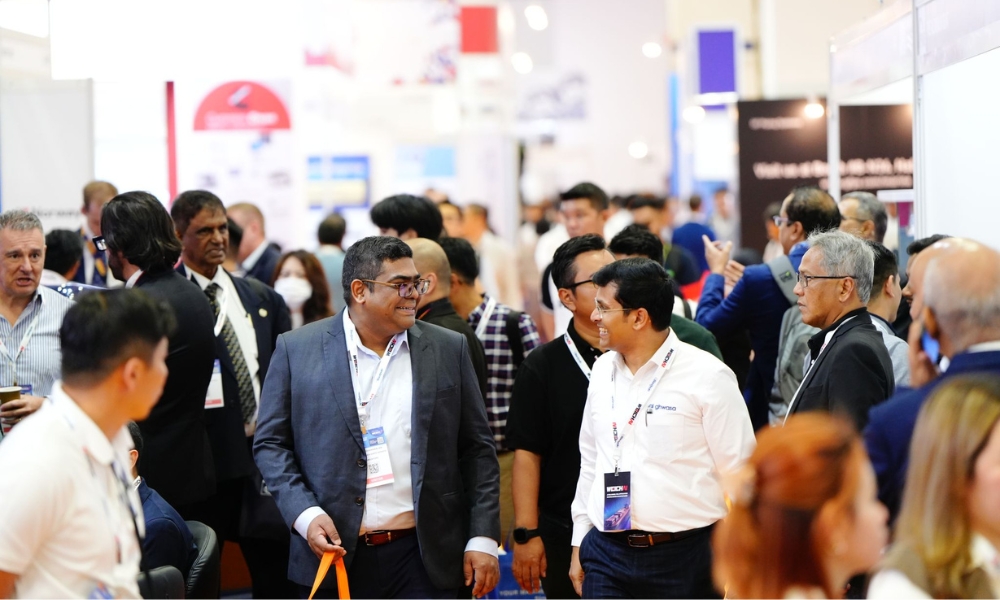
Asia Pacific Maritime (APM) will return for its 19th instalment, from 25 to 27 March 2026 at Marina Bay Sands, Singapore, with its largest edition to date, according to its organiser RX Global on Monday (26 January). 

Anchored by the theme “Future of Vessels, Solutions for Tomorrow”, APM 2026 is set to convene the global leaders to examine how the next energy technologies and innovation are driving the future of maritime.

As decarbonisation targets intensify and digital innovation accelerates, the maritime sector is entering a decisive phase of energy transition. Energy is now the force behind the progress of maritime decarbonisation, including newbuild specifications, fuel strategies, operational optimisation, and the capital and contracts that back them.

Driven by this momentum, APM 2026, opening with a welcome address from Guest-of-Honour Ang Wee Keong, Chief Executive, Maritime and Port Authority of Singapore (MPA), will present a sold-out exhibition featuring over 700 exhibitors, featuring 18 pavilions across six exhibition halls. 

The exhibition spotlights solutions tied to the use of alternative fuels, electric and hybrid technologies, wind assisted propulsion and solutions influencing decarbonisation. 

On the conference side, APM will welcome close to 100 global speakers, covering key topics including Future Fuels & Zero Emission Ships, Next-Gen Shipbuilding: Design, Build, Retrofit & Repair; Electric & Hybrid Power; Finance, Risk & Insurance for the Future Fleet; Maritime Cybersecurity; and Smart & Autonomous Ships.

Weichai, one of the world’s largest industrial equipment manufacturers, commented, “APM is the largest meeting place in Asia and has played a pivotal role in accelerating our growth across the region, since establishing our presence in Singapore. Returning for our tenth appearance at APM in 2026, we look forward to presenting our largest and most ambitious showcase yet.”

“Earlier this month, we celebrated the successful completion of a 1,000-hour sea trial of Pinnacle Marine’s (Singapore) President 100. The vessel, operated by Prestige Ocean Pte Ltd, is the first of its kind vessel powered entirely by 100% biodiesel made from renewable feedstock and by B100 engines manufactured by Weichai. 

This milestone will be commemorated during a testing certification ceremony alongside partners NTU’s Maritime Energy & Sustainable Development Centre of Excellence (MESD) and the China Classification Society Singapore at APM, and we are excited to feature our B100 product series at our booth.”

Electrification continues to gain traction as one of the most immediate pathways to reducing emissions at sea, and battery systems, in particular, are enabling shipowners and operators to improve efficiency without compromising operational reliability.

“Battery electrification will help ship owners and operators to immediately improve vessel efficiency and reduce fuel consumption and GHG emissions. The vessel’s power plant needs to be flexible and adaptable, so that it can still use traditional combustion engines to support the demand but also draw on batteries, which support the power plant to improve overall efficiency. 

As such, future-proof design should already be included at the new-build phase,” said Jan-Erik Räsänen, Chief Technology Officer at Foreship, part of RINA.

Reflecting this shift, APM 2026 will feature leading electric and battery technology providers, including AYK Energy, CALB, Eve Energy, MT Power, Roypow, and Shenzhen Racern Technology. 

To support shipowners and operators more closely, APM 2026 introduces a new feature – the Electric & Hybrid Consultation Lounge. The lounge brings together experts from key industry stakeholders, including the Maritime Battery forum, CharIN, the International Electric Maritime Association (IEMA) and the Zero Emissions Ship Technology Association (ZESTAs), to provide practical guidance in achieving more efficient operations. Discussions will focus on four critical areas shaping adoption: high-power charging in e-mobility, maritime battery systems, next-generation electric marine technologies and zero-emission shipping.

In the renewables aspect, wind propulsion is re-emerging as a viable decarbonisation pathway for deep-sea shipping, and APM will present cutting-edge equipment in wind propulsion. 

It was reported by Clarksons that there were 89 vessels adorned with a wind-propulsion system in December 2025, and the International Windship Association (IWSA) commented in the same month that there are indications of up to 130 of these vessels under construction, scheduled for delivery by 2028. 

In response, APM 2026 spotlights wind-enabled solutions that can propel future fleets, with exhibitors including Chantiers de l’Atlantique (CDL), CWS Morel, Dealfeng New Energy Technology, Econowind BV and Norsepower Oy Ltd. 

Visitors can also expect prominent exhibitors who are advancing alternative fuels, sustainable engine solutions, and technology that drives operational efficiency, including Advanced Polymer Coatings, DAIHATSU INFINEARTH, International Paint, Mitsubishi Heavy Industries Engine System Asia, Nippon Paint Marine, PPG Coatings, Rolls-Royce Solutions Asia Pte Ltd (MTU), Siemens Energy, VINSSEN, Volvo Group, Yanmar Power Solutions and ZF Friedrichshafen AG.

As innovative vessel concepts move from pilots to live deployment, the three-day conference focuses on how the maritime industry can translate ambition into action. Keynote panel “The Maritime State of Play & What’s Next for Asia” will bring together leadership perspectives on decarbonisation, digitalisation, and shifting trade flows to answer key questions that can shape the industry’s next decade: What strategic bets on technology and fuel innovation will deliver real competitive advantage? What role will Asia play in setting global standards and driving the next wave of maritime innovation?

Keynote panellist Joey Chua, Vice-Chair, Digitalisation Committee, Singapore Shipping Association (SSA), said: “As the demand for shipping grows, it becomes clear that digitalisation plays a crucial role beyond a tool for efficiency. Leveraging digital tools becomes a key factor in capability-building, and for real progress to be made, adoption needs to happen across the maritime ecosystem, involving key stakeholders such as shipowners, port operators, regulatory bodies and more.

“I look forward to the discussions at APM that will explore the practical pathways to accelerate the adoption of digital tools, while remaining commercially viable, within Asia’s maritime community.”

The APM conference comprises panel discussions and fireside chats on breakthrough technologies and trends set to define the next decade of maritime. 

Note: The full conference programme, including the list of topics and notable speakers, can be found here.


Photo credit: RX Global
Published: 27 January, 2026

Continue Reading

Bunker Fuel

Singapore: Bunker fuel sales drops by 6.8% on year in May 2026

4.55 million mt of various marine fuel grades were delivered at the world’s largest bunkering port in May, down from 4.88 million mt recorded during the similar month in 2025, according to MPA data.

Admin

Published

on

By

Singapore: Bunker fuel sales drops by 6.8% on year in May 2026

Sales of marine fuel at Singapore port dropped by 6.8% on year in May 2026, according to data from the Maritime and Port Authority of Singapore (MPA).

In total, 4.55 million metric tonnes (mt) (exact 4,548,000 mt) of various marine fuel grades were delivered at the world’s largest bunkering port in May, down from 4.88 million mt (4,878,100 mt) recorded during the similar month in 2025.

Deliveries of marine fuel oil, low sulphur fuel oil, ultra low sulphur fuel oil, marine gas oil and marine diesel oil in May (against on year) recorded respectively 1.79 million mt (-5.3% from 1.89 million mt), 2.29 million mt (-6.5% from 2.45 million mt), zero (-100% from 1,200 mt), 600 (35.2% from 1,700 mt) and zero (from zero).

Singapore: Bunker fuel sales drops by 6.8% on year in May 2026

Bio-blended variants of marine fuel oil, low sulphur fuel oil, ultra low sulphur fuel oil, marine gas oil and marine diesel oil in May, (against on year) recorded respectively 11,600 mt (-71.6% from 40,900 mt), 36,400 mt (-62.1% from 96,100 mt), zero (from zero), zero (from zero) and zero (from zero). B100 biofuel bunkers, introduced in February last year, recorded 12,800 mt (+573.7% from 1,900 mt). 

LNG and methanol sales were 70,300 mt (+56.2% from 45,000 mt) and zero (from zero) respectively. There were no recorded sales of ammonia for the month and so far since 2025.


Photo credit: Maritime and Port Authority of Singapore
Published: 15 June, 2026

Continue Reading

Bunker Fuel Quality

Bunker flash: High concentrations of catalytic fines, elevated acid numbers found in Singapore

Maritec-Naias issued an alert regarding high levels of catalytic fines and elevated acid numbers present in multiple VLSFO bunker samples from deliveries in the Singapore port.

Admin

Published

on

By

RESIZED Hans Reniers on Unsplash

Bunker fuel testing and marine surveying business Maritec-Naias on Friday (12 June) issued an alert regarding high levels of catalytic fines and elevated acid numbers present in multiple VLSFO bunker samples from deliveries in the Singapore port: 

During the period of 20 May 2026 and 02 June 2026, Maritec Pte. Ltd. (hereafter referred to as Maritec-Naias) conducted testing on five samples representing Very Low Sulphur Fuel Oil (VLSFO) deliveries from two suppliers in the Singapore port. The analyses revealed Aluminium and Silicon (Al+Si) concentrations ranging from 61 mg/kg to 68 mg/kg.

It is important to note; these values exceed the ISO 8217:2010/2017 specification limit of 60 ppm but remain within the permissible tolerance limit of 72 ppm under ISO 4259 for a single test result. In this regard, Catalytic Fines content, (Aluminium+Silicon), above 60 ppm is regarded as high. Of the five samples, three originated from one supplier, while the remaining two were from another.

Aluminium and Silicon constitute the principal classes of abrasive solids in fuels. Elevated concentrations of such particles at the engine inlet can precipitate abnormal wear and tear of fuel system components, piston rings, and cylinder liners. To safeguard against this, many engine manufacturers stipulate a maximum threshold of 15 mg/kg Al+Si at the engine inlet.

The primary method of mitigating Catfines is through an efficiently operating fuel purification system. Monitoring Aluminium and Silicon levels both before and after centrifugation provides a reliable measure of the system’s effectiveness in removing these contaminants.

During a similar period, Maritec-Naias also tested fifteen bunker fuel samples representing VLSFO that exhibited elevated Acid Numbers, ranging from 2.0 mg KOH/g to 2.5 mg KOH/g. While these values remain within specification limits, they are nonetheless considered at higher side. Elevated Acid Numbers may stem from contamination with acidic compounds such as Phenolic compounds and Alkyl Resorcinols, often associated with Estonian Shale Oil. Such contaminants can lead to operational complications including sludge formation, fuel pump seizures, and compromised injection equipment cleanliness.

Maritec-Naias Recommendations

  • High Catfines monitoring: Maritec-Naias advises collecting samples at critical points within the fuel system — including the fuel oil tank transfer pump, before and after centrifuge, service tank, and after fine-filter — to evaluate the efficiency of fuel cleaning.
  • Elevated Acid Numbers: For fuels with elevated Acid Numbers, Maritec-Naias recommends conducting Gas Chromatography-Mass Spectrometry (GC-MS) using the Solid Phase Extraction (SPE) method to identify the specific acidic compounds present or upgrading your marine fuel testing package to MFTP Plus, which enables pre-emptive monitoring to detect major harmful substances prevalent in the market, such as Cashew Nut Shell Liquid (CNSL), Phenolic compounds and Alkyl Resorcinols that cause damage to equipment.

Maritec-Naias states, while all data and findings presented in this document are true, it does not reflect on the overall quality of fuel being supplied in Singapore region. If you intend to bunker at this region, please request for a Certificate of Quality (CoQ) prior to loading.


Photo credit: Hans Reniers on Unsplash
Published: 15 June, 2026

Continue Reading

Incident

Three dead after supply boat sinks following collision off Pasir Panjang Terminal

PCG recovered three bodies from the waters after a supply boat sank off Pasir Panjang Terminal on 12 June 2026 at about 9.30am following a collision with a landing craft.

Admin

Published

on

By

RESIZED bunker tanker singapore

The Maritime and Port Authority of Singapore (MPA) on Friday (12 June) said a supply boat sank off Pasir Panjang Terminal at about 9.30am after colliding with a landing craft. 

MPA, Police Coast Guard (PCG), and SCDF Marine Division, immediately activated their crafts to the incident site and commenced search and rescue operations.

“The landing craft is stable with no reported injury to crew on board,” MPA said in a statement. 

PCG has recovered three bodies from the waters, believed to be deceased crew members of the sunken supply boat. Search and rescue operations, including diving operations, are ongoing to determine if there are other crew members from the supply boat missing.

“Port operations have not been affected. Navigational broadcasts have been issued advising vessels to keep clear of the incident area,” it added.

“Investigations into the incident are ongoing.” 


Photo credit: Manifold Times
Published: 15 June, 2026

Continue Reading

Trending