Connect with us

Alternative Fuels

BAR Technologies: Shipping must stop waiting for future bunker fuels to decarbonise

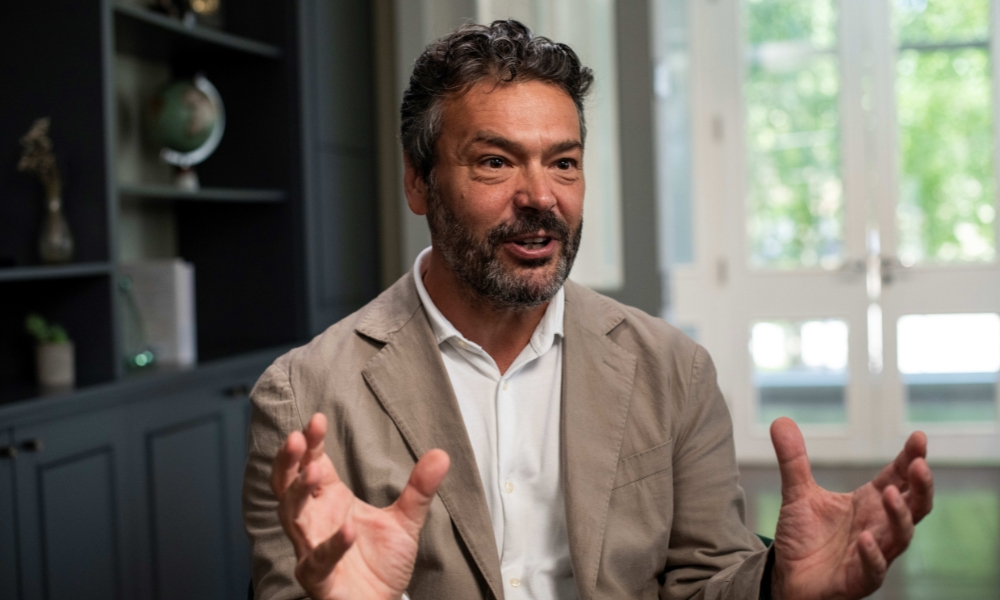
‘Shipping needs to stop treating decarbonisation as something that only begins when future fuels arrive or every detail of the IMO’s Net-Zero Framework is settled,’ says John Cooper, CEO of BAR Technologies.

Admin

Published

on

IMO move signals pivotal regulatory shift on wind propulsion, says BAR Technologies

BAR Technologies on Wednesday (29 July) said while the shipping industry is right to plan for long-term fuel pathways, too much of the decarbonisation debate remains focused on what may become available in the future rather than what can be deployed now.

The company said this in response to a new study by EY Greece warning that shipping’s transition to net zero will be uneven and capital intensive, constrained by factors including alternative fuel availability, infrastructure, shipyard capacity, access to finance and fragmented commercial incentives.

The EY study identifies energy efficiency and operational measures as among the most practical near-term actions available to shipping. BAR Technologies argued that wind propulsion, already delivering measurable fuel and emissions savings on commercial vessels, must be recognised as a proven part of that immediate response.

BAR Technologies said wind propulsion has also passed an important market milestone. 

According to the International Windship Association, more than 100 large commercial cargo ships, representing over five million tonnes of deadweight capacity, are now equipped to harness wind power. That is almost five times the number recorded in May 2022, clear evidence that the technology is moving into the commercial mainstream. 

BAR Technologies are playing a significant part in this transition: By the end of 2026, 10 vessels will be operating with 23 WindWings® installed, giving a combined saving of approximately 100t of CO2 per day.

John Cooper, CEO of BAR Technologies, said: “Shipping needs to stop treating decarbonisation as something that only begins when future fuels arrive or every detail of the IMO’s Net-Zero Framework is settled. The industry cannot allow the absence of perfect policy certainty to become an excuse for inaction. Proven technologies are available now, and owners can act today.”

Unlike alternative fuels, wind requires no new fuel-production facilities, bunkering infrastructure or global supply chain. It is freely available as an energy source and can reduce a vessel’s dependence on whichever fuel it uses.

“Wind propulsion is not waiting to be invented or proven. It is already operating on commercial vessels and reducing the amount of fuel they need. The priority now should be to remove the barriers preventing more owners from investing,” he said. 

For wind propulsion, those barriers are increasingly commercial and financial rather than technical.

Under many chartering arrangements, the owner funds the technology while the charterer receives much of the benefit through lower fuel consumption. Until charterparty structures allow the costs, risks and savings to be shared more effectively, owners can be left carrying the investment and long-term performance risk.

Access to finance is another significant constraint. Without competitive green lending or blended finance, owners may have to fund emissions-reduction technology at conventional commercial borrowing rates. This can lengthen the payback period, particularly in the tramp, bulk and tanker markets, where routes, earnings and charter durations are less predictable.

The EY study concluded that the pace of shipping’s transition will depend on coordination, commercial bankability, access to finance and action across the maritime value chain.

Cooper added: “But the real way to unlock action now is to make green investment affordable. Shipowners need access to financing that makes proven emissions-reduction technologies commercially viable today, not at some point in the future. If we can lower the cost of capital and create funding structures that recognise both the fuel savings and the environmental value these technologies deliver, far more owners will be able to invest.

“Wind propulsion has already passed the technology test. Affordable finance, alongside charterparty structures that share the benefits fairly, is what will unlock deployment at scale.”


Photo credit: BAR Technologies
Published: 30 July, 2026

Continue Reading

Methanol

Goldwind green methanol facility completes trial production, ships first 500 mt

Goldwind has also secured long-term offtake agreements with A.P. Moller – Maersk and Hapag-Lloyd, connecting planned production with demand from shipping.
Admin

Published

on

By

Goldwind green methanol facility completes trial production, ships first 500 mt

MI — The Global Methanol Alliance on Friday (11 September) said the world’s largest green methanol production facility to date has completed its first trial run. 

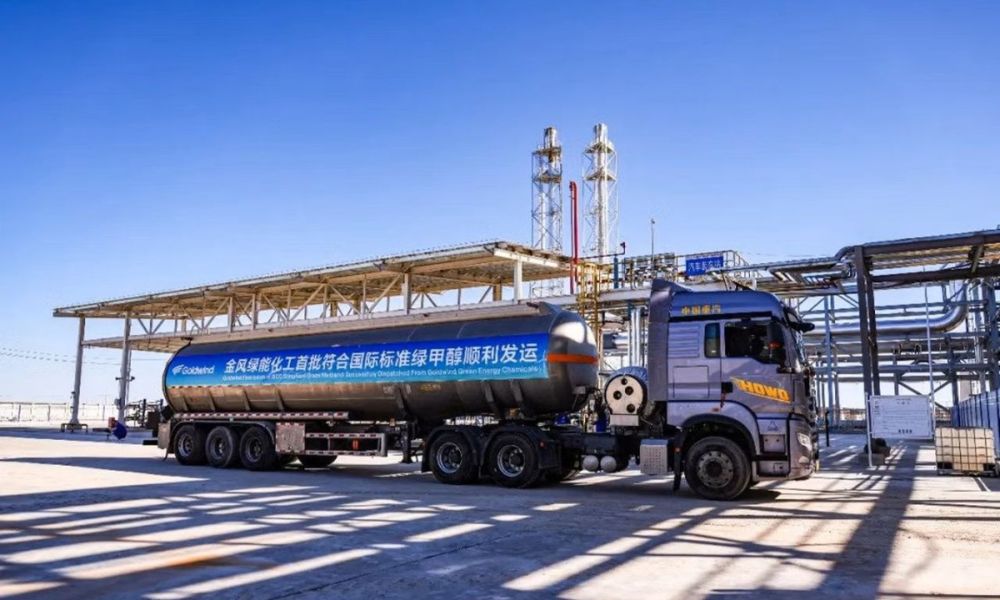
The alliance’s member Goldwind Green Energy has successfully produced biomethanol at its new 250,000 metric tonne (mt)/year facility in Inner Mongolia, with the first 500 mt of trial product now headed to South Korea.

“The facility uses wind-powered green hydrogen and locally sourced corn straw to produce biomethanol meeting EU RED III sustainability requirements. Commercial operations are expected to begin later this month,” it said. 

Goldwind has also secured long-term offtake agreements with A.P. Moller – Maersk and Hapag-Lloyd, connecting planned production with demand from shipping.

In 2024, Hapag-Lloyd reached a long-term agreement with Chinese energy firm Goldwind for the delivery of 250,000 mt of green methanol per year to ensure long-term supply for its vessels.

In 2023, Maersk signed a deal with Goldwind, marking the first large scale green methanol offtake agreement for the global shipping industry.

The commercially viable long-term offtake agreement for annual volumes of 500KT will enable low carbon operations for the first 12 large methanol-enabled Maersk vessels on order. The first volumes are expected in 2026.

Related: Hapag-Lloyd, Goldwind enter offtake deal for green methanol bunker fuel supply
Related: Maersk and China-based Goldwind sign landmark green methanol bunker fuel offtake deal


Photo credit: MI — The Global Methanol Alliance
Published: 14 September, 2026

Continue Reading

LNG Bunkering

Tenerife achieves first truck-to-ship LNG bunkering operation

With the latest operation, the Port of Santa Cruz de Tenerife is now capable of truck-to-ship and multi truck-to-ship bunkering operations, in addition to the ship-to-ship method.
Admin

Published

on

By

Tenerife achieves first truck-to-ship LNG bunkering operation

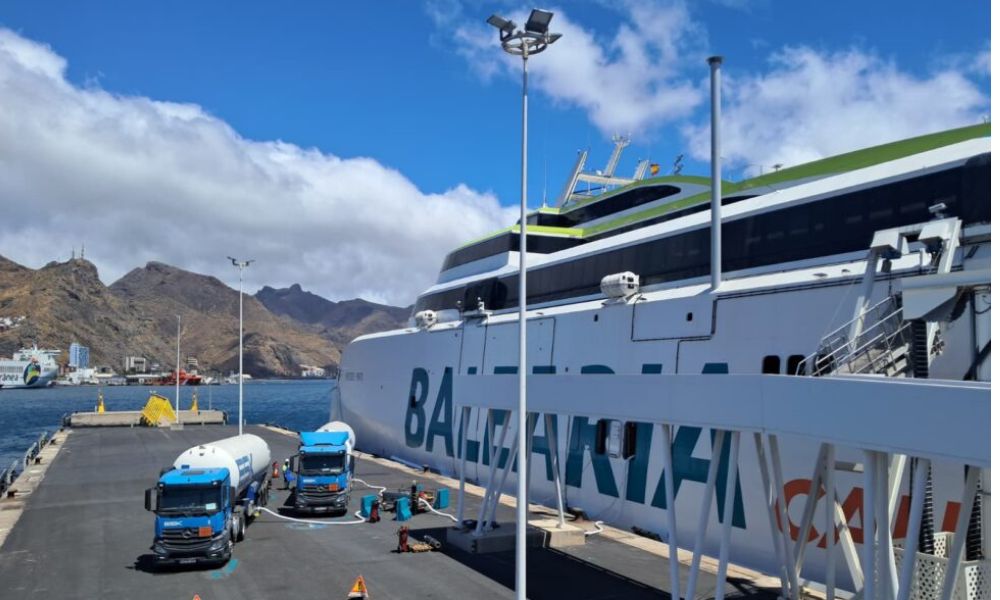
The Port Authority of Santa Cruz de Tenerife on Thursday (10 September) hosted its first LNG bunkering operation using tanker trucks, supplying fuel to a Baleària fast ferry Mercedes Pinto.

The operation began around 12.30pm at the Anaga Dock pier and was carried out by Spanish supplier ESK, the company in charge of providing this service. 

The port authority said a total of 600 MWh of LNG were supplied by two tanker trucks, with a total pumping flow of 700 liters per minute.

The port already supplies LNG using the ship-to-ship (STS) method, which allows fuel to be supplied directly between two ships. 

With the latest operation, the port is now capable of truck-to-ship (TTS) and multi truck-to-ship (MTTS), thus expanding the available options and adapting to the different operational needs of the ships.

“This new modality responds to the need raised by Baleària to have this supply alternative in Tenerife for its eco-efficient vessels and allows the port to advance in a line of work linked to sustainability, innovation and energy transition, facilitating safe and efficient solutions in the face of the evolution of fleets and fuels used by maritime transport,” the port authority added.

The Mercedes Pinto is Baleària’s 12th ship with dual engines prepared to run on natural gas and biogas, a CO₂-neutral fuel, in line with Baleària’s roadmap towards decarbonization.


Photo credit: Port Authority of Santa Cruz de Tenerife
Published: 14 September, 2026

Continue Reading

Ammonia

IMO technical seminar to focus on ammonia production, bunkering and safety

IMO announced its Future Fuels and Technology Project is organising a Technical Seminar on the use of ammonia as marine fuel on 17 September.

Admin

Published

on

By

IMO

The International Maritime Organization (IMO) recently announced its Future Fuels and Technology (FFT) Project is organising a Technical Seminar on the use of ammonia as marine fuel on 17 September. 

The event will address developments in ammonia production for marine fuels, bunkering, onboard applications, engine technologies, spill response, safety considerations, ammonia effluents management and ongoing initiatives related to ammonia-fueled vessels.

The seminar will be held at IMO Headquarters in London and on IMO YouTube Channel. 

The event will take place in the margins of the Sub-Committee on Carriage of Cargoes and Containers (CCC 12) scheduled from 14-18 September 2026.

Sessions will include ammonia production pathways and supply outlook for shipping and infrastructure, developments in ammonia-fuelled vessels and onboard technologies as well as operational, spill response, safety and other considerations.

Note: Registration can be found here and is open until 15 September. Queries can be directed to [email protected].


Photo credit: International Maritime Organization
Published: 14 September, 2026

Continue Reading

Trending