Connect with us

Events

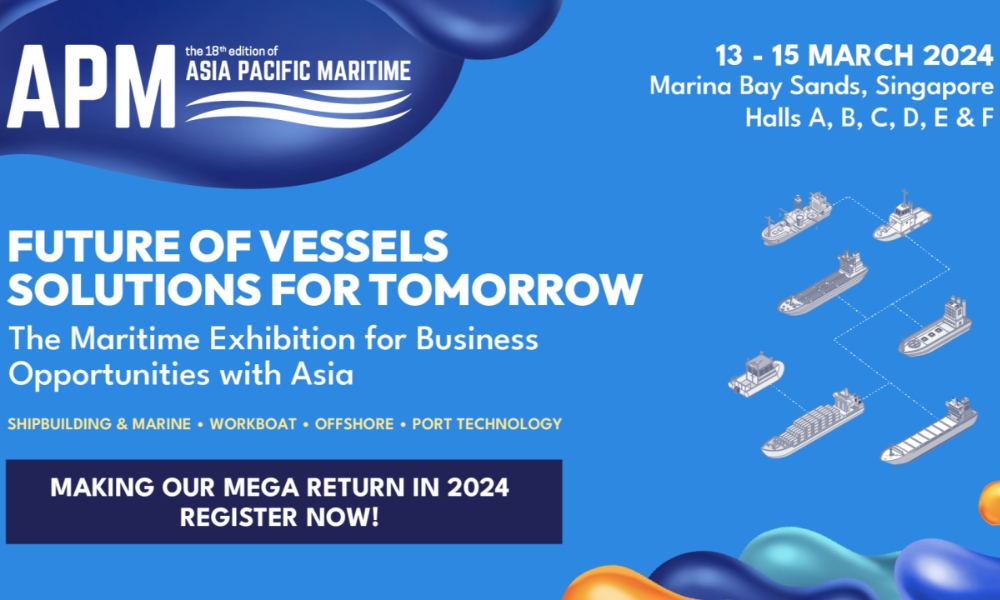
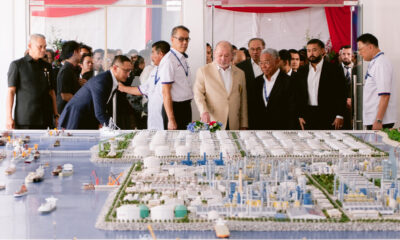
Singapore: 120 maritime industry experts to share insights at APM 2024

Themed ‘Future of Vessels, Solutions for Tomorrow’, event will host a series of new launches and strategic discussions across six halls at Marina Bay Sands Expo & Convention Centre.

Admin

Published

on

Singapore: 18th edition of Asia Pacific Maritime to return from 13 to 15 March

The highly anticipated 18th edition of Asia Pacific Maritime (APM) is set to herald the largest gathering of the global maritime value chain in Southeast Asia. 

From 13 to 15 March 2024, over 1,400 global brands will be present at the conference and exhibition, spanning 17 pavilions across six expansive halls of Singapore’s Marina Bay Sands. 

From closed-door networking sessions and delegation visits to product launches and business announcements, APM 2024 will serve as a platform for fostering tangible connections and sharing insights that will propel the maritime industry forward in today’s landscape of transformative changes driven by technology, climate imperatives, and shifting geopolitical landscape. 

Close to 120 industry experts from Singapore and across the world will share their insights and expertise in Sustainability, Digitalisation, Cybersecurity, Next Gen Ports and Operational Excellence across two stages on the floor. The Main Stage will focus on tackling growth and business potential in maritime, while the Innovation Stage will present case studies, leading innovations, and inspiring visions to help companies overcome challenges in business growth.  

At the centre of the APM conference will be a keynote panel discussion titled “A Net Zero Carbon Maritime Industry – Will We Ever Get There?” as the first session at the Main Stage on 13 March 2024. 

The panel will bring together some of the key leaders in the industry to discuss regulatory and policy frameworks and dissect the industry’s trajectory towards carbon neutrality, examining challenges, opportunities, and the feasibility of achieving this ambitious goal. 

The panel will include:

  • Andreea Miu, Head of Decarbonisation, The Sustainable Shipping Initiative; 
  • Douglas Raitt, Area Commercial Manager Singapore, Southeast Asia & Australasia, Lloyd’s Register; 
  • Capt. Hari Subramaniam, Chairperson, The Nautical Institute (Singapore) & Regional Head of Business Relations, The Shipowners Mutual P&I Association (Luxembourg) (Singapore Branch);
  • Jason Chia, Assistant Vice President, Global Design Centre, Seatrium; Kenneth Lim, Assistant Chief Executive (Industry & Transformation), Maritime & Port Authority of Singapore (MPA); 
  • Dr. Sanjay Kuttan, Chief Technology Officer, Global Centre for Maritime Decarbonisation;
  • Torben Nørgaard, Chief Technology Officer – Energy & Fuels, Mærsk Mc-Kinney Møller Center for Zero Carbon Shipping; 
  • Toshikazu Shiomi, Senior Vice President, Ocean Network Express. 

Kenneth Lim, Assistant Chief Executive (Industry & Transformation), Maritime and Port Authority of Singapore (MPA), said, “Singapore, as a forward-looking maritime hub, has been at the forefront driving digitalisation and decarbonisation for the maritime industry.”

“We look forward to meeting like-minded individuals and organisations from all over the world to discuss achieving net-zero emissions through technological innovations, alternative fuels, regulatory frameworks, and collaboration among industry stakeholders.”

“MPA looks forward to contributing to the global efforts in transforming the maritime industry and combat climate change.”

Torben Nørgaard, Chief Technology Officer – Energy & Fuels, Mærsk Mc-Kinney Møller Center for Zero Carbon Shipping, said: “We must relentlessly continue our ambition to decarbonise in accordance with the 1.5°C target. A substantial increase in upstream investments in alternative fuels is critical for the maritime decarbonisation journey.”

“I am looking forward to sitting down with other maritime leaders at APM 2024 to bring these discussions forward.”

Sessions curated for the conference, which is sponsored by ABS WaveSight, Convera, DNV, Roxtec, Yinson GreenTech, ARI Simulation and Siemens Energy, include:

  • Market Intelligence: Shipping Outlook for 2024 and Beyond – What Lies Ahead
  • Is the Maritime Sector Struggling to Innovate?
  • Developing a Future-Ready Maritime Workforce
  • Green Shipping Corridors: Fostering Eco-Friendly Transportation Networks
  • Rise of Green Ammonia: What is Needed to Make it a Success?

Industry veteran Carmelita Hartoto, Chairwoman of the Indonesia Shipowners’ Association (INSA) and Chair of Federation ASEAN Shipowner’s Association (FASA), will be speaking on the opening day. Her session on “Indonesian Maritime Future Energy – Opportunities and Challenges” will focus on the industry’s status, growth forecasts, and decarbonisation strategies while also exploring opportunities for collaboration to establish a green maritime plan involving electrification and green hub development. 

Other speakers attendees can look forward to seeing:

  • Ashish Mediratta, Head of Crewing, A.P. Moller Maersk
  • Dr. Chunwee Ng, Associate Professor, Singapore Institute of Technology
  • Elizabeth Petit Gonzalez, Head of Partnerships, The Sustainable Shipping Initiative
  • Jan-Viggo Johansen, Managing Director, Marine, Yinson GreenTech
  • Murthy Pasumarthy, Assistant Vice President, Technology & New Product Development, Seatrium
  • Norberto Barlocco, Head of Operations for Electrical, Automation & Digitalisation South West Europe, Siemens Energy 
  • Sanjay Verma, Director, Decarbonisation Solutions, Wärtsilä

Separately, the Satellite Mobility World seminar happening on the afternoon of 14 March at the Innovation Stage will delve into the latest advancements in maritime broadband communications. 

Titled “Unlocking The Future of Broadband at Sea: How Multi-Orbit Connectivity Is Propelling Maritime Forward”, the sessions will be led by Speedcast, OneWeb, Intellian, Kymeta, Intelsat and Iridium. Attendees can expect discussions on cutting-edge technologies like Low-Earth Orbit (LEO) services, flat panel antennas and multi-orbit constellations shaping the future of maritime connectivity.

APM 2024 Exhibition

As the maritime industry prepares for a significant surge in the adoption of technologies such as autonomous vessels, drones, additive manufacturing, smart coatings, artificial intelligence (AI), digital twins, hydrogen fuel cell, carbon capture, and more, APM will stand as a pivotal platform for the unveiling of such solutions to drive the industry forward.

Attendees can expect to see 1,400 leading brands, including Amogy, CALB Group Co., Ltd, Damen Shipyard, Durapower, EST-Floattech, EVE Energy Storage Co., Ltd, Fincantieri, Siemens Energy, ST Engineering Ventures, Tersan Shipyard, VertiDrive and many more.

Carmelita Hartoto will also lead a contingent of Indonesian shipowners to APM 2024. 

Hartoto said: “In my role as Chairwoman of INSA and Chairperson on ASEAN Shipowners, my mission is to enhance national and regional shipping with international stakeholders.”

“Indonesia’s and ASEAN’s shipping industry has been growing significantly in recent years, so there is no better time to present ourselves on the world stage to enhance global awareness of our capabilities and needs.”

“For APM, I am looking forward to having our shipowners network and prospect with companies from all over the world and to learn from all the different stakeholders in the maritime sector.”

Yeow Hui Leng, Group Project Director, RX, the organiser of APM, said: “After weathering the storm of the global pandemic, the resurgence of APM in its grandest form is a testament to the unwavering resilience and determination of our maritime community and the pivotal role of APM, which has been supporting the ecosystem for the last three decades.”

“We look forward to welcoming participants from around the globe as we embark on this journey towards a more sustainable and prosperous maritime future.”

Note: All registered professionals for APM 2024 will be granted free access to both exhibition and conference floors. Latest information on APM 2024 can be found on the event’s website.


Photo credit: RX Global
Published: 5 March 2024

Continue Reading

Methanol

World Fuel and partners complete first green methanol bunkering of car carrier in Shanghai

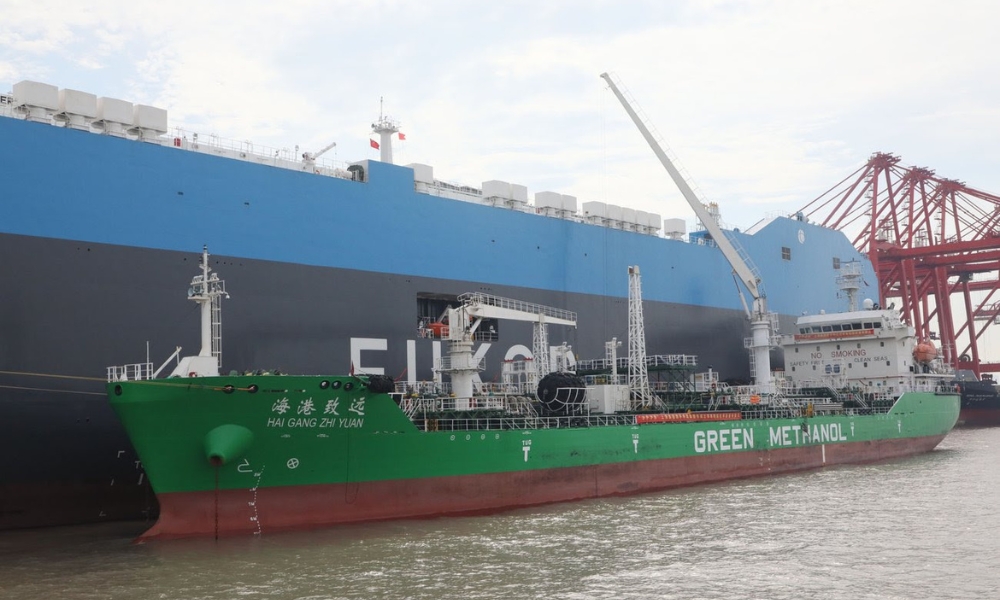
Operation involved the delivery of approximately 2,800 MT of green methanol to “Arctic Tern” via a ship-to-ship transfer using SIPG Energy’s dedicated methanol bunkering vessel “M/V Hai Gang Zhi Yuan”.

Admin

Published

on

By

World Fuel and partners complete first green methanol bunkering of car carrier in Shanghai

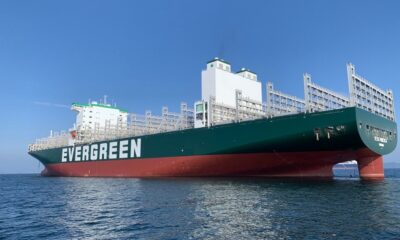
Marine fuel provider World Fuel on Tuesday (21 July) said it successfully completed the first green methanol bunkering of M/V Arctic Tern, with EUKOR Car Carriers and SIPG Energy at the Port of Shanghai. 

Arctic Tern is the first vessel in the new Shaper Class series of car carriers. 

The operation involved the delivery of approximately 2,800 MT of green methanol to Arctic Tern via a ship-to-ship transfer using SIPG Energy’s dedicated methanol bunkering vessel M/V Hai Gang Zhi Yuan, the largest vessel of its kind in operation. 

The bunkering operation was carried out at Haitong Terminal, Waigaoqiao Port Area, Shanghai Port, with cargo handling operations conducted simultaneously during bunkering.

This marks EUKOR Car Carriers’ first green methanol operation and the first time Arctic Tern has bunkered methanol since its delivery on 9 July. The operation marked the first bunkering at Shanghai Port of green methanol produced locally in Shanghai for an international PCTC operator. 

It also demonstrated the city’s integrated green methanol value chain, spanning local production, storage and bunkering, and established a replicable “Shanghai Model” for green methanol supply.

World Fuel arranged the supply and delivery of the fuel on behalf of EUKOR Car Carriers, working with SIPG Energy as the physical supplier at the Port of Shanghai.

The green methanol supplied was produced from municipal solid waste, ISCC-EU certified, and had a carbon intensity value below 25 gCO₂e/MJ.

Arctic Tern is the first of fourteen Shaper Class vessels ordered by Wallenius Wilhelmsen. With a capacity of 9,300 car equivalent units and methanol dual-fuel capability, the vessel will be operated by EUKOR Car Carriers, jointly owned by Wallenius Wilhelmsen and Hyundai Motor Group. Following her first green methanol bunkering, Arctic Tern will continue her maiden voyage from Asia to Europe.

Xavier Leroi, COO Shipping Services at Wallenius Wilhelmsen and CEO of EUKOR Car Carriers, said: “Completing Arctic Tern’s first green methanol bunkering shortly after delivery is a significant milestone towards our decarbonisation ambition for both EUKOR Car Carriers and Wallenius Wilhelmsen. It demonstrates how investments in next-generation vessel technology and fuel flexibility are being translated into real-world operations. 

“This achievement reflects the strong collaboration between all parties involved. Together, we have shown how partnerships across the maritime value chain can help make lower-emission fuels available and operationally viable at scale.”

Mark Tamsitt, SVP Global Marine Sales at World Fuel, said, “The first bunkering event with a new fuel is a significant moment for any shipowner, and our role is to make it as seamless as possible. By connecting EUKOR Car Carriers with SIPG Energy’s proven green methanol capability at the Port of Shanghai, we were able to deliver on reliable supply, fuel quality, and safe processes. As more of our customers bring methanol dual-fuel tonnage into service, we are committed to being the partner that makes these kinds of operations routine.”

Mr. Zhang Da, General Manager of SIPG Energy, said, “Welcoming Arctic Tern to the Port of Shanghai for her first green methanol bunkering demonstrates the strength and maturity of our supply capability. Building on our well-established methanol ship-to-ship bunkering services for container vessels, we have already extended such services to pure car and truck carriers (PCTCs). This bunkering sets a new record for the largest single SIMOPs green methanol bunkering for PCTCs in China, marking another step in building Shanghai’s position as a global green energy hub for international shipping.”

This operation follows Wallenius Wilhelmsen’s announcement on 9 July that Arctic Tern would complete her first methanol bunkering shortly after delivery. The vessel entered service on routes between Asia and Europe immediately following handover from China Merchants Jinling Shipyard in Nanjing.


Photo credit: World Fuel
Published: 22 July, 2026

Continue Reading

Ammonia

HPA and MB Energy develop safety concept for STS ammonia bunkering

HPA says the Port of Hamburg will become “bunker ready” for ammonia, laying the groundwork for safe and reliable ammonia bunkering in the future.

Admin

Published

on

By

HPA and MB Energy develop safety concept for STS ammonia bunkering

The Hamburg Port Authority (HPA) and integrated energy company MB Energy on Tuesday (21 July) said they have completed a comprehensive risk analysis and developed a dedicated safety concept for ship-to-ship ammonia bunkering.

MB Energy said the analysis lays the groundwork for the safe introduction of ammonia as a future marine fuel.

“With our planned ammonia import terminal in Hamburg-Blumensand, MB Energy intends to provide the reliable land side supply infrastructure needed to support this transition across northern German ports,” it said in a social media post. 

Mabanaft Group was renamed to MB Energy last year and merged over 50 existing brands under one identity. 

Separately, HPA said the Port of Hamburg will become “bunker ready” for ammonia, laying the groundwork for safe and reliable ammonia bunkering in the future.

“The focus is in particular on container ships, cruise ships as well as RoRo and ConRo (Container/RoRo) ships,” it said. 

“We expect ammonia to establish itself as an alternative marine marine fuel in the coming years. With our preparatory work, we are already creating the conditions to welcome the first ammonia-powered ships in Hamburg and to bunker them safely.:

HPA added that the import terminal for ammonia planned by MB Energy from 2029 will make a decisive contribution to ensuring the reliable availability of ammonia as a bunker fuel in northern German ports in the long term. 

“The use of an ammonia bunker barge is considered a possible addition to the landside infrastructure to enable ship bunkering in the port and beyond in the future,” it said.

Related: Mabanaft Group renames as MB Energy, merging over 50 brands under one identity


Photo credit: Hamburg Port Authority
Published: 22 July, 2026

Continue Reading

Milestone

GCMD: Project CAPTURED achieves two regulatory milestones for onboard captured CO2

CO2 captured onboard during the project has been formally recognised for compliance under the EU ETS while a proposal submitted to MEPC 84, based on the project, has received IMO’s in-principle support.

Admin

Published

on

By

RESIZED venti views

Global Centre for Maritime Decarbonisation (GCMD) on Wednesday (21 July) said Project CAPTURED has achieved two regulatory milestones that strengthen the commercial case for onboard carbon capture and storage (OCCS).

This comes following its world’s first demonstration of an end-to-end value chain for onboard captured and liquefied CO2 (LCO2).

Completed in June 2025, the pilot showed that CO2 captured onboard a vessel can be offloaded ship-to-ship, transported overland and permanently bound through carbon mineralisation—a process that converts captured CO₂ into stable materials for industrial use.

The CO2 captured onboard during Project CAPTURED has been formally recognised for compliance under the European Union Emissions Trading System (EU ETS). This means the verified tonnage of captured CO2 can be deducted from emissions requiring the surrender of EU Allowances (EUAs).

To qualify for this recognition, the CO2 must be chemically bound permanently in eligible products. Project CAPTURED demonstrated that CO2 captured onboard vessels can meet this requirement through carbon mineralisation.

The data and learnings from the same demonstration formed the basis of a proposal submitted to MEPC 84. This proposal received in-principle support from the International Maritime Organization (IMO) for recognising carbon mineralisation as a form of permanent CO₂ storage.

Complementing geological sequestration, which is already accepted by the IMO, this recognition broadens the downstream options for CO2 captured onboard vessels, and supports the development of maritime carbon value chains. Beyond providing a permanent storage pathway, carbon mineralisation also creates the potential for captured CO2 to serve not only as a waste stream requiring permanent storage, but also as a feedstock for industrial applications through carbon mineralisation, extending emissions reductions beyond the shipping value chain.

Professor Lynn Loo, CEO, GCMD, said, “Project CAPTURED has moved OCCS beyond technical demonstration. The acceptance of the EU ETS deduction gives captured CO₂ a compliance value. At the same time, IMO’s in-principle support for carbon mineralisation will help clarify how captured CO2 can be treated after it leaves the vessel. Together, these milestones turn a pilot into a verified reference case for maritime carbon logistics, one that links regulatory recognition, commercial value and emissions impact.”


Photo credit: Venti Views on Unsplash
Published: 22 July, 2026

Continue Reading

Trending