Connect with us

Shipping Corridor

NatPower Marine, Peel Ports Group plan first Ireland-UK green shipping corridor

Proposed project would see NatPower Marine develop the UK’s first e-ship charging network to support electric propulsion and cold ironing, as part of a global network.

Admin

Published

on

RESIZED CHUTTERSNAP on Unsplash

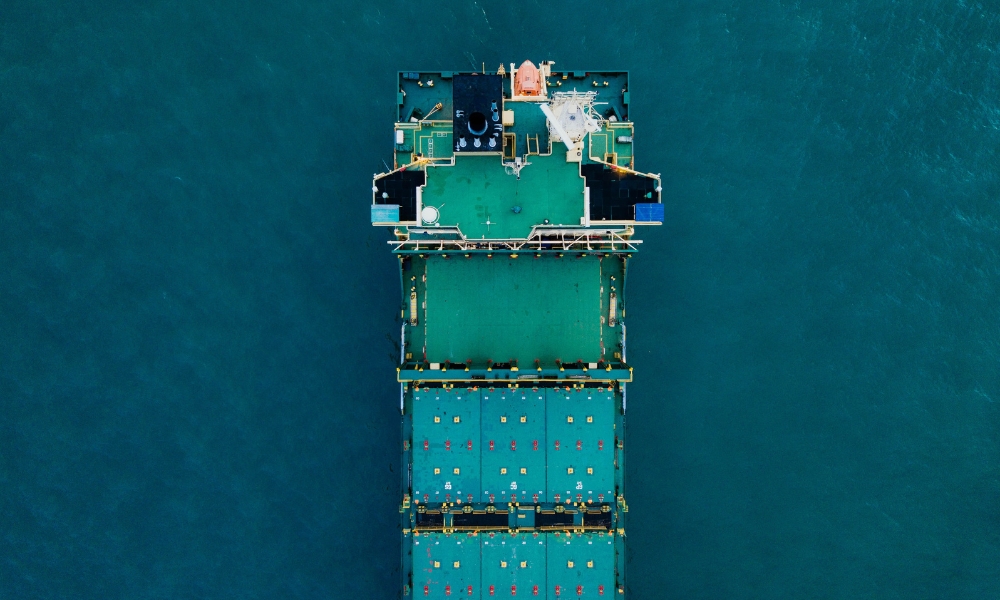
NatPower Marine and Peel Ports Group, a major UK port operator, recently announced plans to establish the first “green shipping corridors” between Ireland and the UK.

The proposed project would see NatPower Marine develop the UK’s first commercial electric ship (e-ship) charging network to support electric propulsion and cold ironing (the process of accessing clean power while docked to avoid significant engine pollution while at the port), as part of a global network.

The network – which would require an estimated GBP 100 million (USD 128 million) investment from NatPower Marine – would see this dedicated e-ship charging infrastructure delivered across all eight UK and Irish ports operated by Peel Ports Group. The master plan would also include electric car, van and HGV chargers installed for commercial electric vehicles passing through the ports.

Over 3,000 vessels cross the Irish Sea every year, emitting 230,000 tonnes of CO2, 20,000 tonnes of nitrous oxide (NOx), and 18,000 of sulphur oxide (SOx). Connecting these to onshore electric charging when in port could dramatically reduce these emissions, supporting climate goals and improving local air quality.

The first Irish Sea routes identified in the proposals include Belfast-Heysham and DublinBirkenhead. This would support Peel Port Group’s ambitions for Heysham Port in Lancashire to become the UK’s first ‘net zero port’. The port has already slashed the emissions of its landside plant, equipment and vehicles by up to 90%.

The plans mark the first step in a new GBP 3 billion global charging network, planned by NatPower Marine for 120 port locations worldwide by 2030. NatPower Marine will develop the sites, in partnership with port operators, and act as the long-term operator of the global charging network.

Stefano Sommadossi, CEO at NatPower Marine, said: “NatPower Marine is investing to deploy the largest global network of charging points to help solve the ‘chicken and egg conundrum’ facing this industry: shipping lines cannot electrify their vessels if port charging infrastructure is not available, and ports are unable to raise capital for charging infrastructure without certainty of demand from shipping lines.

“With marine trade set to triple by 2050, we urgently need to build the global network of clean energy charging infrastructure the industry desperately needs. Our partnership with Peel Ports Group is the first step in this strategic approach to accelerate the adoption of clean energy in shipping and help cargo owners to reach net-zero.” 

Claudio Veritiero, CEO at Peel Ports Group, said: “The proposals presented as part of this partnership are potentially game-changing, and fully support our ambitions to become a net-zero port operator by 2040.”

“We look forward to working closely with NatPower Marine to explore the possibilities for establishing the first green shipping corridor between the UK and Ireland, and further enabling support for our customers, shipping lines and hauliers as they transition to a greener future.”


Photo credit: CHUTTERSNAP on Unsplash
Published: 28 May 2024

Continue Reading

Alternative Fuels

Singapore-Brazil green shipping corridor to support alternative bunker fuel supply chains

Both inked a MOU to establish the Singapore-Brazil GDSC, bringing together their complementary strengths to support the development of alternative marine fuel supply chains.
Admin

Published

on

By

Swapnil Bapat on Unsplash

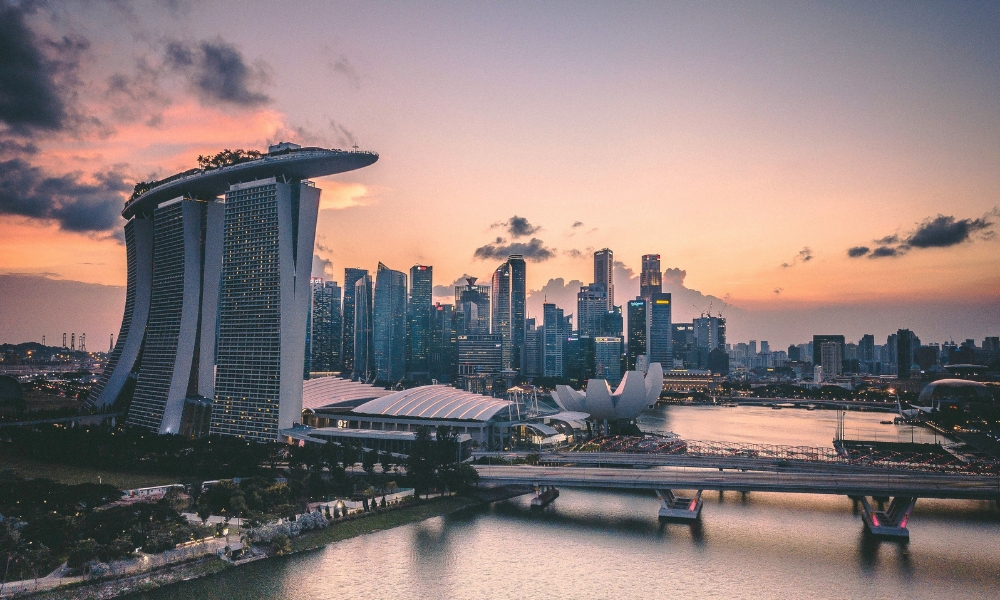
Singapore and Brazil have signed a Memorandum of Understanding (MOU) to establish the Singapore-Brazil Green and Digital Shipping Corridor (GDSC), according to the Maritime and Port Authority of Singapore (MPA) on Friday (28 August). 

The MOU was signed by Singapore’s Minister for Transport, Mr Jeffrey Siow, and Brazil’s Minister of Ports and Airports, Mr Tomé Franca.

MPA said the partnership will strengthen cooperation between Singapore and Brazil on maritime decarbonisation and digitalisation, and support more sustainable and efficient international shipping.

Brazil has significant renewable energy resources and production capabilities that could support the production of zero- and near-zero greenhouse gas emission marine fuels, while Singapore is the world’s largest bunkering port and a leading global hub port with a vibrant innovation ecosystem. 

“The GDSC will bring together these complementary strengths to support the development of alternative marine fuel supply chains,” MPA added. 

Under the MOU, Singapore and Brazil will also explore digital information exchanges to improve maritime and port operations. The two countries will work with industry to advance the research, development and adoption of emerging maritime technologies and solutions.


Photo credit: Swapnil Bapat on Unsplash
Published: 31 August, 2026

Continue Reading

Shipping Corridor

South Korea moves to establish green shipping corridors with new legislation

MOF has proposed implementing regulations for its Green Shipping Corridor Support Act and will open a public consultation on draft enforcement regulations for the legislation from 2 September to 13 October.

Admin

Published

on

By

Lauren Seo on Unsplash

South Korea’s Ministry of Oceans and Fisheries (MOF) on Wednesday (26 August) has proposed implementing regulations for its Green Shipping Corridor Support Act, as the country steps up efforts to accelerate maritime decarbonisation and expand the use of low- and zero-carbon fuels.

The ministry said it would open a public consultation on draft enforcement regulations for the legislation from 2 September to 13 October 2026. The Green Shipping Corridor Support Act is scheduled to enter into force on 1 April 2027.

Green shipping corridors are intended to enable carbon-free transportation between ports by using low- and zero-carbon fuels and environmentally friendly technologies throughout the logistics and shipping process.

South Korea enacted the Green Shipping Corridor Support Act as the world’s first dedicated legislation to support the development of green shipping corridors.

The proposed enforcement decree and regulations will establish detailed criteria and procedures covering matters delegated under the Act, including the marine fuels to be used by green vessels operating on designated corridors, requirements for environmentally friendly ports capable of supplying those fuels, development of basic plans, and the designation and public notification of green shipping corridors.

In parallel, the MOF and Ministry of Trade, Industry and Energy (MOTIE) are implementing the Second Basic Plan for the Development and Distribution of Eco-Friendly Ships (2026–2035), which was jointly developed to reflect rapidly changing technology and policy conditions in South Korea and overseas.

The plan is built around five strategic priorities: research and development of future ships capable of reducing carbon emissions; commercialisation of new technologies; expansion of environmentally friendly marine-fuel supply infrastructure; deployment of eco-friendly vessels; and development of a green shipping and shipbuilding ecosystem.

Under the plan, the government aims to support the conversion of 889 private and public-sector vessels to more environmentally friendly ships by 2035.

The government also plans to strengthen the competitiveness of small and medium-sized shipbuilders and marine equipment manufacturers, which it said remain relatively disadvantaged compared with major shipyards. Support will focus on areas including eco-friendly ship design and the demonstration of green marine equipment and technologies.

South Korea also intends to strengthen strategic links between the shipbuilding and shipping sectors to encourage the domestic construction of eco-friendly vessels.

The MOF said it would use the new legislation and the second basic plan as the foundation for building a maritime decarbonisation ecosystem and supporting South Korean companies in competing for a leading position in global markets.


Photo credit: Lauren Seo on Unsplash
Published: 31 August, 2026

Continue Reading

Alternative Fuels

Germany launches EUR 70 million funding programme for green inland shipping corridors

Eligible projects include the installation of zero- or low-emission propulsion systems on newbuild and existing cargo vessels, as well as investments in port infrastructure for alternative fuels.
Admin

Published

on

By

Maxime Vandenberge on Unsplash

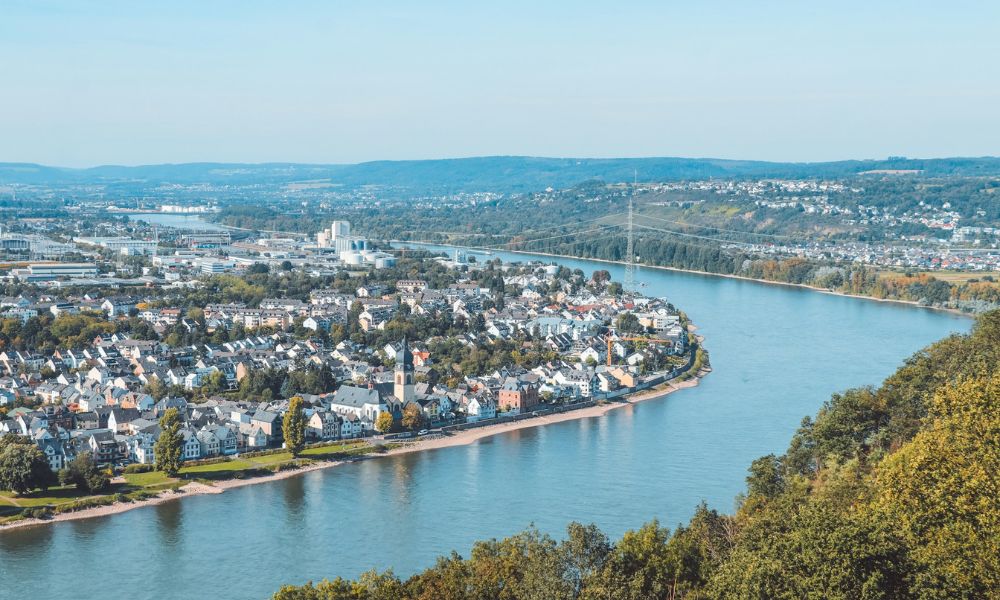
Germany’s Federal Ministry for Transport (BMV) recently opened the first funding call under its new programme for green inland navigation, with up to EUR 70 million (USD 81 million) available for projects to develop green inland shipping corridors.

The funding will support the deployment of zero- and low-emission inland vessels and the development of associated infrastructure. 

Eligible projects include the installation of zero- or low-emission propulsion systems on newbuild and existing cargo vessels, as well as investments in port infrastructure for alternative fuels such as hydrogen, ammonia and methanol.

Funding will also cover facilities for producing renewable electricity and renewable hydrogen, along with storage systems. Infrastructure at transhipment and berthing facilities outside ports, including charging, refuelling and mobile supply equipment, is also eligible.

Companies, municipalities and other economically active organisations based in Germany can apply under the first funding call, which focuses exclusively on establishing green inland shipping corridors. Applications opened on 17 August through the German government’s easy-Online funding portal.

The initiative is also intended to encourage a greater shift of freight and passenger transport to inland waterways, while supporting Germany’s climate targets, European alternative-fuels infrastructure requirements and the long-term competitiveness of the country’s inland shipping sector.


Photo credit: Maxime Vandenberge on Unsplash
Published: 18 August, 2026

Continue Reading
Advertisement

OUR INDUSTRY PARTNERS


Trending