Connect with us

Port & Regulatory

MEPC 84 opening: IMO Sec-Gen urges for constructive and pragmatic exchanges

‘Listen to one another, there is no need to argue. We are adult enough to agree to disagree. There is no reason to repeat what happened last October. There is no need for it,’ says Arsenio Dominguez.

Admin

Published

on

MEPC 84 opening: IMO Sec-Gen urges for constructive and pragmatic exchanges

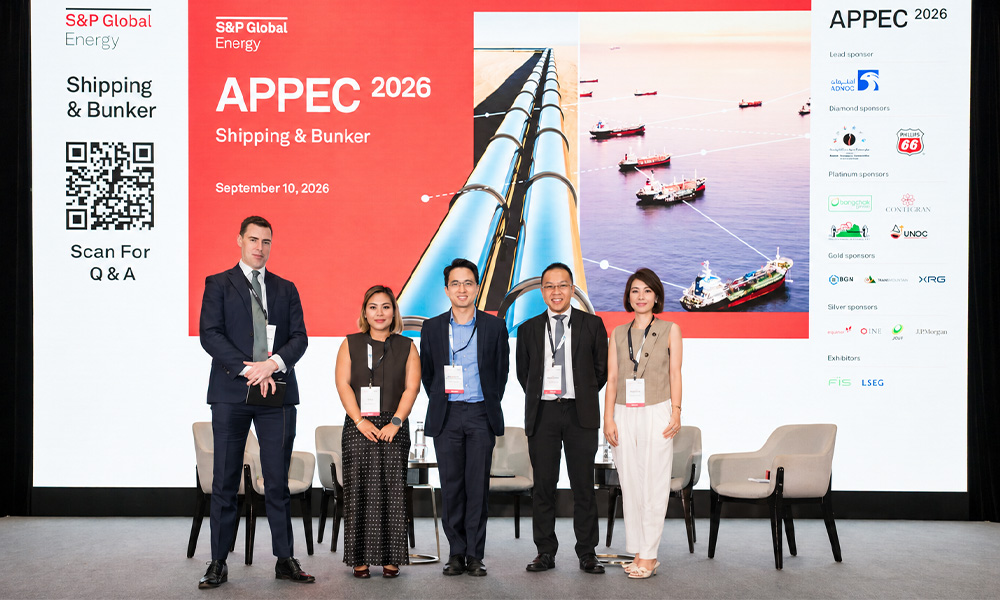
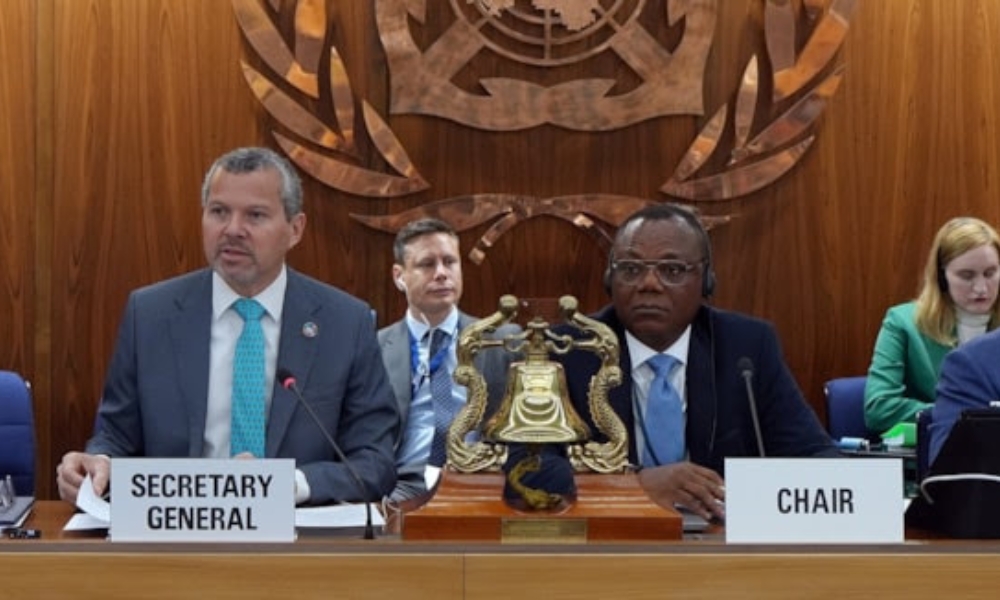
International Maritime Organization (IMO) Secretary-General Arsenio Dominguez on Monday (27 April) opened the 84th session of the Marine Environment Protection Committee (MEPC 84), urging Member States to find convergence and make meaningful progress on the IMO Net-Zero Framework to cut global shipping emissions, and set an example of effective multilateralism.

The following is the full transcript of the Secretary-General’s opening remarks:

Good morning, distinguished delegates, 

Welcome to the 84th session of the Marine Environment Protection Committee.

Situation in the Strait of Hormuz

Before turning to the work of this session, and further to my briefing to Member States last Friday, I must once again address the situation in the Strait of Hormuz, which continues to be of grave concern. Thousands of seafarers remain stranded inside the Gulf on board vessels, exposed to significant risks and considerable psychological strain. They are victims of a situation with broader consequences for the global economy and food security. The longer this situation goes on, the greater the risk of serious accidents, including environmental accidents. 

The Council held an extraordinary session in March, reaffirming the respect for the freedom of navigation; the paramount importance of the safety of seafarers and shipping; the conviction that seafarers and shipping must never be used as collateral victims of any geopolitical conflict; and the importance of dialogue and diplomacy in de-escalating tensions. 

I wish to reaffirm that the IMO is the place for multilateral agreement on international shipping. This includes measures such as Traffic Separation Schemes in high volume straits between two or more Member States. 

I continue to engage with relevant stakeholders on this matter and I urge all parties to work towards de-escalation.

Reduction of Greenhouse Gas Emissions and Energy Efficiency

Turning to the meeting this week, a very important task this week is to find convergence to make meaningful progress on the IMO Net-Zero Framework for international shipping.

I am pleased to see that many of you have used the time since last year’s extraordinary session wisely and productively. The submissions to this session, as well as the constructive discussions during last week’s ISWG-GHG 21, demonstrate a genuine commitment to address the concerns expressed at the extraordinary session and to move this work forward.

I am confident the Committee is now in a better position to understand each other’s respective views, which will facilitate progress towards consensus on mid-term greenhouse gas reduction measures. In particular, I welcome the good progress on the guidelines supporting the technical element of the framework, notably the greenhouse gas fuel intensity, or GFI, regulating component. The work is not complete, however your work on the GFI Calculation Guidelines, together with the fuel certification and life-cycle assessment guidelines, provides a solid basis for further progress on globally harmonized reporting and will support practical and effective implementation.

With regard to the economic element, I am encouraged by your continued efforts to develop a shared understanding of what a just and equitable transition means in the IMO context.

My request to you is that we engage in constructive and pragmatic exchanges. Listen to one another, there is no need to argue. We are adult enough to agree to disagree. There is no reason to repeat what happened last October. There is no need for it. Let us move forward where we agree and continue to elaborate where further work and understanding is required. At a time where there is already enough disagreement around the world, I ask you that we can set an example of effective multilateralism.

It is also important to recognize that IMO’s regulations are already delivering tangible results. According to IMO’s Fuel Consumption Reporting data submitted to this session, the carbon intensity of international shipping has decreased by more than 38% compared to 2008. This demonstrates that concrete action to reduce fuel consumption, save costs, and improve efficiency is possible today.

You will also be invited this week to continue the review of the short-term measures, including the Carbon Intensity Indicator regulations, as well as consider emerging technologies including onboard carbon capture, wind propulsion, and the monitoring of methane and nitrous oxide emissions, with a view to provide further clarity on the use of fuels and technologies through global regulations.

Ballast Water Management and Biofouling

Concerning ballast water management, you are invited to approve a package of amendments to the BWM Convention, adopt the revised G4 Guidelines, and progress work on the BWMS Code and associated guidelines, as well as consider the way forward on the remaining steps of the experience-building phase. 

You are also invited to confirm that the legally binding framework on ships’ biofouling will take the form of a standalone instrument, as recommended by the PPR Sub-Committee.

Marine Plastic Litter

On marine plastic litter, the Committee will be invited to adopt the draft 2026 Strategy and Action Plan to Address Marine Plastic Litter from Ships. You will also consider the recommendation from PPR 13 that a new mandatory code be developed on the maritime transport of plastic pellets in freight containers, and a draft MEPC circular promoting the implementation of fishing gear marking systems.

Closing

I am confident that under the expert guidance of your Chair, Dr. Harry Conway of Liberia, ably supported by the Vice-Chair, Mr. Hanqiang Tan of Singapore, as well as the staff of the Marine Environment Division and the supporting divisions, you will be able to successfully achieve the objectives set for this session.

I invite you all to the welcome reception in the Delegates’ Lounge at the close of today’s business.

Thank you.


Photo credit: International Maritime Organization
Published: 28 April, 2026

Continue Reading

Alternative Fuels

Ports of Barcelona and Shanghai team up to develop green ports, alternative bunker fuels

Agreement officially establishes the ‘sister ports’ relationship between Shanghai and Barcelona and aims to boost cooperation in areas such as developing green ports and alternative fuels.

Admin

Published

on

By

Ports of Barcelona and Shanghai team up to develop green ports, alternative bunker fuels

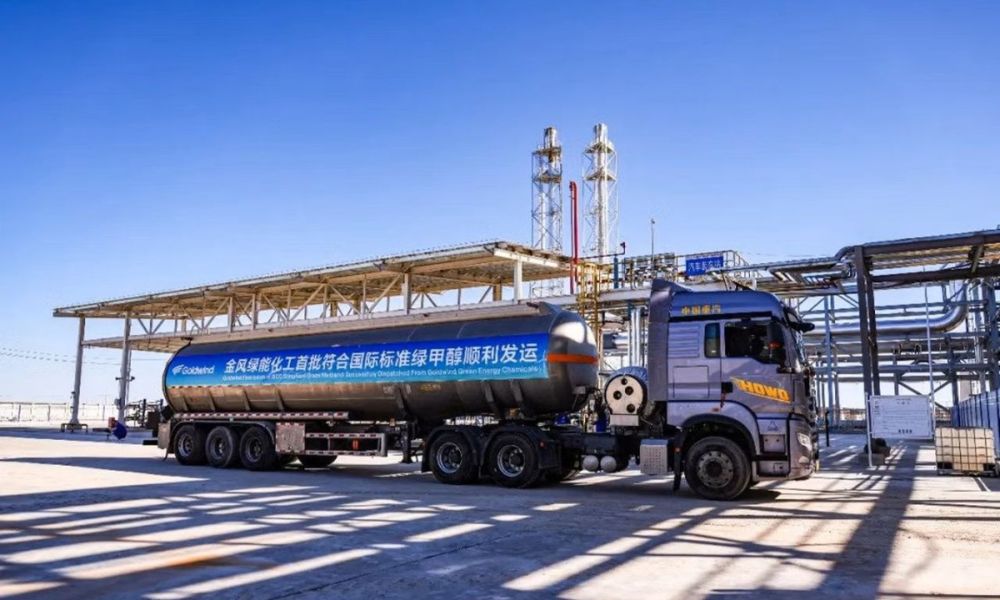
The Port of Barcelona on Thursday (11 June) said it signed a new strategic cooperation agreement with the Shanghai Municipal Transportation Commission (SMTC) and Shanghai International Port Group (SIPG).

The agreement officially establishes the “sister ports” relationship between Shanghai and Barcelona and aims to boost cooperation in areas such as the digitalisation and security of port operations; developing green ports and alternative fuels; intermodality and fostering sustainable maritime corridors between the Far East and the Mediterranean. 

The agreement was signed by José Alberto Carbonell, president of the Port of Barcelona; Xiao Hui, general director of the SMTC, and Yang ZhiYong, vice president of SIPG, in the presence of Jaume Duch, Regional Minister for European Union and Foreign Action. 

The relationship between the Port of Barcelona and the Port of Shanghai has intensified in recent years. In late July 2025, a preliminary agreement was signed between both port authorities, which led to a technical visit in September 2025 by a delegation from Shanghai led by Wang Haijian, Vice President and Director of Operations of SIPG, to advance the development of the Green Shipping and Digital Corridor between both ports. 

“This new institutional visit and the signing of the new agreement consolidates the Port of Barcelona’s position as a Euro-Mediterranean logistics hub and strengthens its links with one of the main ports and economic centres in the world,” the port said. 


Photo credit: Port of Barcelona
Published: 12 June, 2026

Continue Reading

Biofuel

NYK Line subsidiary Kinkai Yusen to trial B24 bio bunker fuel on RoRo vessel

Kinkai Yusen says it will conduct a demonstration operation using biofuel refuelled at Hakata Port on 16 June on the RoRo vessel “Nanotsu”.

Admin

Published

on

By

NYK Line subsidiary Kinkai Yusen to trial B24 bio bunker fuel on RoRo vessel

NYK Line subsidiary Kinkai Yusen on Tuesday (9 June) said it will conduct a demonstration operation using biofuel refuelled at Hakata Port on 16 June on the RoRo vessel Nanotsu, which operates between Hakata Port and Tsuruga Port.

The company said it will be the first instance of a domestic RoRo vessel operating using biofuel at Hakata Port. 

The biofuel (B24) which will be used will comprise 24% biofuel and conventional marine fuel, and is expected to reduce greenhouse gas (GHG) emissions without requiring major modifications to existing ship equipment. 

“The procurement of biofuel will be carried out in cooperation with Idemitsu Kosan Co Ltd and Itochu Enex Co Ltd,” it said in a statement. 


Photo credit: MarineTraffic / Tetsuya
Published: 12 June, 2026

Continue Reading

Alternative Fuels

Mureloil deploys hybrid chemical tanker for bunkering and terminal transport

After its delivery, the ship carried out its first commercial operations in the ports of Bilbao and Mugardos before being deployed to Barcelona where it will operate over the coming months.

Admin

Published

on

By

Mureloil deploys hybrid chemical tanker for bunkering and terminal transport

Spanish bunker service provider Mureloil on Saturday (28 February) said it has deployed Bahía Candela, a next-generation hybrid chemical tanker, for operations. 

The vessel is specifically designed for bunkering operations and terminal-to-terminal fuel transport. 

After its delivery, the ship carried out its first commercial operations in the ports of Bilbao and Mugardos. The tanker then stopped in Algeciras before starting its journey to Barcelona, where it will operate over the coming months. 

The Bahía Candela is the first of two sister vessels, with the second named Bahía Beatriz, both of which will be operated by Repsol as part of its maritime decarbonisation strategy to develop low-carbon fuel logistics including methanol and biofuels. 

Building on the success of Bahía Levante, the new vessel features a diesel-electric propulsion system combined with 4.2 MW of lithium-ion batteries, enabling fully electric port operations for up to 72 hours—including cargo handling and manoeuvring—with zero direct GHG emissions.

Related: Mureloil launches hybrid chemical tanker for bunkering and terminal transport


Photo credit: Mureloil
Published: 12 June, 2026

Continue Reading

Trending