Luis Gronda of global energy and commodity price reporting agency Argus Media on Wednesday (18 November) published an interview with Star Bulk Carriers President Hamish Norton on how the company stands in meeting IMO 2030 GHG based on its experience with navigating the IMO 2020 sulphur cap:
The dry bulk industry could meet the International Maritime Organization’s (IMO) mandate on greenhouse gases (GHG), through the use of alternative fuels such as ammonia, battery and hydrogen fuel cells, according to Star Bulk Carriers president Hamish Norton.
In this interview, Norton discusses where the company stands in meeting the IMO 2030 GHG goals, how the IMO’s sulphur regulation has affected bunkering operations and more. This interview has been edited for clarity and brevity.
Did the IMO 2020 sulphur regulation have an effect on your bunkering operations, like a lack of high sulphur fuel oil (HSFO) or very low sulphur fuel oil (VLSFO) availability?
We rarely encountered non-availability of both sorts of fuel and that was only occasionally in specific ports, e.g. Fujairah, or smaller Chinese ports, and we learned of potential delays in many ports, large and small.
However, neither availability nor timing became a problem for us because we were able to deal with both potential problems by planning ahead. Instead of beginning the process of finding fuel three or four days before we needed it, we started planning 10 days or even two weeks ahead.
Additionally, we entered into term contracts, which guaranteed availability. The market has calmed down quite a bit now for both fuel grades, and we are back to lead times of 6-8 days.
Have you encountered off-specification VLSFO batches ?
We have not encountered off-spec VLSFO as we burn essentially no VLSFO. As the vast majority of our fleet are equipped with scrubbers, we burn primarily HSFO and supplement that with low sulphur marine gasoil (LSMGO). We have not experienced off-spec HSFO or LSMGO.
How much bunker fuel does Star Bulk burn per year, and do you procure bunkers on a spot basis, a term basis or both?
We burn approximately 700,000 tons/yr, depending, of course, on the average speed of the fleet in a given year, which correlates positively with charter rates and negatively with fuel prices.
We have not hedged fuel prices so far, although we have hedged the spread between HSFO and VLSFO for about 100,000 tons this year. We do not only procure bunkers on a spot basis but have also entered into term contracts.
How many vessels does Star Bulk have with scrubbers? Were there plans for more installations in 2020 that were delayed or cancelled?
We have 114 vessels fitted with scrubbers. No scrubber installations were cancelled.
As with every other shipowner who has installed scrubbers, there were delays, which became progressively worse after the first quarter of 2019. We were able to get all the scrubbers installed successfully by the end of the first quarter of 2020.
Has procuring HSFO to burn on your vessels with scrubbers been a problem? If so, in which ports?
We have not had any trouble procuring HSFO, but to a greater extent than before 2020, we must think about which ports to use for bunker procurement, and we have to plan ahead to a greater degree.
There are certainly fewer ports with HSFO (Indian ports, for example, or occasionally South Africa) but overall HSFO supply has been much better than anticipated in late 2019.
Do you expect interest in scrubber investments to grow once the pandemic is over?
We believe that the economics of owning scrubbers will improve when consumption of refined petroleum products increases, which should cause refinery utilization to increase.
We have no idea if the improved economics will reignite interest in scrubber investments.
Are there any particular fuels (such as hydrogen, LNG, ammonia, etc.) that you think the dry bulk shipping industry will embrace more than others to achieve IMO’s 2030 and IMO’s 2050 greenhouse emissions reduction targets?
If we had to guess what fuels the dry bulk shipping industry will use to meet the 2030 mandate, we would probably guess liquid petroleum products, augmented with speed reductions, engine improvements, hybrid electricity production on board, hull and propeller improvements and hull friction reduction.
There are several zero emission fuels which are currently being assessed by the industry, such as biofuels, hydrogen from renewable sources and ammonia from renewable sources.
Are there particular low-carbon fuels Star Bulk is considering?
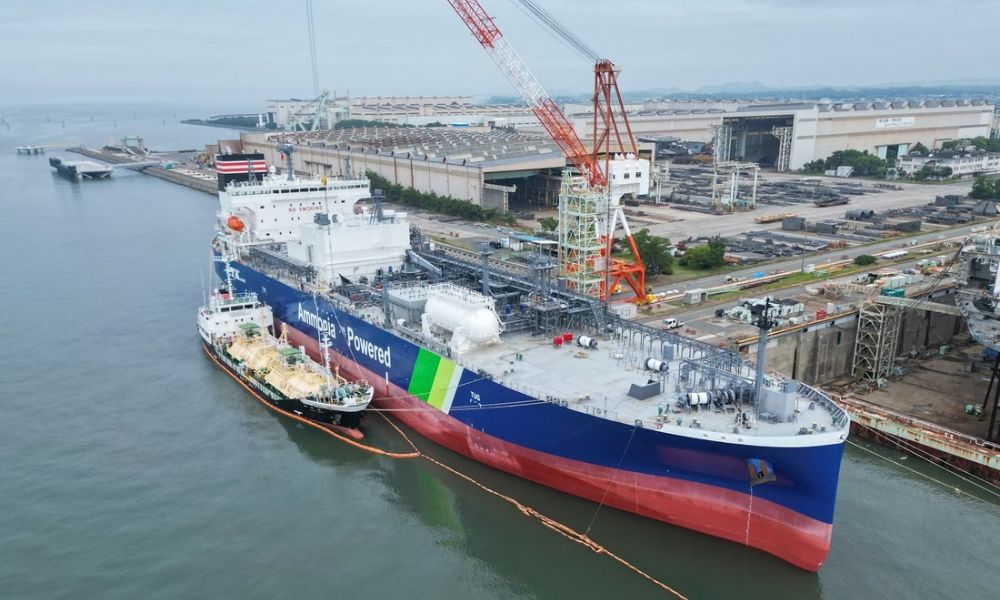
Ammonia seems to be an attractive scenario except for its toxicity as it is truly carbon free if made from renewable electricity and is also scalable. Batteries or hydrogen fuel cells could also be promising for shorter-distance shipping.
Biofuels may also contribute to the industry’s decarbonization, however, demand from other sectors is expected to limit the availability of truly sustainable biofuels.
Other shipping companies say they achieved IMO 2030’s greenhouse gas emission goals in 2019. Is Star Bulk on track to achieving IMO’s 2030 goals, and by what means?
Star Bulk is on track to achieving IMO’s 2030 goals. Star Bulk has an energy efficiency management plan in place and has been taking a series of operational measures to optimize our fleet’s performance, including the application of weather routing systems and speed management practices.
Since 2018 we have utilized our vessel performance monitoring system to measure greenhouse gas emissions, and we are happy to report an improvement in our fleet’s energy efficiency operating index.
Do you think IMO’s 2030 greenhouse gas emission goals are ambitious enough?
Given the current state of energy saving technology, we view the 2030 emission goals as relatively ambitious, though we would be happy if the shipping industry performed even better than the goals that have already been set.
Do you think IMO’s 2050 greenhouse gas emission goals are easily achievable?
The 2050 goals require the introduction of carbon neutral fuels, along with the infrastructure to produce, transport and store them as well as the technology to burn those.
It is probable that decarbonization of the shipping industry will be driven by more than one zero emission fuel and different infrastructure technologies.
Star Bulk is also participating in feasibility studies for certain fuels that have the potential of being carbon neutral. We believe that it is only through partnerships and collaboration among different industry stakeholders that the transition to 2050 can be achieved.
How has the US-China trade war affected dry bulk rates, and do you expect it to during the second half of the year? Do the US election result play a role?
US-China trade clearly affects the psychology of the market, but it does not affect ton-miles very much. China buys soybeans, and their purchases of soybeans have been increasing as their pig population has been recovering from African Swine Fever.
But the alternative sources of soybeans in Latin America produce more ton-miles of demand than the relatively closer supply from the US Gulf.
We do not believe the election in the US is likely to have much influence on the dry bulk market.
A number of shipowners said emissions regulation uncertainty prevents them from ordering more ships. Is this uncertainty a major factor in your newbuild orders? What is Star Bulk’s orderbook?
We have no ships on order. Uncertainty about the economic life of a ship ordered today but having to operate in a future world in which regulations may change rapidly certainly affects our thinking about an investment in a ship, and we believe such uncertainty affects the thinking of most other shipowners in a position to order a ship.
We believe that such uncertainty is likely to keep the order book for ships of all types smaller than it would otherwise be. This reduction in ordering is a good thing and has to happen if the shipping fleet is going to meet the 2050 rules.
The shortage of ships over the long term will cause shipping rates to increase. The ships that will eventually become available to meet the 2050 standards will be expensive. One needs high rates to justify an investment in expensive ships. The market will solve the greenhouse gas problem if given the right incentives.
Photo credit and source: Argus Media
Published: 19 November, 2020












 Technology1 week ago