


SGTraDex platform used by EMF and CMS to exchange carbon credits and Proof of Sustainability certificates for a bunker fuel transaction.
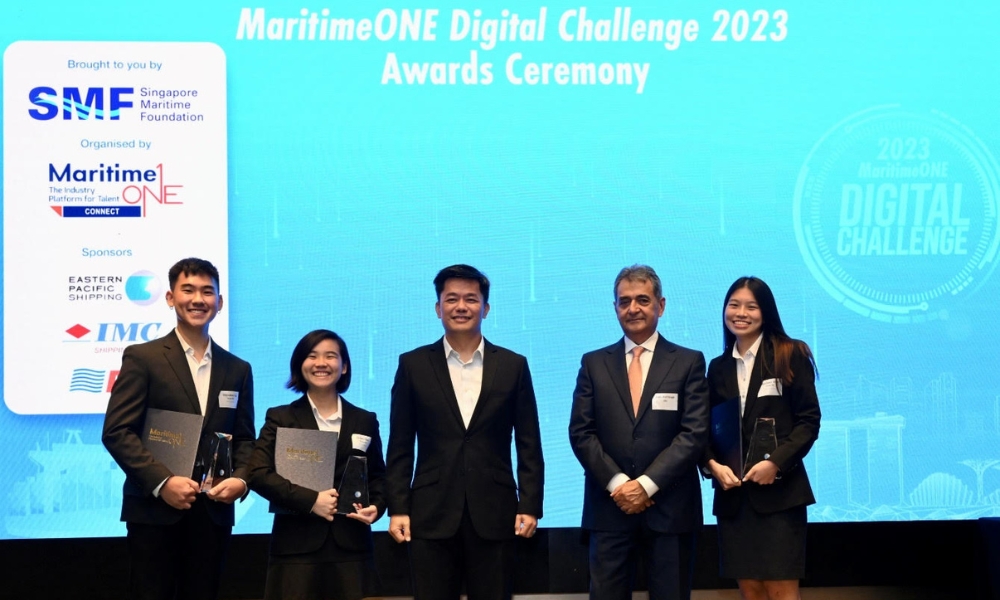

Students from Nanyang Technological University and Singapore Management University were crowned champions of the third edition of the case competition.
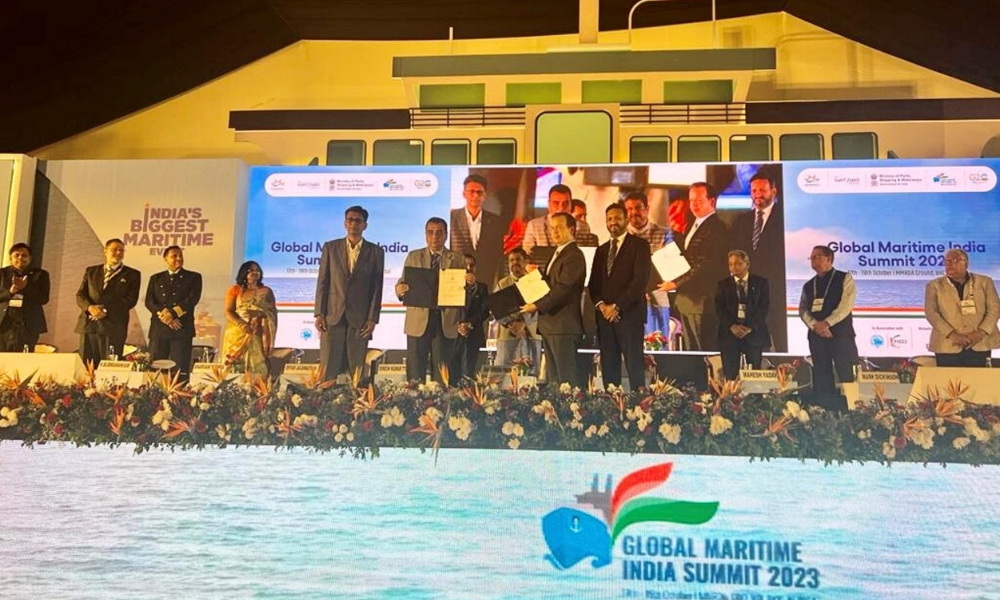

Duo signed a Memorandum of Understanding to explore options for converting at least two SCI vessels to be capable of operating on green methanol marine fuel.

The 9,300 CEU vessels will be built in China at Jinling Shipyard (Jiangsu) and are scheduled for delivery from mid-2026; the order contains options for a...
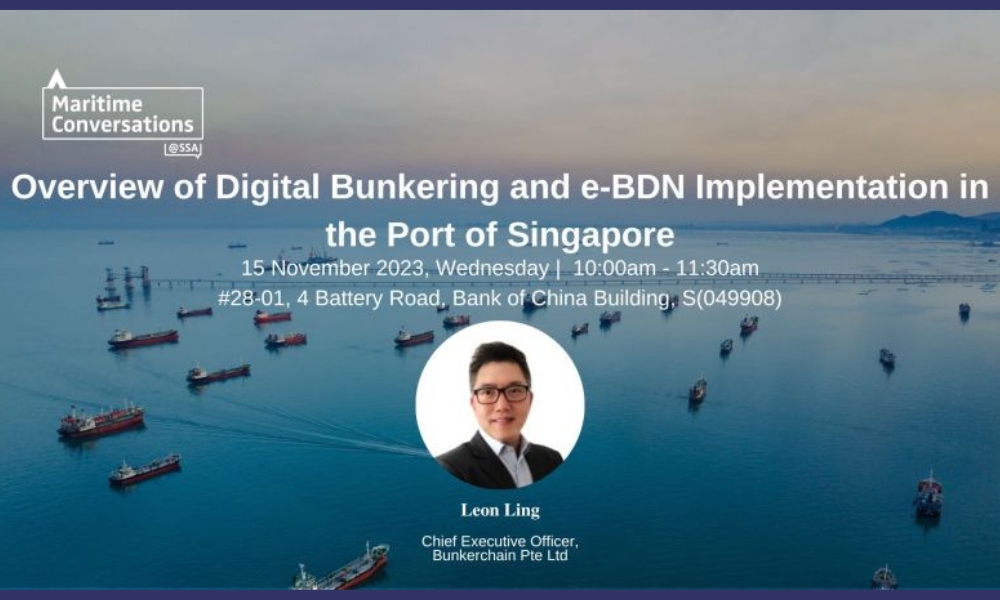

Leon Ling, Chief Executive Officer of Bunkerchain will be presenting an in-depth overview of how electronic bunker delivery note will be implemented in Singapore.
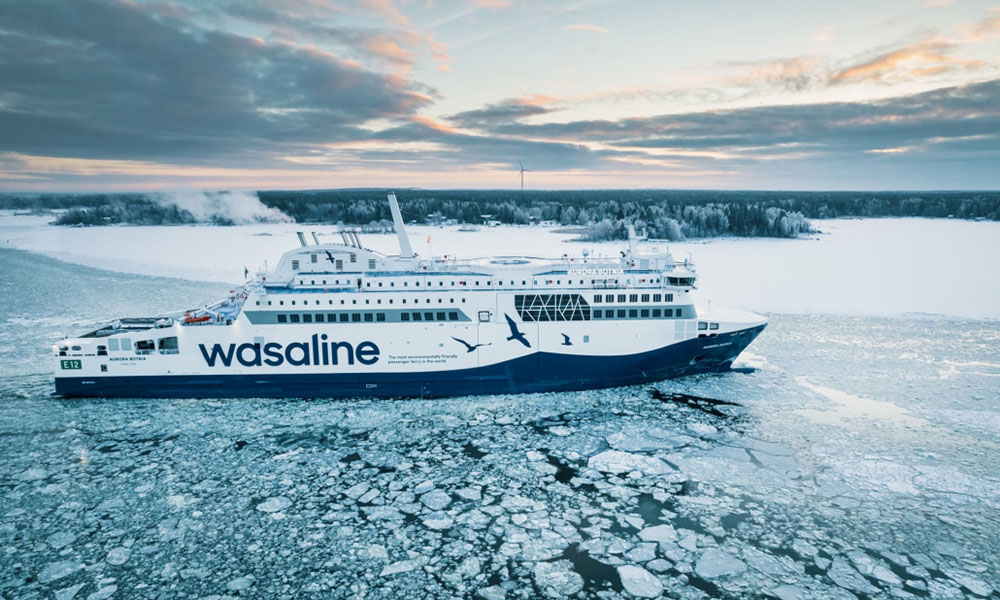

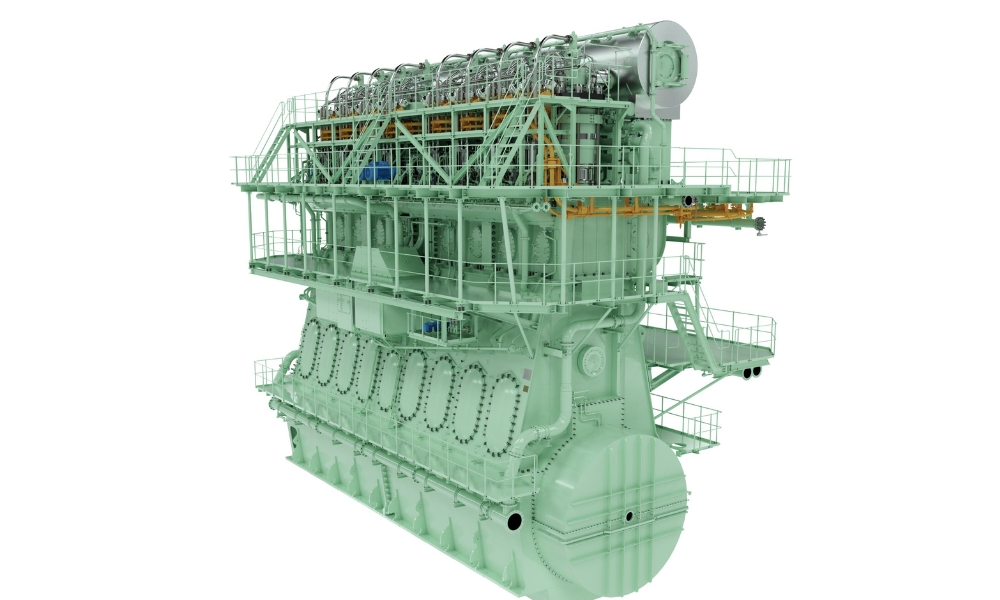
New technology can reduce methane emissions by 41% more than the standard Wärtsilä 31DF engine, which has already the lowest emission levels on the market.

Approximately 63% of the vessels on order in South Korea are being fitted with dual fuel capabilities, with a market value of USD 99.58 million, says...

Concerns over potentially catastrophic impact of a rapidly warming planet have spurred efforts by Asian countries to set targets for achieving zero net carbon emissions by...


Steve Bee, VPS Group Commercial Director, discusses how pre-burn chemical screening of bunker fuels can help prevent costly and catastrophic engine failures.
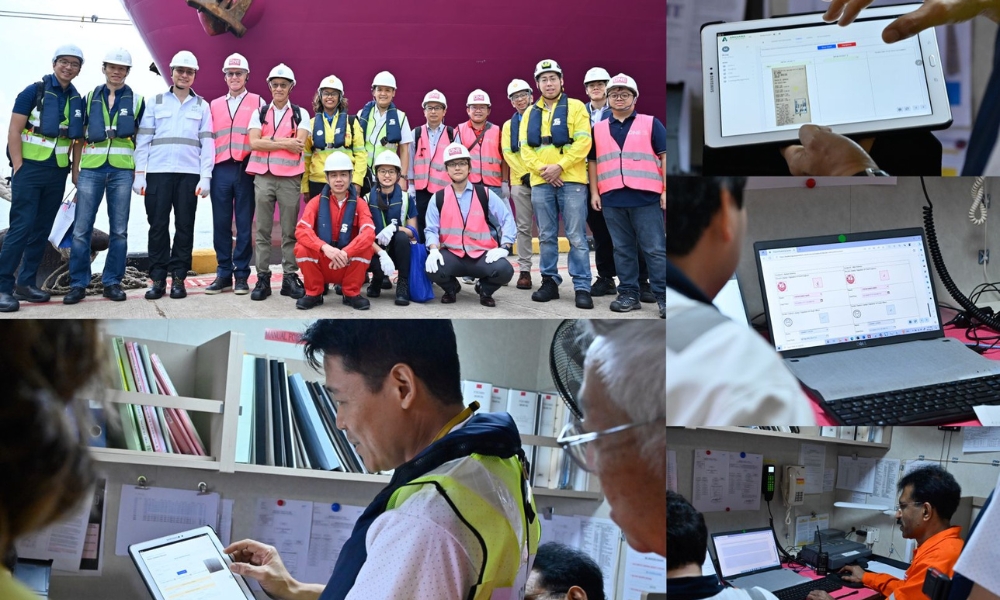

MPA will explore enhancements, including automating data flow from MFMs, and work with Singapore Standards Council to revise current code of practice to support electronic bunkering...


