Connect with us

Decarbonisation

Wah Kwong NatPower, AREL partner on maritime electrification in Hong Kong

Collaboration will examine opportunities to deploy shore power facilities, vessel charging infrastructure and battery energy storage solutions, alongside the development of electric vessels.

Admin

Published

on

Wah Kwong NatPower, AREL partner on maritime electrification in Hong Kong

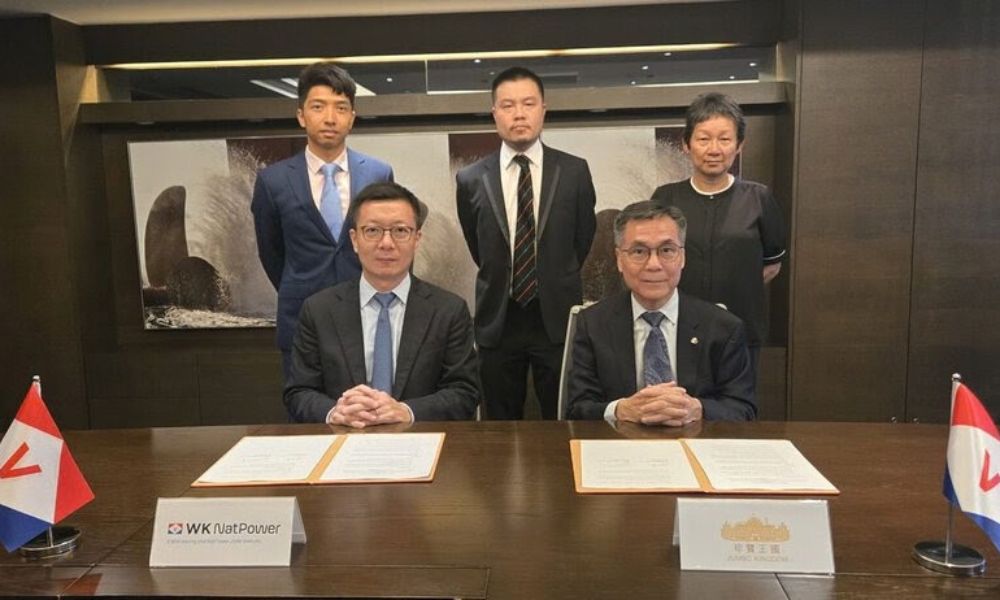
Wah Kwong NatPower (WK NatPower) on Tuesday (22 September) said it has signed a Memorandum of Understanding (MoU) with Aberdeen Restaurant Enterprises Limited (AREL) to explore the electrification of piers, vessels and supporting energy infrastructure in the Aberdeen area of Hong Kong.

Against the backdrop of the HKSAR Government’s latest policy direction to advance green shipping, smart port development and shore power infrastructure, WK NatPower and AREL will explore the development of an integrated marine electrification ecosystem in the Aberdeen and Shum Wan areas. 

The collaboration will examine opportunities to deploy shore power facilities, vessel charging infrastructure and battery energy storage solutions, alongside the development of electric vessels for future transport and tourism services.

The initiative supports Hong Kong to become a leading hub for sustainable maritime innovation while contributing to the revitalisation of one of the city’s most iconic waterfront communities. As an initial phase of the collaboration, the two parties will explore the opportunity for the construction of a series of electric vessels and transport vessels. 

The initiative will also examine the potential deployment of the ApliAber® electric vessel fleet as a new benchmark for sustainable waterfront mobility and hospitality experiences in Hong Kong.

Vincent Ni, General Manager of WK NatPower, said: “This MoU marks an important step in supporting Hong Kong’s marine energy transition. Aberdeen has long been an iconic part of Hong Kong’s maritime heritage, and we are delighted to explore opportunities to develop integrated shore power and vessel electrification solutions that can support a cleaner and more sustainable future for the harbour.”

Wong Tai Yu, Director of AREL, said: “Through this collaboration, we look forward to exploring practical ways to introduce cleaner energy, electric vessels and sustainable waterfront experiences, while supporting the revitalization of Jumbo Kingdom® for future generations.”


Photo credit: Wah Kwong NatPower
Published: 23 September, 2026

Continue Reading

Alternative Fuels

GCMD, Equinor to combine expertise on alternative bunker fuels, decarbonisation solutions

Equinor brings extensive experience to partnership as a vessel charterer and marine fuel supplier, including chartering dual-fuel LNG and methanol tankers, testing biofuels and supplying methanol.
Admin

Published

on

By

GCMD, Equinor to combine expertise on alternative bunker fuels, decarbonisation solutions

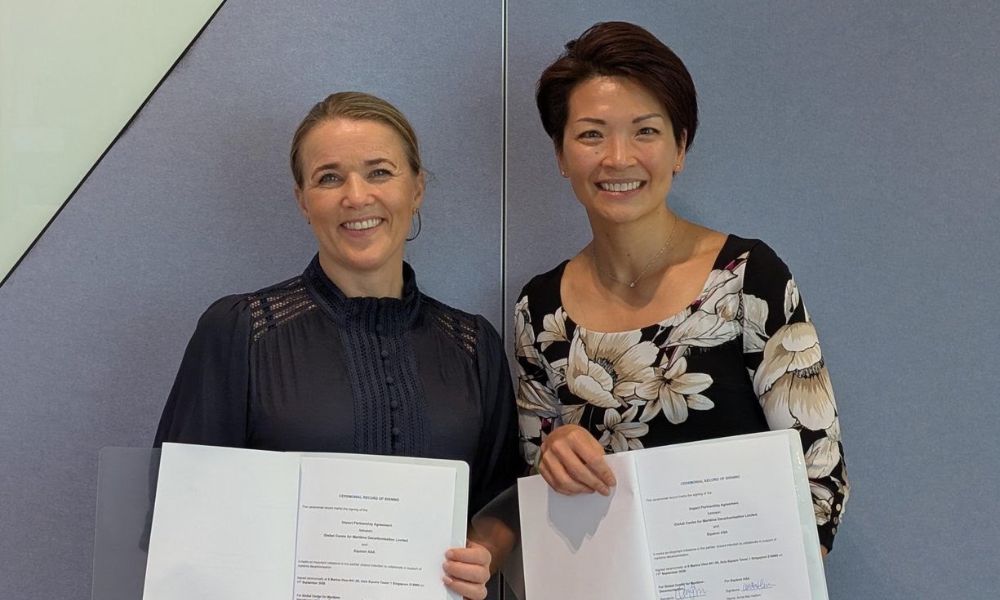
The Global Centre for Maritime Decarbonisation (GCMD) and Equinor on Tuesday (22 September) announced a five-year Impact partnership.

The partnership brings together GCMD’s capabilities in conducting real-world maritime pilots with Equinor’s experience as a charterer, energy provider and developer of low-carbon solutions.

Together, the organisations will leverage their complementary expertise to help address technical and operational gaps in scaling alternative marine fuels and supporting the development and uptake of other maritime decarbonisation solutions.

GCMD’s work on alternative fuels, including biofuels, ammonia and methanol, focuses on two critical aspects of deployment: operational safety and robust monitoring, reporting and verification (MRV). Its pilots and studies are generating operational data to support safe bunkering and handling of these fuels. 

At the same time, its assurance work seeks to strengthen confidence in quantity, quality and GHG emissions abatement.

“Equinor brings extensive experience as a vessel charterer and marine fuel supplier. This includes chartering dual-fuel LNG, LPG and methanol tankers, testing and using biofuels and supplying methanol to the maritime sector,” GCMD said.

Equinor is also piloting the use and supply of ammonia as a marine fuel, contributing to the development of associated safety, regulatory and bunkering arrangements.

Combining these perspectives can help address practical barriers to alternative fuels deployment while strengthening assurance across emerging marine fuel value chains.

Beyond alternative fuels, GCMD is working to accelerate the adoption of solutions that can reduce emissions from the existing fleet, including energy efficiency technologies (EETs) and onboard carbon capture and storage (OCCS).

GCMD’s work on EETs includes quantifying real-world fuel savings from technologies such as wind-assisted propulsion systems and developing financing mechanisms to scale their adoption. In OCCS, Project CAPTURED demonstrated an end-to-end value chain for onboard captured and liquefied CO₂, generating evidence that contributed to the recognition of captured CO2 under the EU ETS and in-principle support at the IMO for recognising carbon mineralisation as permanent storage.

Equinor brings decades of experience in offshore CO₂ storage, including its role in the development and operation of Northern Lights, the world’s first cross-border CO2 transport and storage facility, where liquefied CO₂ is transported by ship to an onshore receiving terminal before it is sent by pipeline for permanent geological storage beneath the North Sea.

Through the partnership, GCMD and Equinor will explore opportunities to combine their respective capabilities and experience to support the deployment and scaling of maritime decarbonisation solutions.


Photo credit: Global Centre for Maritime Decarbonisation
Published: 23 September, 2026

Continue Reading

Ammonia

IMO technical seminar examines ammonia bunkering and infrastructure

Around 800 participants exchanged technical information and experiences on the potential use of ammonia as a marine fuel, including developments in production and bunkering and infrastructure.
Admin

Published

on

By

16

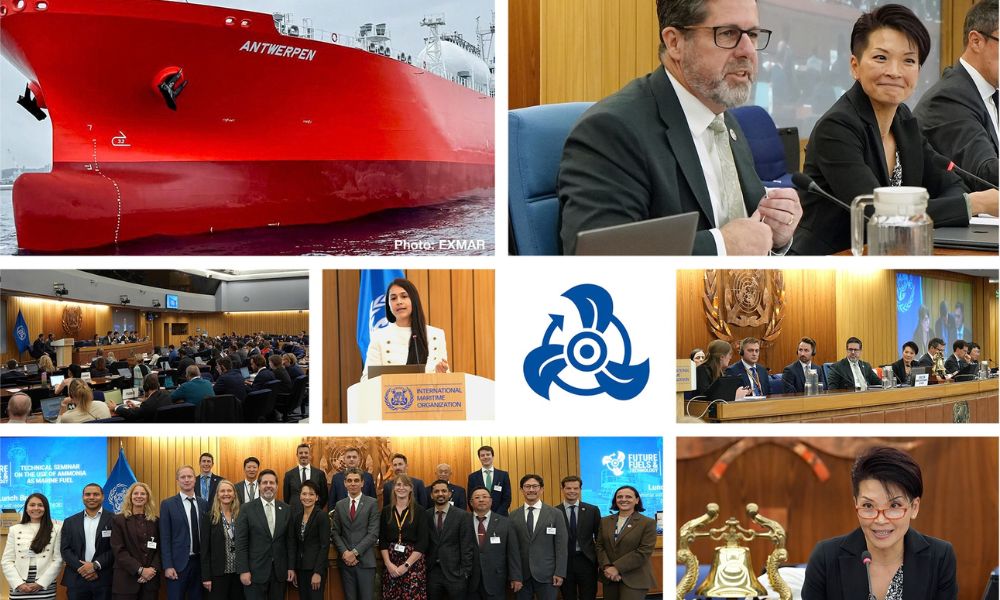
The International Maritime Organization on Tuesday (22 September) said international experts have shared their insight on the use of ammonia as marine fuel during an IMO technical seminar at IMO Headquarters in London (17 September). 

The seminar was organized by IMO’s Future Fuels and Technology Project (FFT Project) and brought together around 800 participants from IMO Member States, NGOs, IGOs, industry and academia, both in person and online. 

Professor Lynn Loo, Chief Executive Officer of the Global Centre for Maritime Decarbonization, moderated the event. 

Participants exchanged technical information and experiences on the potential use of ammonia as a marine fuel, including developments in production, bunkering and infrastructure, technology developments, notably on ammonia-fuelled engines and control of emissions, as well as safety and environmental considerations. 

Opening the seminar, David Osborn, Director of the IMO Marine Environment Division, highlighted the importance of technical knowledge in supporting discussions on alternative fuels.

“Sound policy must nevertheless rest on sound evidence. The decisions this Organization takes on alternative fuels depend on a clear and shared understanding of what the technology can do today, where the difficulties lie, and what remains unresolved,” he said. 

IMO’s Future Fuels and Technology Project (FFT Project) is a partnership between the Government of the Republic of Korea and IMO, aiming to support GHG emissions reduction from international shipping by promoting the uptake of future fuels and technology. 

The seminar was the fifth technical seminar organized under the project, following previous editions covering onboard carbon capture and storage (OCCS), energy transition of shipping (Hong Kong Maritime week), biofuels and methane-based fuels

Note: Video recording and presentations of the seminar is available here


Photo credit: International Maritime Organization
Published: 23 September, 2026

Continue Reading

Bunker Fuel

PortXchange: Rotterdam bunker volume shift offers warning as Spain adopts fuel law

Spain’s marine fuel supplier-focused decarbonisation rules follow the Netherlands, where Rotterdam bunker sales fell to their lowest level since 2009.
Admin

Published

on

By

PortXchange: Rotterdam bunker volume shift offers warning as Spain adopts fuel law

Port emissions data specialist PortXchange on Tuesday (22 September) said nine months after the Netherlands became the first country to impose a binding decarbonisation obligation on marine fuel suppliers rather than on the ships they serve, Spain has followed with Royal Decree 611/2026.

The company said the market data from Rotterdam shows what other ports should expect if the mechanism keeps spreading unevenly. 

Since Dutch rules took effect on 1 January 2026, requiring fuel suppliers to cut the greenhouse gas intensity of bunker fuel sold in the Netherlands, Rotterdam’s bunker sales have fallen sharply, dropping 648,399 tonnes in the first quarter of the year to their lowest level since 2009.

Belgium has delayed introducing an equivalent rule and Germany has so far excluded maritime fuel from its own transposition, so the volume that left Rotterdam has moved to ports with no equivalent obligation rather than being decarbonised. By September, Rotterdam’s compliance-driven price premium over its nearest competitor had widened to USD 20-25 per tonne.

Spain’s Royal Decree 611/2026 applies the same principle, a binding obligation on fuel suppliers rather than vessel operators, but scopes it to domestic cabotage shipping, with a greenhouse gas intensity reduction curve rising from 6.5% in 2027 to 33% in 2040. Spanish ports will also be required to report annually on the fuel and electricity they supply, categorised by type.

The timing is pointed. The IMO’s own attempt at a single global mechanism, the Net-Zero Framework approved in principle in April 2025, failed to secure adoption at an extraordinary session in October 2025 on a 57-49 vote.

The question returns to the table this winter: an intersessional working group meets on 23-27 November 2026, immediately followed by MEPC 85 and the resumed extraordinary session from 30 November to 4 December, where the adoption vote is expected to be revisited. PortXchange argues the EU’s national rollout is, in effect, a live pilot of the fragmentation risk IMO member states are trying to avoid.

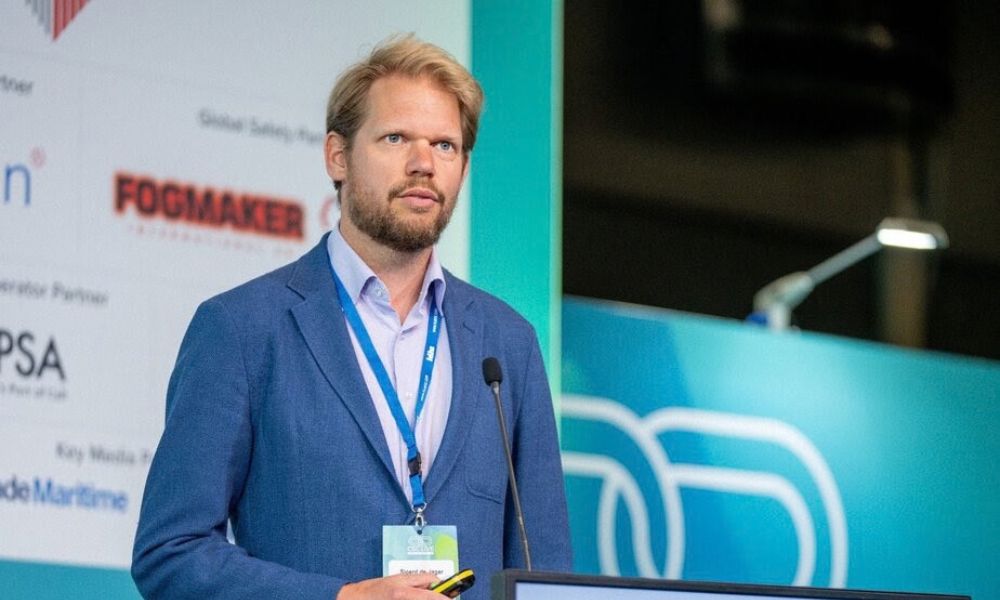
“Netherlands played it straight. Belgium delayed. Germany opted out. And the volume did exactly what volume does when the rules aren’t the same next door: it moved. Spain’s next. The real question is who else is willing to go first without checking whether anyone’s coming with them,” said Sjoerd de Jager, Managing Director and Co-Founder of PortXchange.

PortXchange’s EmissionInsider and Port Emission Reporter give ports and operators visibility into bunker volumes, supplier jurisdictions and Scope 3 emissions exposure across multiple markets, allowing shifts of this kind to be identified as they form rather than reconciled after the fact in quarterly trade data.

Sjoerd de Jager said: “This is bigger than one decree. Two governments have now shown what happens when the transition isn’t coordinated: the tonnes move, the emissions don’t. 

“The industry doesn’t need another debate about who regulates first. It needs ports, suppliers and regulators acting together before  December, not after. That’s not a policy preference. It’s a survival strategy.”


Photo credit: PortXchange
Published: 23 September, 2026

Continue Reading
Advertisement

OUR INDUSTRY PARTNERS


Trending