Connect with us

Ammonia

IMO technical seminar examines ammonia bunkering and infrastructure

Around 800 participants exchanged technical information and experiences on the potential use of ammonia as a marine fuel, including developments in production and bunkering and infrastructure.

Admin

Published

on

16

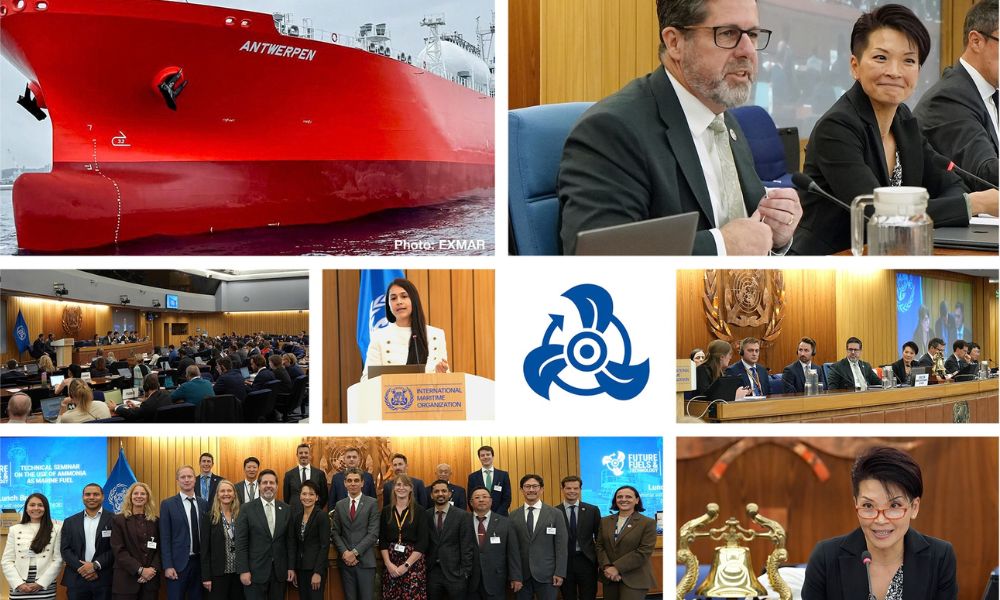
The International Maritime Organization on Tuesday (22 September) said international experts have shared their insight on the use of ammonia as marine fuel during an IMO technical seminar at IMO Headquarters in London (17 September). 

The seminar was organized by IMO’s Future Fuels and Technology Project (FFT Project) and brought together around 800 participants from IMO Member States, NGOs, IGOs, industry and academia, both in person and online. 

Professor Lynn Loo, Chief Executive Officer of the Global Centre for Maritime Decarbonization, moderated the event. 

Participants exchanged technical information and experiences on the potential use of ammonia as a marine fuel, including developments in production, bunkering and infrastructure, technology developments, notably on ammonia-fuelled engines and control of emissions, as well as safety and environmental considerations. 

Opening the seminar, David Osborn, Director of the IMO Marine Environment Division, highlighted the importance of technical knowledge in supporting discussions on alternative fuels.

“Sound policy must nevertheless rest on sound evidence. The decisions this Organization takes on alternative fuels depend on a clear and shared understanding of what the technology can do today, where the difficulties lie, and what remains unresolved,” he said. 

IMO’s Future Fuels and Technology Project (FFT Project) is a partnership between the Government of the Republic of Korea and IMO, aiming to support GHG emissions reduction from international shipping by promoting the uptake of future fuels and technology. 

The seminar was the fifth technical seminar organized under the project, following previous editions covering onboard carbon capture and storage (OCCS), energy transition of shipping (Hong Kong Maritime week), biofuels and methane-based fuels

Note: Video recording and presentations of the seminar is available here


Photo credit: International Maritime Organization
Published: 23 September, 2026

Continue Reading

Alternative Fuels

GCMD, Equinor to combine expertise on alternative bunker fuels, decarbonisation solutions

Equinor brings extensive experience to partnership as a vessel charterer and marine fuel supplier, including chartering dual-fuel LNG and methanol tankers, testing biofuels and supplying methanol.
Admin

Published

on

By

GCMD, Equinor to combine expertise on alternative bunker fuels, decarbonisation solutions

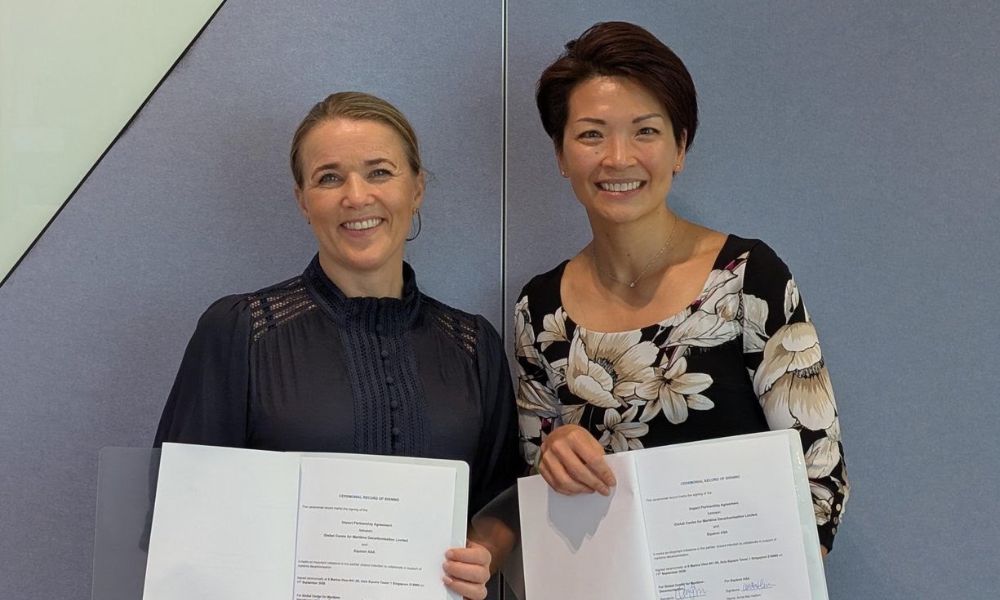
The Global Centre for Maritime Decarbonisation (GCMD) and Equinor on Tuesday (22 September) announced a five-year Impact partnership.

The partnership brings together GCMD’s capabilities in conducting real-world maritime pilots with Equinor’s experience as a charterer, energy provider and developer of low-carbon solutions.

Together, the organisations will leverage their complementary expertise to help address technical and operational gaps in scaling alternative marine fuels and supporting the development and uptake of other maritime decarbonisation solutions.

GCMD’s work on alternative fuels, including biofuels, ammonia and methanol, focuses on two critical aspects of deployment: operational safety and robust monitoring, reporting and verification (MRV). Its pilots and studies are generating operational data to support safe bunkering and handling of these fuels. 

At the same time, its assurance work seeks to strengthen confidence in quantity, quality and GHG emissions abatement.

“Equinor brings extensive experience as a vessel charterer and marine fuel supplier. This includes chartering dual-fuel LNG, LPG and methanol tankers, testing and using biofuels and supplying methanol to the maritime sector,” GCMD said.

Equinor is also piloting the use and supply of ammonia as a marine fuel, contributing to the development of associated safety, regulatory and bunkering arrangements.

Combining these perspectives can help address practical barriers to alternative fuels deployment while strengthening assurance across emerging marine fuel value chains.

Beyond alternative fuels, GCMD is working to accelerate the adoption of solutions that can reduce emissions from the existing fleet, including energy efficiency technologies (EETs) and onboard carbon capture and storage (OCCS).

GCMD’s work on EETs includes quantifying real-world fuel savings from technologies such as wind-assisted propulsion systems and developing financing mechanisms to scale their adoption. In OCCS, Project CAPTURED demonstrated an end-to-end value chain for onboard captured and liquefied CO₂, generating evidence that contributed to the recognition of captured CO2 under the EU ETS and in-principle support at the IMO for recognising carbon mineralisation as permanent storage.

Equinor brings decades of experience in offshore CO₂ storage, including its role in the development and operation of Northern Lights, the world’s first cross-border CO2 transport and storage facility, where liquefied CO₂ is transported by ship to an onshore receiving terminal before it is sent by pipeline for permanent geological storage beneath the North Sea.

Through the partnership, GCMD and Equinor will explore opportunities to combine their respective capabilities and experience to support the deployment and scaling of maritime decarbonisation solutions.


Photo credit: Global Centre for Maritime Decarbonisation
Published: 23 September, 2026

Continue Reading

Ammonia

HD HHI and HD KSOE secure ABS AiP for ammonia bunkering vessel design

ABS awarded approval in principle for the basic design of a 22,000 CBM bunkering vessel capable of supplying ammonia as marine fuel.
Admin

Published

on

By

HD HHI and HD KSOE secure ABS AiP for ammonia bunkering vessel

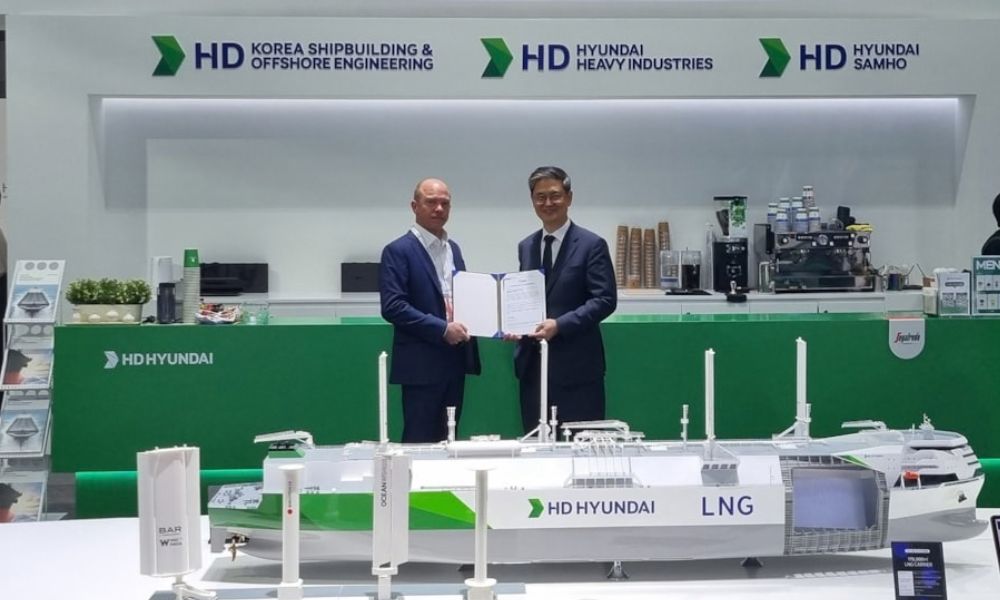
Classification society ABS on Monday (21 September) said it has awarded HD Hyundai Heavy Industries (HD HHI) and HD Korea Shipbuilding & Offshore Engineering (HD KSOE) approval in principle (AIP) for the basic design of a 22,000 CBM bunkering vessel capable of supplying ammonia as marine fuel.

The approval is the result of a joint development project initiated earlier this year. ABS reviewed the design’s general arrangement, machinery arrangement, ammonia cargo handling system and fuel supply system against applicable class and international requirements.

Gareth Burton, ABS Senior Vice President, Global Engineering, said: “Bunkering infrastructure is a critical step for any marine fuel to scale, and it has to be implemented with safety designed in from the start.

“This AIP reflects the industry’s need for fuel flexibility while advancing the safe bunkering of ammonia. ABS is proud to support HD HHI and HD KSOE as they develop technologies that expand fuel flexibility.”

Ryu Hong-Ryeul, Chief Technical Officer (CTO) of HD HHI, said: “As ammonia rapidly emerges as a viable low-carbon alternative fuel, demand for ammonia bunkering vessels is expected to grow in line with the increasing adoption of ammonia-fuelled ships. 

“This AIP marks a significant milestone toward the commercialisation of ammonia bunkering vessels.”

ABS and the HD Hyundai group have worked together across a range of technologies supporting ammonia as a marine fuel. Recent projects have included AIP for HD KSOE’s ammonia cargo handling and bunkering system and initial review for HD HHI’s machinery arrangement in engine room.


Photo credit: ABS
Published: 22 September, 2026

Continue Reading

Ammonia

NYK wraps up first STS ammonia bunkering operation in Japan

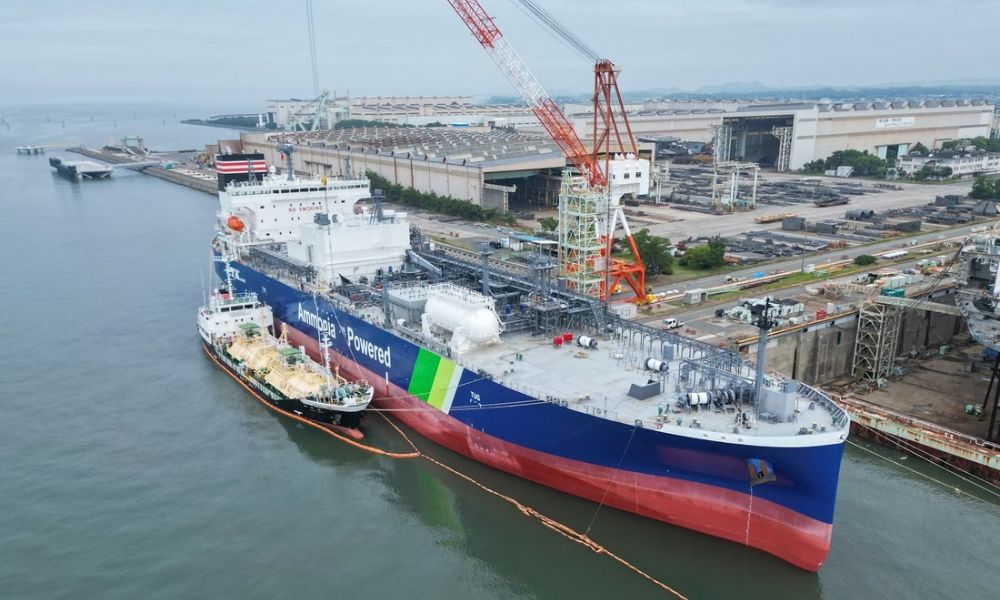
Ammonia fuel was transferred from the ammonia carrier “Shoei Maru” via the STS method to an ammonia-fuelled medium gas carrier, scheduled for delivery in November 2026.
Admin

Published

on

By

NYK wraps up first STS ammonia bunkering operation in Japan

NYK Line, on Thursday (17 September) with Japan Marine United Corporation, Nihon Shipyard Co Ltd, Mitsubishi Gas Chemical Company, and Kokuka Sangyo Co Ltd, has completed the world’s first ship-to-ship (STS) ammonia bunkering operation to an ammonia-fuelled vessel. 

At a quay within Japan Marine United Corporation’s Ariake Shipyard, ammonia fuel was transferred from the ammonia carrier Shoei Maru via the STS method to an ammonia-fuelled medium gas carrier (AFMGC) scheduled for delivery in November 2026. 

The operation was conducted in preparation for sea trials of the AFMGC using fuel ammonia.

“This achievement represents an important initiative that has put into practice an operation essential for the future practical deployment of ammonia-fuelled vessels,” the company said. 

The bunkering operation was conducted following extensive discussions among the companies involved. Safe operating procedures and work processes were established prior to the operation, enabling the transfer to be completed safely. Through this initiative, we have accumulated practical insights regarding safe fuel supply operations.

This operation serves as a pioneering example of the fuel-supply framework that will be required for the widespread adoption of ammonia-fuelled vessels. 

The AFMGC is currently in the final stage of construction and is scheduled for delivery in November 2026. 

“The successful completion of this operation marks a significant milestone toward the broader commercial use of fuel ammonia and the practical deployment of ammonia-fuelled vessels. It also represents an important step forward in establishing an ammonia supply chain,” the company added. 


Photo credit: NYK
Published: 21 September, 2026

Continue Reading
Advertisement

OUR INDUSTRY PARTNERS


Trending