Connect with us

Alternative Fuels

DNV: How ethanol is expanding shipping’s fuel choices

DNV examines why interest in ethanol is growing, drawing on insights from cargo owners, engine manufacturers, and other industry stakeholders.

Admin

Published

on

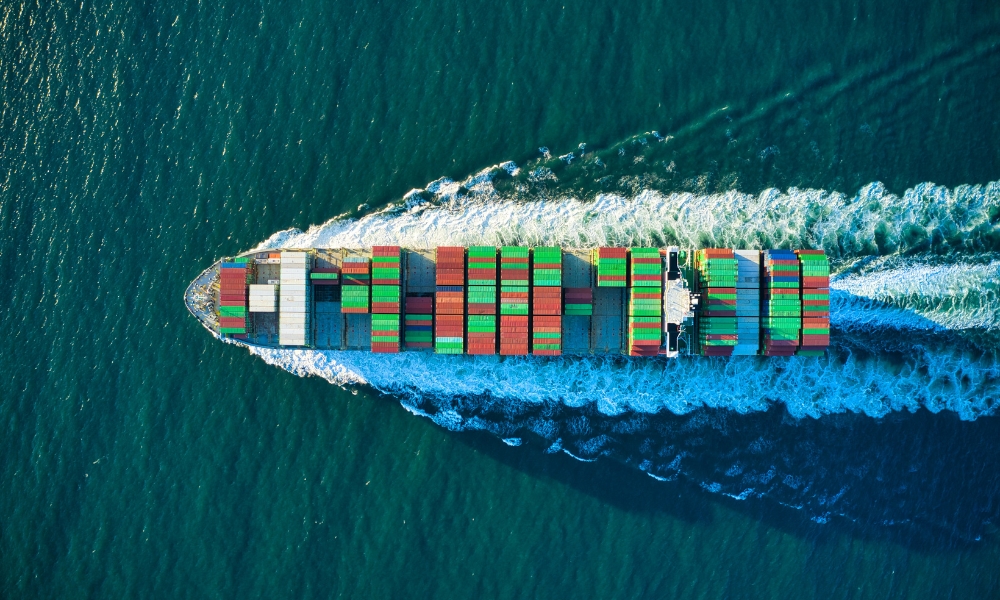
RESIZED Venti Views on Unsplash

Classification society DNV on Thursday (17 September) published a Maritime Impact article, examining why interest in ethanol is growing, drawing on insights from cargo owners, engine manufacturers, and other industry stakeholders. 

The article explores recent vessel projects, technology developments, and the factors that will influence future uptake, including economics, fuel availability, sustainability, and regulation:

For years, ethanol sat on the periphery of the maritime fuel debate. Whilst the orderbook shows that LNG and, more recently, methanol have seen growing uptake in the global fleet, ethanol has remained largely confined to regional discussions despite being the world’s most widely produced liquid biofuel.

That picture is beginning to change.

Why interest is growing in ethanol as marine fuel

Part of ethanol’s appeal is its maturity outside shipping. Decades of use in road transport have created extensive production capacity, established supply chains, and well-developed fuel logistics. At the same time, increasing focus on lifecycle emissions and regulations such as FuelEU Maritime are directing attention towards fuels capable of delivering meaningful well-to-wake greenhouse gas reductions.

However, production scale and emissions performance alone do not explain the growing interest. Ethanol is entering the maritime conversation at a time when the industry is searching for practical pathways that can support decarbonization without locking companies into a single long-term fuel choice.

Why cargo owners are investing in ethanol-powered ships

Among those exploring ethanol’s potential is VALE, a mining company and cargo owner which sees the fuel as part of its broader decarbonization strategy.

That commitment is already translating into projects. VALE has partnered with Shandong Shipping to build at least two Guaibamax vessels equipped with rotor sails and powered by ethanol, with delivery expected in 2029, and is evaluating the conversion of methanol-fuelled vessels into tri-fuel ships capable of operating on methanol, ethanol, and conventional fuel.

For VALE, a central focus of these projects is how they support the company in maintaining flexibility, thus creating options in an uncertain market. This reflects a broader industry trend towards preserving fuel flexibility whilst continuing to reduce emissions.

“Designing and constructing new ships is the most cost-effective and integrated opportunity to incorporate technological advances in our decarbonization program,” says Rodrigo Bermelho, Shipping Director at VALE. “This approach provides flexibility during regulatory and market uncertainty, enabling VALE to advance decarbonization whilst maintaining different strategic options.”  

Shared technology, greater flexibility: the growing ethanol–methanol opportunity

One of the most interesting aspects of ethanol’s emergence is that it is not developing in isolation.

The fuel enters the maritime conversation at a time when investments in methanol technology are accelerating. The two alcohol fuels share several characteristics, creating opportunities to build on existing engine developments, fuel systems, and operational experience rather than requiring a completely separate technological pathway.

“Ethanol shares some characteristics with methanol and may offer additional flexibility for certain vessel applications over time,” says Mario Barbosa, General Manager Latin America at Wärtsilä.

This connection could prove important as shipowners seek to maintain flexibility in an increasingly uncertain fuel landscape. Rather than committing to a single fuel pathway, they may be able to leverage technologies and vessels capable of accommodating multiple future fuel options.

Ethanol requires own technical assessment

Whilst the similarities between methanol and ethanol create opportunities, industry experts stress that the two fuels should not be treated identically. Safety considerations also remain important. However, ethanol benefits from the fact that alcohol fuels are already covered by established IMO safety frameworks, whilst growing operational experience with methanol is helping the industry better understand the safe handling and use of alcohol-based marine fuels.

“Engine parameters, fuel injection, fuel system specifications, and safety considerations need to be carefully assessed for each vessel and application,” says Barbosa. “Ethanol brings its own characteristics, including differences in energy content, which means optimization is important to support reliable and efficient operation.”

In practice, this means that ethanol benefits from lessons learned through methanol adoption but still requires its own technical assessment. Fuel system design, engine configuration, and operational requirements must all be considered when evaluating ethanol for a specific vessel or trade.

Note: The full article by DNV can be found here


Photo credit: Venti Views on Unsplash
Published: 21 September, 2026

Continue Reading

Biofuel

Petrochina International blends over 30,000 mt of marine biofuel since March

Company has been developing marine biofuel blending operations at China (Zhejiang) Pilot Free Trade Zone, leveraging storage and logistics facilities at its Aoshan base.
Admin

Published

on

By

Zhoushan completes China’s first batch of marine biofuel blending under pilot programme

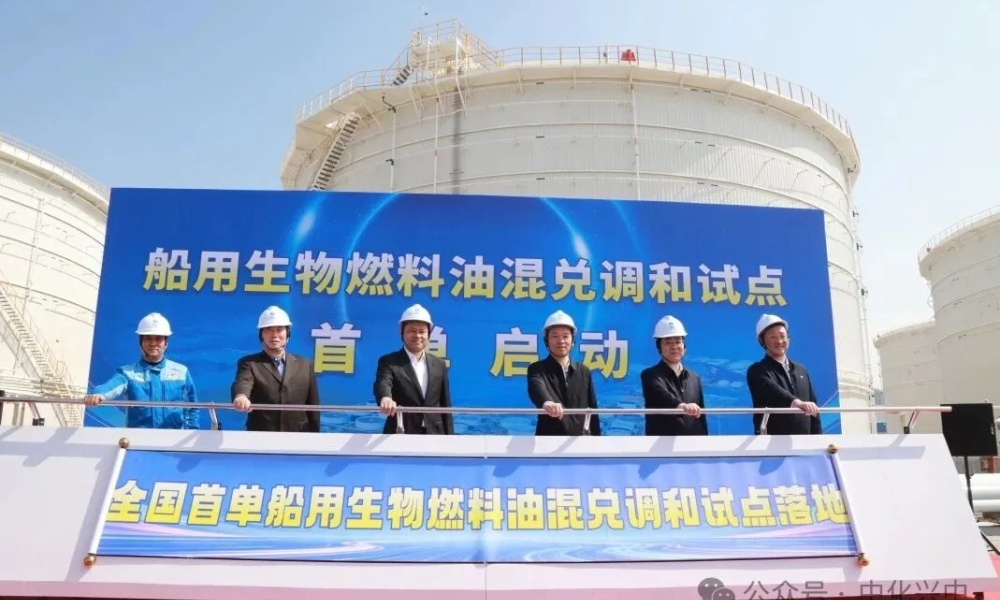
Petrochina International Co Ltd recently said it has blended more than 30,000 metric tonnes (mt) mt of biofuel since completing the country’s first biofuel marine fuel blending operation on 13 March.

The company said the milestone demonstrates its ability to conduct continuous and large-scale biofuel marine fuel blending operations.

The company has been developing marine biofuel blending operations at China (Zhejiang) Pilot Free Trade Zone, leveraging storage and logistics facilities at its Aoshan base.

Its latest product, B24 marine fuel containing 24% biofuel component, meets relevant International Maritime Organization (IMO) requirements and marine fuel standards, according to the company. It said the product can be supplied for bunkering vessels operating on international routes.

It has used its global trading network to secure feedstock supplies and support cost control and supply security for the blending operations, it added.

The company said the large-scale blending of its marine biofuel products marks a development in China’s marine biofuel blending market.

It plans to work with upstream and downstream businesses within its group to support the development of Zhoushan Port as a major bonded marine fuel bunkering hub and contribute to its parent group’s transition towards lower-carbon energy.

Manifold Times previously reported China (Zhejiang) Pilot Free Trade Zone launching the first pilot programme for marine biofuel blending in China with the completion of the first batch of B24-HSFO. 

The launch was marked with the blending of 2,000 mt of biodiesel and 6,300 mt of high sulphur fuel oil (HSFO) in storage tank F-02 of Sinochem-Xingzhong Oil Staging (Zhoushan), producing 8,300 mt of B24-HSFO. 

Manifold Times also reported the first cross-regional bonded bunkering operation of blended biofuel in East China was successfully completed at the Meishan Port Area of ​​Ningbo-Zhoushan Port. 

The B24-HSFO used in the bunkering operation was supplied by the Aoshan Petroleum Base in Zhoushan from the first pilot programme for marine biofuel blending in China. 

Related: Zhoushan completes China’s first batch of marine biofuel blending under pilot programme
Related: Ningbo wraps up East China’s first cross-regional biofuel blending and bunkering
Related: China debuts first marine biofuel blending pilot programme in Zhoushan
Related: China’s first batch of domestically blended marine biofuel delivered to Qingdao for bunkering


Photo credit: Sinochem-Xingzhong Oil Staging (Zhoushan)
Published: 21 September, 2026

Continue Reading

Ammonia

NYK wraps up first STS ammonia bunkering operation in Japan

Ammonia fuel was transferred from the ammonia carrier “Shoei Maru” via the STS method to an ammonia-fuelled medium gas carrier, scheduled for delivery in November 2026.
Admin

Published

on

By

NYK wraps up first STS ammonia bunkering operation in Japan

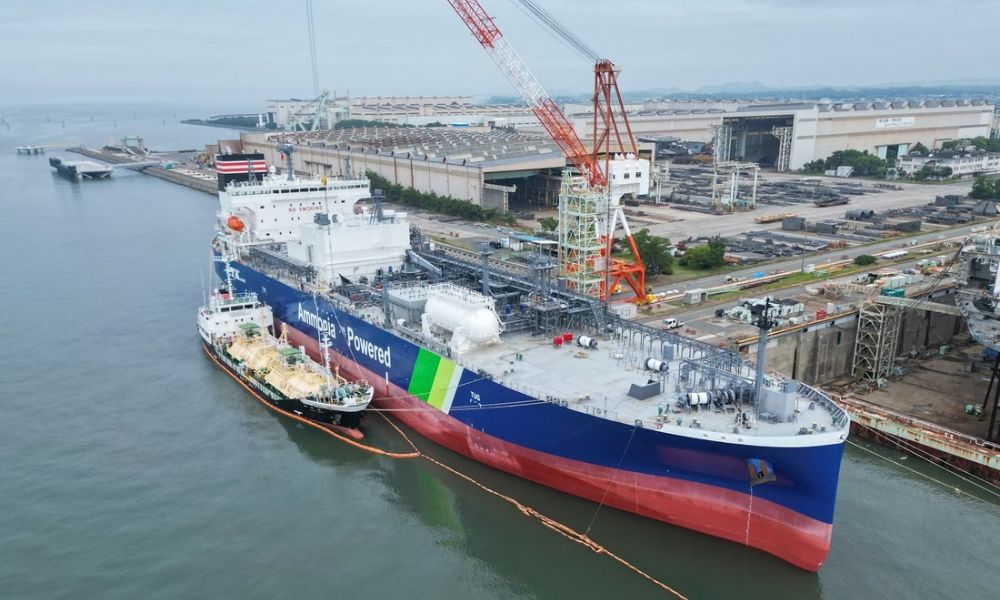
NYK Line, on Thursday (17 September) with Japan Marine United Corporation, Nihon Shipyard Co Ltd, Mitsubishi Gas Chemical Company, and Kokuka Sangyo Co Ltd, has completed the world’s first ship-to-ship (STS) ammonia bunkering operation to an ammonia-fuelled vessel. 

At a quay within Japan Marine United Corporation’s Ariake Shipyard, ammonia fuel was transferred from the ammonia carrier Shoei Maru via the STS method to an ammonia-fuelled medium gas carrier (AFMGC) scheduled for delivery in November 2026. 

The operation was conducted in preparation for sea trials of the AFMGC using fuel ammonia.

“This achievement represents an important initiative that has put into practice an operation essential for the future practical deployment of ammonia-fuelled vessels,” the company said. 

The bunkering operation was conducted following extensive discussions among the companies involved. Safe operating procedures and work processes were established prior to the operation, enabling the transfer to be completed safely. Through this initiative, we have accumulated practical insights regarding safe fuel supply operations.

This operation serves as a pioneering example of the fuel-supply framework that will be required for the widespread adoption of ammonia-fuelled vessels. 

The AFMGC is currently in the final stage of construction and is scheduled for delivery in November 2026. 

“The successful completion of this operation marks a significant milestone toward the broader commercial use of fuel ammonia and the practical deployment of ammonia-fuelled vessels. It also represents an important step forward in establishing an ammonia supply chain,” the company added. 


Photo credit: NYK
Published: 21 September, 2026

Continue Reading

Ammonia

Azane secures ammonia bunker fuel supply from Yara

Yara will supply ammonia to Azane through its established production and logistics network, and Azane will sell the ammonia to end clients in the maritime fuel market.
Admin

Published

on

By

Azane secures ammonia bunker fuel supply from Yara

Azane Fuel Solutions AS (Azane) on Friday (18 September) said it has signed an ammonia supply agreement with Yara Norge AS (Yara), securing access to ammonia for Azane’s marine fuel activities. 

The company said the agreement represents an important step in establishing a reliable ammonia supply chain to support the maritime sector’s transition towards lower-emission operations.

“The agreement strengthens the ammonia value chain and supports Azane’s ambition to deliver reliable and scalable ammonia solutions for the shipping industry,” it said in a statement.  

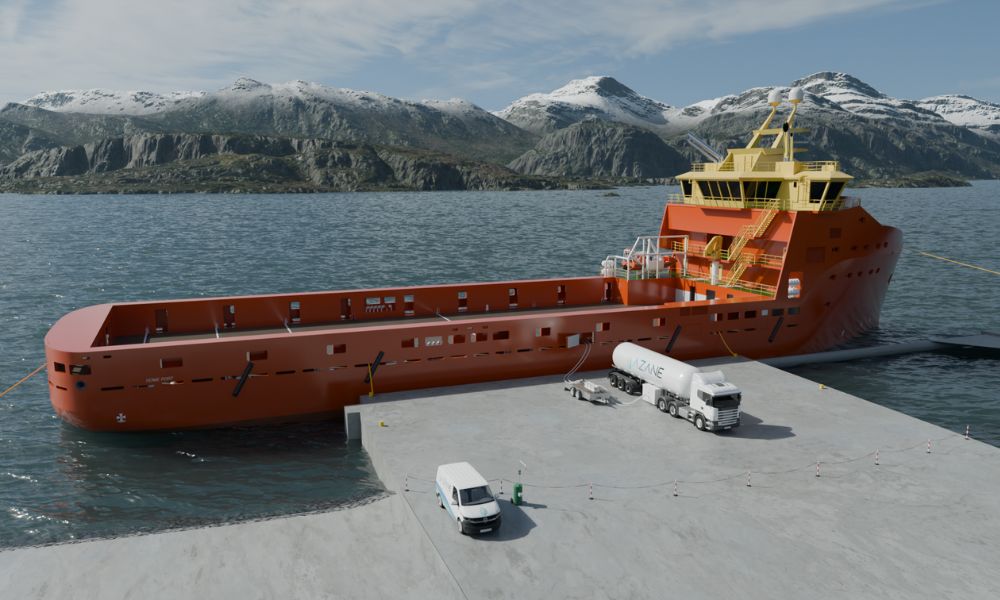
Under the agreement, Yara will supply ammonia to Azane through its established production and logistics network, and Azane will sell the ammonia to end clients in the maritime fuel market – such as the recently announced agreement with Equinor.

“Securing access to ammonia from a leading global producer is a key milestone for Azane,” said Steinar Kostøl, CEO of Azane Fuel Solutions. 

“As interest in ammonia as a marine fuel continues to grow, strong partnerships across the value chain are essential to ensuring a safe, reliable and commercially viable fuel supply.”

“Ammonia is recognized as a promising low-emission fuel alternative for shipping and offshore operations, and we are pleased to support Azane’s efforts to pilot ammonia supply solutions,” said Gunner Sørensen, Senior Sales Manager, Yara Industrial Solutions. 

“As a leading global producer and supplier of ammonia, Yara is well positioned to provide reliable supply to customers across a range of industries, including emerging applications such as maritime fuel.”

Related: Azane signs ammonia bunkering deal with Equinor, first deliveries due in H2 2026


Photo credit: Azane Fuel Solutions
Published: 21 September, 2026

Continue Reading

Trending