Connect with us

Hydrogen

Moeve launches construction of green hydrogen project to support marine fuels

Hydrogen produced by the project will be used to support the more sustainable production of fuels for road, aviation and maritime transport, while also helping to decarbonise other industries.

Admin

Published

on

Moeve launches construction of green hydrogen project to support marine fuels

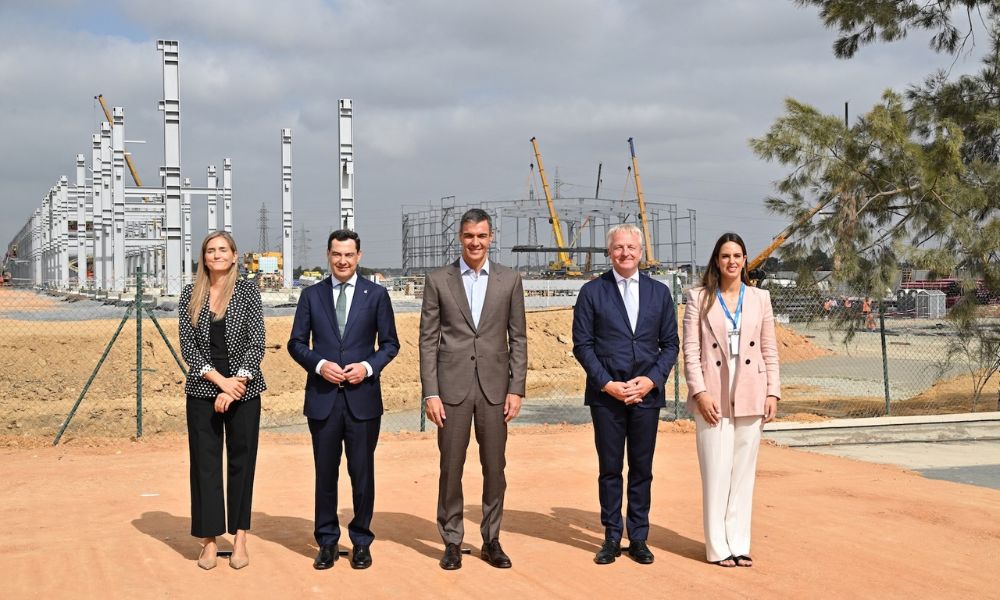
Spanish energy major Moeve on Thursday (17 September) said it has celebrated the start of construction of the first phase of the Andalusian Green Hydrogen Valley, Europe’s largest renewable hydrogen project, with an event in Palos de la Frontera, Huelva.

“Onuba” is the name for the first phase of the Andalusian Green Hydrogen Valley. Located at Moeve’s Energy Park in Palos de la Frontera (Huelva), Onuba will have an initial 300 MW of electrolysis capacity, with the option to expand by an additional 105 MW. 

“The project represents a joint investment of more than EUR 1 billion, including associated infrastructure and the development of a dedicated photovoltaic plant for self-consumption,” the company said..

The project, led by Moeve with a majority 51% stake, benefits from a strong shareholder structure that combines industrial and financial expertise through the participation of Hy24, the world’s largest clean hydrogen private equity asset manager, and COFIDES, Spain’s public-private finance institution, as strategic partners with a combined 29% stake. 

The remaining 20% is jointly held by Enagás Renovable, one of Europe’s leading developers of renewable gas projects, and Alter Enersun, a company dedicated to the development of renewable electricity generation facilities.

The facility will be capable of producing approximately 45,000 metric tonnes (mt) of renewable hydrogen annually, avoiding around 250,000 mt of CO2 emissions each year, equivalent to the emissions generated by the internal combustion vehicle fleets of the cities of Huelva, Cádiz and Jaén. 

The hydrogen will be used to support the more sustainable production of fuels for road, aviation and maritime transport, while also helping to decarbonise other industries.

The new plant will deploy advanced technological solutions that will help shape the emerging hydrogen market while redefining energy engineering standards as the company’s first digitally-native facility. From the design stage, the installation incorporates a digital twin and a unified data and IoT platform, laying the foundations for safer, more efficient and predictive operations.

This first phase of the Andalusian Green Hydrogen Valley has been designated by the European Union as a Project of Common Interest (PCI) and has secured EUR 304 million in funding from the Spanish Government under the Recovery, Transformation and Resilience Plan, financed by the European Union through NextGenerationEU. 

The funding forms part of the Renewable Hydrogen Valleys support program and will support the development of 405 MW within the Andalusian Green Hydrogen Valley.


Photo credit: Moeve
Published: 21 September, 2026

Continue Reading

Hydrogen

Chart Industries to supply liquid hydrogen fuel systems for Samskip boxships

Project will bring together advanced storage technology, fuel conditioning systems, bunkering interfaces, and safety solutions to support reliable vessel operations.
Admin

Published

on

By

Chart Industries to supply liquid hydrogen fuel systems for Samskip boxships

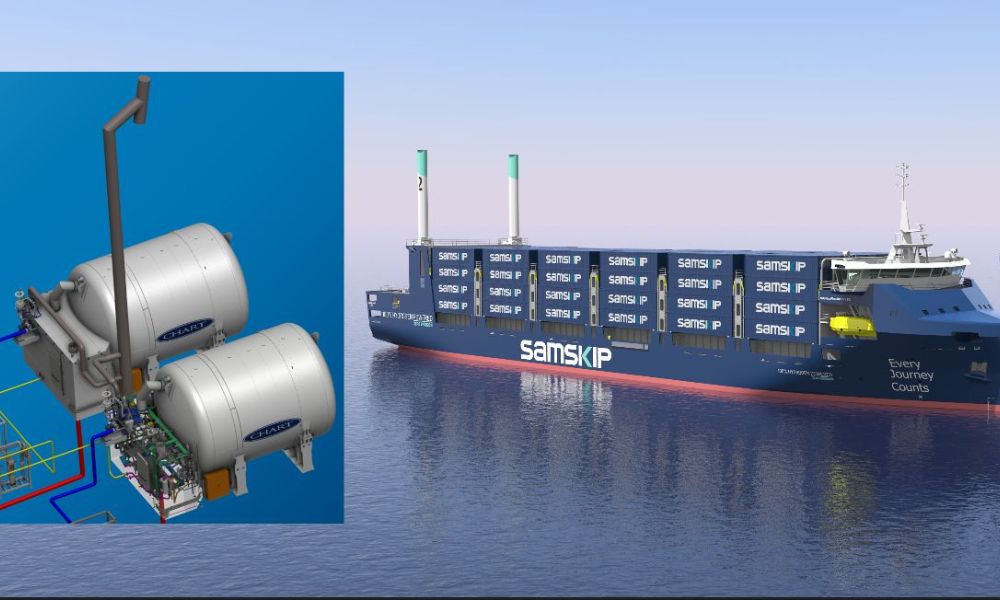
US cryogenic equipment company Chart Industries recently said the company will supply the liquid hydrogen fuel systems for Samskip’s SeaShuttle 1 and 2, the world’s first hydrogen-powered container vessels.

The company said the project will demonstrate how liquid hydrogen can enable zero-emission operations for commercial shipping, bringing together advanced storage technology, fuel conditioning systems, bunkering interfaces, and safety solutions to support reliable vessel operations. 

“Most importantly, these are not demonstration concepts. They are commercial vessels designed to operate on the Rotterdam-Oslo corridor, showcasing how hydrogen is moving from possibility to practice,” it said in a social media post. 

“We’re proud to support Samskip and our project partners as we help advance the future of sustainable maritime transport.”


Photo credit: Chart Industries
Published: 16 September, 2026

Continue Reading

Alternative Fuels

ABS joins Korean initiative to develop standards for hydrogen-fuelled ships

ABS has signed a MoU with three Korean maritime organisations, targeting ISO standards for hydrogen ships, smart shipyards and future maritime technologies.
Admin

Published

on

By

ABS joins Korean initiative to develop standards for hydrogen-fuelled ships

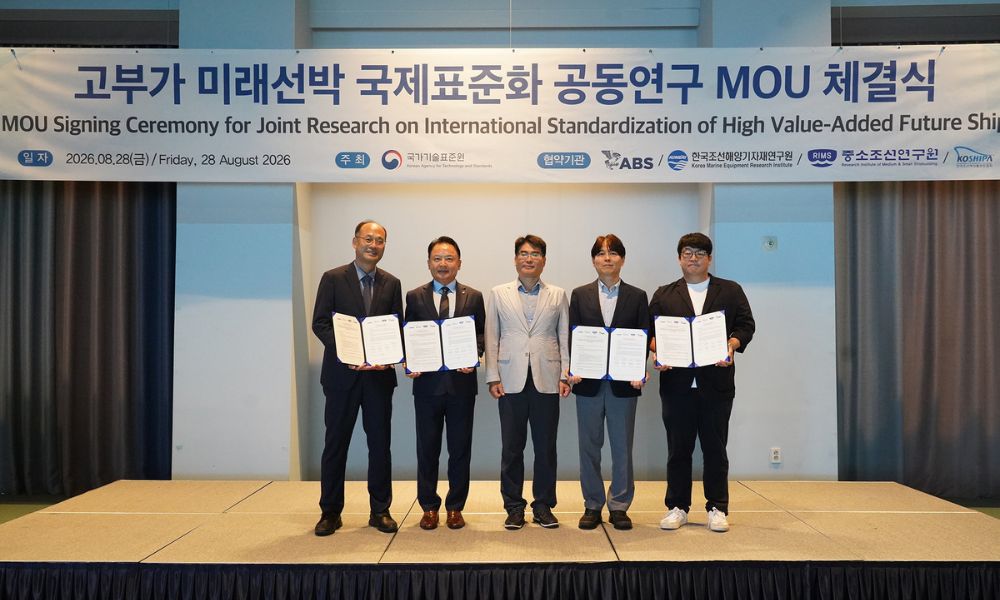
Classification society ABS on Sunday (13 September) said it has signed a memorandum of understanding (MoU) with three Korean maritime organisations to advance the development of international standards for the next generation of smart ships and shipyards.

The MOU targets ISO standards for hydrogen ships, smart shipyards and future maritime technologies. 

The Korea Marine Equipment Research Institute (KOMERI), the Korean Offshore & Shipbuilding Association (KOSHIPA) and the Research Institute of Medium & Small Shipbuilding (RIMS) have joined ABS in a five-year framework to develop global benchmarks for vessels and shipyards that take advantage of digital technology, smart manufacturing and advanced maritime systems. 

As part of a related agreement, ABS is already supporting the development of preliminary standards in two areas: digital production and traceability requirements for additively manufactured shipboard components and vent mast design for hydrogen-fuelled ships.

“Next-generation shipbuilding is advancing rapidly, and the international standards that govern smart ships, smart shipyards and advanced manufacturing are still taking shape. ABS has deep, long-running relationships with Korea’s shipbuilding sector, and this agreement puts that experience to work in developing the standards the industry needs. It is a further reflection of why Korean yards look to ABS to help advance these technologies safely,” said Patrick Ryan, ABS Senior Vice President and Chief Technology Officer.

The MOU builds on an earlier agreement between ABS and the Korean Agency for Technology and Standards (KATS) to advance international standardisation of smart ship and shipyard technologies, part of Korea’s national strategy to lead in high-value-added vessel development. 

The agreement also reflects the growing engagement of ABS with Korea’s maritime sector, including recent cooperation with Korean and U.S. institutions through the Korea-U.S. Shipbuilding Partnership Center.

“International standards are more than technical criteria — they are the gateway to market entry and a core element of global competitiveness. Working with ABS allows us to combine Korea’s standardization capabilities with ABS’ classification experience, and we expect this to produce practical results that lower the barriers for Korean equipment manufacturers entering overseas markets,” said Joo-Hyoung Choi, Managing Director of KOMERI.


Photo credit: ABS
Published: 15 September, 2026

Continue Reading

Hydrogen

Viking floats out second hydrogen-powered ship, delivery set for May 2027

“Viking Astrea” is a sister ship in Viking’s ocean fleet and will have a propulsion system based partially on liquefied hydrogen and fuel cells.
Admin

Published

on

By

Viking floats out second hydrogen-powered ship, delivery set for May 2027

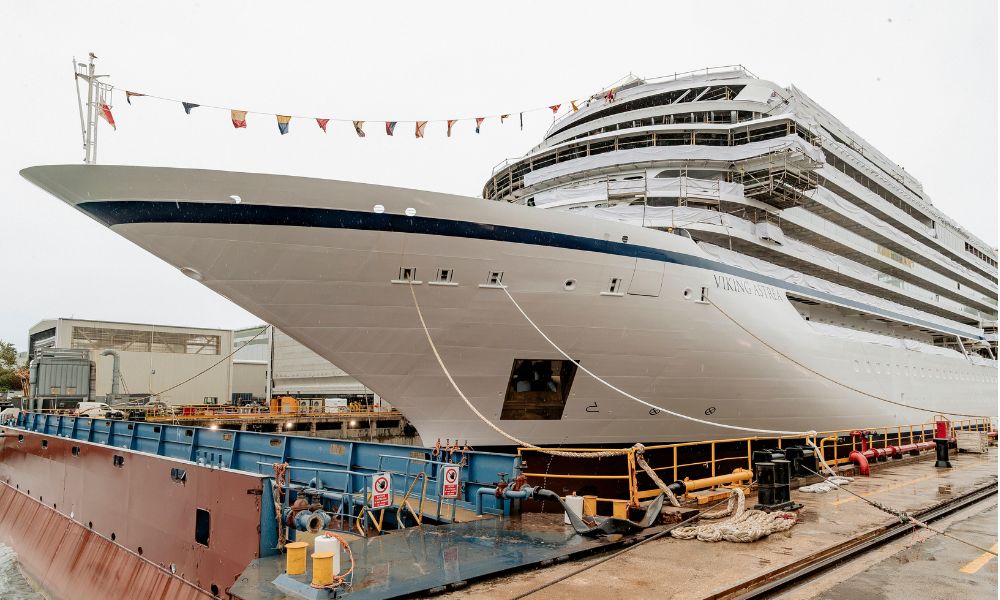
Viking on Friday (11 September) announced that Viking Astrea, the company’s second hydrogen-powered cruise ship capable of operating with zero emissions, was “floated out,” marking a major construction milestone and the first time the ship has touched water. 

Scheduled for delivery in May 2027, the Viking Astrea will spend her inaugural season sailing itineraries in the Mediterranean and Northern Europe.

“The float out of the Viking Astrea represents another important milestone for Viking,” said Leah Talactac, President and Chief Executive Officer of Viking. 

“From the beginning, we have sought thoughtful ways to design more efficient ships, and the Viking Astrea is an important step forward in that ongoing effort.”

The float out ceremony took place at Fincantieri’s Ancona Shipyard. Following a two-day process that will set the Viking Astrea afloat, it will then be moved to a nearby outfitting dock for final construction and interior build-out.

Classified as a small ship, as are all Viking ocean ships, the Viking Astrea is a sister ship in Viking’s ocean fleet and will have a propulsion system based partially on liquefied hydrogen and fuel cells. 

This hybrid propulsion system will make her capable of navigating and operating with zero emissions, which would allow her to access even the most environmentally sensitive areas. 

Enabled by Isotta Fraschini Motori (IFM), Fincantieri’s subsidiary specialising in advanced fuel cell technology, the ship’s propulsion system will be capable of producing up to six megawatts of power. 

The Viking Libra, the world’s first hydrogen-powered cruise ship capable of operating with zero emissions, is scheduled for delivery in November 2026.


Photo credit: Viking
Published: 14 September, 2026

Continue Reading

Trending