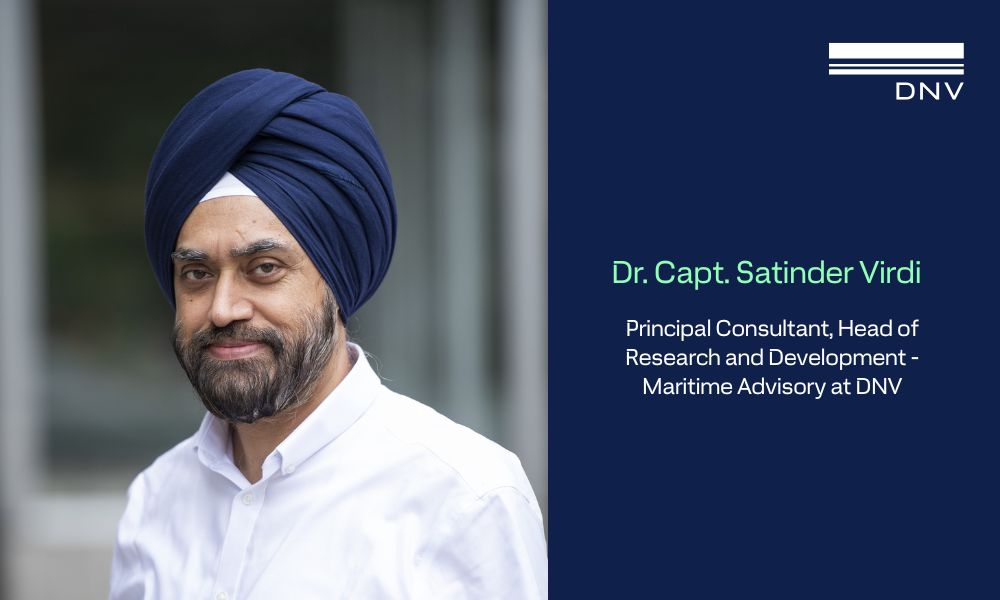
With ammonia being one of the frontrunners among zero-carbon marine fuels, Dr. Capt. Satinder Virdi, Principal Consultant and Head of Research and Development, Maritime Advisory of classification society DNV shares why now is the time to move from pilot projects to large-scale regional implementation.
He highlights key challenges and opportunities, including infrastructure readiness, safety and regulation, and what it will take for APAC to lead the way in this shift:
As the global maritime industry accelerates its decarbonization efforts, ammonia is gaining traction as a zero-carbon fuel option, especially for long-distance shipping. When produced using renewable energy and seawater hydrolysis, green ammonia offers a viable pathway to significantly reduce emissions. However, adopting ammonia at scale involves unique safety, regulatory, and operational challenges that must be addressed systematically.
The Asia-Pacific (APAC) region is poised to lead this next phase of maritime energy transition. Countries such as Singapore and Japan are actively developing ammonia bunkering infrastructure and safety frameworks, while Australia is advancing major green ammonia production and export projects. As the region with some of the world’s busiest ports, top shipbuilders, and evolving regulations, APAC is navigating a complex and evolving maritime landscape- with both opportunities and challenges. To scale ammonia safely and effectively, the region must prioritize risk-informed design, regulatory alignment, coordinated cross-sector action, and human capital development.
Critical step towards wide-scale use
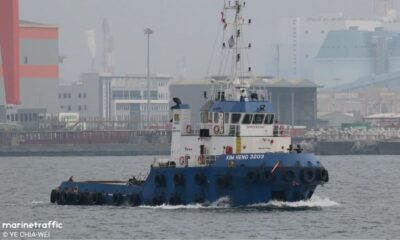
In 2024, the first successful shore-to-ship ammonia bunkering pilot was conducted in Singapore for Fortescue’s ammonia-powered vessel, the Green Pioneer, a critical step forward in demonstrating the feasibility of handling ammonia safely under real-world conditions. DNV was closely involved in the technology qualification process and technical assessments of the vessel’s ammonia safety systems and design, awarding it with a “Gas Fuelled Ammonia” notation, an industry first, to use ammonia in combination with diesel as a marine fuel.
Insights from a January 2022 ammonia bunkering safety study by GCMD served as a reference for the pilot’s execution. Supported by DNV and other industry partners, the study evaluated over 400 potential risk scenarios and delivered key safety recommendations to guide ammonia bunkering operations. These findings were instrumental in identifying suitable pilot locations and now serve as a foundation for future ammonia bunkering activities.
Shortly afterwards, the momentum around ammonia continued to build in Australia’s Pilbara region, where DNV supported a successful ship-to-ship ammonia transfer between MOL’s and Navigator Gas’ ammonia carriers, again working alongside GCMD. This operation demonstrated safe ammonia handling in a different regulatory and port environment, reinforcing the applicability of risk-based safety approaches. Together, these pilots are turning ammonia as a shipping fuel from concept to reality in APAC.
Safety as a top priority
Ammonia is a colourless, caustic, and highly toxic substance, making its use as a marine fuel particularly challenging. Classified as a flammable fuel under the IMO’s IGF Code (International Code of Safety for Ships Using Gases or Other Low-Flashpoint Fuels), its use requires specialised bunkering systems, designated safety zones onboard and in port, and targeted crew training as outlined in the STCW Code (Seafarers’ Training, Certification and Watchkeeping).
Its high toxicity demands rigorous safety protocols, as even low-level exposure poses serious health risks. While its pungent odour aids leak detection, managing these risks requires new approaches to ship design, emergency preparedness, and crew readiness.
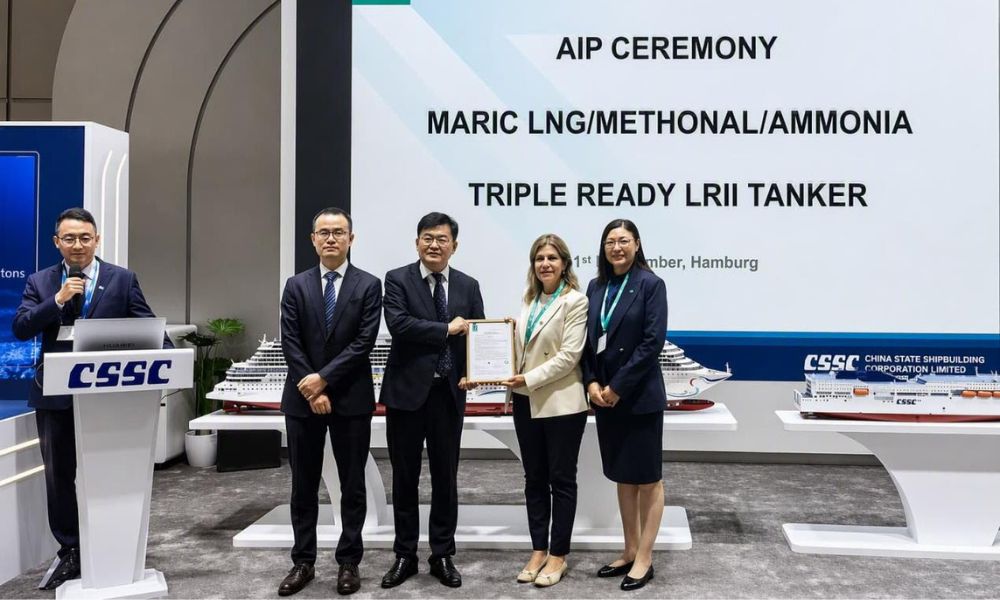
Risk-based design is already being applied in new vessel and bunkering concepts. For instance, in DNV’s assessment of recent ammonia-ready vessel designs, features such as double-walled piping, gas dispersion modelling, and automated emergency shutdown systems are being integrated from the start. These are not optional add-ons but are essential to meet the safety threshold that regulators, port authorities, and society expect.
But design alone isn’t enough. The human factor will be a defining element in ammonia’s safety profile. DNV is supporting a major RoRo operator with due diligence and operational planning to ensure its technical teams are prepared to manage ammonia’s unique operational risks.
Infrastructure and Commercial Readiness
While ammonia bunkering concepts are progressing, commercial uptake is still at an early stage. According to DNV’s Alternative Fuels Insight (AFI) platform, only three ammonia-fuelled vessels are currently operational globally, with 37 more on order.
To enable future scaling and adoption of ammonia as a marine fuel, robust safety guidelines for its handling, comprehensive training for both crew and shore-side personnel, and strategic investment in dedicated bunkering infrastructure will be essential. These elements are critical to reducing operational uncertainty and fostering safe, confident adoption by vessel operators.
Moreover, green ammonia production, critical to the fuel’s net-zero credentials, is still limited. Industry estimates suggest that less than 1% of global ammonia today is produced using renewable energy, although multiple projects are under development in Australia, the Middle East, and Latin America.
Toward a Safe and Scalable Future
As ammonia gains traction as a marine fuel, the need to optimize operational safety is increasingly in focus. Alongside vessel design and crew training, which form the foundation for safe operations, technical barriers are also necessary. To help address these, DNV together with industry partners Yara Clean Ammonia, Bernhard Schulte Shipmanagement/Ula Ship Management, and other stakeholders, have developed a new Recommended Practice (RP) that outlines safety protocols, risk assessment frameworks, and crew training requirements specific to ammonia. APAC stakeholders can draw valuable insights from this RP and adapt its guidance to regional contexts, as it provides a roadmap for training institutions, operators, and flag states to adopt ammonia-ready safety systems and build the necessary competence for future deployment.
In addition to safety considerations, the way forward for scaling ammonia deployment in APAC requires managing complex, interconnected challenges. An industry-wide collaboration involving ammonia producers, regulators and vessel operators is necessary for its broader adoption. Harmonizing evolving international standards with national policies will help avoid regulatory fragmentation. Widespread adoption will also require extensive crew training and major port upgrades to support ammonia-fuelled vessels at scale.
DNV is actively supporting these efforts across the region, collaborating with regulators, shipowners, and energy developers to turn ambition into safe, scalable solutions.
Related: Fortescue successfully conducts world’s first ammonia bunker fuel trial in Singapore
Related: GCMD: STS ammonia transfers pave way for ammonia bunkering in Pilbara region
Photo credit: DNV
Published: 15 August, 2025