Connect with us

Project

Statkraft advances green hydrogen to ammonia production facility in Shetland

Green ammonia produced will be used by a wide range of industries, including as a sustainable bunker fuel and to decarbonise fertiliser production.

Admin

Published

on

Statkraft advances green hydrogen to ammonia production facility in Shetland

Europe’s largest renewable energy generator Statkraft recently said it will take forward plans for its Shetland Hydrogen Project 2, after agreeing a lease on a site owned by Shetland Islands Council.

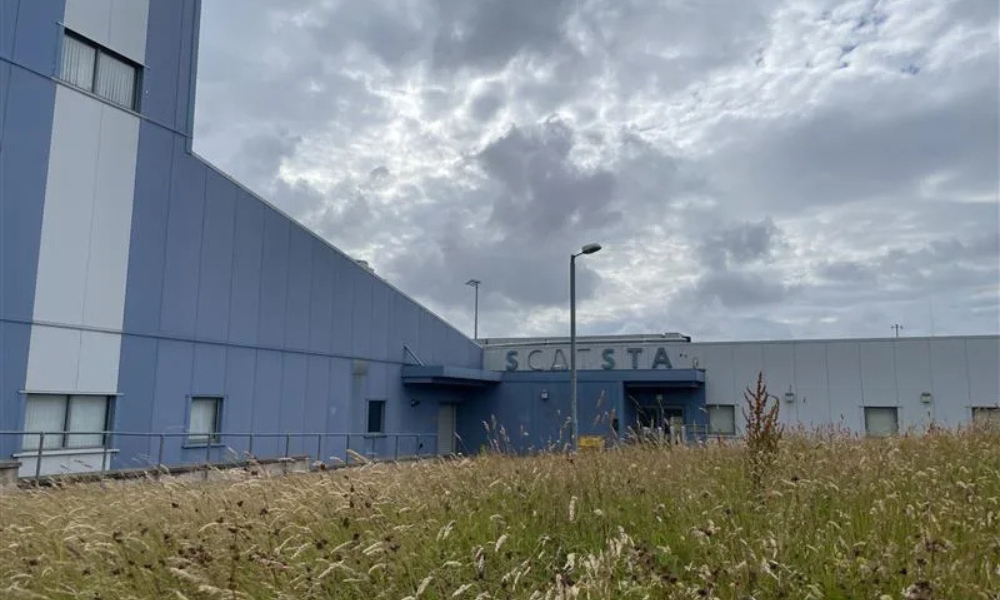
The proposed scheme is an electrolytic hydrogen to green ammonia production facility of up to 400MW, on land adjacent to the disused Scatsta Airport which is near the existing Sullom Voe Oil Terminal and Shetland Gas Plant.

The green ammonia produced will be used by a wide range of industries, including as a sustainable fuel for marine shipping and to decarbonise fertiliser production, and in doing so contribute significantly to the UK’s industrial decarbonisation goals.  

The construction of schemes like Shetland Hydrogen Project 2 will allow excess renewable power that cannot be utilised by the grid to be transformed into hydrogen. Statkraft has three wind farms on Shetland in pre-construction, Mossy Hill near Lerwick, and Energy Isles and Beaw Field on Yell.

Stuart Marley, Statkraft’s Principal Hydrogen Project Manager, said: “This is an exciting milestone for the potential to develop green hydrogen and ammonia production in Shetland. This scheme offers an opportunity to combine Shetland’s renewable resources with innovative technology. The historic links with energy production mean there is a wealth of talent in the region to draw on to ensure projects are run safely and efficiently. While we are currently in the early stages of development, we will work closely with local stakeholders and the wider Shetland community, as we progress this project.”


Photo credit: Statkraft
Published: 12 August, 2025

Continue Reading

Alternative Fuels

Evos and HyFive ink LOI to explore e-methanol storage in Port of Rotterdam

LOI follows Evos’ recently announced expansion project for methanol and ethanol storage in the port, which will give Evos capacity to handle the developing market in low-carbon marine fuels and bunkering.
Admin

Published

on

By

Evos Rotterdam starts construction on methanol and ethanol expansion project

Evos and HyFive on Wednesday (8 July) said they have signed a Letter of Intent (LOI) to explore the storage and handling of e-methanol in the Port of Rotterdam, which is expected to be produced by HyFive’s HyMet Musel project in northern Spain.

Under this non-binding agreement, Evos and HyFive will assess potential technical and commercial parameters, including logistics interfaces and operational requirements.

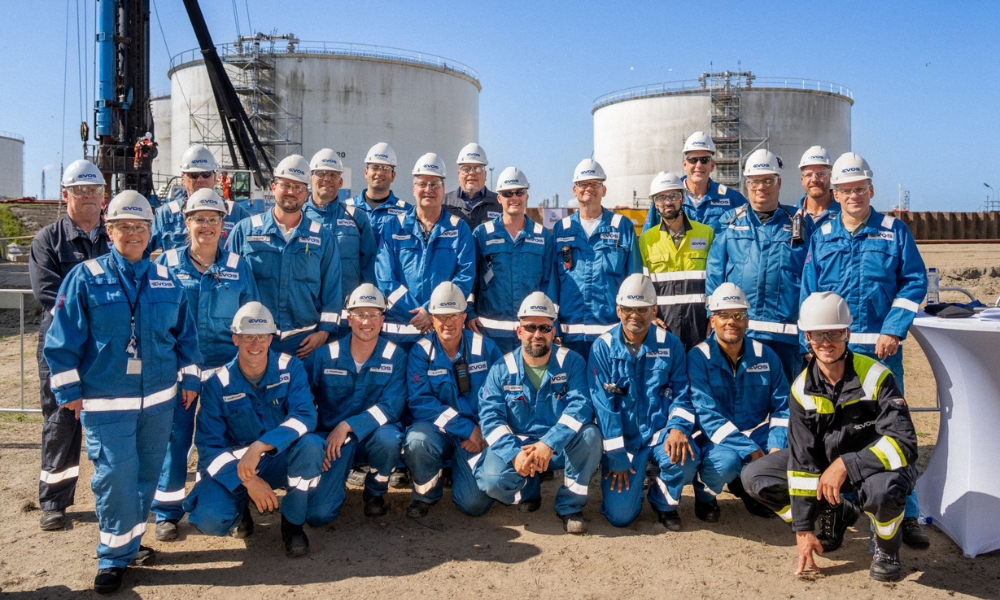
The LOI follows Evos’ recently announced expansion project for low-carbon methanol and ethanol storage in the port. The project includes the construction of five new storage tanks with a combined gross capacity of 67,500 cubic metres, a new pump station and a new jetty to be built by the Port of Rotterdam Authority. 

Once operational in early 2028, the expansion will give Evos Rotterdam greater capacity to handle methanol and ethanol for industrial customers, as well as for the developing market in cleaner, low-carbon marine fuels and bunkering.

HyFive’s HyMet Musel project on Spain’s Atlantic coast is planned with a production capacity of 100,000 tonnes per year, with start-up targeted from 2029. HyFive has signed a comprehensive term sheet for a significant portion of the initial production volumes and continues commercial discussions with potential offtakers, including shipping companies active in the ARA region.

Alberto Sanchez de Rojas, General Manager, HyFive, said: “We are pleased to sign this LOI with Evos to explore a potential supply route for e‑methanol from our HyMet Musel project. While this is an initial step, it is an important milestone in assessing downstream infrastructure options that could help meet growing demand for cleaner marine fuels in the ARA region.”

Christiaan Kop, Evos Rotterdam Managing Director, said: “We welcome the opportunity to explore, through this potential partnership with HyFive, how our Rotterdam terminal could support future e‑methanol flows into the ARA region. We see strong long‑term momentum behind low‑carbon fuels, and we continue to invest in infrastructure that can help our customers and partners navigate the energy transition.”

Related: Evos Rotterdam starts construction on methanol and ethanol expansion project


Photo credit: Evos Rotterdam
Published: 9 July, 2026

Continue Reading

Methanol

CRI delivers world’s largest e-methanol reactor to Liaoyuan project in China

First phase of the project has a production capacity of 170,000 mt of renewable methanol annually, supporting demand for low-carbon fuels in shipping, chemicals, and other sectors.
Admin

Published

on

By

CRI delivers world’s largest e-methanol reactor to Liaoyuan project in China

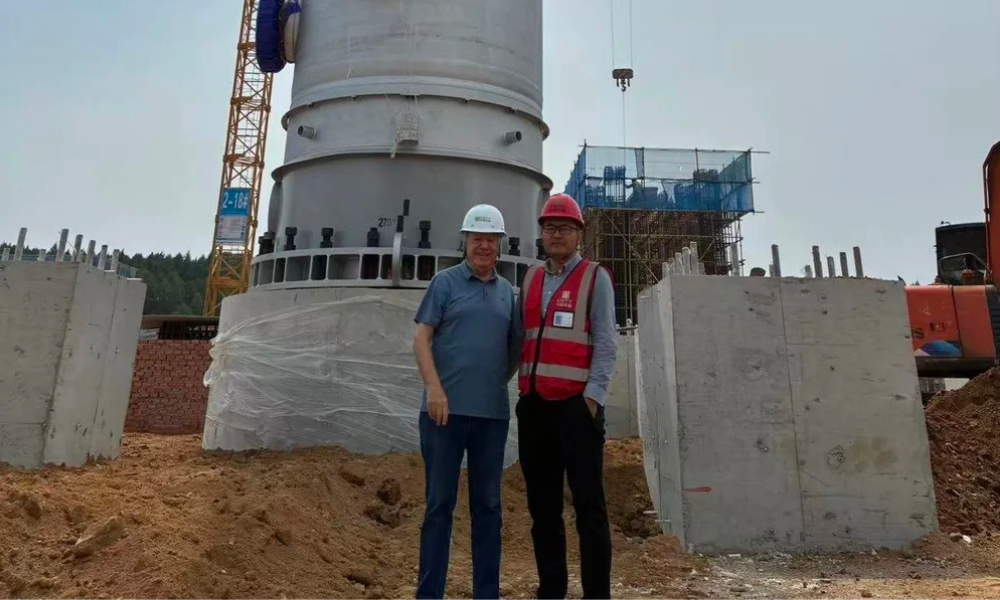
Carbon Recycling International (CRI) has recently delivered the largest of its kind e-methanol reactor for the Liaoyuan E-Methanol Project in Jilin Province, China. 

CRI, a company that develops and deploys technology that converts carbon dioxide emissions into renewable methanol, said the delivery and successful installation of CRI’s proprietary methanol converter reactor is a major construction milestone. 

“The project continues to progress according to plan toward commissioning and start-up later this year,” it said. 

The Liaoyuan project is being developed by CRI’s client Tianying Group (CNTY) and once commissioned will become the largest e-methanol facility in operation globally. 

The first phase has a production capacity of approximately 170,000 metric tonnes (mt) of renewable methanol annually from green hydrogen and captured biogenic carbon dioxide, supporting the growing demand for low-carbon fuels in shipping, chemicals, and other sectors seeking practical and scalable pathways to decarbonisation.

The methanol converter reactor forms the core of CRI’s proprietary Emissions-to-Liquids (ETL) technology. Designed and supplied by CRI, the reactor is where renewable hydrogen and captured carbon dioxide are converted into renewable methanol through the company’s proven industrial-scale process. It has been specifically designed and constructed with operational flexibility as a key feature and represents the third generation of CRI’s e-methanol reactor design.

The successful installation represented a significant construction milestone and marked the transition to the final stages of project execution.

“The installation of the methanol converter reactor is an important milestone for both Tianying and CRI,” said John Milner, Project Manager at Carbon Recycling International. 

“The reactor is the core of our ETL technology and embodies nearly two decades of innovation, engineering development, and commercial operating experience. Seeing this equipment installed at one of the world’s most ambitious renewable energy projects is a proud moment for our team and a major milestone as the Liaoyuan facility advances toward commissioning and start-up.”

CRI’s technology is already deployed at commercial scale at the company’s reference plants in Anyang and Lianyungang, and the Liaoyuan project represents the next step in the continued deployment of carbon recycling technology to support the production of renewable fuels and chemicals.


Photo credit: Carbon Recycling International
Published: 7 July, 2026

Continue Reading

Methanol

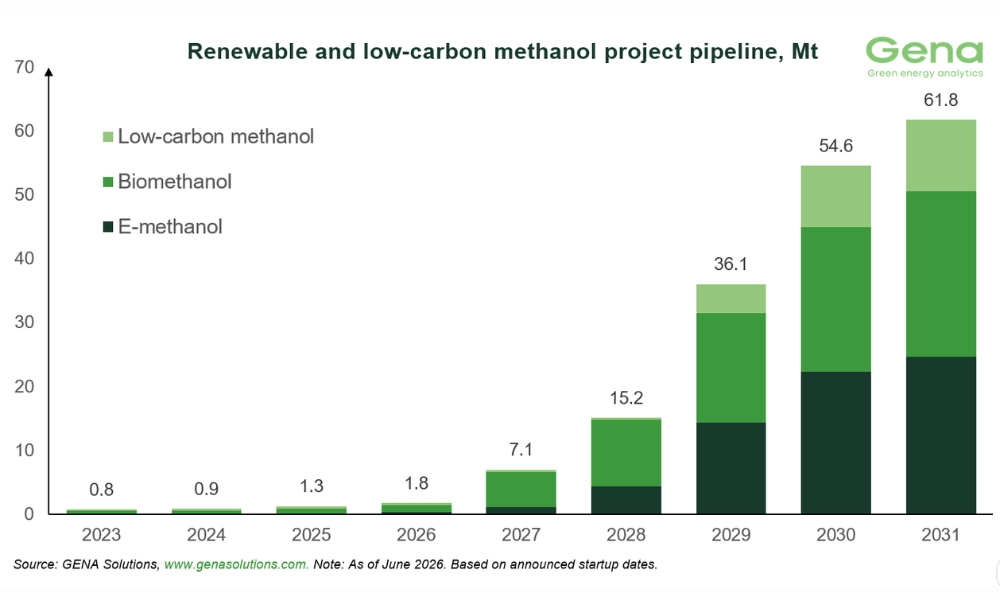
GENA Solutions: Total renewable and low-carbon methanol project pipeline rises from 61.6 to 61.8 Mt by 2031

Information shared by the Methanol Institute meant to assist the maritime industry in the adoption of methanol as a mainstream marine fuel heading into IMO 2030/2050.
Admin

Published

on

By

GENA Solutions: Total renewable and low-carbon methanol project pipeline rises from 61.6 to 61.8 Mt by 2031

The Methanol Institute recently shared with Manifold Times the renewable and low-carbon methanol project pipeline June 2026 release produced by GENA Solutions Oy.

Information from the release is meant to provide the bunkering publication’s readers with insight on renewable methanol availability, and to assist the maritime industry in the adoption of methanol as a mainstream marine fuel heading into IMO 2030/2050.

Key takeaways from GENA’s June 2026 Methanol release are as follows:

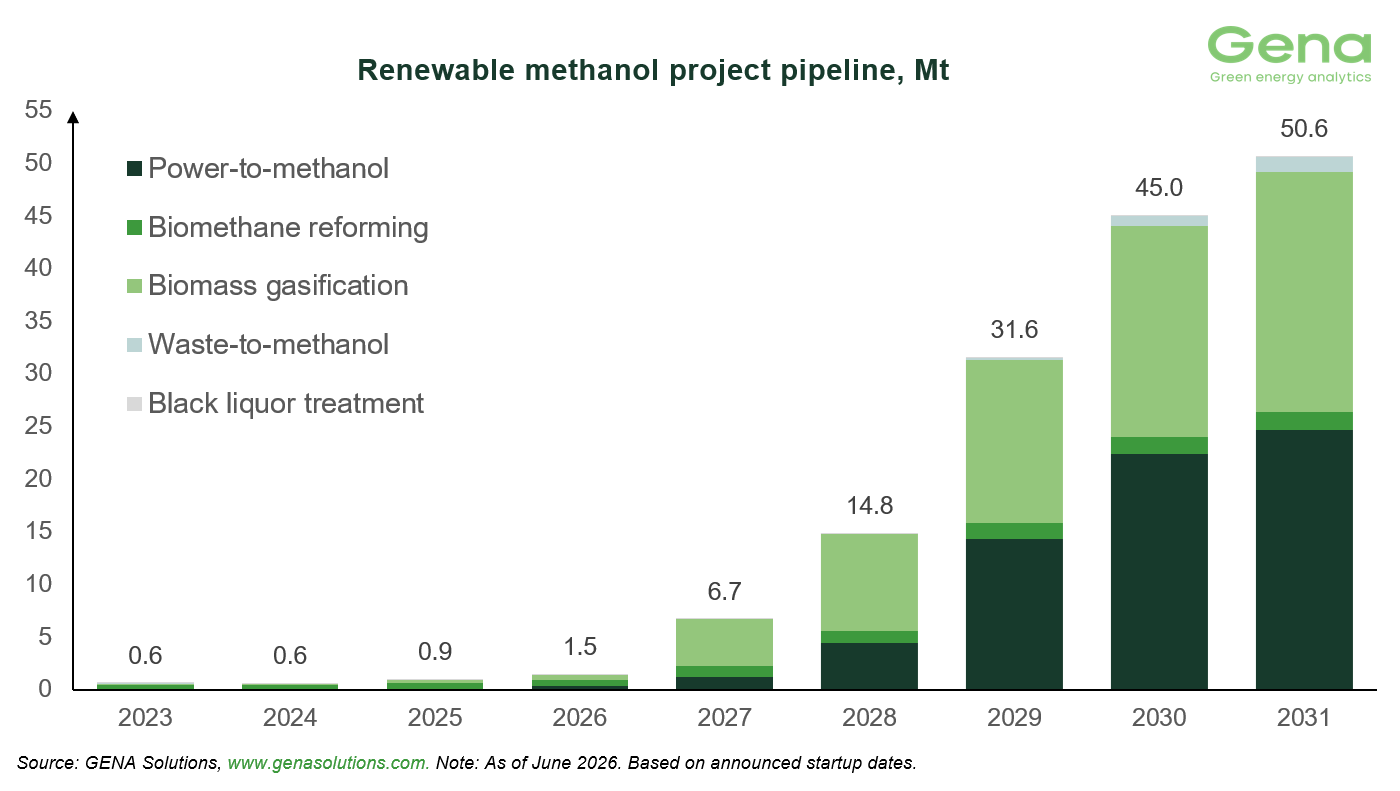
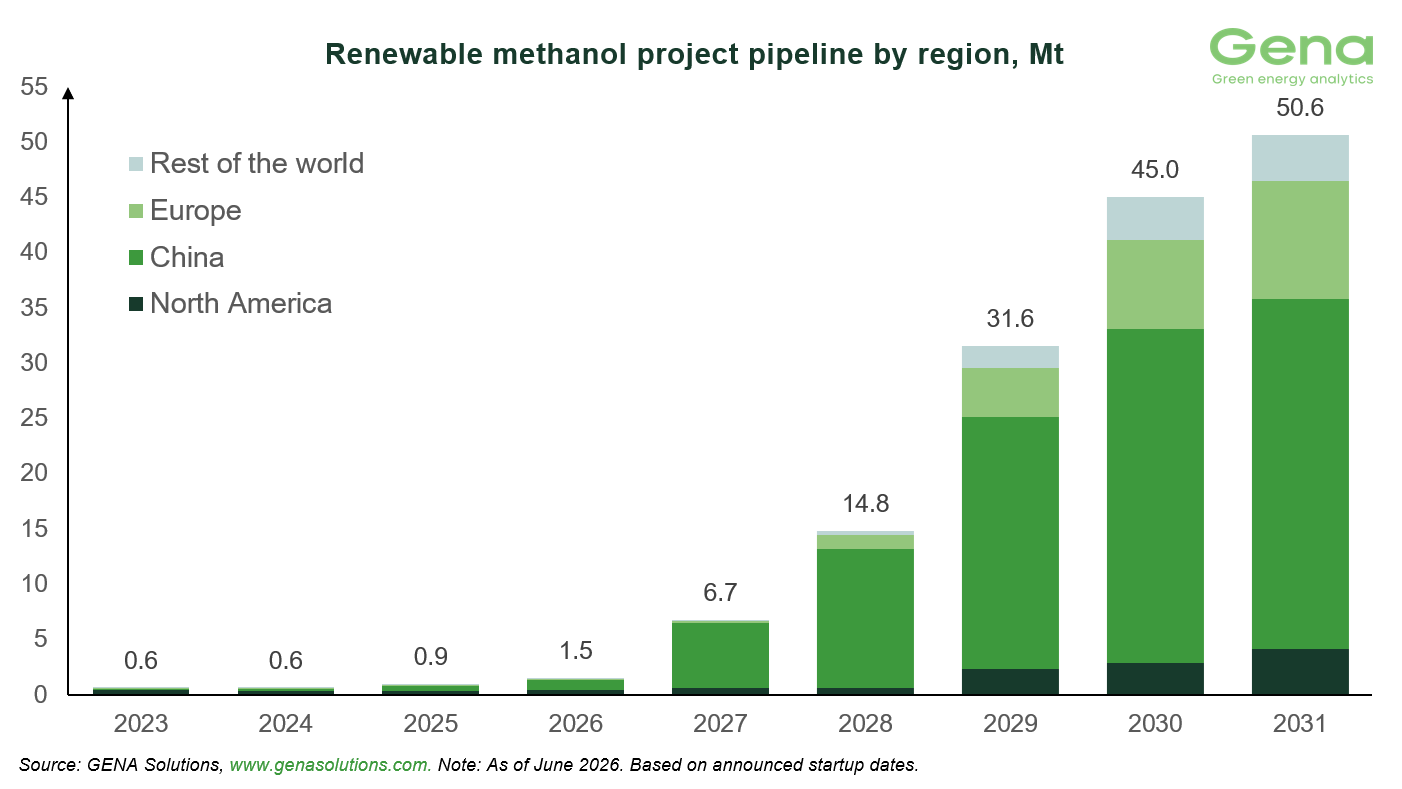
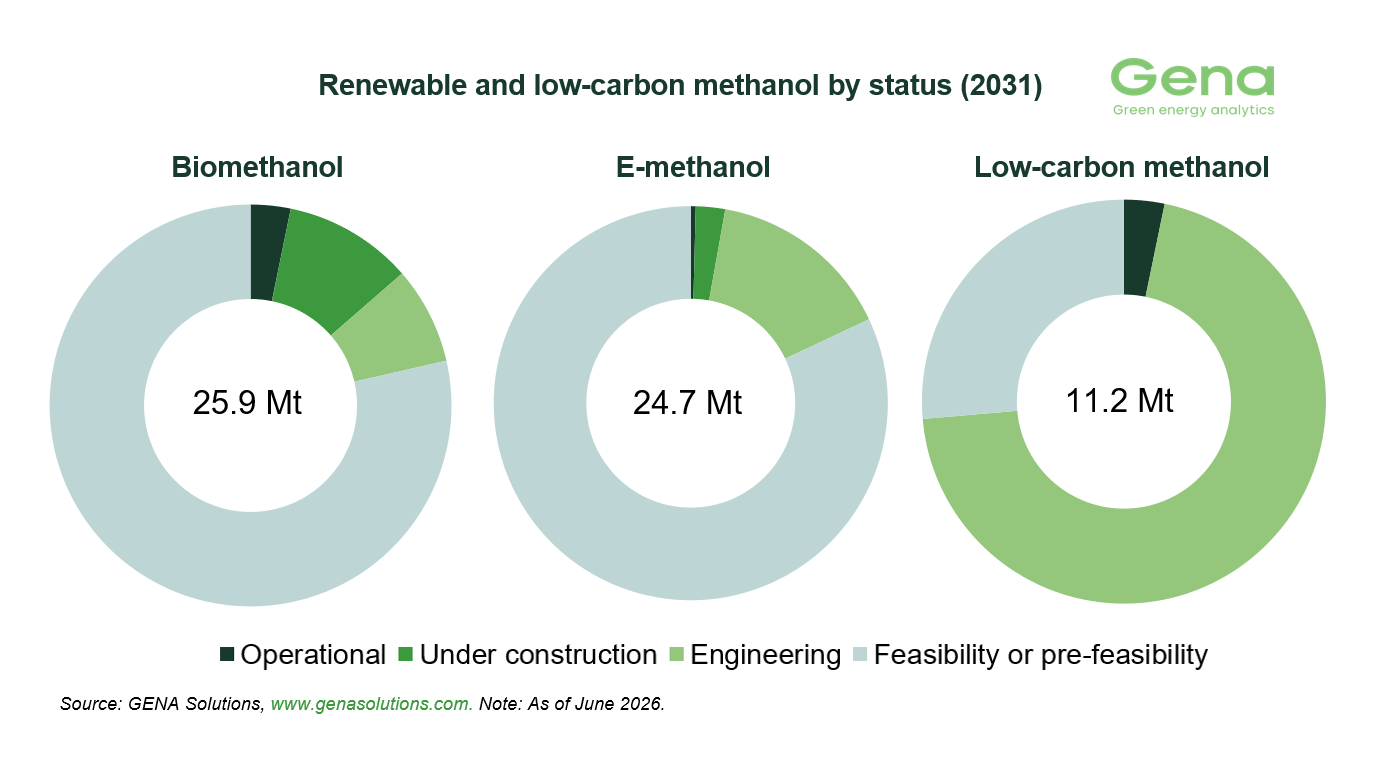
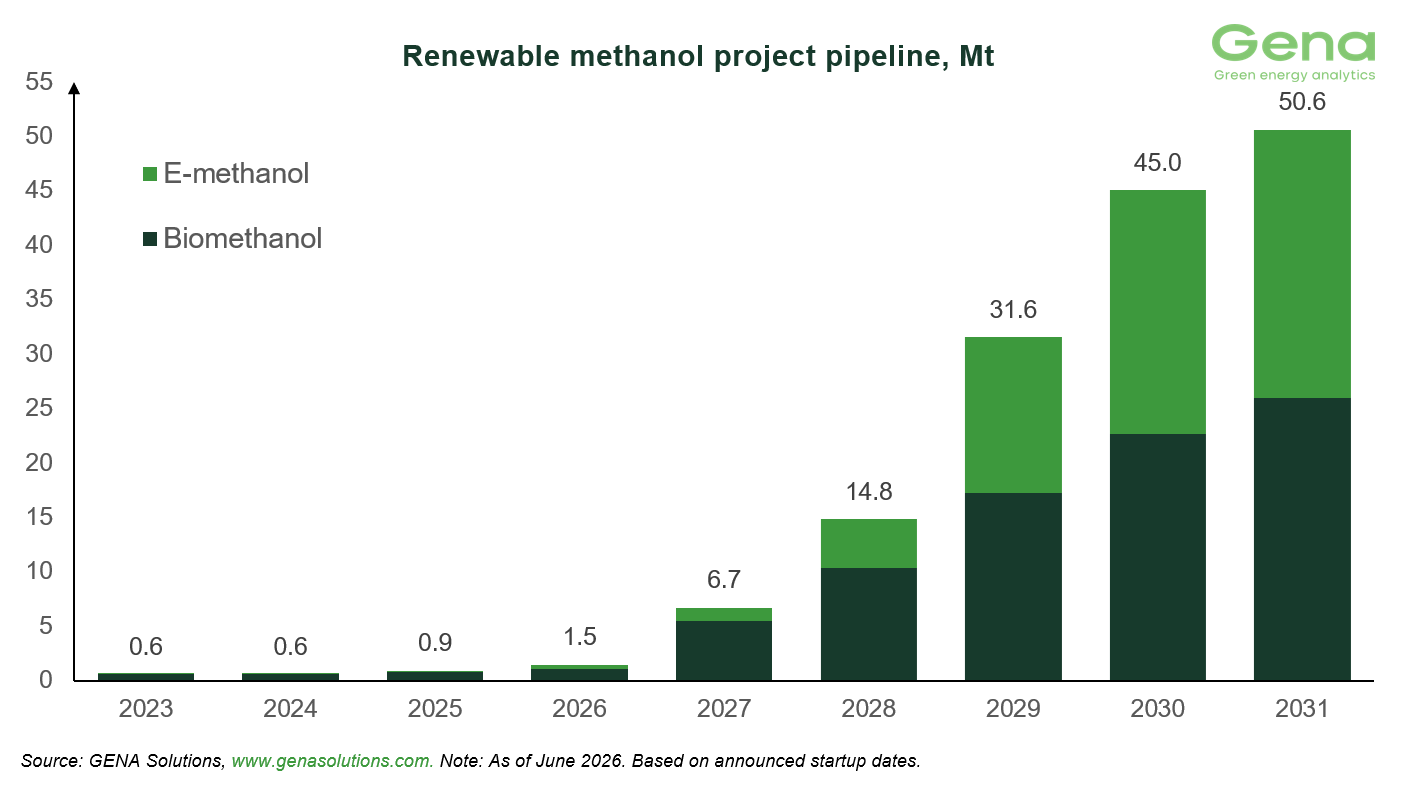
  • As of the end of June 2026, GENA tracks 284 renewable and low-carbon methanol projects, representing 61.8 Mt of capacity by 2031. This includes 24.7 Mt of e-methanol, 25.9 Mt of biomethanol, and 11.2 Mt of low-carbon methanol.
  • Five new projects were added to Project Navigator, while three frozen projects were excluded. The cumulative project pipeline capacity by 2031 increased by just 0.1 Mt month on month.
  • Renewable methanol project pipeline growth slowed in 2026 to about 0.7 Mt per month, compared with 1.1 Mt per month in 2025. The postponement of the IMO NZF adoption is one of the major factors behind this slowdown.
  • About two-thirds of renewable methanol project pipeline growth over the past six months was driven by methanol-to-jet GENA now tracks 36 MTJ projects globally, with cumulative methanol consumption of more than 9 Mt.
  • By the end of 2026, GENA expects operations to begin at three industrial-scale facilities: one hybrid biomethanol facility and two e-methanol facilities. This will increase renewable methanol operational capacity to up to 1.5 Mt.
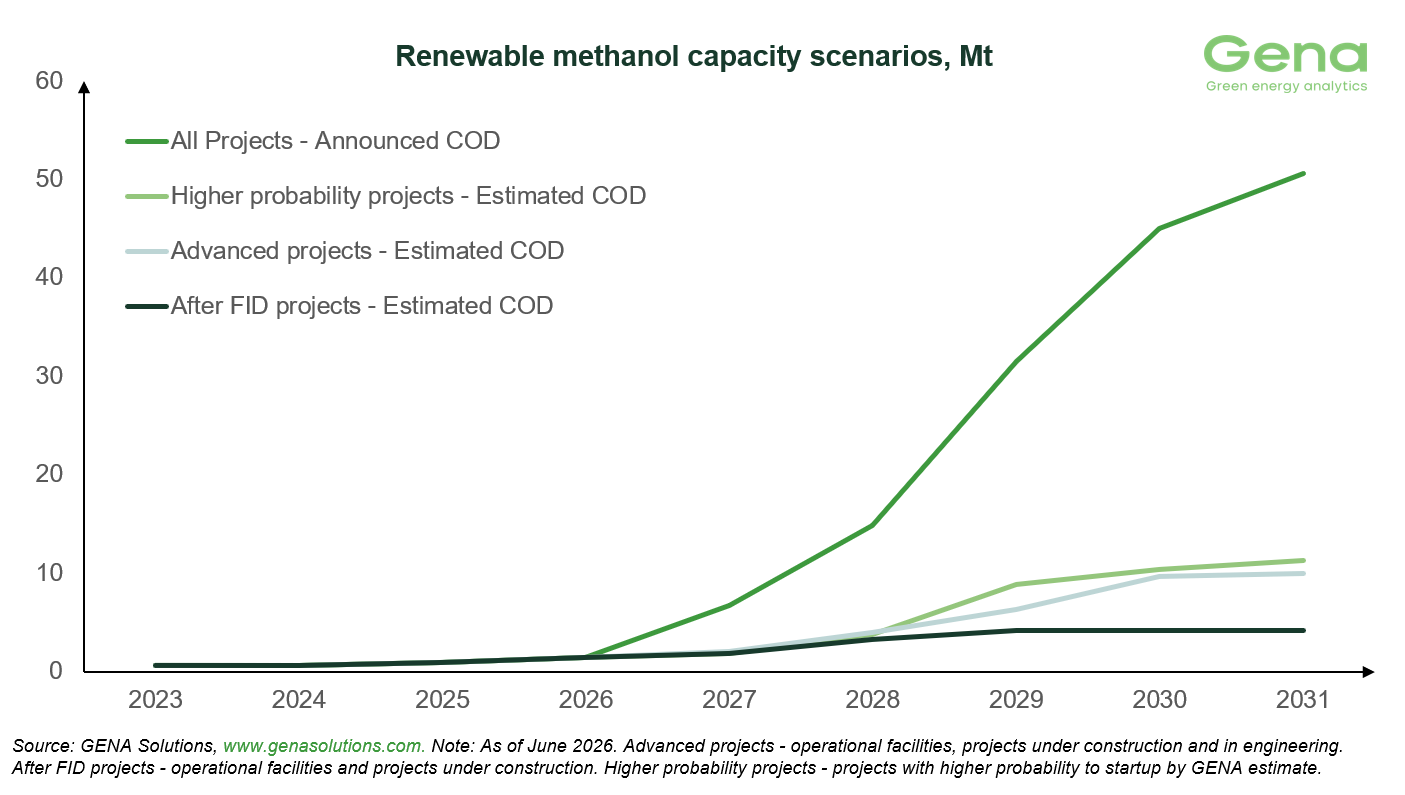
  • By 2031, global renewable methanol capacity could range from 6 Mt to 12 Mt.

Note: The full article can be viewed here.
Renewable methanol 1

Renewable methanol by feedstock 9

Renewable methanol by region 8


Methanol by status 10

Capacity scenarios 3


Photo credit: GENA Solutions
Published: 2 July, 2026

Continue Reading

Trending