Connect with us

Bunker Fuel

Mærsk Mc-Kinney Møller Center for Zero Carbon Shipping report sheds light on marine fuel cells

Insights will help ship owners and charterers make informed decisions as they consider whether to include fuel cells as a viable option in their short-, medium-, and long-term strategies.

Admin

Published

on

Mærsk Mc-Kinney Møller Center for Zero Carbon Shipping report sheds light on marine fuel cells

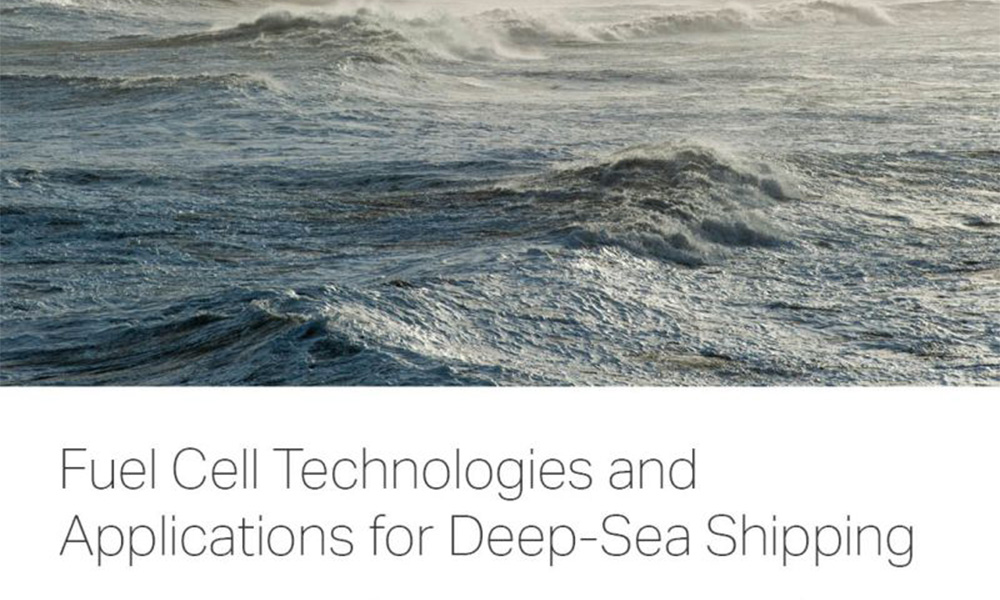
Mærsk Mc-Kinney Møller Center for Zero Carbon Shipping on Friday (24 May) published a report to analyse fuel cells as an alternative fuel conversion technology of potential interest to the shipping industry.

It said the insights will help ship owners and charterers make informed decisions as they consider whether to include fuel cells as a viable option in their short-, medium-, and long-term strategies.

The main investigation centred on a desktop study examining the potential for fuel cells’ integration on board deep-sea vessels and focused on the ship segments responsible for the largest bulk of shipping emissions, i.e., bulk carrier, tanker, and container ship.

A key takeaway from the report was that it appeared “unrealistic to assume that fuel cells will compete with or entirely replace onboard internal combustion engines in the near future, even as fuel cells reach a high technological maturity level”, given the inherent differences between fuel cells and internal combustion engines.

“This is due to the high initial costs currently associated with these technologies, along with the adjustments that would be required in ships’ engine-room design and standard operating procedures for the crew,” according to the report.

The report, titled Fuel Cell Technologies and Applications for Deep-Sea Shipping, found that it seemed more likely that different technologies will co-exist for the foreseeable future.

“Ship owners could combine fuel cells and internal combustion engines in order to leverage the advantages of each system. In this way, the industry could make the most of fuel cells’ environmental performance while also becoming more familiar with fuel cells and progressively scaling up investments as the technology becomes more affordable,” the report added.

“For this reason, our investigation focused on assessing the role that fuel cells could play in auxiliary load on board ships, rather than on propulsion.”

The report began by introducing fuel cells and describing the main technologies of relevance for shipping applications. Then it analysed the potential for integration of these technologies with different ship types and alternative marine fuels. 

The analyses cover energy demand, greenhouse gas emissions, fuel costs, capital expenditure, total cost of ownership, and physical integration of fuel cell technology. It also considers how a theoretical carbon tax could impact the business case for fuel cells in shipping. 

Finally, the report outlined some conclusions and possible avenues for future research. Safety implications of fuel cells were outside the scope of this specific project.

Note: The full report titled ‘Fuel Cell Technologies and Applications for Deep-Sea Shipping’ can be downloaded here.


Photo credit: Mærsk Mc-Kinney Møller Center for Zero Carbon Shipping
Published: 30 May 2024

Continue Reading

Bunker Fuel Availability

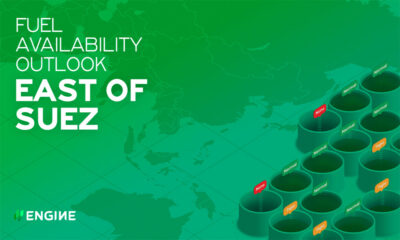
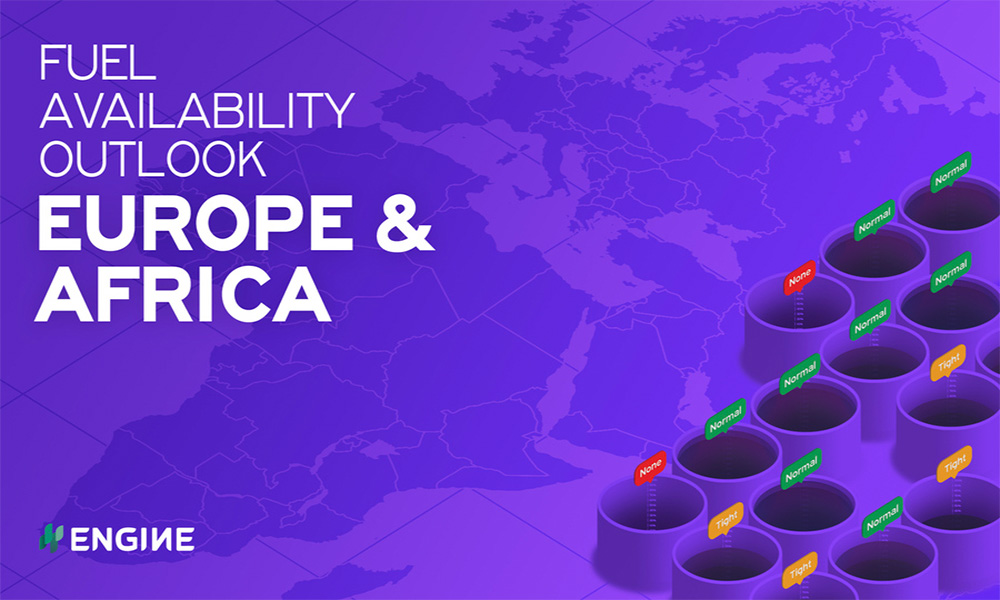
ENGINE: Europe and Africa Fuel Availability Outlook (22 July 2026)

Lead times of 5-7 days recommended in ARA; fuel availability remains tight in the Gibraltar Strait; good demand but tight availability in Senegal’s Dakar.
Admin

Published

on

By

RESIZED ENGINE Europe and Africa

The following article regarding Europe and Africa bunker fuel availability has been provided by online marine fuel procurement platform ENGINE for post on Singapore bunkering publication Manifold Times:

  • Lead times of 5-7 days recommended in ARA
  • Fuel availability remains tight in the Gibraltar Strait
  • Good demand but tight availability in Senegal’s Dakar

Northwest Europe

Bunker fuel availability is tight in the ARA for prompt supplies, with buyers advised to book stems around 5-7 days in advance to get delivery of any fuel grade, a trader said.

The ARA’s independently held fuel oil stocks have increased 6% higher on average so far in July, compared to June’s monthly average, according to Insights Global data.

The ARA hub has imported only 109,000 b/d of fuel oil in July so far, a massive dip from June’s monthly average of 215,000 b/d, according to Vortexa cargo data. Most cargoes have come from Colombia (30%), the Caribbean Netherlands (26%) and Sweden (19%).

The region’s independent gasoil inventories – which include diesel and heating oil – have dropped by 4% in July, compared to June, according to the Insights Global data. Gasoil inventories have dropped to their lowest level in nearly four years.

The region has imported 99,000 b/d of gasoil in July so far, down significantly from 188,000 b/d imported in June, according to Vortexa data. Most of these shipments have come from Sweden (27%), the UK (22%) and France (14%).

Bunker availability is stable in Germany’s Hamburg, and all fuel grades can be delivered within five days, a trader told ENGINE.

Off Denmark’s Skaw and in Sweden’s Gothenburg, availability remains tight and fuel buyers are advised booking deliveries around 10 days ahead for any fuel grade, according to a trader.

Mediterranean

Fuel buyers looking to bunker in the Gibraltar Strait are recommended to book stems around 5-7 days ahead, a trader said.

There are 10 vessels awaiting bunkers in the port, and some suppliers are running around 4-6 hours behind schedule on deliveries, port agent MH Bland said.

In Barcelona, buyers are advised to book around a week ahead, a trader said.

Fuel availability is stable in Lisbon, where 3–5 days of notice is sufficient for all fuel grades, a supplier said.

In Las Palmas, buyers are advised to allow 7–10 days for HSFO, VLSFO and LSMGO deliveries, a trader told ENGINE.

Prompt fuel availability remains tight off Malta, with buyers advised 5–7 days of notice, a trader said.

Fuel availability is tight in Istanbul, where suppliers require 4–5 days of notice for all grades, a local supplier told ENGINE.

Africa

HSFO availability remains limited across most African ports, a trader told ENGINE.

VLSFO and LSMGO availability is tight in Dakar, but bunker demand is good, a supplier said.

Prompt availability remains tight in Lome and off Walvis Bay, with buyers advised to book seven days ahead, a trader told ENGINE.

VLSFO deliveries at the Lagos anchorage requires 5–7 days of notice, a local supplier told ENGINE.

In Luanda, buyers are advised to book VLSFO and LSMGO deliveries 4–5 days ahead, a supplier said.

Prompt VLSFO and LSMGO availability is tight in Durban and off Algoa Bay, with buyers advised at least 5–7 days of notice, a trader said.

VLSFO availability remains tight in Nacala and Maputo, where suppliers recommend lead times of around 5–7 days, a trader said.

Bunker availability is tight in Port Louis, with buyers advised to book VLSFO and LSMGO deliveries seven days ahead, a trader said.

By Nachiket Tekawade


Photo credit and source: ENGINE
Published: 23 July, 2026

Continue Reading

Methanol

World Fuel and partners complete first green methanol bunkering of car carrier in Shanghai

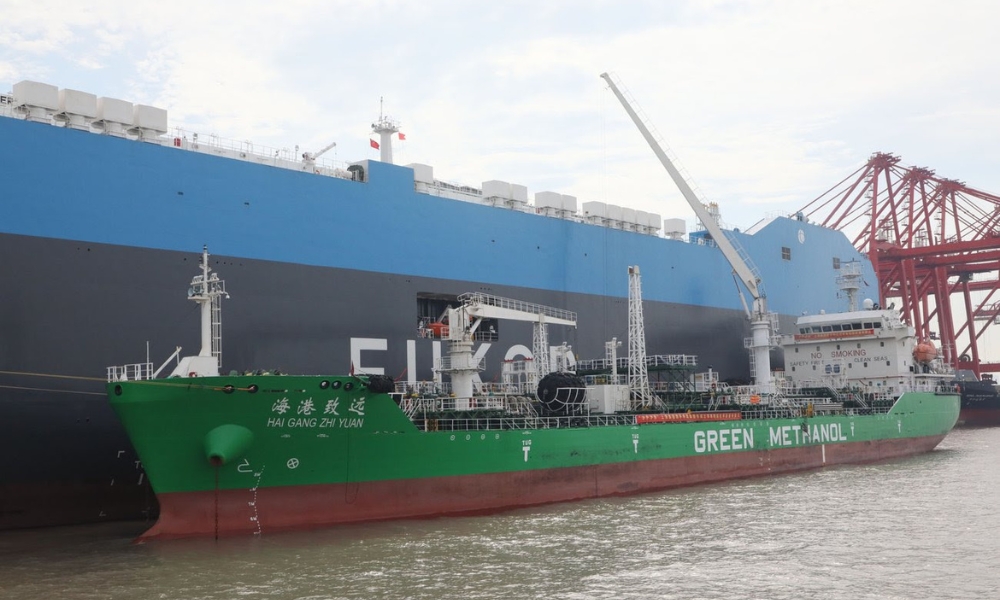
Operation involved the delivery of approximately 2,800 MT of green methanol to “Arctic Tern” via a ship-to-ship transfer using SIPG Energy’s dedicated methanol bunkering vessel “M/V Hai Gang Zhi Yuan”.
Admin

Published

on

By

World Fuel and partners complete first green methanol bunkering of car carrier in Shanghai

Marine fuel provider World Fuel on Tuesday (21 July) said it successfully completed the first green methanol bunkering of M/V Arctic Tern, with EUKOR Car Carriers and SIPG Energy at the Port of Shanghai. 

Arctic Tern is the first vessel in the new Shaper Class series of car carriers. 

The operation involved the delivery of approximately 2,800 MT of green methanol to Arctic Tern via a ship-to-ship transfer using SIPG Energy’s dedicated methanol bunkering vessel M/V Hai Gang Zhi Yuan, the largest vessel of its kind in operation. 

The bunkering operation was carried out at Haitong Terminal, Waigaoqiao Port Area, Shanghai Port, with cargo handling operations conducted simultaneously during bunkering.

This marks EUKOR Car Carriers’ first green methanol operation and the first time Arctic Tern has bunkered methanol since its delivery on 9 July. The operation marked the first bunkering at Shanghai Port of green methanol produced locally in Shanghai for an international PCTC operator. 

It also demonstrated the city’s integrated green methanol value chain, spanning local production, storage and bunkering, and established a replicable “Shanghai Model” for green methanol supply.

World Fuel arranged the supply and delivery of the fuel on behalf of EUKOR Car Carriers, working with SIPG Energy as the physical supplier at the Port of Shanghai.

The green methanol supplied was produced from municipal solid waste, ISCC-EU certified, and had a carbon intensity value below 25 gCO₂e/MJ.

Arctic Tern is the first of fourteen Shaper Class vessels ordered by Wallenius Wilhelmsen. With a capacity of 9,300 car equivalent units and methanol dual-fuel capability, the vessel will be operated by EUKOR Car Carriers, jointly owned by Wallenius Wilhelmsen and Hyundai Motor Group. Following her first green methanol bunkering, Arctic Tern will continue her maiden voyage from Asia to Europe.

Xavier Leroi, COO Shipping Services at Wallenius Wilhelmsen and CEO of EUKOR Car Carriers, said: “Completing Arctic Tern’s first green methanol bunkering shortly after delivery is a significant milestone towards our decarbonisation ambition for both EUKOR Car Carriers and Wallenius Wilhelmsen. It demonstrates how investments in next-generation vessel technology and fuel flexibility are being translated into real-world operations. 

“This achievement reflects the strong collaboration between all parties involved. Together, we have shown how partnerships across the maritime value chain can help make lower-emission fuels available and operationally viable at scale.”

Mark Tamsitt, SVP Global Marine Sales at World Fuel, said, “The first bunkering event with a new fuel is a significant moment for any shipowner, and our role is to make it as seamless as possible. By connecting EUKOR Car Carriers with SIPG Energy’s proven green methanol capability at the Port of Shanghai, we were able to deliver on reliable supply, fuel quality, and safe processes. As more of our customers bring methanol dual-fuel tonnage into service, we are committed to being the partner that makes these kinds of operations routine.”

Mr. Zhang Da, General Manager of SIPG Energy, said, “Welcoming Arctic Tern to the Port of Shanghai for her first green methanol bunkering demonstrates the strength and maturity of our supply capability. Building on our well-established methanol ship-to-ship bunkering services for container vessels, we have already extended such services to pure car and truck carriers (PCTCs). This bunkering sets a new record for the largest single SIMOPs green methanol bunkering for PCTCs in China, marking another step in building Shanghai’s position as a global green energy hub for international shipping.”

This operation follows Wallenius Wilhelmsen’s announcement on 9 July that Arctic Tern would complete her first methanol bunkering shortly after delivery. The vessel entered service on routes between Asia and Europe immediately following handover from China Merchants Jinling Shipyard in Nanjing.


Photo credit: World Fuel
Published: 22 July, 2026

Continue Reading

Ammonia

HPA and MB Energy develop safety concept for STS ammonia bunkering

HPA says the Port of Hamburg will become “bunker ready” for ammonia, laying the groundwork for safe and reliable ammonia bunkering in the future.
Admin

Published

on

By

HPA and MB Energy develop safety concept for STS ammonia bunkering

The Hamburg Port Authority (HPA) and integrated energy company MB Energy on Tuesday (21 July) said they have completed a comprehensive risk analysis and developed a dedicated safety concept for ship-to-ship ammonia bunkering.

MB Energy said the analysis lays the groundwork for the safe introduction of ammonia as a future marine fuel.

“With our planned ammonia import terminal in Hamburg-Blumensand, MB Energy intends to provide the reliable land side supply infrastructure needed to support this transition across northern German ports,” it said in a social media post. 

Mabanaft Group was renamed to MB Energy last year and merged over 50 existing brands under one identity. 

Separately, HPA said the Port of Hamburg will become “bunker ready” for ammonia, laying the groundwork for safe and reliable ammonia bunkering in the future.

“The focus is in particular on container ships, cruise ships as well as RoRo and ConRo (Container/RoRo) ships,” it said. 

“We expect ammonia to establish itself as an alternative marine marine fuel in the coming years. With our preparatory work, we are already creating the conditions to welcome the first ammonia-powered ships in Hamburg and to bunker them safely.:

HPA added that the import terminal for ammonia planned by MB Energy from 2029 will make a decisive contribution to ensuring the reliable availability of ammonia as a bunker fuel in northern German ports in the long term. 

“The use of an ammonia bunker barge is considered a possible addition to the landside infrastructure to enable ship bunkering in the port and beyond in the future,” it said.

Related: Mabanaft Group renames as MB Energy, merging over 50 brands under one identity


Photo credit: Hamburg Port Authority
Published: 22 July, 2026

Continue Reading

Trending