Connect with us
DNV Decarbonization Insight Series August 2026 - What maritime professionals should know about AI Training

Biofuel

UECC collaborates with ACT Group, LR and Wartsila on cashew nut-based bio bunker fuel

Collaboration resulted in the provisional acceptance of CNSL- based FSI.100 as a 30% blend component in a distillate DMA marine fuel oil, cleared by OEM, Class, and flag Administrations, for sea-trial stages.

Admin

Published

on

UECC collaborates with ACT Group, LR and Wartsila on cashew nut-based bio bunker fuel

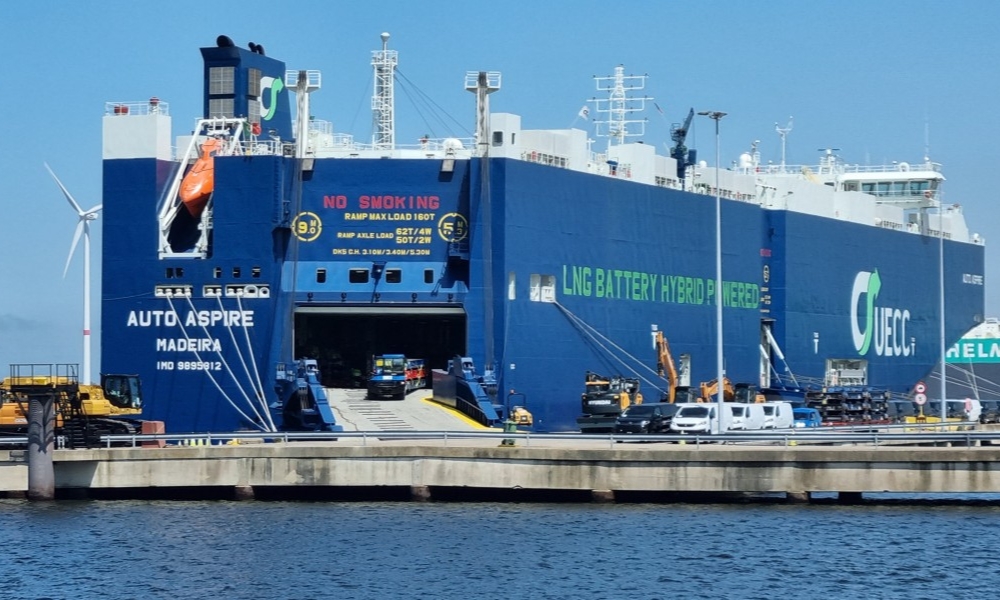
United European Car Carriers (UECC) on Wednesday (27 March) announced its collaboration with Lloyd’s Register Fuel Oil Bunkering Analysis and Advisory Service (FOBAS), engine manufacturer Wartsila, and biofuel supplier ACT Group on the development and evaluation of cashew nut shell liquid (CNSL)-based biofuel.

“As part of this partnership, ACT Group created a CNSL-based biofuel known as FSI.100,” UECC said.

“This was achieved through a rigorous development process, which included extensive engine testing and a meticulously controlled supply chain, earning the trust of UECC.”

Following thorough testing on various blend combinations, FSI.100 received approval from engine manufacturers as a 30% blend component in an ISO 8217 DMA grade distillate fuel oil to carry out sea trials.

FSI.100 addresses concerns about the popularity and suitability of CNSL-based biofuels. It also offers compelling advantages: a certified sustainable, fully controlled supply chain that ensures traceability and accountability from the point of origin to extraction, conversion, and consumption. 

“This approach enhances confidence in CNSL-derived marine fuels, reduces waste, and promotes resource efficiency, aligning with circular economy principles in the maritime sector,” UECC said.

“Additionally, FSI.100 utilises sustainable land use practices and exhibits high-quality maritime fuel properties, such as ultra-low sulphur and winter spec pour points. It also delivers significant greenhouse gas savings, with well-to-wake emissions reductions of 90% (9.50gCO2eq/MJ) compared to conventional maritime fuels.”

UECC said it recognised the importance of this thorough evaluation and transparency in sustainable fuel procurement to ensure the reliability and safety of operations, especially in light of recent incidents in the Rotterdam area that highlight challenges posed by the blending of “unestablished” biofuel feedstocks in marine fuels. 

As a player in sustainable Ro-Ro shipping, UECC has taken proactive steps to address these operational issues through its collaboration with LR FOBAS, Wartsila, and ACT Group in developing FSI.100. 

Daniel Gent, Energy & Sustainability Manager at UECC, said: “In our decarbonisation journey, it’s essential to leave no stone unturned. UECC is proud to lead the industry in not only implementing creative solutions but also establishing a blueprint for the critical assessment of future fuels such as CNSL-based FSI.100, which holds great potential for sustainable shipping.” 

The joint efforts between UECC, LR FOBAS, Wartsila, and ACT Group have resulted in structured and phased processes that include extensive engine test bench trials and analytical assessments to evaluate the suitability of CNSL-based FSI.100 blends in both residual and distillate fuel oils for marine applications. This diligent approach aligns with UECC’s commitment to sustainability and responsible business practices.

An important milestone for the maritime industry was accomplished when the collaboration resulted in the provisional acceptance of CNSL- based FSI.100 as a 30% blend component in a distillate DMA marine fuel oil, cleared by OEM, Class, and flag Administrations, for sea-trial stages.

Fabio Scaramelli who is leading the biofuels supply and trading division at ACT Group, said: “As innovators in maritime sustainability, our partnership with UECC, LR FOBAS, and Wartsila represents a significant step forward in advancing CNSL-based biofuels. The development of FSI.100 highlights our dedication to creating transformative resources for the sector’s decarbonisation journey.” 

“UECC’s collaboration with industry leaders demonstrates our dedication to shaping the future of sustainable shipping. By setting high standards and embracing innovative solutions, we are not only reducing emissions but also driving positive change across the maritime industry.”

As part of UECC’s commitment to transparency and best practices, the company recommended precautionary measures in bunker procurement, ensuring clarity on blend components and adherence to established bio-grade fuel standards. 

“Where there are no ‘established’ fuel standards for the product being offered, then a structured phased approach in assessing the suitability of the product for use on board a ship needs to be taken to gain acceptance by Class, OEM and Flag for sea trials,” the firm added.

Related: FOBAS: Blending of ‘unestablished’ biofuel feedstocks in marine fuels


Photo credit: United European Car Carriers
Published: 1 April 2024

Continue Reading

Financial Result

CBL International returns to profit as 1H sales volumes rise 10.9%

Gross profit rose 140.5% to USD 6.53 million from USD 2.71 million, while gross profit margin expanded from 1.02% in 1H2025 to 1.65% in 1H2026.
Admin

Published

on

By

CBL International Limited (CBL), the listing vehicle of Banle Group (Banle) logo

CBL International Limited (CBL), the listing vehicle of the Banle Group (Banle), a marine fuel logistics company in the Asia-Pacific region, on Tuesday (18 August) announced its unaudited financial results for the first half of 2026 and declared a special cash dividend of USD 0.10 per share.

The company reported consolidated revenue of USD 395.59 million for the six months ended June 30, 2026, representing a 49.2% increase from USD 265.17 million in the same period of 2025. The increase was driven primarily by the surge in global oil prices arising from the escalation of Middle East geopolitical tensions and secondarily by the 10.9% growth in sales volume.

Gross profit rose 140.5% to USD 6.53 million from USD 2.71 million, while gross profit margin expanded from 1.02% in 1H2025 to 1.65% in 1H2026. This 63-basis-point improvement reflects CBL’s strengthened ability to secure reliable supply and meet elevated customer demand at competitive pricing amid tighter Middle East bunker availability and heightened market volatility. The multi-year investments in network coverage and supplier relationships enabled the Company to capture demand arising from vessel rerouting while protecting and expanding margins.

Total operating expenses increased by 2.2% year-on-year to USD 3.49 million from USD 3.42 million, demonstrating continued cost discipline. Selling and distribution expenses increased by (+9.6%) in line with higher volumes, while general and administrative expenses remained at the same level as the same period in 2025. 

The company recorded operating income of USD 3.04 million compared with an operating loss of USD 701,000 in 1H2025, and net income of approximately USD 1.50 million compared with a net loss of USD 992,000 in the prior-year period.

CBL’s multi-year strategy of port expansion and supplier development continued to deliver tangible results. As of 30 June 2026, the company’s global service network had expanded to more than 70 ports, enabling it to serve key global trade routes with competitive pricing and reliable delivery.

Asia Pacific remained the primary revenue driver. Elevated bunker demand arising from vessels redirected away from the Middle East toward Far East and intra-Asia corridors was captured through the strengthened regional network. Sales concentration among the top five customers declined to below 60% (compared with 60.4% in 1H2025 and 66.7% in 1H2024), while revenue from the top 12 global container liner customers increased to 68.6% from 60.1%. Customers acquired within the past two years contributed 23.5% of total sales during the first half of 2026.

Despite significant geopolitical disruptions—including the escalation of Middle East conflicts involving Iran, threats to close the Strait of Hormuz in March 2026, ongoing Red Sea instability, and the impacts of U.S. tariff policies—CBL demonstrated strong resilience. CBL’s diversified supplier network enabled the Company to secure supplies under constrained conditions and successfully meet elevated customer demand in the Far East and other regions. The overall impact on CBL has so far been limited in negative terms and supported volume growth.

A key strategic development was the April 2026 acquisition of a 50.5% majority stake in Green Marine Energy Holdings Limited. Green Marine operates complementary businesses in sustainable feedstock distribution and licensed bunkering of conventional and biofuels in Malaysian waters. This investment enhances CBL’s upstream capabilities, supports integrated biofuel supply chain development, and strengthens its physical bunker capabilities in Malaysia.

Dr. Teck Lim Chia, Chairman and CEO of CBL International Limited, said: “Our first half results mark an important milestone. Our return to profitability was driven by the tangible payoff from multi-year investments in our global supplier network and operational capabilities. Despite significant geopolitical disruptions and market volatility, we grew sales volume by 10.9% and expanded our gross profit margin by 63 basis points. 

“The acquisition of a majority stake in Green Marine further positions us upstream in the sustainable fuel value chain and strengthens our physical bunker capabilities in Malaysia. These achievements underscore the resilience of our business model and the effectiveness of our long-term strategy.

“As regulatory frameworks for maritime decarbonization continue to evolve and customer demand for lower-carbon fuels is expected to strengthen, CBL is well positioned with ISCC certifications, an expanding sustainable energy portfolio, and the Green Marine platform. We remain focused on disciplined cost management, further network expansion, and capturing opportunities across both conventional and sustainable marine fuels to deliver sustainable growth and long-term shareholder value, including through the declaration of a special cash dividend of USD 0.10 per share.”

Looking ahead, CBL expects to:

  • Further integrate Green Marine’s feedstock distribution and Malaysian bunkering capabilities, while scaling biofuel offerings and exploring LNG and methanol solutions to support customers’ decarbonization goals.
  • Maintain disciplined cost management, continue to increase operational efficiency and leverage expanded banking facilities and capital markets tools to support working capital, growth initiatives, and potential shareholder return programs.
  • Remain vigilant regarding geopolitical risks, oil price volatility, U.S. trade policy developments, and regulatory changes, while staying cautiously optimistic about the outlook for the second half of 2026 and beyond.

Related: CBL International acquires majority stake in Green Marine Energy
Related: CBL International reports surge in biofuel sales by 154.7% year-on-year in 1H2025


Photo credit: Banle Group
Published: 19 August, 2026

Continue Reading

Alternative Fuels

CMA CGM boxship takes on record 8,016 mt of biomethanol bunker fuel in Shanghai

“CMA CGM OSMIUM” completes the world’s largest single-batch biomethanol bunkering operation, with enough volume to cover its entire voyage from Shanghai to East Coast of South America.
Admin

Published

on

By

CMA CGM boxship takes on record 8,016 mt of biomethanol bunker fuel in Shanghai

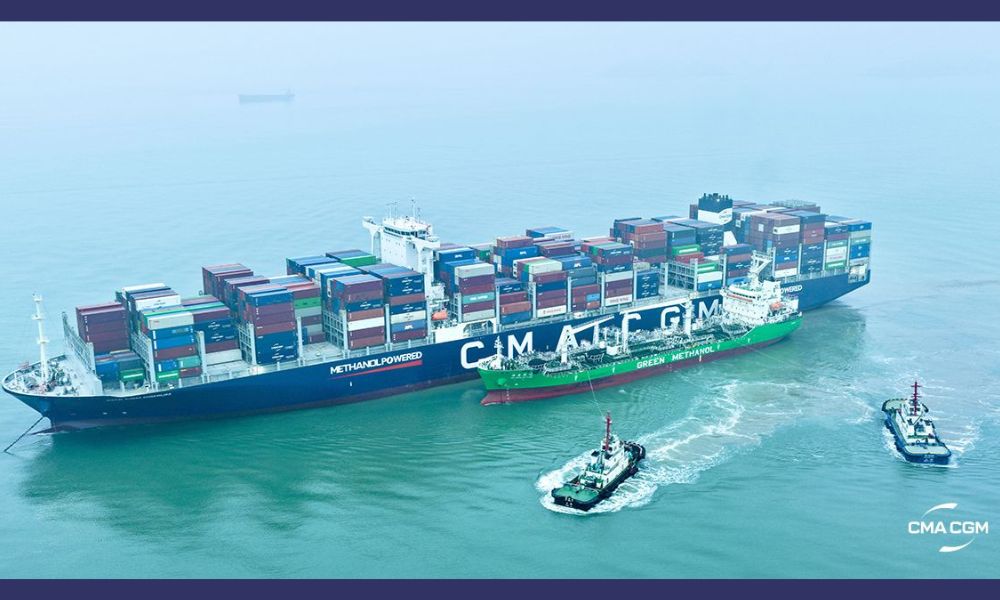
French shipping giant CMA CGM on Tuesday (18 August) said its 13,000 TEU dual‑fuel containership completed the world’s largest single-batch biomethanol bunkering operation at Shanghai Port.

CMA CGM OSMIUM was supplied with 8,016 metric tonnes (mt) of biomethanol in a single operation.

“This volume is enough to cover the vessel’s entire voyage from Shanghai to the East Coast of South America, with an estimated emissions reduction equivalent to 10,000 tonnes of CO₂,” the company said in a social media post. 

Carried out in partnership with Shanghai Electric Group Co Ltd and Shanghai International Port (Group) Co Ltd, CMA CGM said the operation demonstrates the potential of biomethanol for large-scale maritime applications and contributes to the development of lower-carbon fuel solutions for shipping.

Manifold Times previously reported SIPG Energy (Shanghai) Co Ltd (SIPG Energy) completing what it described as China’s first simultaneous two-vessel bunkering operation involving two different green marine fuels at anchorage, supplying LNG and bio-methanol to two vessels.

The company’s LNG bunkering vessel Hai Gang Wei Lai supplied LNG to PIL’s KOTA ELAN, while methanol bunkering vessel Hai Gang Zhi Yuan supplied domestically produced biomass-based methanol to CMA CGM’s dual-fuel container ship CMA CGM OSMIUM.

Related: China: SIPG Energy completes first simultaneous two-vessel, two-fuel green bunkering operation


Photo credit: CMA CGM
Published: 19 August, 2026

Continue Reading

Alternative Fuels

Baltic Workboats delivers biomethane-powered multi-purpose workboat

“KRATT” is Estonia’s first large workboat to use biomethane as its primary fuel and is also equipped with a 400 kWh battery bank for electric propulsion.
Admin

Published

on

By

Baltic Workboats delivers biomethane-powered multi-purpose workboat

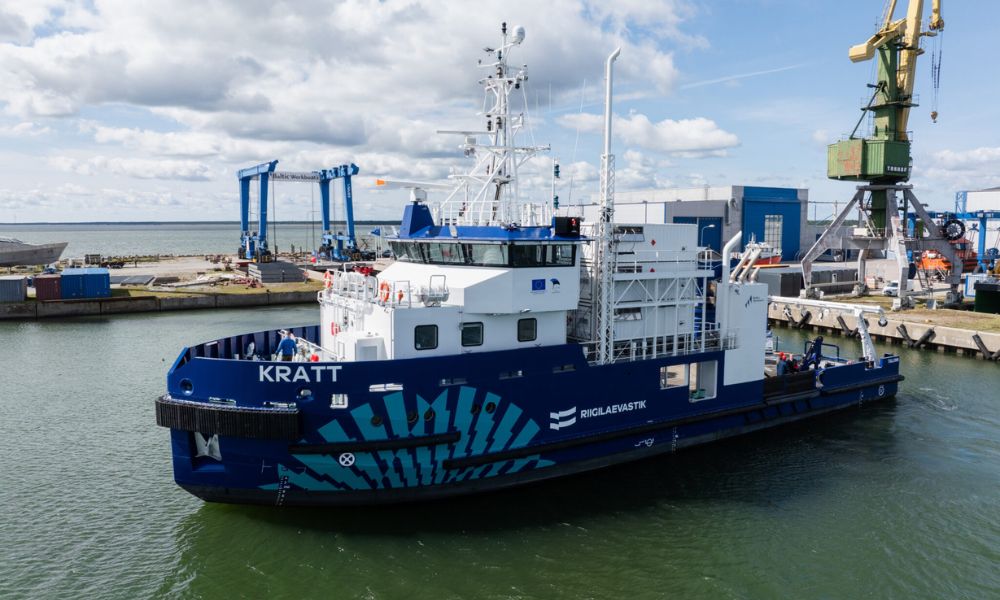
Baltic Workboats recently said a new 38-metre multi-purpose workboat, KRATT, built for the Estonian State Fleet, has been christened at its Nasva shipyard in Saaremaa on 12 August. 

KRATT is Estonia’s first large workboat to use biomethane as its primary fuel and is also equipped with a 400 kWh battery bank for electric propulsion. 

On biomethane, the vessel can travel up to 1,000 nautical miles at a speed of seven knots. On battery power, it can operate for up to two hours at five knots. The battery bank also allows the vessel to use electric power for up to ten hours while at anchor, reducing the need to run auxiliary engines as well as fuel consumption, emissions and noise levels.

From autumn, the vessel will carry out a wide range of maritime tasks in Estonian waters, from buoy handling and fairway maintenance to marine research, pollution response and rescue operations.

According to Andres Laasma, Director General of the Estonian State Fleet, the gradual renewal of the state-owned fleet is essential to ensure the country’s ability to carry out its maritime duties.

“Our main workboats today are on average 30-40 years old, and maintaining their reliability is becoming more difficult and costly year by year. The new workboat KRATT will help ease this situation, as it is a multi-purpose vessel capable of performing a wide range of tasks,” Laasma said.

KRATT is the first major workboat ordered by the state in the past ten years.


Photo credit: Baltic Workboats
Published: 19 August, 2026

Continue Reading

Trending