Connect with us

Alternative Fuels

Singapore can become a centre of excellence in methanol bunkering

Nation state’s bunkering fleet is the ideal testbed to deploy low carbon fuel and convert infrastructure to handle new customers, writes Chris Chatterton.

Admin

Published

on

post 50886

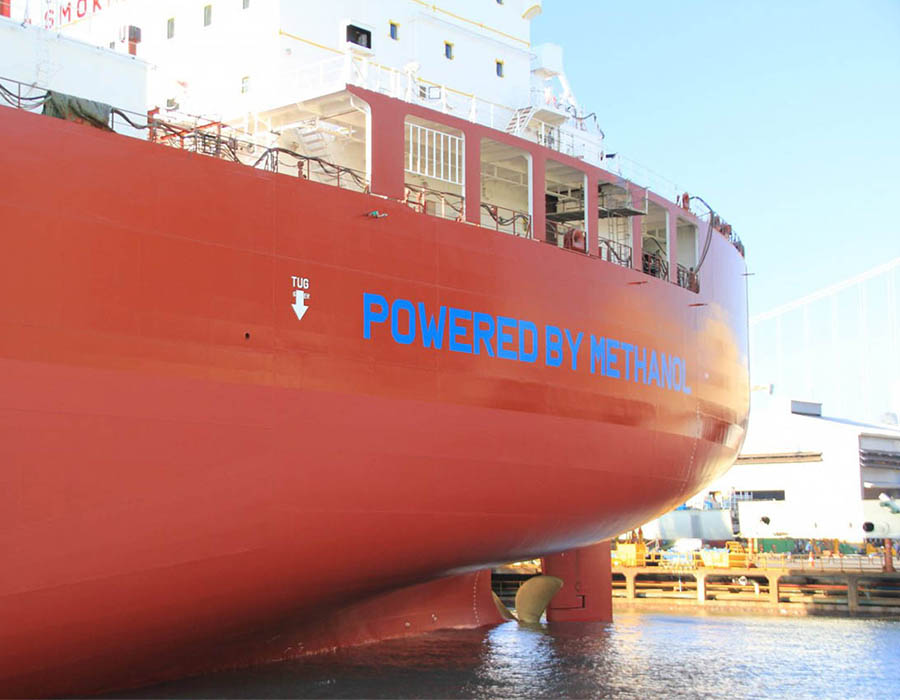
The Methanol Institute recently wrote an article highlighting next generation bunkering opportunities for methanol in Singapore. It was written by Chris Chatterton, Chief Operating Officer at Methanol Institute Singapore, and shared with Manifold Times:

All countries want to move the dial on decarbonisation but few are as uniquely placed to do so as Singapore. As the world’s leading bunker port and a key gateway on the Asia-Europe trades, it sits amid the world’s fastest growing markets. 

That growth also makes it a critical player in reducing greenhouse gas emissions both in the region and on a global basis. The decision by large container lines to build ships that will use Methanol as marine fuel illustrate that Singapore has a limited window in which to adapt its bunkering infrastructure and lower emissions in the port.

Methanol is a liquid fuel, safe and simple to handle with standardised training and minimal conversion of existing bunkering infrastructure required. It has the ability to reduce in-service carbon emissions and comes with a pathway to renewable products that provides the net carbon neutral fuel that the liner operators will use. It is also fully compliant with sulphur emissions under IMO Marpol Annex VI.

It has regulatory approval under the IMO’s IGF Code and the 55 dual fuel Methanol engines in service and on order from MAN demonstrate that owners see it as an important component of the energy transition. Wartsila has recently unveiled its W32 engine which will be available as a methanol dual fuel version, with other models to follow over the next two years.  

The latest discussions at IMO, which are moving towards accounting for maritime carbon emissions on a well-to-wake basis, are prompting producers of renewable Methanol to see maritime as a market with long term potential.

Discussions at the recent Asia Pacific Maritime event indicated a heightened level of interest in methanol among policymakers and a realisation that while Ammonia may possibly be the long-term solution, Methanol should be considered as a minimum, the bridge required to make progress against IMO targets in the meantime.

Interest in Methanol as marine fuel is already growing across Singapore’s maritime sector, with more requests being made for advice and insight on bunkering practices and safety training. Local distributors and international producers have signalled their interest to provide both the product and the expertise and make investments in infrastructure and vessels, which will enable Singapore to allow methanol to be available by year end.

What Singapore needs now is to seize the opportunity. Its bunkering community ranges from large, integrated energy companies to small operators but all of them need support to begin the energy transition we know is coming. Its fleet of vessels – new and old, large and small – presents an ideal opportunity to be repurposed to operate on Methanol and be converted to supply at low cost and with minimal technical exposure.  This is especially so within the harbour craft and work boat sector.

Undertaken as a national endeavour, it might even be possible to tie the supply of fuel to a sectoral conversion or newbuilding programme, gaining a better delivered price for users.

Experience gained in converting vessels, training crews and converting midstream and downstream bunkering to Methanol would give Singapore valuable knowledge and expertise before large Methanol fuelled cargo ships start calling in 18-24 months.

The advantage that Methanol offers is that there is no need to delay. The know-how, engines, and infrastructure are all available now, providing a means to begin reducing emissions immediately rather than waiting for the next generation of fuel to become available.

This is critical to understand because pressure on carriers and their customers for greater transparency around emissions reduction is growing quickly. Under a proposed Securities and Exchange Commission rule, companies may soon be required to disclose their actual greenhouse gas emissions and climate related risks in periodic filings. These businesses will increasingly be called upon to account for their full emissions supply chain, including scope three emissions incurred by their service providers. 

Leveraging local policy grounded in global regulations can make Singapore the leading provider of low carbon tools and reduction technology and ultimately renewable methanol bunkers in Asia-Pacific. As a critical maritime player, its position on emerging ‘green corridors’ could make it the low carbon hub in a regional network that acts as the model for shipping’s energy transition.


Photo credit and source: Methanol Institute
Published: 11 April, 2022

Continue Reading

Alternative Fuels

Wah Kwong subsidiary appoints Nordic Green Biotrading as European distributor

Nordic Green will have the exclusive right to market, promote, and distribute Venture Energy’s supply of RED Advanced bio-methanol and RFNBO-methanol across the EEA, UK, and Switzerland.

Admin

Published

on

By

Wah Kwong subsidiary appoints Nordic Green Biotrading as European distributor

Venture Energy, a sustainable fuels supplier headquartered in Hong Kong, recently announced the signing of a Distribution Agreement with Nordic Green Biotrading ApS (Nordic Green), appointing the Danish company as its exclusive distributor of renewable methanol across the EEA, the United Kingdom, and Switzerland.

The move marked a key step in expanding Venture Energy’s next-generation marine fuels platform into the European market.

Venture Energy is a subsidiary of Hong Kong shipowner Wah Kwong Maritime Transport, focusing on the procurement and trading of clean fuels.

Under the agreement, Nordic Green will have the exclusive right to market, promote, and distribute Venture Energy’s supply of RED Advanced bio-methanol (bio-methanol) and RFNBO-methanol (e-methanol) throughout the Territory.

“We are delighted to formalise our longstanding collaboration with Nordic Green as our strategic distribution partner in Europe, extending the breadth and quality of our downstream coverage for our supplier network and developing the profile of high-quality renewable methanol producers in the European market.” said Gregor McMillan, Executive Director of Venture Energy.

Deepak Devendrappa, General Manager of Venture Energy, said: “Nordic Green’s track record in local distribution, deep market knowledge, and strong customer relationships across the region’s core bio-blending and chemical sectors make them the ideal partner to bring our ISCC-certified renewable methanol to our customers in the territory. 

“This agreement is another step in the road for Venture Energy as we act on Wah Kwong’s commitment to supporting the energy transition with reliable, sustainable fuel solutions.”

The distribution agreement covers sales within the dutiable area of the EEA, the United Kingdom, and Switzerland. Venture Energy will continue to market directly into the marine bunkering segment.

Bo Gleerup, representing Nordic Green, added: “This exclusive partnership represents a significant milestone for Nordic Green. Being able to sell Venture Energy’s high-quality, certified, renewable methanol volumes from a range of bio-methanol and e-methanol producers, complement our existing supply network for European road-fuel and chemical producers. This fresh focus allows us to offer some of the most competitive products coming into the market today. We look forward to working closely

with our colleagues at Venture Energy to develop this collaboration and deliver value to our shared customers across the territory.”

Related: Wah Kwong launches clean fuels procurement and trading subsidiary Venture Energy
Related: Wah Kwong clean fuels trading subsidiary and Shenji Energy ink green methanol supply deal


Photo credit: Venture Energy
Published: 17 June, 2026

Continue Reading

Hydrogen

LH2 Shipping wins Enova funding for two more liquid hydrogen-powered bulk carriers

Company secured USD 36 million for the development and construction of two additional liquid hydrogen-powered bulk carriers.

Admin

Published

on

By

LH2 Shipping wins Enova funding for two more liquid hydrogen-powered bulk carriers

Norway’s LH2 Shipping on Tuesday (16 June) said it has been awarded Enova support of NOK 344.3 million (USD 36 million) for the development and construction of two additional liquid hydrogen-powered bulk carriers.

With the latest award, LH2 Shipping is now involved in the development of six hydrogen-powered bulk carrier projects. The announcement builds on previous Enova-supported vessel initiatives and reflects growing momentum for liquid hydrogen as a viable fuel alternative for short-sea shipping to meet decarbonising policy goals.

The new projects represent a continuation of LH2 Shipping’s long-term strategy to establish commercially viable hydrogen-powered vessels while contributing to the development of the supporting fuel and bunkering infrastructure required for large-scale adoption.

“This award is an important strategic milestone for LH2 Shipping,” stated Ivan Østvik, CEO of LH2 Shipping. 

“It strengthens our position as a developer of liquid hydrogen-based zero-emission vessel solutions and brings us yet another step closer to our ambition of enabling a substantial fleet of hydrogen-powered vessels that can help establish a complete maritime liquid hydrogen value chain.”

Since introducing the world’s first hydrogen-powered bulk carrier projects, LH2 Shipping has focused on moving beyond demonstration concepts toward commercially deployable vessels. The addition of vessels five and six further expands the project portfolio and supports continued industrial learning across ship design, fuel systems, operations, and infrastructure.

The Enova support will indirectly enable LH2 Shipping to continue their work developing additional zero-emission solutions for passenger transport and offshore operations, supporting Norway’s broader transition toward a low-emission maritime sector.

“If we are to succeed in the transition to low and zero emission solutions in the maritime sector, we depend on players who dare to go first. LH2 Shipping shows how shipping companies can take the lead and adopt new technology. This is crucial to accelerating development and reducing emissions from shipping,” said Head of Hydrogen and Ammonia Initiatives, Elin Ulstad Stokland at Enova.

This latest Enova award brings total support for the six vessels to more than NOK 800 million and reinforces the momentum behind hydrogen-powered shipping in Norway. Through these projects, LH2 Shipping is offering ship operators to decarbonise bulk transport at scale while contributing to the development of the infrastructure and experience needed for wider industry adoption.


Photo credit: LH2 Shipping
Published: 17 June, 2026

Continue Reading

Methanol

China: Chimbusco takes delivery of new methanol bunkering vessel in Zhoushan

Company says commissioning of “Zhong Ran LV Neng 85” will further enhance its service capabilities in green methanol bunkering in major domestic ports.

Admin

Published

on

By

Chimbusco takes delivery of new methanol bunkering vessel in Zhoushan

China Marine Bunker (PetroChina) (Chimbusco) recently took delivery of its first bunkering vessel in China to deliver methanol to dual-fuel ships.

The 8,500-dwt duplex stainless steel chemical tanker Zhong Ran LV Neng 85 was successfully delivered in Zhoushan.

The company said the commissioning of this new ship will further enhance Chimbusco’s service capabilities in green methanol bunkering in major domestic ports and expand its national marine new energy service and support network

During the delivery period, Chimbusco said it focused on safe operations and conducted special training for all crew members of the vessel.

The training covered methanol bunkering operation specifications, prevention of collisions between commercial and fishing vessels, daily vessel reporting, and voyage report filling standards.

Manifold Times previously reported the launching of the bunkering vessel at Taizhou Fangzhen Shipbuilding Wharf in Zhejiang.

The floating out of the ship comes after Chimbusco has obtained methanol bunkering licences for Shanghai Port and Ningbo Port.

Related: Chimbusco launches new methanol bunkering vessel in Zhejiang


Photo credit: China Marine Bunker (PetroChina) (Chimbusco)
Published: 16 June, 2026

Continue Reading

Trending