Connect with us

Environment

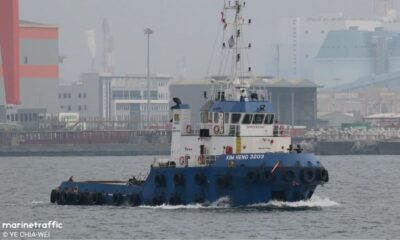
Wartsila: Slow steaming to arrive at the right time

Explores why slow steaming is not common practice used to match a vessel’s arrival time at ports.

Admin

Published

on

5c7cb614369fe 1551676948

The following ‘Slow steaming to arrive at the right time’ article was first published on the Wärtsilä magazine Twentyfour 7 in February 2019:

International shipping accounts for around 3% of global CO2 emissions. The amount of cargo carried by sea has grown and is expected to reach 12 billion tonnes by 2020. Growth in global trade also means growth in fuel consumption and, therefore, higher emissions.

One of the most effective, quickest and easiest solutions to reduce emissions is to slow ships down. Even micro-adjustments at high speeds have a massive impact on fuel consumption. According to a study conducted by environmental group, Seas at Risk, a 10% reduction in the speed of world fleet would result in a 19% reduction in CO2 emissions.

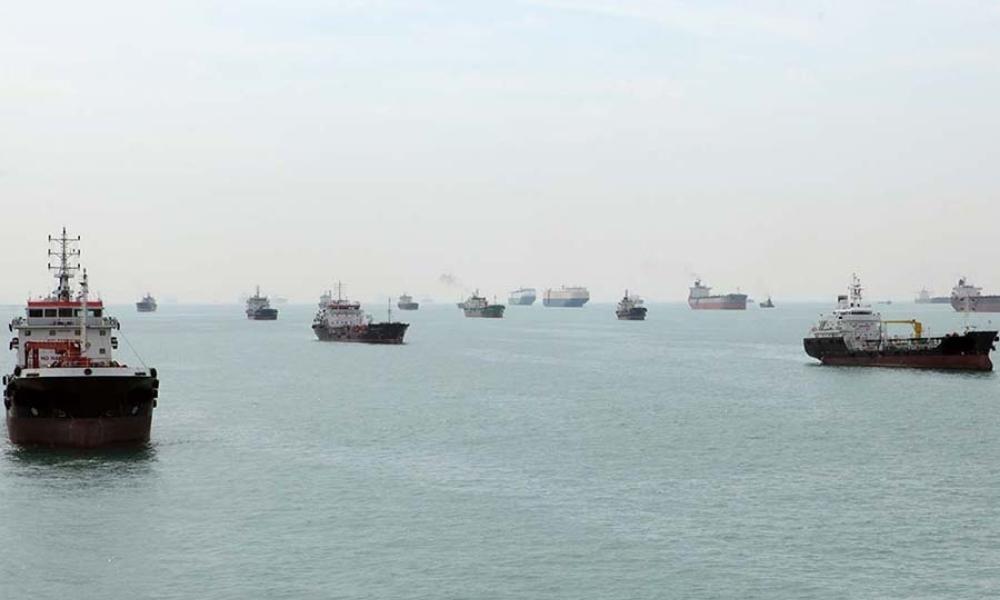
Slowing down the speed of the vessel also reduces the time a vessel spends at anchor waiting for a port call. While waiting outside the port, ships consume energy, emitting fumes to the detriment of local air-quality and their cumulative presence heightens the risk of accidents.

Slow steaming and just-in-time port arrivals are two of the few practices, where economic and environmental benefits don’t contradict each other. Many environmental organisations have called for the shipping industry to act quicker in order to take on new practices to cut down emissions. The International Maritime Organization (IMO) has acted on the matter since the Kyoto Protocol in 1997 and called for a reduction of emissions caused by international shipping. Several policy options have since been launched. But no regulations on slow steaming have been tabled yet. So, currently, it is a voluntary practice.

Getting all on board

Marine Traffic, a leading source of ship tracking intelligence world-over, has developed a real-time global database to track vessels while on a voyage and at port. Argyris Stasinakis who is a partner, board member at this Oxford-based company, sees the problem as a complex one. However, according to him, the solution can be narrowed down to one single word: communication.

“The key is information exchange. Communication between the vessel, port authorities, terminals and other parties involved is not as dynamic as it should be,” says Stasinakis. “In many cases, vessels are called to port two to six hours beforehand, and that is too late to make any meaningful adjustments to the vessel speed,” he explains.

Delays and congestions in ports are often due to inefficient communication between one player to another.

Technically, ready!

Matteo Natali, General Manager at Wärtsilä addresses the issue. He notes that a port consists of several individual roles. “The Port is actually a community with many different operators. There are terminal operators, port authority, logistics companies, agents, pilots, tug operators, other service providers, and so forth,” explains Natali.

The good thing is that technical solutions already exist to support coordination between the different parties involved. For instance, Wärtsilä is involved in projects that aim to enable more efficient, real-time communication between all stakeholders.

Natali himself is also working on one such interesting project—Portify, a digital communication platform that allows for smooth data exchange between the vessel and the port community. The platform thus helps actualise the benefits of real-time coordination and ultimately achieve speed and route optimisation for just-in-time arrival, based on the availability of the berth and all players involved in the vessel arrival operations.

While Stasinakis agrees that technical solutions exist, he points out that the culture of sharing information, which is currently business-driven, is a barrier.

“Stakeholders are reluctant to share information. But we have seen in other industries, like aviation or global retail, that when there is huge information flow, the data sharing leads to a higher understanding of the industry and improved efficiency,” says Stasinakis. Marine Traffic works on an open-source principle and has millions of monthly users.

The digital tide

Some of the world’s busiest ports are leading the way by going increasingly digital to allow better real-time communication. Europe’s busiest port is Rotterdam, where 30,000 ocean-bound vessels and 105,000 inland vessels are handled every year. Port of Rotterdam has developed a digital dashboard where real-time data on water, weather and opening slots at berth are updated.

“We were one of the first to initiate talks with other ports and shipping companies to find existing standards to maximise the benefits of sharing data,” explains Captain Ben van Scherpenzeel, who is the director of Nautical Developments, Policy and Plans at the Port of Rotterdam.

Captain van Scherpenzeel has a practical outlook and says that given the scope of data, the system should be as lean as possible.

“We are currently conducting very fundamental work, trying to define what is the minimum amount of data that would need to be exchanged. Next step is figuring how to make data part of the current process. At least half of my working hours currently is devoted to this project.”

Published: 4 March, 2019
 

Continue Reading

Shipping Corridor

Industry partners launch Brazil-Belgium e-fuel green shipping corridor initiative

A new consortium facilitated by the Global Maritime Forum and RMI will work to establish a green shipping corridor between the Port of Açu in Brazil and the Port of Antwerp-Bruges in Belgium.

Admin

Published

on

By

RESIZED william william on Unsplash

A new consortium facilitated by the Global Maritime Forum and RMI will work to establish a green shipping corridor between the Port of Açu in Brazil and the Port of Antwerp-Bruges in Belgium, according to Global Maritime Forum on Thursday (4 June). 

In addition to the port teams on both ends of the corridor, the consortium includes HIF Global, Fuella, NYK Line, Höegh Autoliners, and Wallenius Wilhelmsen. 

The consortium will assess infrastructure, vessels, and business models to create a roadmap for transporting zero-carbon fuels produced in Açu, such as e-ammonia or e-methanol. The transport itself would also be powered by the same zero- or near-zero-emission fuels.

“We’re thrilled to be working with these partners to take these important steps towards Brazil’s e-fuel production and bunkering opportunity, whilst supporting the growing demand for e-fuels in Europe,” said Eleanor Wells, a senior project manager at the Global Maritime Forum.

The new consortium builds on a pre-feasibility study developed by RMI and the Global Maritime Forum in November 2025. 

The study highlighted the competitive projected costs of e-fuel produced in Açu, due to Brazilian policies supportive of green hydrogen production, the country’s largely renewable electricity grid, its abundance of renewable energy sources, and a relatively low cost of capital. A 2024 report from the same two organisations, Oceans of Opportunity, identified the Port of Açu as a high-potential e-fuel export hub.

Green shipping corridors are dedicated trade routes where the feasibility of zero-emission shipping is catalysed by public and private action. These routes are seen as central to delivering on the shipping industry’s goal of having zero-emission fuels account for 5% of all fuels by 2030. 

While green corridors have rapidly expanded in popularity worldwide, and a handful of initiatives have now reached the realisation stage, the most recent edition of the Annual Progress Report on Green Shipping Corridors warned that progress is being stalled by a ‘feasibility wall’ created by the cost gap between conventional and zero-emission fuels.

The Global Maritime Forum and RMI will continue to facilitate the realisation of the Açu-Antwerp green corridor, with work already moving at pace to progress beyond pre-feasibility and develop a feasibility analysis for the corridor. The feasibility analysis is expected to be published by the end of the year, with the consortium meeting regularly in the meantime.


Photo credit: william william on Unsplash
Published: 5 June, 2026

Continue Reading

Emissions reporting

StormGeo and OceanScore link emissions data, compliance workflows

Cooperation combines StormGeo’s expertise in operational vessel and emissions data with OceanScore’s expertise in emissions compliance workflows across EU ETS, FuelEU Maritime and UK ETS requirements.

Admin

Published

on

By

StormGeo and OceanScore link emissions data, compliance workflows

Weather intelligence and decision support solutions provider StormGeo and Hamburg-based technology platform OceanScore on Wednesday (3 June) said they have deepened their ongoing cooperation through the signing of a collaboration agreement during Posidonia 2026 in Athens on 2 June.

The cooperation combines StormGeo’s expertise in operational vessel and emissions data with OceanScore’s expertise in emissions compliance workflows across EU ETS, FuelEU Maritime and upcoming UK ETS requirements.

Together, the companies aim to help shipping companies seamlessly navigate increasing regulatory complexity more efficiently — from emissions reporting and data validation to compliance exposure management, pooling and financial settlement.

As emissions regulation becomes an increasingly important part of commercial shipping operations, the need for reliable operational data and streamlined compliance processes continues to grow. The cooperation between StormGeo and OceanScore is designed to support shipping companies with more connected, transparent and actionable processes across operational and commercial teams.

“From the outside, companies like StormGeo and OceanScore may sometimes be perceived as competitors because both operate around emissions and compliance workflows,” said Albrecht Grell, Managing Director at OceanScore. 

“But in reality, the industry increasingly needs both perspectives working together: trusted operational emissions data on one side and commercial compliance execution on the other. Our cooperation reflects that shipping companies are no longer looking for isolated solutions — they need connected processes, automated across different systems and reliable decision-making throughout the full compliance chain.”

By connecting validated operational emissions data with commercial compliance management, the cooperation supports workflows across:

  • emissions reporting and validation 
  • compliance management across EU ETS, FuelEU Maritime and upcoming UK ETS requirements
  • exposure visibility and cost transparency
  • pooling, settlement and financial processes 

The cooperation also aims to improve commercial transparency and coordination across operational and commercial stakeholders.

“StormGeo plays a central role in helping shipping companies turn operational vessel and emissions data into trusted, decision-ready insights,” said Espen Martinsen, Chief Commercial Officer at StormGeo. 

“As emissions regulations become more complex, this data is essential for transparent and efficient compliance management. By working with OceanScore, we can help customers connect StormGeo’s validated operational data with commercial compliance processes, creating a more integrated and practical approach to emissions management.”

The signing ceremony took place at the StormGeo booth during Posidonia 2026 in Athens and was attended by representatives from both companies.

Both companies expect the cooperation to continue evolving alongside upcoming regulatory developments, including FuelEU Maritime, EU ETS, the upcoming UK ETS and future emissions-related frameworks affecting global shipping.


Photo credit: StormGeo
Published: 4 June, 2026

Continue Reading

Methanol

Seaspan and Hapag-Lloyd complete first of five methanol vessel retrofit

Following “Seaspan Yangtze”, the remaining vessels planned for retrofit under the methanol retrofit programme are “Seaspan Amazon”, “Seaspan Ganges”, “Seaspan Thames”, and “Seaspan Zambezi”.

Admin

Published

on

By

Seaspan and Hapag-Lloyd complete first of five methanol vessel retrofit

Seaspan Corporation (Seaspan) and Hapag-Lloyd on Wednesday (3 June) announced the successful completion of the first of the five vessel conversions under their methanol retrofit programme with the delivery of Seaspan Yangtze.

From the early SAVER (Seaspan Action for Vessel Energy Reduction) programme to today’s CleanBlue initiative, Seaspan has committed over USD 230 USD million across 86 vessels, executing more than 550 efficiency and retrofit projects.

Following Seaspan Yangtze, the remaining vessels planned for retrofit under the programme are Seaspan Amazon, Seaspan Ganges, Seaspan Thames, and Seaspan Zambezi. Each retrofit is expected to reduce well-to-wake CO₂e emissions by approximately 30,000 to 50,000 metric tonnes per vessel annually when operating on low-carbon methanol, while also extending vessel lifespan and enhancing fuel flexibility.

“Decarbonisation is not just about building the fleet of tomorrow, it is also about unlocking the full potential of the fleet we have today. Retrofitting and upgrades on existing fleets play a practical, immediate, and economical role in accelerating shipping’s decarbonization journey,” said Bing Chen, Chairman, President and CEO of Seaspan. 

“Project SAVER CleanBlue highlights Seaspan’s strong customer partnerships, deep technical expertise, and unique platform integrated with JV partners, such as WattSpan Maritime Technology, in executing complex and large-scale retrofit projects.”

“The successful conversion of the Seaspan Yangtze together with the planned retrofit of its four sister vessels is another important step on our ambitious path towards net-zero fleet operations by 2045,” said Silke Lehmköster, Managing Director, Fleet, Hapag-Lloyd. 

“Together with Seaspan, we are demonstrating that retrofitting existing vessels for low-carbon methanol can be a practical way to reduce emissions in shipping.”


Photo credit: Seaspan
Published: 4 June, 2026

Continue Reading

Trending