Connect with us

Environment

Stena Bulk and OGCI partner on carbon capture and storage feasibility study

Data from Stena Bulk Suezmax tanker used to explore applicability, cost, and emissions reduction potential of installing onboard CCS technologies

Admin

Published

on

Stena Bulk and OGCI partner on carbon capture and storage feasibility study

Tanker shipping company Stena Bulk on Monday (13 December) shared results of a recent partnership with the Oil and Gas Climate Initiative (OGCI) to study and explore the potential of capturing carbon at the point of exhaust from large commercial vessels.

Stationary carbon capture & storage (CCS) technologies onboard ships could be an important solution in the maritime sector’s race to decarbonise.

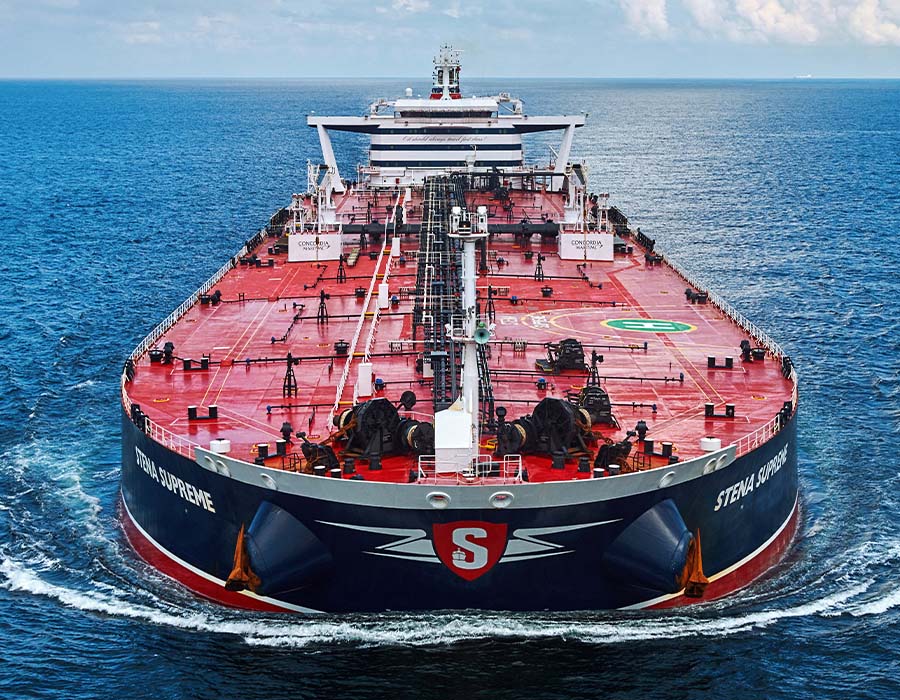
To support the feasibility study into their use, Stena Bulk initially provided data from three vessels in its fleet; a medium range (MR) oil/chemical tanker and a Suezmax crude oil tanker that are currently running on heavy fuel oil (HFO), and an LNG carrier fuelled by LNG.

The information that Stena Bulk provided to support the study included key vessel technical information such as deck space, fuel use, the availability of heat and energy in the exhaust stream, as well as wider considerations such as if the vessels were technically representative of the wider global fleet.

The findings of the study showed that the LNG carrier offered the most straightforward path to implementing viable CCS because it had the right mix of onboard infrastructure. The Suezmax and MR tankers presented more technical challenges to implement a CCS system.

Ultimately, the full feasibility study was conducted based on the Suezmax tanker’s technical specifications because of the positive impact that a potential carbon capture and storage system would have, and to test feasibility on a ship that was representative of the global fleet.

The results of the study show that carbon capture and storage is technically feasible on a large tanker. The biggest challenge, the study found – although by no means an unsurmountable one – was likely to be cost of installation and operation, with storage tanks, compressors, and other equipment generating a large upfront CapEx barrier.

Operating expenses would also increase, the study found, because of the energy required to use the CCS system effectively. However, the study found that these costs could be substantially reduced if the engine was adapted for compatibility with carbon capture and storage.

The study concluded these costs were likely to be a hurdle to deployment of CCS in the near and medium term, but that as the technology improves and becomes cheaper to operate, it could be a persuasive option for the industry’s decarbonisation trajectory. Wider context could influence this as well, the study pointed out, with commodity prices for captured carbon dioxide potentially offsetting some of the costs for owners and operators.

Erik Hånell, President and CEO of Stena Bulk, said: “It is fantastic to be able to share the results of the study we recently conducted with OGCI into the feasibility of carbon capture and storage for the global fleet. Completing this study fully aligns with Stena Bulk’s vision to advance decarbonisation because it is the commercially sensible thing to do. These results show promise, but also make clear that there are commercial and technical challenges that our sector must overcome if we are to use CCS as a decarbonisation solution.”

“We think that it’s right that the industry is honest about the challenges it faces from a technical and commercial perspective on the pathway to decarbonisation. This study proves once again that there is no silver bullet solution to meet the IMO’s climate targets, and that we must promote and adopt a wide variety of proven and commercially sensible solutions if we are to successfully decarbonise.”

Dr. Michael Traver, Transport Workstream Chair for the Oil and Gas Climate Initiative, said: “Carbon capture and storage is expected to play a key role in meeting the ambitions of the Paris Agreement and is a familiar process for many of the member companies of OGCI.  Extending and adapting the technology to marine vessels poses unique challenges, but also represents a great opportunity to reduce emissions from a difficult to abate sector within transportation.  Our partnership with Stena Bulk has been a great example of the type of cross-industry collaboration that will be necessary to meet the challenges we face.”


Photo credit: Stena Bulk
Published: 17 December, 2021

Continue Reading

LNG Bunkering

MOL and Seaspan sign annual LNG bunkering deal for car carriers in Port of Vancouver

MOL says North America is one of the key trade lanes for car carriers, and with recent delivery of new LNG-fuelled vessels, securing a stable LNG fuel supply in the area has become increasingly important.

Admin

Published

on

By

MOL and Seaspan sign annual LNG bunkering deal for car carriers in Port of Vancouver

Mitsui O.S.K. Lines, Ltd. (MOL) on Thursday  (21 May) announced that MOL and Seaspan Energy have signed the first annual contract for LNG bunkering for car carriers at the Port of Vancouver, Canada. 

On 29 April, MOL completed the first LNG bunkering under this contract. Since completing the first LNG bunkering on the West Coast of North America on 1 March 2025 – the first by a Japanese shipping company – MOL has conducted several additional LNG bunkering operations in the region. 

North America is one of the key trade lanes for car carriers, and with the recent delivery of new LNG-fuelled vessels, securing a stable LNG fuel supply in the area has become increasingly important. This contract underscores the company’s commitment to establishing a stable and seamless regional LNG fuel procurement framework.

Seaspan expanded its LNG bunkering capabilities in 2026 from Vancouver to Long Beach, California, and continues to proactively support the growth of a clean marine supply chain.

Seaspan Energy President Harly Penner, said: “The relationship between Seaspan Energy and MOL is highly valued. MOL was the first car carrier operator to receive LNG bunkering services in the Port of Vancouver, and we are proud to continue supporting their operations in Vancouver through this annual LNG bunkering agreement. 

“This partnership reflects our shared commitment to advancing lower-emission marine transportation and supporting the industry’s transition toward net-zero GHG emissions.”

Marine Fuel GX Division General Manager Daisuke Fujihashi, said: “We are very pleased to further strengthen our partnership with Seaspan Energy through this contract for LNG fuel procurement. 

“Looking ahead, we will continue to deepen our collaboration with Seaspan Energy in the field of clean fuels, including bio LNG, and remain committed to offering our customers more pathways toward cleaner supply chains.”


Photo credit: MOL
Published: 22 May, 2026

Continue Reading

Ammonia

MMMCZCS: MAGPIE Project confirms operational feasibility of ammonia bunkering

MAGPIE consortium completed a successful ship-to-ship ammonia bunkering simulation in Rotterdam on 12 April, proving that ammonia can be bunkered safely within an operating port.

Admin

Published

on

By

MMMCZCS: MAGPIE Project confirms operational feasibility of ammonia bunkering

The Mærsk Mc-Kinney Møller Center for Zero Carbon Shipping (MMMCZCS) on Thursday (21 May) said a new demonstration project in the Port of Rotterdam showed that ship-to-ship ammonia bunkering can be carried out safely within an active port environment. 

The demonstration is part of the EU-funded MAGPIE (sMArt Green Ports as Integrated Efficient multimodal hubs) project, and the report is now available, providing concrete learnings that industry can use to guide future ammonia bunkering and accelerate global port permitting.

The shipping sector must transition away from fossil fuels to meet climate targets. Ammonia is considered a promising alternative fuel, but its specific hazards pose significant safety, operational, and regulatory challenges. Without competent operators, fit-for-purpose equipment and robust safety and regulatory frameworks, ammonia bunkering cannot take place safely in ports.

Within the MAGPIE project, a full-scale simulation of a ship-to-ship ammonia bunkering operation was conducted in the Port of Rotterdam on 12 April 2025. The demonstration showed that ammonia bunkering within port limits is operationally feasible when carefully planned and executed within a robust safety and regulatory framework.

The learnings from the demonstration have now been consolidated by the Mærsk Mc-Kinney Møller Center for Zero Carbon Shipping and project partners in a comprehensive ammonia bunkering demonstration report. This publication provides the industry with practical lessons and a validated port safety framework and tools that other ports can use as a blueprint for ammonia bunkering.

A key outcome of the project is the validation of the Port of Rotterdam’s port safety framework for ammonia as a fuel, as well as the International Association of Ports and Harbours’ (IAPH) Port Readiness Tool. The results demonstrate that these frameworks are fit-for-purpose instruments for ports considering the introduction of new alternative fuels.

“The project delivers practical learnings, validation sheets and recommendations that can be used by ports globally to build confidence in ammonia bunkering and to inform future port permitting and regulatory processes. The results support the EU’s ambition for green ports and the safe deployment of alternative fuels in the maritime sector,” said Bo Cerup-Simonsen, CEO, Mærsk Mc-Kinney Møller Center for Zero Carbon Shipping.

“The energy transition requires new, integrated value chains. This ammonia bunker pilot is an important step in developing a complete value chain for alternative fuels, from import to application in shipping. Together with our partners, we demonstrate that innovation, safety, and scalability can go hand in hand. Rotterdam plays a connecting role as an energy and logistics hub for Northwest Europe,” said Boudewijn Siemons, CEO, Port of Rotterdam.

The learnings from MAGPIE contribute to a broader effort to accelerate sustainable, smart and multimodal port systems and results will be shared with the wider industry to support the global transition of the shipping sector.

Note: The report titled ‘Ammonia Bunkering Demonstration Report’ can be found here


Photo credit: Mærsk Mc-Kinney Møller Center for Zero Carbon Shipping
Published: 22 May, 2026

Continue Reading

Environment

OliOil selects Elomatic as partner for autonomous oil spill response container design

A unique feature of the solution is that the container can be placed on both oil-carrying vessels and in ports, enabling rapid response capability.

Admin

Published

on

By

OliOil selects Elomatic as partner for autonomous oil spill response container design

Finnish startup OliOil recently said it is developing an oil spill response container that enables advanced prevention of oil spread immediately after an incident occurs. 

Elomatic will design the system to meet performance and operational reliability requirements under challenging conditions.

The collaboration between Elomatic and OliOil focuses on developing the oil spill response container technology from pilot phase toward industrial manufacturing. 

In the preliminary design phase, the aim is to create a concept for a functional system where containerized boats deploy autonomously during an oil spill, using AI and robotics to position containment booms.

OliOil’s oil spill response container was created from a LUT University research project focused on Baltic Sea protection. 

What makes the solution advanced is that the container can be placed on both oil-carrying vessels and in ports, enabling rapid response capability. Boom deployment is the critical first step in any spill response, preventing the oil’s spread and enabling efficient oil recovery with specialized collection equipment.

Elomatic’s scope covers container design, boat hoisting systems, electrification, and ventilation. The team is also defining the boats’ technical specifications and designing their propulsion systems.

“Elomatic’s expertise in both industry and marine technology is valuable. It’s also important to us that Elomatic has experience in commercializing innovations in addition to engineering expertise,” said Kristian Laiho, Chair of the Board at OliOil.

“It’s great to work with a company bringing new solutions to environmental challenges. Utilizing our broad expertise in OliOil’s product development and commercialization is meaningful to us,” said Karoliina Joensuu, Head of Industry Business Unit at Elomatic.


Photo credit: OliOil
Published: 15 May, 2026

Continue Reading

Trending