Connect with us

Environment

OliOil selects Elomatic as partner for autonomous oil spill response container design

A unique feature of the solution is that the container can be placed on both oil-carrying vessels and in ports, enabling rapid response capability.

Admin

Published

on

OliOil selects Elomatic as partner for autonomous oil spill response container design

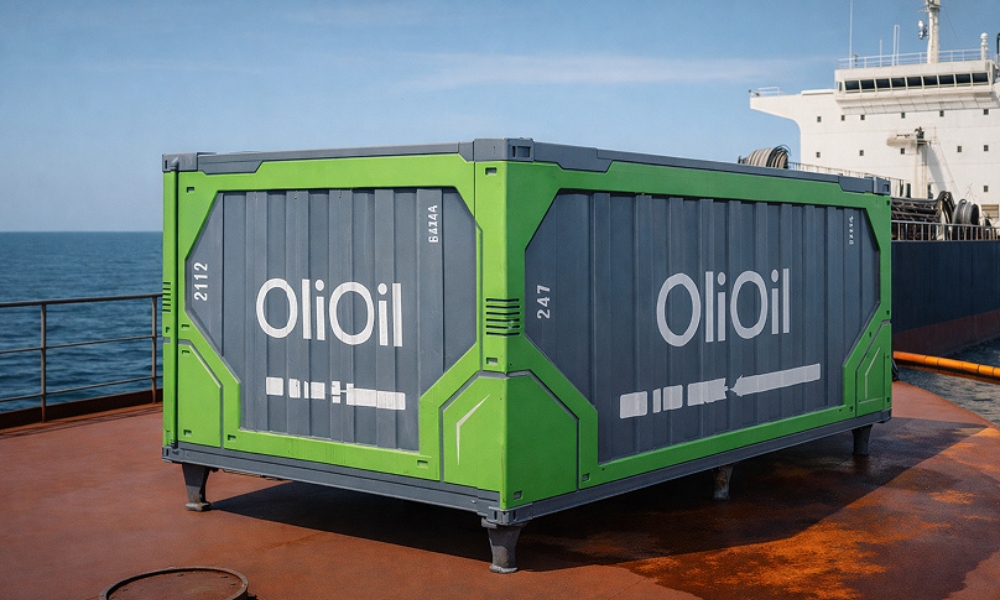
Finnish startup OliOil recently said it is developing an oil spill response container that enables advanced prevention of oil spread immediately after an incident occurs. 

Elomatic will design the system to meet performance and operational reliability requirements under challenging conditions.

The collaboration between Elomatic and OliOil focuses on developing the oil spill response container technology from pilot phase toward industrial manufacturing. 

In the preliminary design phase, the aim is to create a concept for a functional system where containerized boats deploy autonomously during an oil spill, using AI and robotics to position containment booms.

OliOil’s oil spill response container was created from a LUT University research project focused on Baltic Sea protection. 

What makes the solution advanced is that the container can be placed on both oil-carrying vessels and in ports, enabling rapid response capability. Boom deployment is the critical first step in any spill response, preventing the oil’s spread and enabling efficient oil recovery with specialized collection equipment.

Elomatic’s scope covers container design, boat hoisting systems, electrification, and ventilation. The team is also defining the boats’ technical specifications and designing their propulsion systems.

“Elomatic’s expertise in both industry and marine technology is valuable. It’s also important to us that Elomatic has experience in commercializing innovations in addition to engineering expertise,” said Kristian Laiho, Chair of the Board at OliOil.

“It’s great to work with a company bringing new solutions to environmental challenges. Utilizing our broad expertise in OliOil’s product development and commercialization is meaningful to us,” said Karoliina Joensuu, Head of Industry Business Unit at Elomatic.


Photo credit: OliOil
Published: 15 May, 2026

Continue Reading

Port & Regulatory

US lawmakers reintroduce bill to develop clean shipping technology and infrastructure

Legislation would create a USD 1 billion per year programme to develop the next generation of clean shipping technology and infrastructure such as zero-emission ships and cleaner marine fuels.

Admin

Published

on

By

RESIZED william william on Unsplash

US Representatives Nanette Barragán and Troy A. Carter, Sr., along with Senator Chris Van Hollen, on Friday (26 June) reintroduced the Next Generation Shipping Act. 

The legislation would create a USD 1 billion per year programme through the Department of Transportation’s Maritime Administration (MARAD) to develop the next generation of clean shipping technology and infrastructure. 

The lawmakers said the bill would help to address harmful pollution that comes from the shipping industry, a major but often unrecognised source of greenhouse gas emissions and port pollution. 

Through the development and usage of new technologies— such as zero-emission ships, cleaner marine fuels, and better port equipment— the programme seeks to protect the health of port and coastal communities, and help the US reduce its climate pollution.

They added that the bill would also help the United States keep up with other countries in Europe and Asia that are already investing heavily in clean shipping technology. The bill would ensure that the U.S. leads in the future of shipping, rather than rely on technology from other countries.

“Shipping plays a vital role in our economy, and at the Ports of Los Angeles and Long Beach, but it should not come at the expense of the health of our families,” said Rep. Barragán. 

“The Next Generation Shipping Act is about investing in cleaner technologies, supporting American jobs, making sure the United States leads in the future of maritime innovation, all while making sure we do so in a way that preserves public health. By acting now, we can protect our communities, strengthen our economy, and build a more sustainable shipping industry for generations to come.”

“The Next Generation Shipping Act is forward-thinking legislation that will help revitalise the U.S. maritime industry and boost our economic competitiveness. As the federal government looks to expand commercial shipbuilding capacity, the U.S. must invest in cleaner ships and technologies to compete globally,” said Antonio Santos, Federal Climate Policy Director, Pacific Environment. 

“The bill provides much-needed funding to position the US to be a leader in the development of next-generation vessel technologies and sustainable maritime fuels, while creating good-paying jobs and supporting workforce training. We thank Representative Barragán, Representative Carter, and Senator Van Hollen for introducing this important legislation and call on Congress to pass this bill to spur the market for building the advanced ships of the future.”


Photo credit: william william on Unsplash
Published: 30 June, 2026

Continue Reading

Alternative Fuels

DNV: How low‑GHG methane can future‑proof LNG-capable vessels

DNV summarises key findings of its Methane in shipping paper, helping shipowners of LNG-capable vessels to meet stricter GHG reduction requirements, and optimise LNG‑based fuel strategies for future compliance.

Admin

Published

on

By

DNV: How low‑GHG methane can future‑proof LNG-capable vessels

Classification society DNV on Monday (22 June) published a Maritime Impact article, summarising the key findings of its Methane in shipping paper, helping shipowners of LNG-capable vessels to meet stricter GHG reduction requirements, and optimise LNG‑based fuel strategies for future compliance: 

Excluding LNG carriers, more than 800 ships can run on LNG using mature, proven technology and established infrastructure, with over 600 more on order.

Under the FuelEU Maritime regulation, LNG‑capable ships can remain compliant on fossil LNG until around 2035, depending on engine configuration. Ships fitted with two‑stroke high‑pressure dual‑fuel engines can remain compliant longer than those using four‑stroke low‑pressure dual‑fuel engines, which are more common in cruise ships and RoPax vessels.

Extending LNG compliance with low-GHG options

DNV’s Methane in Shipping white paper indicates that a potential compliance pathway is the use of LNG-compatible low-GHG fuels. LNG ships are compatible with alternatives such as liquefied bio-methane and e-methane. With tightening GHG intensity requirements, these ships are thus well positioned to transition towards lower GHG emission fuels without major retrofits for these alternatives.

t1 ind 636 main drop in fuel options

“Bio-methane and e-methane can achieve very low, or even negative, life cycle emissions depending on how they are produced. LNG-fuelled vessels can progressively decarbonize by blending in or switching to these fuels,” explains Øyvind Sekkesæter, Senior Consultant at DNV and lead author of the paper.

Demand for low-GHG methane will grow with tightening regulations

According to demand projections outlined in the paper, compliance-driven low-GHG methane demand under FuelEU Maritime alone could reach 2–4 million tonnes by 2040, rising to as much as 40–95 million tonnes under the proposed IMO Net Zero Framework’s base target.

t2 ind 636 projected demand for low ghg methane

On the supply side, current production of low-GHG methane is limited, but still higher than many other low-GHG fuel alternatives. Global bio-methane production reached around 7 million tonnes in 2024 and is projected to increase to about 15 million tonnes by 2030. E-methane remains nascent, with only 0.01 million tonnes of operational capacity today, but announced projects could lift this to 0.9 million tonnes by 2030.

t3 ind 636 bio methane production in key markets

While there is significant potential to expand the global supply of low-GHG methane beyond today’s production levels, shipping will compete with other sectors for this supply. Most available supply is already absorbed by power generation and road transport, meaning access for shipping will largely depend on its willingness to pay relative to other users.

Note: The full DNV article can be read here

Related: DNV paper: Existing LNG bunkering infrastructure will ease transition to low‑GHG methane


Photo credit: FueLNG and DNV
Published: 23 June, 2026

Continue Reading

LNG Bunkering

Dan-Bunkering supports Sallaum Lines with LNG bunkering operation in China

“Ocean Express” is one of six newbuilds in the series and represents the fourth supply opportunity Dan-Bunkering has supported so far.

Admin

Published

on

By

Dan-Bunkering supports Sallaum Lines with LNG bunkering operation in China

Global bunker supplier Dan-Bunkering on Friday (19 June) said it has recently concluded an LNG delivery in China for Sallaum Lines’ newbuild Pure Car and Truck Carrier (PCTC), Ocean Express

The delivery involved approximately 1,400 metric tonnes (mt) of LNG bunker fuel. 

This delivery is the outcome of a development process that began around April 2025, during which Dan-Bunkering worked with Sallaum Lines to evaluate several LNG supply opportunities in China linked to the company’s newbuild programme. 

Ocean Express is one of six newbuilds in the series and represents the fourth supply opportunity Dan-Bunkering has supported so far.

For this delivery, Dan-Bunkering said it secured a ship-to-ship supply solution aligned with the vessel’s operational requirements. The solution was made possible through close cooperation with supply partner SIPG Energy.

“This is a great example of what it takes to support clients in the transition to alternative fuels,” said James Shiller, Global Lead of New Fuels at Dan-Bunkering, and continues:

“LNG bunkering is not always straightforward, particularly during a first full bunker operation. Success depends on local knowledge and persistent cooperation across teams. Sallaum Lines trusted us and SIPG Energy to keep working the options, and we are proud that all involved teams turned a challenging situation into a successful delivery. We value the relationship and look forward to supporting their remaining newbuild deliveries.”

The company added that the delivery was made possible through close coordination across Dan-Bunkering and the wider Group, including Dan-Bunkering’s Netherlands office, Bunker Holding’s specialists and sourcing team.


Photo credit: Dan-Bunkering
Published: 22 June, 2026

Continue Reading

Trending