Connect with us
DNV Decarbonization Insight Series August 2026 - What maritime professionals should know about AI Training

Biofuel

Singapore start-up Green COP poised to establish pilot biofuels plant with funding

Firm garnered substantial funding from a curated group of angel investors including corporate investor Ken Energy; to establish a sustainable biofuels pilot plant with a daily production capacity of 1 tonne.

Admin

Published

on

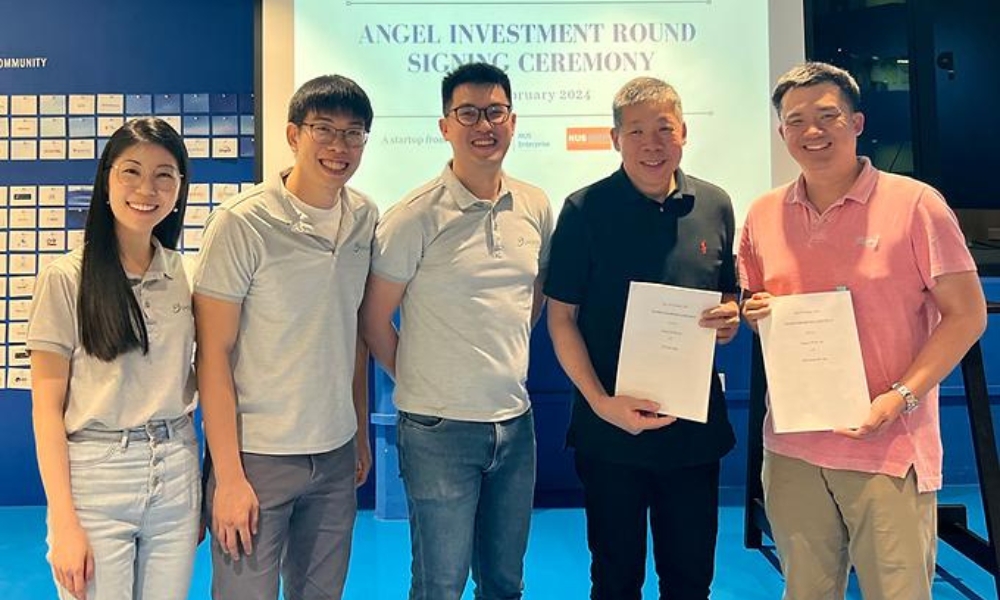
Co-founders of Green COP (left to right): Sng Yee Ching, Low Wang Chang, and Hanson Lee, stand alongside their angel investors (left to right), Teo Teng Seng, appointed as Chairman, and Desmond Chong, representing Ken Energy Pte. Ltd., holding the signed agreement, symbolizing the successful fundraising efforts and the unity of vision between Green COP and its investors.

Green COP, a deep-tech start-up in sustainable fuel solutions in Singapore, on Tuesday (13 February) announced the successful conclusion of its angel investment round. 

The company has garnered substantial funding from a curated group of angel investors, including a corporate investor, Ken Energy Pte. Ltd., positioning Green COP for accelerated growth and groundbreaking advancements in the sustainability landscape.

Driving this strategic move is the appointment of Mr. Teo Teng Seng, a veteran in the maritime industry, as its Chairman. Widely recognized for his leadership acumen and maritime expertise, Mr. Teo played a pivotal role in spearheading the angel investment round, providing invaluable insights and support to guide Green COP through this exciting phase.

In a noteworthy development soon to be announced, Green COP’s strategic collaboration with a leading global integrated palm oil player aims to leverage synergies in sustainable practices, further enhancing Green COP’s capabilities in transforming biowaste into sustainable biofuels.
Green COP Biofuels

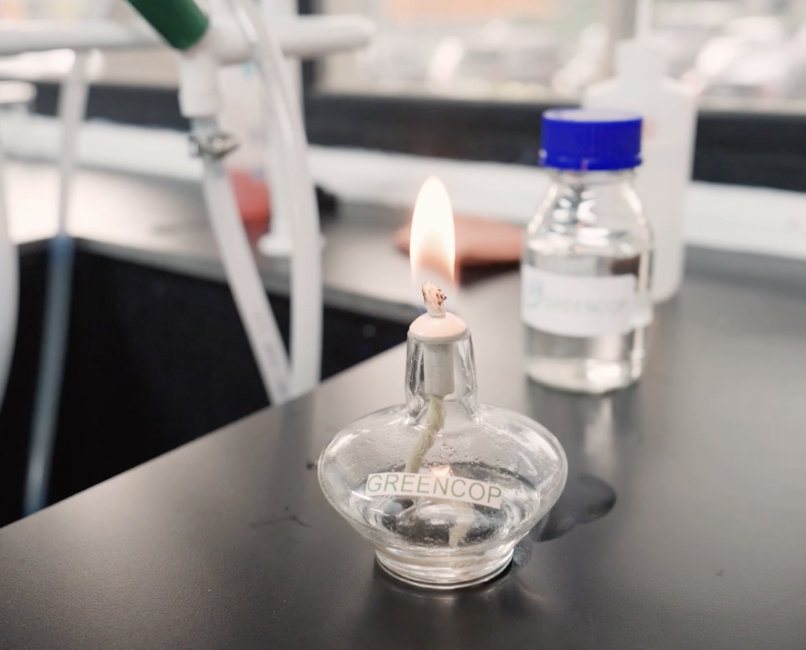
Unlike traditional fuels, Green COP’s colorless alcohol-based biofuels offer a cleaner, eco-conscious energy alternative.

Dr. Hanson Lee, co-founder and CEO of Green COP, said: “We are thrilled to welcome Mr. Teo Teng Seng as Chairman of our Board. His wealth of experience and strategic vision align perfectly with our goals, propelling us towards new horizons.”

Green COP added that the fundraise represented a pivotal milestone, enabling the company to validate its pilot initiatives initially recognised as a top three winner of the 2022 edition of PIER71™ Smart Port Challenge.

Green COP’s patented pre-treatment and fermentation technology yields more efficient drop-in fuels that seamlessly integrate with existing infrastructure, facilitating a smooth transition to sustainable energy solutions. Green COP’s alcohol-based biofuels boasts an extended shelf life of more than 24 months and contribute to a significant 30% reduction in Nitrogen Oxides (NOx) emissions.

The angel investment round has garnered interest from visionary investors who align with Green COP’s mission of shaping a more sustainable world. Their pivotal strategic support, is expected to significantly bolster Green COP’s trajectory and future endeavours.

“We are grateful for the trust and confidence demonstrated by our investors. This funding, enables us to launch a pilot biofuels plant, a transformative milestone in our start-up journey. With Mr. Teo’s guidance, we are well positioned for success in the next phase,” added Dr. Lee.

With the newly acquired funds, Green COP is poised to establish a sustainable biofuels pilot plant with a daily production capacity of 1 tonne. This initiative aims to not only bolster market outreach but also underscores Green COP’s unwavering commitment to nurturing a sustainable economy within the maritime and transportation sectors.

Related: Singapore: Biofuel start-up Green COP among top winners of Smart Port Challenge


Photo credit: Green COP
Published: 14 February, 2024

Continue Reading

Bunker Alerts

Low flashpoint found in Indonesia bunker fuels, alerts Maritec-Naias

Firm tested eight bunker samples representing LSMDO and B40 fuel grade from vessels that took fuel oil /bunkered in Indonesia ports, which indicated flashpoints as low as 39.5°C.

Admin

Published

on

By

RESIZED Shaah Shahidh on Unsplash

Bunker fuel testing and marine surveying business Maritec-Naias on Wednesday (12 August) issued an alert regarding bunker samples from vessels that took fuel oil/bunkered in Indonesia showing flashpoints as low as 39.5°C:

During the period of 21 July to 04 August 2026, Maritec-Naias tested eight bunker samples representing Low Sulfur Marine Distillate Oil (LSMDO) and B40 fuel grade from vessels that took fuel oil /bunkered in Indonesia ports, which indicated Flashpoints as low as 39.5°C.

All eight fuel samples tested were sourced from a single supplier.

Regulatory Implications:

Based on the results of the eight samples tested, the fuels do not comply with the minimum flashpoint requirement of 60 °C set by SOLAS and ISO 8217.

As per SOLAS requirements, the minimum flashpoint of any fuel carried in the tanks of a ship should be not less than 60 °C (with exception of fuel for lifeboats, which can be grade DMX with a flash point min of 43 °C).

ISO 4259 interpretation for tested flashpoint temperature is not taken into consideration here as the safety of onboard crew and vessel is of higher precedence.

Since 01 May 2024, it has been a MARPOL Annex VI requirement that the Bunker Delivery Note (BDN) includes either the actual flashpoint of a fuel as supplied or a declaration that its flashpoint has been determined as being at or above 70°C.

From 1 January 2026, SOLAS amendments clarified that the flashpoint requirement applies to fuels, which were specifically intended to have a flashpoint not less than 60°C as required under SOLAS II‑2/2.1.1 These amendments now align with MARPOL by requiring flashpoint details to be recorded on the BDN. Additionally, prior to bunkering, suppliers must provide the ship’s representative with a signed declaration confirming that the fuel meets the SOLAS flashpoint standard.

MARITEC-NAIAS RECOMMENDATIONS

When ordering fuels from Indonesia it is advised to insist on getting the actual flash point values from the supplier. If your vessel has bunkered a low flashpoint fuel it is prudent to observe/implement the precautions below:

  • Flame screens on tank vents should be maintained in good condition and there should be no sources of ignition in the vicinity of the vents. This will assist in safe natural ventilation of volatile components in the fuel.
  • No Smoking, no naked flame and no hot work must be allowed at any areas near to tank air vents.
  • Send additional tank(s) samples upon arrival in port to check the fuel properties and flash point results especially if there has been co-mingling of fuels in bunker tanks
  • If the vessel is out at sea, it may be possible to obtain dispensation from your Flag State Administration up to the next arrival port.
  • Put the supplier on notice promptly and notify your P&I club.


Photo credit: Shaah Shahidh on Unsplash
Published: 13 August, 2026

Continue Reading

Alternative Fuels

South Korea’s Polaris Shipping orders tri-fuel bulk carriers for Vale charter deal

Bulk carriers, which will be delivered sequentially from 2031, will be equipped with WinGD-developed engines capable of using methanol, ethanol and heavy fuel oil as marine fuels.

Admin

Published

on

By

South Korea’s Polaris Shipping orders tri-fuel bulk carriers for Vale charter deal

South Korean shipowner Polaris Shipping recently said it has signed a newbuilding contract for four tri-fuel vessels with Chinese shipbuilder Qingdao Beihai Shipbuilding Heavy Industry on 4 August.

The 210,000-dwt Newcastlemax bulk carriers, which will be delivered sequentially from 2031, will be equipped with WinGD-developed engines capable of using methanol, ethanol and heavy fuel oil as marine fuels.

The vessels are also designed as LNG- and ammonia-ready ships, allowing them to be converted to LNG or ammonia propulsion in the future.

Polaris Shipping also plans to significantly improve energy efficiency and reduce greenhouse gas emissions by applying various energy-saving technologies, including wind-assist propulsion systems, rotor sails, departure optimisation and land-based systems, to the vessels.

Polaris Shipping has completed a 25-year long-term charter contract for the bulk carriers with Brazilian iron ore producer Vale.

Polaris Shipping plans to sign construction contracts for up to four additional 210,000-dwt eco-friendly Newcastlemax bulk carriers with Chinese shipbuilder Hengli Heavy Industries in the near future. The Newcastlemax bulk carriers ordered from Hengli will be built as high-efficiency, environmentally friendly vessels to replace the company’s existing older bulk carriers.


Photo credit: Polaris Shipping
Published: 13 August, 2026

Continue Reading

Financial Result

Fratelli Cosulich marine energy unit records EUR 7.1 million net profit in 2025

Bunker Trading revenue, the Group’s core activity, at the end of the year stood at approximately EUR 1.382 million compared to approximately EUR 1.638 million in 2024.

Admin

Published

on

By

Fratelli Cosulich marine energy unit records EUR 7.1 million net profit in 2025

Genoa-based international shipping and logistics company Fratelli Cosulich Group on Thursday (31 July) recorded EUR 58.6 million (USD 68 million) in EBITDA in 2025, substantially in line with the EUR 59.7 million recorded in 2024 and remaining close to its all-time highs. 

The company’s consolidated turnover reached EUR 1.877 billion, compared with EUR 2.128 billion in 2024.

“This decrease must be read considering the significant weight of Marine Energy and bunker trading activities, where turnover is naturally influenced by fuel prices, market dynamics and the euro dollar exchange rate,” the company said in its 2025 annual report. 

“For this reason, the reduction in revenues does not represent a proportional decrease in the Group’s operational strength.”

The Group recorded a net profit of EUR 20 million with its marine energy business unit delivering EUR 7.1 million. The unit also achieved EUR 16.8 million in EBITDA. 

In 2024, the company recorded a net profit of EUR 20.6 million with its marine energy business unit delivering EUR 5.6 million. The unit also achieved EUR 28.1 million in EBITDA. 

On the performance of its bunker trading activity, also during the year just ended, as in 2024, the company said margin stabilisation was recorded, remaining at levels similar to the average of previous years.

Bunker Trading revenue, the Group’s core activity, at the end of the year stood at approximately EUR 1.382 million compared to approximately EUR 1.638 million in 2024.

“In 2025, Marine Energy exceeded expectations in a more competitive market marked by lower prices, strengthening its results through a solid commercial structure, key account relationships and a focused approach to smaller bunkering hubs,” the company said.
 “Commercial development was supported by further expansion towards Asian customers, including the opening of a dedicated Japan desk, while the unit prepared the basis for a future local presence.”

The company added that the transition towards a multi-fuel offering continued to move from strategy to operations. 

In Singapore, the unit completed its first B100 biofuel bunker delivery through Marta Cosulich, demonstrating its ability to provide lower-carbon alternatives using its future-ready fleet. 

The Group also entered into a strategic cooperation with a “long-established shipping player” to explore opportunities in methanol, LNG and ammonia bunkering.

The company added that fleet development remained central. 

“Construction progressed on the new series of methanol-ready IMO II chemical bunker tankers, while Maya Cosulich was delivered in December,” it said.

“Designed for safe and efficient alternative fuel delivery, she represents another tangible step in expanding the unit’s physical capabilities for the evolving needs of maritime customers.”

Related: Fratelli Cosulich marine energy unit records EUR 5.6 million profit in 2024


Photo credit: Fratelli Cosulich
Published: 12 August, 2026

Continue Reading

Trending