Connect with us

Milestone

Singapore: Global Energy celebrates first methanol marine fuel delivery with IMO type II bunker tanker

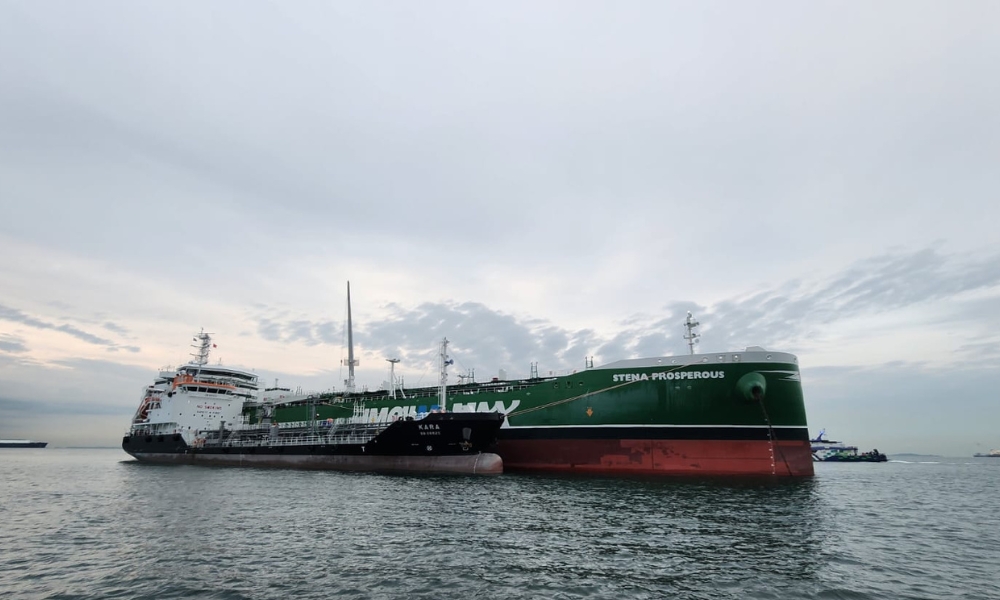
Approximately 1,340 mt of blended methanol was supplied by GET’s IMO type II bunker tanker “MT Kara” to “Stena Prosperous” on 24 May.

Admin

Published

on

Singapore: Global Energy celebrates first methanol marine fuel delivery with IMO type II bunker tanker

Singapore accredited bunker supplier Global Energy Trading Pte Ltd (GET) on Friday (24 May) entered a company milestone with its first methanol bunkering operation.

Approximately 1,340 metric tonnes (mt) of blended methanol was supplied by GET’s IMO type II bunker tanker MT Kara to Stena Prosperous, a methanol-powered tanker commercially managed by Proman, after loading from the VOPAK Penjuru Terminal.

A fuel blend of 20% ISCC-certified sustainable bio-methanol and 80% conventional methanol, which reduces carbon emissions by 31% on a tank-to-wake basis compared to using Very Low Sulphur Fuel Oil (VLSFO) for the same journey, was supplied during the bunkering operation.

“This marks a milestone in the history of Singapore’s marine fuel industry, paving the way for the island’s transition to meet its decarbonisation goals of 2030 and beyond,” Wayne Loh, Manager, Commercial Business, GET told Manifold Times.

“Our joy of success is shared with Maritime and Port Authority of Singapore, Proman, Valenz, Vopak, Classification Societies, and other key stakeholders.

“All participants have contributed dearly and worked diligently together to set the course towards a sustainable future in shipping.

“The journey will strengthen Singapore’s position further as the premier port for marine innovations in meeting the challenges associated to methanol and other alternative marine fuels.

“A special ‘thank you’ goes to the crew of Kara and Stena Prosperous for their cooperation and dedication.”

Global Energy Group (established 1992) is a marine service and regional oil transportation/logistics business provider; the company owns and operates 25 bunker tankers to support its marine fuel supply business in Singapore and Fujiarah.

Global Energy Trading Pte Ltd and Stellar Shipmanagement Services Pte Ltd are its wholly owned subsidiaries, operating the core businesses of the group.

Related: Singapore reaches new milestone with methanol bunkering op of “Stena Prosperous”


Published: 28 May 2024

Continue Reading

Methanol

Ningbo-Zhoushan Port completes Zhejiang’s largest single-ship green methanol bunkering op

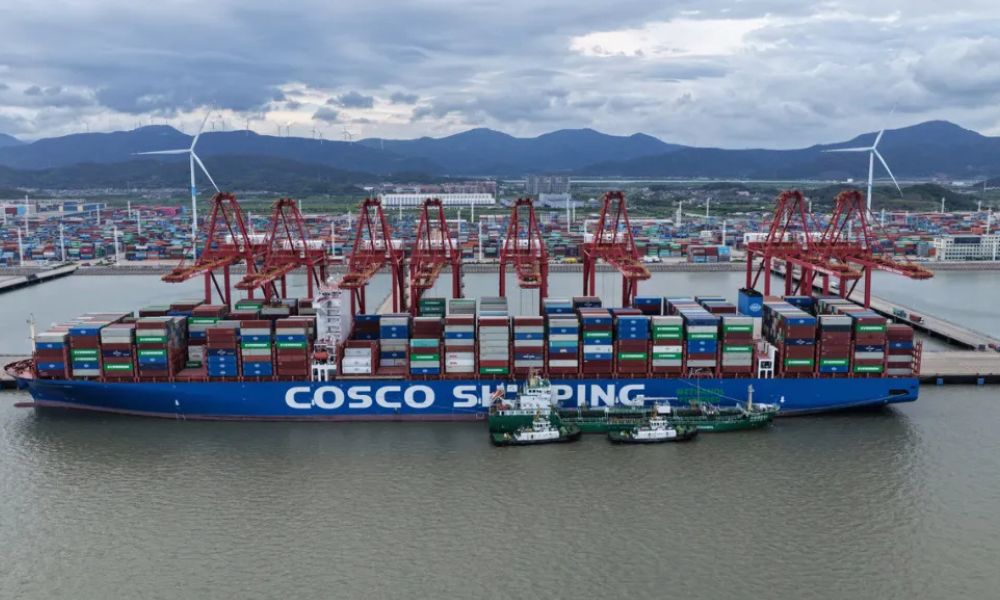
“COSCO SHIPPING Libra” received around 5,500 mt of green methanol at Ningbo-Zhoushan Port, setting a new provincial record for a single international vessel.
Admin

Published

on

By

Ningbo-Zhoushan Port completes Zhejiang’s largest single-ship green methanol bunkering op

China (Zhejiang) Pilot Free Trade Zone on Monday (24 August) said Ningbo-Zhoushan Port has completed Zhejiang province’s largest single-ship green methanol bunkering operation.

Methanol dual-fuel containership COSCO SHIPPING Libra received around 5,500 metric tonnes (mt) of green methanol at the Meishan port area on 23 August.

The operation was carried out under the supervision of Meishan Customs, part of Ningbo Customs, and was conducted by the methanol bunkering vessel Zhong Ran Lv Neng 85.

The operation set a new record for the volume of green methanol bunkered by a single international trading vessel in Zhejiang. 

The milestone comes as Ningbo-Zhoushan Port seeks to expand its large-scale green methanol bunkering capabilities.

Zhong Ran Lv Neng 85 entered commercial operation at Ningbo-Zhoushan Port in July, becoming the port’s first newly built dedicated methanol bunker vessel.

According to the authorities, the customs department used its digital supervision system to enable paperless declaration and review of vessel movements and fuel supply information, while optimising on-site supervision arrangements.


Photo credit: China (Zhejiang) Pilot Free Trade Zone
Published: 27 August, 2026

Continue Reading

Bunker Fuel

PO/Marine supplies nearly 913,154 mt of bunker fuels in 2025

‘With a market share of 39.2%, PO/Marine has proudly maintained our leadership in the marine fuels sector for seven consecutive years,’ the company said.
Admin

Published

on

By

PO/Marine supplies nearly 913,154 mt of bunker fuels in 2025

Turkey’s Petrol Ofisi on Wednesday (26 August) said its bunkering arm PO/Marine reached a total sales volume of 913,154 metric tonnes (mt) of bunker fuels in 2025, based on Turkey’s Energy Market Regulatory Authority’s (EMRA) data.

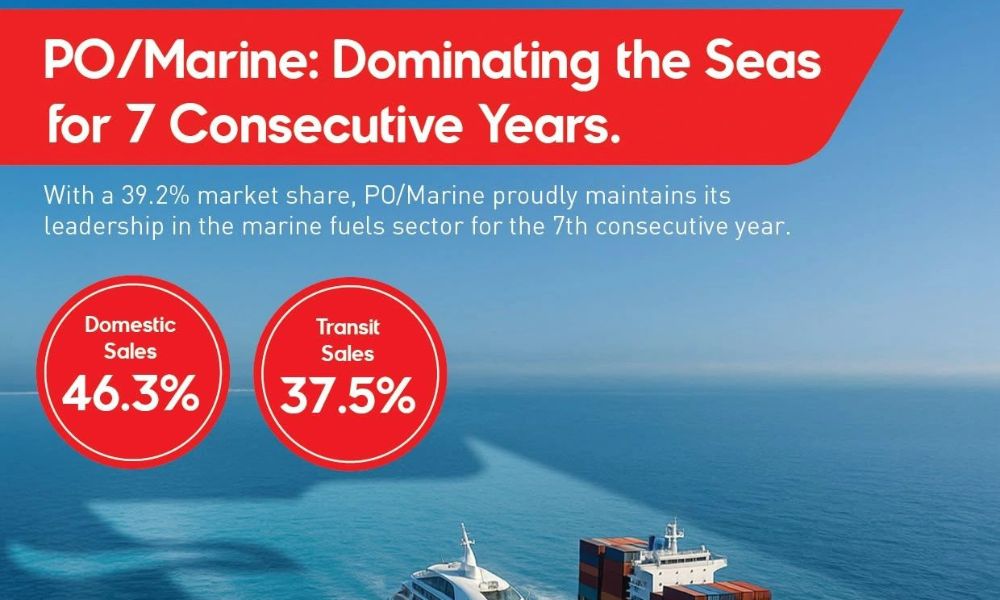
According to the company, it achieved 46.3% share in the domestic marine fuel market and 37.5% share in the transit market. 

“With a (total) market share of 39.2%, PO/Marine has proudly maintained our leadership in the marine fuels sector for seven consecutive years,” the company said in a social media post. 

“With our strong performance in both the domestic market and transit sales, we continue to be a trusted partner at sea.”

Manifold Times previously reported PO/Marine reaching a total sales volume of nearly 1 million mt of bunker fuels in 2024. 

Related: PO/Marine supplies nearly 1 million mt of bunker fuels in 2024


Photo credit: PO/Marine
Published: 27 August, 2026

Continue Reading

Alternative Fuels

Olam Agri, Vitol Bunkers wrap up co-processed VLSFO bio-bunkering operation in Singapore

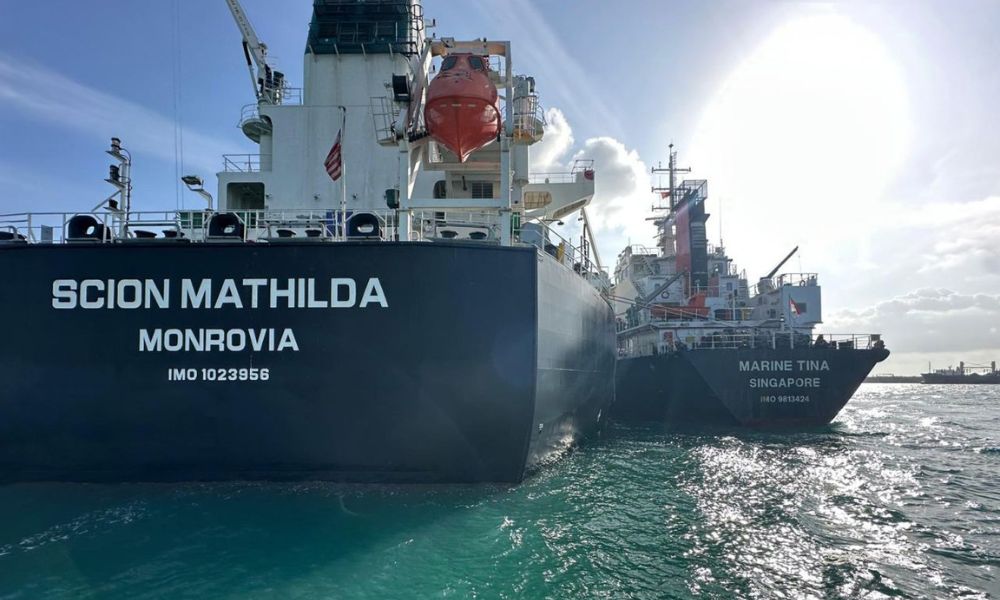
“MV Scion Mathilda” was supplied with 246.5 mt of co-processed VLSFO at the Port of Singapore, comprising 212 mt of conventional VLSFO and 34.5 mt of co-processed CNSL VLSFO.
Admin

Published

on

By

Olam Agri, Vitol Bunkers wrap up co-processed VLSFO bio-bunkering operation in Singapore

Agri-business Olam Agri on Thursday (20 August) said it successfully completed Singapore’s first bio-bunkering operation with Vitol Bunkers, using Very Low Sulphur Fuel Oil (VLSFO) co-processed with Cashew Nutshell Liquid (CNSL), showcasing a waste-to-energy approach. 

MV Scion Mathilda was supplied with 246.5 metric tonnes (mt) of co-processed VLSFO at the Port of Singapore, comprising 212 mt of conventional VLSFO and 34.5 mt of co-processed CNSL VLSFO. The product was supplied by Vitol Bunkers and procured by Olam Agri’s ocean freight business.

The fuel was subsequently consumed during a voyage from Caofeidian (China) to Rotterdam (Netherlands), followed by a ballast leg from Rotterdam to Barcarena (Brazil). 

Total fuel consumption across the voyage comprised 1,354 mt of VLSFO, 101 mt of MGO and 34.1 mt of co-processed VLSFO. The vessel completed the voyage without any operational remarks, confirming the product’s performance in real-world conditions.

The operation marks a significant step forward in the search for practical, scalable alternatives to conventional marine fuels, and demonstrates that meaningful greenhouse gas (GHG) reductions can be achieved without any change to vessel operations.

Martin Fynbo, Head of Bunkers at Olam Agri’s ocean freight business, said: “The successful deployment of this product, achieving verified greenhouse gas mitigation alongside ensuring operational integrity, serves as a definitive proof of concept. This milestone provides validation to a traditionally risk-averse sector, demonstrating that a previously disregarded bio-product solution can both be operationally viable and sustainable.”

Sherman Yeo, Trading Manager, Vitol Bunkers, said: “This operation proves that co-processed VLSFO can be delivered and consumed at sea without any compromise to vessel performance or operational routine. The mass balance solution we have developed opens up a genuinely new avenue for GHG reduction in marine fuels.”

The co-processed VLSFO carries a GHG intensity of 2.02 gCO2eq/MJ, delivering savings of at least 120 MT CO2eq compared with conventional VLSFO on an equivalent basis. This outcome was achieved with no additional onboard handling or fuel treatment requirements.

Vitol’s co-processing and mass balancing methodology resolves a longstanding challenge in the use of CNSL as a marine biofuel. Direct blending of CNSL has historically been dismissed by the industry due to material compatibility and handling issues. By co-processing CNSL within the refinery stream, Vitol has opened a commercially viable pathway for CNSL to contribute to GHG reduction in shipping.

The co-processed VLSFO used in this operation conforms to RMG380 VLSFO grade and has the same chemical composition and quality as conventional fuel, eliminating the need for additional permissions or special clauses in charter party agreements.

“CNSL, derived as a by-product of cashew processing, represents an underutilised feedstock with genuine potential as a scalable marine biofuel component,” Olam Agri added. 

“This trial demonstrates that with the right processing approach, it can be integrated into existing supply chains without disruption.”


Photo credit: Vitol
Published: 21 August, 2026

Continue Reading
Advertisement

OUR INDUSTRY PARTNERS


Trending