Connect with us

Business

European Commission releases first report on CO2 emissions from maritime transport

‘The transparency and the granularity of the reported data is key to addressing market barriers and stimulating the uptake of energy-efficient technologies,’ said the EC.

Admin

Published

on

sara kurfess Q3CO1ZOZ6ZI unsplash

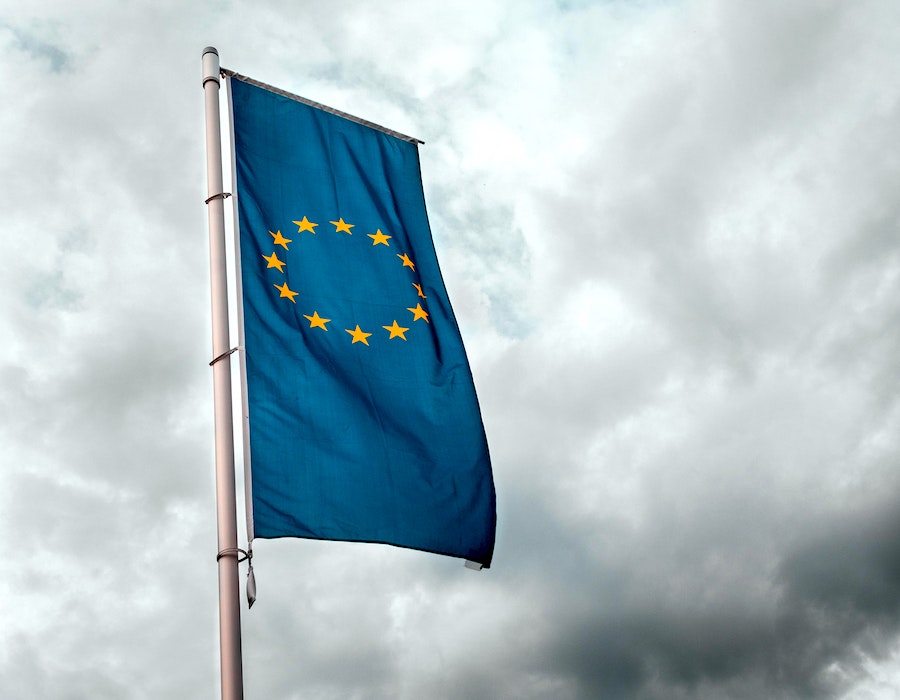
The European Commission (EC), the executive branch of the European Union, on Monday (25 May) published its  first annual report on carbon dioxide (CO2) emissions from maritime transport. 

The report analyses the CO2 emissions and energy efficiency information of all the ships over 5,000 gross tonnage, which performed maritime transport activities related to the European Economic Area (EEA) in 2018, it said.

Emissions reported by 11,600 ships have added up to over 138 million tonnes of CO2 emissions in that year, representing 3.7% of total EU CO2 emissions according to the European Environment Agency’s greenhouse gas emissions data.

The Commission noted this  annual report is based on data from emissions in 2018, reported by companies until September 2019 under the EU Regulation on monitoring, reporting and verification (MRV) of CO2 emissions from maritime transport. 

The report shows that around two-thirds of the reported CO2 emissions are related to voyages to or from a port outside the EEA. 

Voyages inside the EEA represented only 32% of total CO2 emissions, and emissions from ships in EEA ports stood for 6% of total emissions. 

When comparing CO2 emissions across different ship types, container ships represented the largest share of total emissions, with over 30%, explained the EC. 

Most of the monitored fleet already meets the global energy efficiency standards applicable over the period 2020-2025.

In terms of operational energy efficiency, the EC notes that a vast majority of ships have reduced their speed compared to 2008 (by -15 to -20%). Cruising at lower speeds saves energy and fuel, and can significantly reduce CO2 emissions.

Since 2018, the EU Regulation on monitoring, reporting and verification of CO2 emissions from maritime transport (Regulation (EU) 2015/757) requires shipping companies to monitor their CO2 emissions, fuel consumption and other relevant information during navigation to or from ports in the EEA, when they transport cargo or passengers for commercial reasons.

The 11,600 ships monitored under the EU legislation represent 38% of the world merchant fleet (above 5,000 gross tonnage) and cover a large variety of ships from roll-on/roll-off passenger ships to bulk carriers, tankers and container ships. 

They are relatively young (11 years old on average), but there are large age disparities between ship types.

CO2 emissions data and energy efficiency information of all individual ships are publicly available on THETIS-MRV, the web-based database developed by the Commission and the European Maritime Safety Agency (EMSA). 

“The transparency of the system and the granularity of the reported data is key to addressing market barriers and stimulating the uptake of energy-efficient behaviours and technologies,” said the EC.

The report also includes a section on fleet ownership distribution in the region.

It reports that more than half of the monitored fleet (in terms of gross tonnage) is owned by entities based in the EU. 

It should be noted that these owners are not necessarily the MRV companies or the ones operating the ships. 

The report shows that Greek companies own the largest share of the monitored fleet in terms of gross tonnage (20%), followed by companies from Japan (9%), Germany (8%) and Singapore (7%). Owners from Norway, Denmark and China each represent 5% of all monitored ships.

Looking at the two largest EU owners, Greek companies predominantly own bulk carriers (more than 50%) and oil tankers (around 25%). In contrast, German companies mostly own container ships and general cargo ships. 

For comparison, EU companies own a significantly smaller share of the world fleet with 39% of the total gross tonnage, while owners from countries such as China, Singapore or Japan have significant shares. 

However, EU companies still own the largest single share of the world fleet. Greek owners represent 16% of the world fleet, meaning that a significant share of their ships is not included in the monitored fleet.

A full copy of the report is available for download here.


Photo credit: Sara-kurfess

Published: 26 May, 2020


Continue Reading

Legal

Singapore withdraws remaining 127 charges against Hin Leong founder OK Lim

Lim Oon Kuin, also known as OK Lim, was issued a stern warning and a district court granted him a discharge amounting to an acquittal for these charges on 17 July.

Admin

Published

on

By

RESIZED Sora Shimazaki on Pexels

Founder of collapsed oil trader Hin Leong Trading, Lim Oon Kuin, also known as OK Lim, has had the remaining 127 charges against him withdrawn, according to The Straits Times on Monday (20 July). 

OK Lim was issued a stern warning and a district court granted him a discharge amounting to an acquittal for these charges, including those for cheating, on 17 July. The discharge means Lim cannot be prosecuted again for the same offences.

Lim, 84, is currently serving a 13½-year prison sentence after the High Court reduced his original 17½-year jail term in March 2026. He was convicted in 2024 on two cheating charges and one count of abetting forgery in a case prosecutors described as one of Singapore’s most serious trade finance frauds.

Lim was convicted in May 2024 of two charges of cheating the Hongkong and Shanghai Banking Corporation (HSBC) and one count of abetting forgery that proceeded to trial out of a total of 130 criminal charges.

He was first charged in court on 14 August 2020, and was subsequently handed further charges in court on 25 September 2020, 30 April 2021 and 24 June 2021 for his role in perpetuating fraud on various financial institutions. 

A total of 130 charges were eventually brought against him for cheating and forgery-related offences.

Related: Singapore: Hin Leong Founder OK Lim gets jail term slashed to 13.5 years


Photo credit: Sora Shimazaki
Published: 21 July, 2026

Continue Reading

Winding up

Singapore: Coastal Logistics Pte Ltd to be wound up voluntarily

Coastal Logistics was reportedly affiliated with troubled Singapore bunker player Coastal Oil (Singapore) Pte Ltd.

Admin

Published

on

By

RESIZED Drew Beamer

Several resolutions for Coastal Logistics Pte Ltd were made during an extraordinary general meeting held on 14 July, according to a notice in the Government Gazette on Friday (4 July).

The following resolutions were duly passed during the meeting:

As Special Resolution

  • That it has been proved to the satisfaction of the meeting that the Company cannot by reason of its liabilities continue its business and accordingly the Company be wound up voluntarily pursuant to Section 160(1)(b) of the Insolvency, Restructuring and Dissolution Act 2018 (No. 40 of 2018);

As Ordinary Resolutions

  • that Mr. Wong Pheng Cheong Martin and Ms. Koay May Yee, both care of FTI Consulting (Singapore) Pte Ltd, One Raffles Quay, #27-10 South Tower, Singapore 048583 be appointed as the joint and several Liquidators of the Company for the purpose of such winding up; and
  • that the Liquidators be at liberty to open, maintain and operate any bank account(s) or account(s) for monies received by them as Liquidators with such bank(s) as they deem fit; and
  • that a Committee of Inspection will not be formed.

Manifold Times previously reported Nicholas James Gronow, director of Heng Tong Fuels & Shipping and Coastal Logistics, filed statutory declarations for both companies stating the firms cannot continue their businesses due to liabilities.

Both companies were reportedly affiliated with troubled Singapore bunker player Coastal Oil (Singapore) Pte Ltd. 

In 2019, several vessels owned by both firms entered the sale & purchase (S&P) market in Singapore.

Related: Singapore: Director declares Heng Tong Fuels & Shipping’s inability to continue business
Related: Heng Tong Fuels & Shipping in court over DBS Bank bunker tanker loan
Related: Singapore: Bunker tanker “Coastal Neptune” arrested
Related: Heng Tong Fuels & Shipping, Coastal Logistics tankers enter S&P market


Photo credit: Drew Beamer
Published: 21 July, 2026

Continue Reading

LNG Bunkering

PIL’s LNG dual-fuel boxship “Kota Elok” arrives in Singapore on maiden call

As the first of 13 new 13,000 TEU vessels joining its fleet, Kota Elok is equipped to operate on LNG and low-sulphur fuel oil that helps reduce our greenhouse gas emissions.

Admin

Published

on

By

PIL's LNG dual-fuel boxship “Kota Elok” arrives in Singapore on maiden call

Singapore-based Pacific International Lines Pte Ltd on Monday (20 July) said its first 13,000 TEU LNG dual-fuel container vessel, Kota Elok, recently made her maiden call to Singapore on 15 July.

As the first of 13 new 13,000 TEU vessels joining its fleet, Kota Elok is equipped to operate on liquefied natural gas (LNG) and low-sulphur fuel oil that helps reduce our greenhouse gas emissions. 

The vessel also incorporated energy-saving features and digital technologies to reduce fuel consumption and enhance operational performance, as well as a bow windshield to improve aerodynamics, contributing to improved fuel efficiency and lower emissions over the course of long-haul voyages.

“Following Singapore, Kota Elok will continue her voyage on our East Coast Service 1 (ES1) route to South America, calling at ports in Brazil, Uruguay, and Argentina before returning to Asia,” the company said in a social media post. 

Kota Elok also became PIL’s first vessel to receive Lloyd’s Register certification for compliance with the IACS UR E26 and UR E27 cyber security requirements.

Developed by the International Association of Classification Societies (IACS), UR E26 and UR E27 are mandatory cyber resilience requirements for newbuild vessels contracted from 1 July 2024. 


Photo credit: Pacific International Lines
Published: 21 July, 2026

Continue Reading

Trending