Connect with us

Newbuilding

Drewry: LNG newbuild orders halve in 2025—a likely rebound in the near term

New orders were impacted by the slower pace of FIDs in 2024 and 1H25, along with high newbuild prices and increasing uncertainty related to USTR 301, as well as stringent emission regulations.

Admin

Published

on

Drewry: LNG newbuild orders halve in 2025—a likely rebound in the near term

Maritime research and research provider Drewry recently analysed the trends of LNG newbuild orders, comparing 2024 and 2025 as well as its outlook for new orders in 2026:

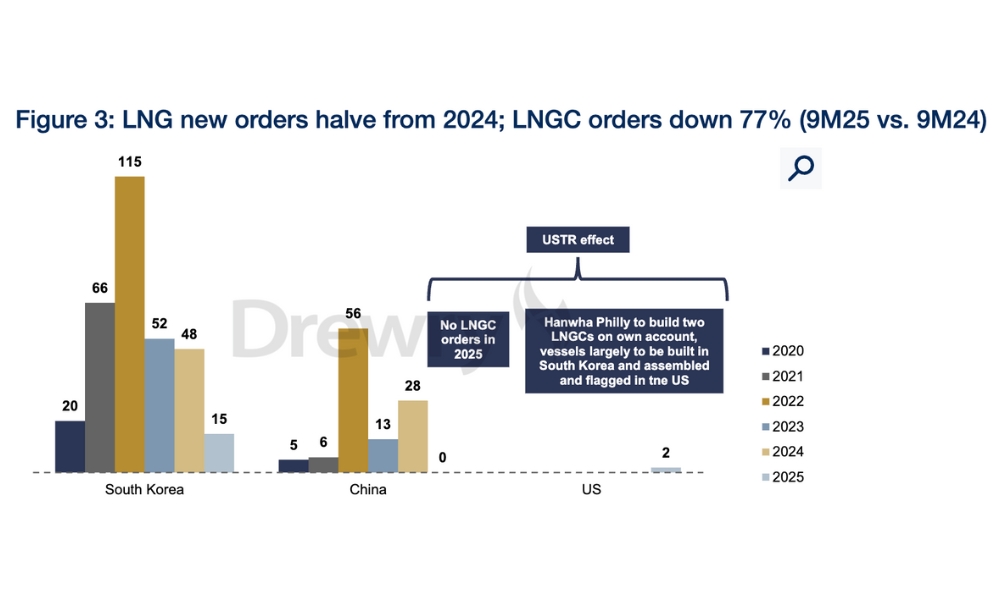
Only 38 vessels were ordered in 9M25 compared to 86 in 9M24, with the orderbook-to-fleet ratio continuing to weaken in 2025, deflated by higher deliveries and low new orders. New orders were impacted by the slower pace of FIDs (in 2024 and 1H25), along with high newbuild prices and increasing uncertainty related to USTR 301, as well as stringent emission regulations such as the EU ETS and FuelEU Maritime (FEM).

New orders suffer, while deliveries thrive 

By end-3Q25, 38 vessels were ordered, down 56% from 9M24. The LNGC tally was even lower, with only 17 carriers ordered in 9M25 compared to 73 in 9M24, while LNGBVs have been stealing the show with 19 vessels ordered so far. Two FLNGs were also ordered in 3Q25 by Mexico’s Amigo LNG at the UAE’s Dubai Drydocks.

Drewry expects about 50 vessels to be ordered in 2025, compared to 96 in 2024. The current orderbook comprises 335 vessels (289 LNGCs, 37 LNGBVs, 4 FSRUs and 5 FLNGs), with an orderbook-to-fleet ratio of 41%. We expect the orderbook to deflate further till new ordering resumes, which appears to revive from the next year only.

New ordering revives in 3Q25

LNGC ordering gained momentum in 3Q25, with nine vessel orders, exceeding the eight ordered in 1H25. The quarter also saw five LNG bunker vessels (LNGBVs) and two floating LNG units (FLNGs) added to the orderbook. A notable development was Hanwha’s unexpected decision to commission two LNGCs under its own account, one in July and another in August. These ships are registered to be built at Hanwha’s Philly shipyard, marking the first LNGC orders in the US since the 1970s. While the core construction will take place in South Korea, final assembly and flagging will occur in the US. This move is widely interpreted as a strategic response to the USTR 301 regulation, which mandates that 1% of US LNG exports be carried on US-built and flagged LNGCs, a requirement considered economically challenging given the reported $250 million price tag per carrier.

Chinese shipyards bear the brunt of increasing scrutiny from the West 

As of end-September 2025, South Korean yards constitute 65% of the current orderbook, followed by Chinese yards, accounting for 33%. There have been no LNGC orders at Chinese yards so far in 2025 mainly due to the uncertainty created by the USTR regulations on Chinese-built vessels. However, Chinese yards have secured 58% of the LNGBV orders placed so far this year. The regulations with potential port fees on Chinese-built LNGCs and other geopolitical developments have increased commercial uncertainty for shipowners over where to place orders.

Note: The full article by Drewry can be read here.


Photo credit: Drewry Maritime Research
Published: 30 October, 2025

Continue Reading

Newbuilding

Stena Line orders two new hybrid ferries for Sweden – Denmark route

Vessels will feature the latest hybrid propulsion technology, allowing them to operate on both conventional fuel and electricity and will be prepared for conversion to 100% electric operation.
Admin

Published

on

By

Stena Line orders two new hybrid ferries for Sweden – Denmark route

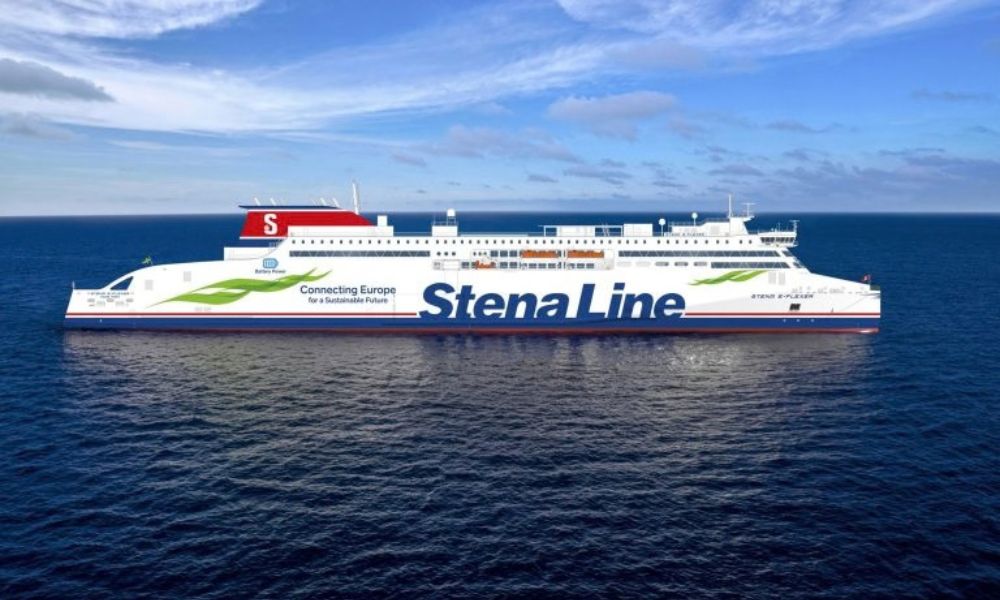
Stena Line on Wednesday (23 September) said it is renewing its fleet and has placed an order for two new hybrid E-Flexer ferries, scheduled to enter service in 2030.

Both vessels will be built at the China Merchants Industry Weihai Shipyard in China, which has so far built 15 E-Flexers.

The vessels will feature the latest hybrid propulsion technology, allowing them to operate on both conventional fuel and electricity. 

They will also be prepared for conversion to 100% electric operation once the necessary charging infrastructure is in place.

The two RoPax ferries will have capacity for 1,500 passengers and 2,750 lane metres of freight. Designed as day ferries, they are intended to operate on the Gothenburg–Frederikshavn route.

The two new vessels will become the sixth and seventh E-Flexers in Stena Line’s fleet. The first entered service in 2019, and today three E-Flexers operate on the Irish Sea and two between Sweden and Poland.

“This is a historic investment for Stena Line, giving us the opportunity to take further steps towards the sustainable modernisation of our fleet,” said Niclas Mårtensson, CEO of Stena Line.

“The two new ferries will strengthen our customer offering by taking the travel experience to a new level. At the same time, we are future-proofing our own CO₂ reduction targets while preparing for the stricter environmental requirements ahead.”

The vessels currently operating on Stena Line’s Gothenburg–Frederikshavn route, Stena Danica and Stena Jutlandica, have served the route for many years. Stena Danica entered service on the route as early as 1984, while Stena Jutlandica followed in 1996.


Photo credit: Stena Line
Published: 25 September, 2026

Continue Reading

Alternative Fuels

Höegh Autoliners orders six more ammonia, methanol-ready Aurora class PCTCs

Höegh Autoliner inked a contract with China Merchants Group for six additional Aurora class PCTCs, which will be built by China Merchants Heavy Industry (Jiangsu) and delivered between 2029 and 2031.
Admin

Published

on

By

Höegh Autoliners orders six more ammonia, methanol-ready Aurora class PCTCs

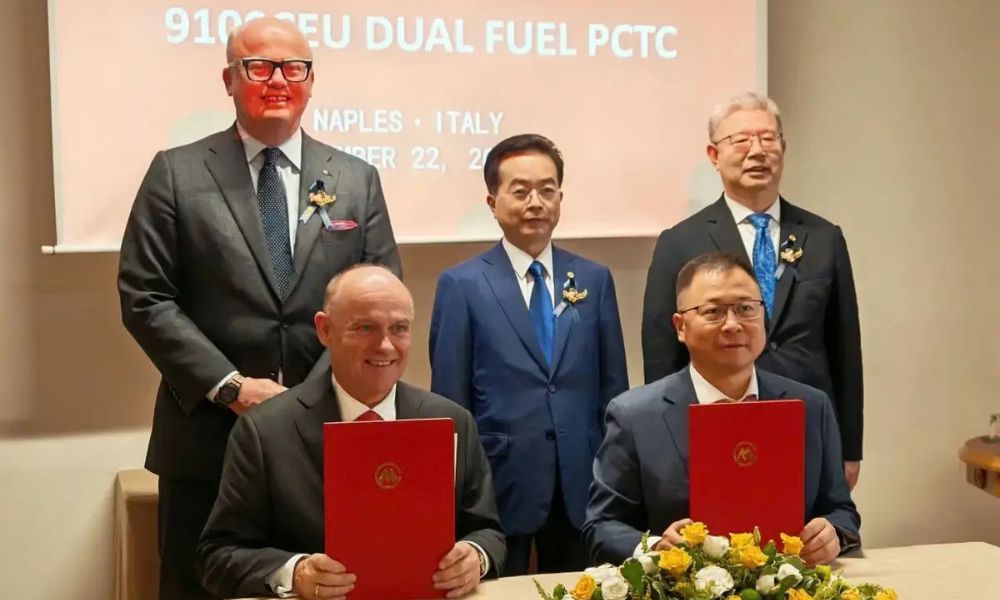
Höegh Autoliners on Tuesday (22 September) said it has formally signed a contract with China Merchants Group (CMG) for six additional Aurora class pure car and truck carriers (PCTCs). 

The contract was signed during a high-level meeting in Naples attended by senior representatives from both companies, including Miao Jianmin, Chairman of China Merchants Group. Chair of Höegh Autoliners, Leif O. Høegh, and Andreas Enger, CEO of Höegh Autoliners.

The six additional dual-fuel LNG and zero-carbon-ready vessels will be built by China Merchants Heavy Industry (Jiangsu) Co., Ltd. (CMHI) and delivered between 2029 and 2031. 

With 18 Aurora Class vessels in the programme, Höegh Autoliners is building the fleet needed for a zero- emission future and setting the pace for the transformation of deep-sea shipping.

The Aurora Class vessels can carry up to 9,100 cars and reduce carbon emissions per transported car by up to 58 per cent compared with conventional PCTCs. They have DNV’s ammonia-ready and methanol-ready notations and are designed to be converted to run on future zero-carbon fuels.

Leif O. Høegh, Chair of the Board of Directors of Höegh Autoliners, said: “For nearly 100 years, we have developed, adapted and led the way through major changes in shipping. It is in our DNA to keep moving and challenge what is possible. This signing continues that story. We are investing in the vessels that will define our fleet for decades and help move our industry towards zero emissions.”

Andreas Enger, CEO of Höegh Autoliners, said: “This is not just another vessel-building agreement. It is a statement about the future of deep-sea shipping and the role we intend to play in shaping it. The Aurora Class is at the heart of our fleet renewal and our path to a sustainable future. By expanding the programme to 18 vessels, we are securing efficient, flexible and future-ready capacity while setting the pace towards zero-emission operations.”

Miao Jianmin, Chairman of China Merchants Group, said: “Höegh Autoliners is a pioneer in international shipping and will celebrate its 100th anniversary next year. We would like to offer our congratulations in advance! Over the past century, Höegh Autoliners has achieved remarkable development and has grown into a leading company in the global RoRo shipping sector. We truly admire what you have accomplished.”


Photo credit: Höegh Autoliners
Published: 24 September, 2026

Continue Reading

Newbuilding

CLdN orders two LNG dual-fuel RoRo vessels from HD Hyundai Heavy Industries

New vessels will be built with space reserved for the future addition of larger electric shaft generators and batteries as the technology matures.
Admin

Published

on

By

CLdN orders two LNG dual-fuel RoRo vessels from HD Hyundai Heavy Industries

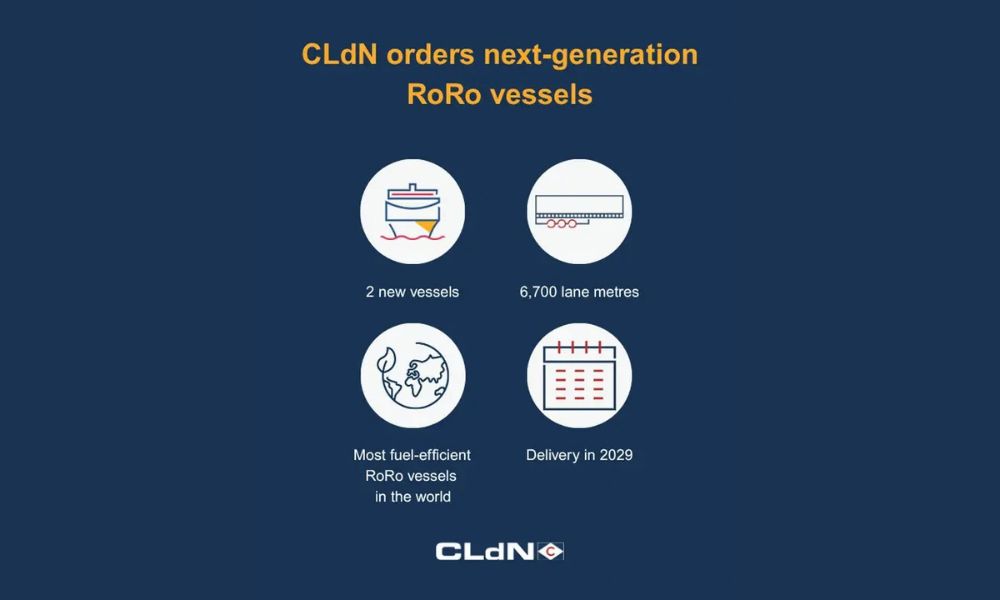
Europe’s multimodal logistics providers CLdN on Tuesday (22 September) announced it has placed an order for two new 6,700 lane-metre RoRo vessels with HD Hyundai Heavy Industries (HD Hyundai HI).

Construction of the new vessels is set to begin towards the beginning of 2028, with delivery scheduled for mid-2029. 

“The ships will be the 15th and 16th vessels ordered by CLdN from the South Korean shipbuilder over the past 10 years,” the company said on its website. 

The new vessels will be dual-fuel capable, able to run on standard marine diesel or LNG, and will be built with space reserved for the future addition of larger electric shaft generators and batteries as the technology matures.

While fuel consumption per vessel is expected to be similar to that of CLdN’s existing 5,000 lane-metre class ships, the increased cargo capacity of the new vessels is expected to deliver 30 to 40% better fuel efficiency per tonne-kilometre of cargo carried making the vessels the most fuel-efficient RoRo ships in the world.

The new vessels are designed with one additional deck and increased ground space compared to CLdN’s existing 5,000 lane-metre class ships, with a configuration specifically adapted for trailer cargo. 

“The addition of these vessels to CLdN’s fleet will ensure customers benefit from an even broader range of shipping options via CLdN’s extensive fleet of RoRo and container vessels,” the company said. 


Photo credit: CLdN
Published: 24 September, 2026

Continue Reading

Trending