Connect with us

LNG Bunkering

FortisBC hits 10,000th LNG bunkering operation milestone

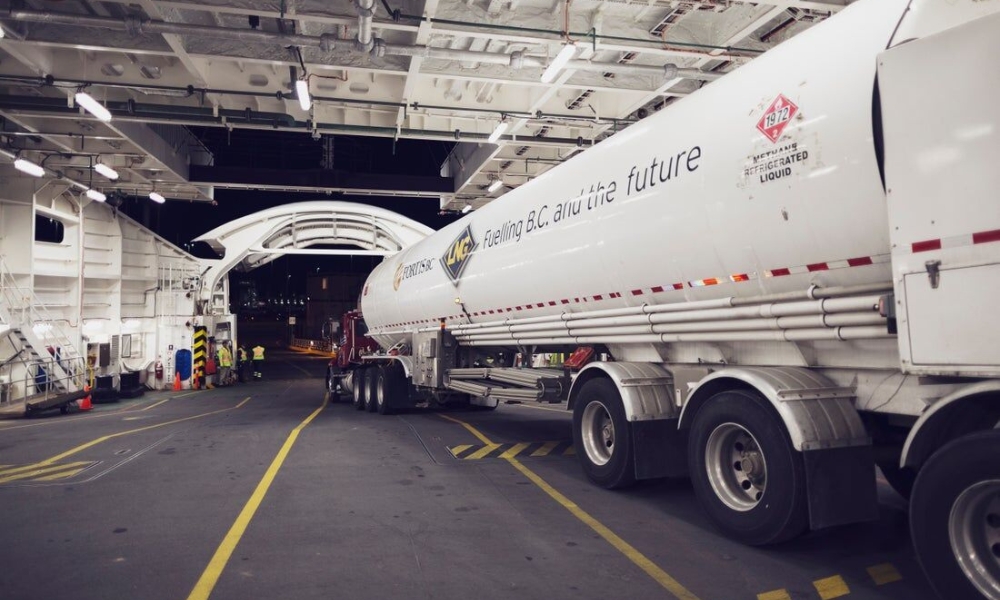
Key driver of this growth has been the firm’s collaboration with Seaspan Ferries and BC Ferries to develop proprietary tanker‑truck technology that enables safe and efficient LNG fuelling directly onboard vessels.

Admin

Published

on

FortisBC hits 10,000th LNG bunkering operation milestone

FortisBC Energy (FortisBC) recently reached a major milestone with the completion of its 10,000th liquefied natural gas (LNG) bunkering operation for marine vessels, underscoring the company’s growing role in supporting lower carbon marine transportation across the West Coast.

Since initiating LNG bunkering operations in 2016, FortisBC has steadily expanded its capabilities and partnerships―including a landmark agreement with the Musqueam Indian Band to collaborate on LNG projects― helping vessel operators transition away from higher‑emitting fuels in alignment with the provincial government’s Look West strategy. 

As more operators convert vessels to LNG, FortisBC continues to focus on meeting demand and advocating for expanded LNG refuelling infrastructure to position British Columbia as a leading marine bunkering hub.

“Reaching our 10,000th LNG bunkering delivery is a testament to the innovation, collaboration and long‑term commitment that defines FortisBC’s approach to providing increased access to lower carbon intensity marine energy compared with traditional marine fuels,” said Mike Leclair, vice president of major projects and LNG at FortisBC. 

“This milestone reflects not just the growth of our LNG capabilities, but also the shared effort to build a sustainable future for marine transportation with made-in-B.C. refuelling solutions.”

The delivery follows a year of noteworthy firsts at the Port of Vancouver for LNG produced at its Tilbury facility and delivered through Seaspan Energy LNG bunker vessels, including Canada’s first ship-to-ship LNG transfer, the first LNG transfer to a car carrier and the first cruise ship bound for Alaska fuelled with LNG. 

In Vancouver’s English Bay, the first ship-to-ship LNG transfer to a container vessel was also completed. 

“We’re continuing to build on those milestones, with development of greater ship-to-ship fuelling capabilities and additional infrastructure to meet growing demand for LNG in transpacific shipping,” the company said. 

A key driver of this growth in LNG marine refuelling has been FortisBC’s collaboration with Seaspan Ferries and BC Ferries to develop proprietary tanker‑truck technology that enables safe and efficient LNG fuelling directly onboard vessels. The Seaspan Swift ferry was the first in North America to receive LNG fuel via delivery truck on-board an open vehicle deck.

“As Canada looks to double exports to non-U.S. markets in the next 10 years, the Port of Vancouver will play an outsized role in moving more of what Canadians make, mine, harvest and grow—and we know that must be done with care for the environment,” said Alexa Young, vice president of government, external and environmental affairs at the Vancouver Fraser Port Authority. 

“LNG bunkering has an important part to play as the first alternative fuel available in significant quantities for the maritime sector. We’ve seen cruise, cargo and container ships all embrace LNG since its introduction to the port last year through approved provider Seaspan Energy, helping reduce air pollutant emissions while keeping Canadian cargo moving.”


Photo credit: FortisBC Energy
Published: 30 April, 2026

Continue Reading

Alternative Fuels

MOL inks bio-LNG bunker fuel supply deals with Titan and Axpo for car carriers in Europe

Titan, part of Amsterdam-based Molgas, will continue to supply bio-LNG fuel in Northwest Europe, while Axpo will take charge of supply in the Mediterranean region.

Admin

Published

on

By

MOL inks bio-LNG bunker fuel supply deals with Titan and Axpo for car carriers in Europe

Mitsui OSK Lines (MOL) on Thursday (18 July) said it has signed new supply agreements in Northern Europe and the Mediterranean region to expand the use of bio-LNG marine fuel on MOL-operated LNG-fuelled car carriers.

Titan, part of Amsterdam-based Molgas, will continue to supply bio-LNG fuel in Northwest Europe, while Axpo will take charge of supply in the Mediterranean region.

MOL said the agreement makes it possible for its company to supply bio-LNG fuel for automobile carriers in the Mediterranean region, specifically Port of Malaga and Barcelona in Spain, following the bio-LNG fuel supply agreement in Western Europe, which commenced in March last year.

The bio-LNG fuel to be supplied in this initiative has a lifecycle carbon intensity (carbon dioxide emissions per unit of energy consumption) of -15 g-CO2/MJ or less, from production through consumption. Furthermore, this bio-LNG fuel has obtained International Sustainability and Carbon Certification (ISCC-EU). 

“Through this supply agreement, MOL has established a framework that ensures a continuous and stable supply of bio-LNG fuel not only in Northern Europe but also in the Mediterranean,” the company said.

As part of the group’s efforts to adopt alternative fuels and achieve net-zero greenhouse gas (GHG) emissions, it is utilising LNG-fuelled vessels as a bridge solution to facilitate the transition to carbon-neutral fuels such as bio-LNG and synthetic LNG (e-methane).

In 2025, MOL signed a bio LNG fuel supply agreement in Northwest Europe with Titan, part of the Molgas, and MOL has continued this bio LNG fuel supply agreement with the same company in 2026 as well.


Photo credit: Mitsui OSK Lines
Published: 19 June, 2026

Continue Reading

LNG Bunkering

Molgas wraps up first LNG bunkering operation at Italy’s Port of Palermo

Company said the operation is the result of months of preparation and the joint efforts of teams from Spain, Italy, the Netherlands and Greece.

Admin

Published

on

By

Molgas wraps up first LNG bunkering operation at Italy’s Port of Palermo

Madrid-headquartered Molgas Energy Group on Tuesday (16 June) said it successfully completed its first LNG bunkering operation at Port of Palermo in Italy. 

The company said the operation is the result of months of preparation and the joint efforts of teams from Spain, Italy, the Netherlands and Greece. 

In a 10 to 12 hour operation, three tank trucks supplied the fuel to a ferry in the Sicilian port. 

Manifold Times previously reported Molgas initiating operations in Italy with a milestone — the first-ever LNG bunkering via truck-to-ship  in Sicily.


Photo credit: Molgas Energy Group
Published: 18 June, 2026

Continue Reading

LNG Bunkering

CCEC and CMA CGM form joint venture to build and operate LNG bunkering vessel

Each party will hold a 50% ownership stake in the joint venture, which has been established for the purpose of constructing, chartering, and operating one 20,000 cbm dual-fuel LNG bunkering vessel.

Admin

Published

on

By

RESIZED scott graham

Capital Clean Energy Carriers Corp. (CCEC), an international owner of ocean-going gas vessels, on Friday (12 June) announced the formation of a joint venture company with CMA CGM. 

Each party will hold a 50% ownership stake in the joint venture, which has been established for the purpose of constructing, chartering, and operating one 20,000 cbm dual-fuel LNG bunkering vessel. 

The joint venture marks CCEC’s entry into the LNG bunkering segment, the company’s first vessel dedicated to marine fuel supply.

In connection with this transaction, the joint venture has entered into a shipbuilding contract with Nantong CIMC Sinopacific Offshore & Engineering (CIMC SOE) for the construction of the vessel at a contract price of USD 82.8 million, with delivery expected in the third quarter of 2028.

Incorporating the latest technologies, the vessel is designed to enable safe and reliable LNG transfers across a wide range of operating conditions. Advanced emissions reduction systems, combined with highly efficient dual-fuel power generation, are designed to help the vessel meet applicable environmental standards of the global shipping industry.

In addition, the joint venture is expected to enter into a 12-year time charter with a joint venture company formed between CMA CGM and TotalEnergies, commencing upon delivery of the vessel from the shipyard.

Jerry Kalogiratos, CEO of Capital Clean Energy Carriers, commented: “This joint venture marks CCEC’s entry into LNG bunkering — a natural extension of our gas platform from carriage into marine fuel supply. 

“Working alongside counterparties of the calibre of CMA CGM and TotalEnergies, we can help build the infrastructure that allows LNG to deliver a cleaner emissions profile, alongside security and diversity of supply, while opening a new, long-term contracted revenue stream for the Company through the Joint Venture.”

Christine Cabau, Executive Vice President Operations and Assets of CMA CGM, said: “Together with Capital Clean Energy Carriers and TotalEnergies, we are committed to building a reliable and high-performance LNG bunkering supply chain, which is essential to ensuring the availability and reliability of fuels such as LNG that represent the first step in the decarbonization of our industry.”


Photo credit: Scott Graham
Published: 16 June, 2026

Continue Reading

Trending