Hengli shifts ownership of Singapore trading arm in wake of US sanctions
China’s Hengli Group company shifted most of the ownership of Hengli Petrochemical International to Dalian Changxing International Trade, a firm backed by a local Chinese government entity.
China’s Hengli Group has reorganised the shareholding structure of its Singapore-based trading arm shortly after the United States imposed sanctions on its refinery unit, according to Reuters on Tuesday (28 April).
On 24 April, US Department of the Treasury’s Office of Foreign Assets Control (OFAC) sanctioned China-based independent teapot refinery Hengli Petrochemical (Dalian) Refinery Co Ltd, a unit of Hengli Petrochemical, saying it purchased billions of dollars’ worth of Iranian oil.
“Hengli Petrochemical (Dalian) Refinery Co Ltd, China’s second-largest teapot refinery, has emerged as one of Tehran’s most valued customers, purchasing billions of dollars’ worth of its oil products,” OFAC said at the time.
Citing sources, the report said the company shifted most of the ownership of Hengli Petrochemical International to Dalian Changxing International Trade, a firm backed by a local Chinese government entity.
The Singapore unit is now 95% owned by this new shareholder, while Hengli Petrochemical’s Dalian refinery retains a 5% stake. Previously, the refinery had full ownership of the Singapore entity.
It was reported that Hengli Petrochemical denied it has engaged in any trade with Iran.
Photo credit: Manifold Times Published: 29 April, 2026
Q&A: DNV’s Piyush Raj on building AI capabilities for maritime professionals
In an interview, DNV Maritime Advisory’s Dr. Piyush Raj shares his perspectives on the industry’s evolving AI landscape and the skills maritime professionals will need in the years ahead.
As interest in artificial intelligence (AI) continues to grow across the maritime industry, many organizations are exploring how the technology can be applied in practice. At the same time, questions remain around data quality, workforce readiness, trust and the practical challenges of scaling AI beyond pilot projects.
In this Q&A, Dr. Piyush Raj, Head of Maritime Technology & Innovation, DNV Maritime Advisory, and trainer at DNV Maritime Academy (Singapore), shares his perspectives on the industry’s evolving AI landscape and the skills maritime professionals will need in the years ahead:
MT: AI has become an increasingly common topic across the maritime industry. Based on your interactions with maritime organizations, what are some of the key challenges they face when exploring or applying AI?
From my experience, the challenge when maritime organizations look to implement AI tools is building the foundation for it to produce useful results, rather than the implementation or use of the technology itself. Many organizations have large amounts of data, but struggle with data quality and standardization. On top of that, there are governance, cyber security, and control and assurance issues, both of the data and of the tools and systems themselves. Even when we have something that looks promising, there can be scaling challenges. Moving beyond a proof-of-concept or pilot project to a broader operational or fleet level requires a whole new approach in terms of organizational buy in, process integration, and trust within and beyond the organization itself.
This is because maritime is a safety critical industry and safety is the backbone of how shipping has created the modern global economy. If we lose confidence in the safety of our industry, we’ve lost everything. So, we need to be sure that as AI adoption increases, we have a firm basis for demonstrating that these systems are just as reliable, secure, transparent, and aligned with regulatory expectations as the systems we have today. Equivalent safety levels are a very familiar concept to us in the maritime industry – we have technologies that have been rolled out on that basis and enjoy great trust today. But building that trust is just as important as developing the technology itself.
MT: Singapore has established itself as a hub for maritime innovation and digitalization. How are these developments shaping the skills and capabilities maritime professionals need today?
Singapore’s has built a reputation for leadership in maritime innovation, especially as relates to digitalization, largely due to the efforts of the Maritime and Port Authority of Singapore (MPA) and cooperation with both industry and academia. At DNV for example, Singapore is home to our Maritime Decarbonization and Smart Shipping Centre of Excellence where we focus on working with partners to build in these areas, alongside enhancing sustainability and talent development. All these combined have resulted in a lot of expertise developing, as well as the associated rollout and adoption of technologies like predictive maintenance, vessel performance monitoring, decision support systems, smart port operations, the wider use of digital twins, and data-driven optimization, throughout the maritime value chain.
One thing these technologies tend to have in common is that they are data driven, and this has increased expectations that maritime professionals and crew in Singapore should be able to work with data-driven tools as part of their day-to-day responsibilities. Today, the rise of AI adds a new level of expectation, that professionals will need an understanding of AI, process and system automation, and the cybersecurity implications of these tools, and on top of that the ability to critically evaluate digital outputs, so that they can be applied in operational decision-making.
As a result, there is growing interest in training programmes that help maritime professionals build up these skills, and especially their understanding of AI and its practical applications.
MT: What can maritime professionals expect to gain from DNV Maritime Academy’s AI courses?
Our AI courses are designed to help maritime professionals understand where AI can deliver real value in maritime operations today, and where the potential is over the long term. Developed specifically for the industry, the trainings combine AI fundamentals with practical, maritime-specific, use cases that cover everything from operations, maintenance, safety, through to fleet management and decision support.
Beyond the technology itself, participants will gain insights into regulations and governance, cybersecurity, assurance and human factors – all of which are critical considerations in a safety-critical industry like shipping. We also like to think that a key differentiator of our courses is our focus on responsible AI adoption, and this is an area where we as DNV have a particular emphasis on developing recommended practices and guidance on AI-enabled systems and AI assurance.
Most importantly, we hope participants will leave with a practical framework to evaluate AI opportunities, identify high-value use cases, avoid common pitfalls, and be able to make more informed decisions about AI adoption and the ongoing digital transformation of shipping.
Singapore: Equatorial Marine Fuel among eight selected for new LNG bunkering licences
Other recipients include Aramco Trading Singapore, ExxonMobil Asia Pacific, PetroChina International (Singapore), Shell Eastern Trading, Vitol Bunkers (S) and Sinopec Fuel Oil (Singapore).
The Maritime and Port Authority of Singapore (MPA) on Thursday (30 July) said it will issue eight new licences to supply liquefied natural gas (LNG) as a marine fuel in Singapore from 1 September.
MPA said the new licences will expand Singapore’s LNG bunkering capacity, strengthen the supporting ecosystem to meet growing demand for LNG bunkering services, and support Singapore’s continued development as a multi-fuel bunkering hub.
The licences will be awarded to Aramco Trading Singapore, Equatorial Marine Fuel Management Services, ExxonMobil Asia Pacific, PetroChina International (Singapore), Shell Eastern Trading, Sinopec Fuel Oil (Singapore), TotalEnergies Gas & Power Asia (TEGPA)-Sembcorp Fuels (Singapore) Joint Venture, and Vitol Bunkers (S).
“The eight successful applicants were selected following an evaluation of their supply capabilities, commercial plans, operational experience, and safety standards,” MPA said in a statement.
The evaluation also considered their capabilities to monitor and mitigate methane slip and support the supply of methane-based alternatives with lower lifecycle greenhouse gas emissions, including liquefied bio-methane and e-methane.
The licences will be valid for five years, from 1 September 2026 to 31 August 2031, subject to licensees continuing to meet the relevant licensing conditions. Licensees are required to provide end-to-end LNG bunkering services, including fuel supply, storage, cargo transfer and delivery to vessels.
The issuance of these licences concludes the Call for Applications launched on 14 January.
To further strengthen safe and reliable LNG bunkering operations, MPA and Enterprise Singapore, through the Singapore Standards Council, will upgrade the existing Technical Reference for LNG Bunkering (TR56) into a Singapore Standard (SS) in August 2026.
“The new SS will strengthen safety requirements, bunkering procedures, custody transfer and crew competencies, and serve as a common industry reference for LNG bunkering operations in Singapore,” MPA added.
“The SS will enhance Singapore’s LNG bunkering ecosystem and reinforce Singapore’s position as a trusted bunkering hub.”
Singapore: Company, director to be charged over flag registration services for UN-sanctioned ship
Investigations revealed that in 2022, the company provided flag registration services in respect of the “PETREL 8”, a vessel designated by UNSC in 2017 for transporting prohibited items from North Korea.
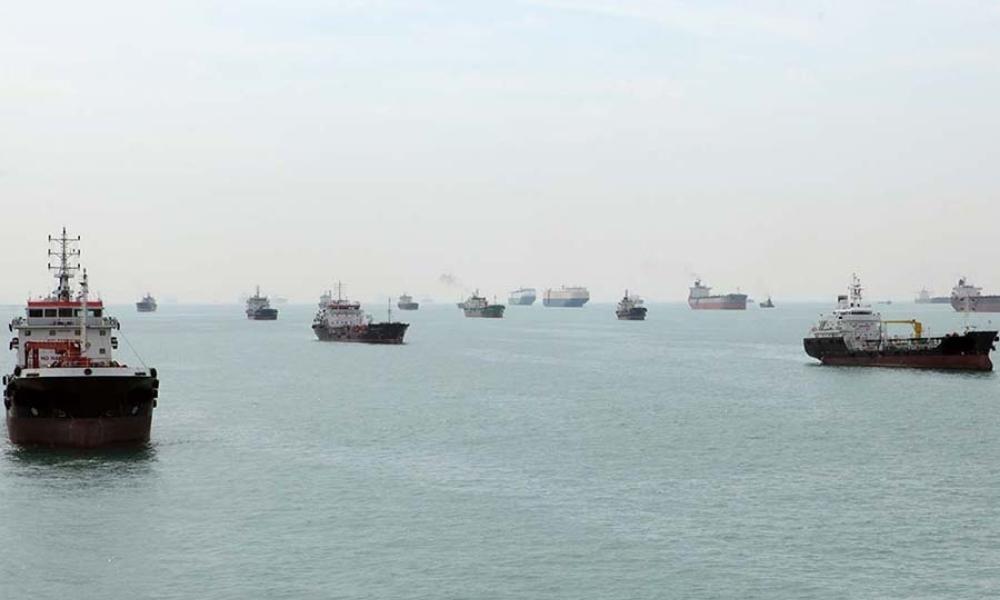
The Singapore Police Force (SPF) on Thursday (30 July) said a company and its 49-year-old male director will be charged in court on 31 July for their alleged involvement in providing flag registration services to a vessel that contravened United Nationals regulations.
Investigations by the Commercial Affairs Department revealed that on 18 May 2022, the company provided flag registration services in respect of bulk carrier PETREL 8.
The vessel had been designated by the United Nations Security Council (UNSC) on 3 October 2017, pursuant to Resolutions UN S/RES/2317 (2017) and UN S/RES/2375 (2017), for transporting prohibited items from the Democratic People’s Republic of Korea (DPRK).
“At the material time, it is alleged that the company director had reasonable grounds to believe that PETREL 8 was a UNSC-designated vessel involved in transporting prohibited items from the DPRK when the flag registration services were provided,” SPF said in a statement.
The company will be charged with one count under Regulation 8D(d)(ii) of the United Nations (Sanctions – DPRK) Regulations 2010. The company director will be charged with one count under Regulation 8D(d)(ii) read with Regulation 13(a) of the same Regulations, for abetting the company to commit the offence.
The offence under the United Nations Act 2001 for contravening these Regulations carries an imprisonment term of up to 10 years and/or a fine of up to SGD 500,000 (USD 389,414) for an individual. In the case for a company, the offence carries a fine of up to SGD 1 million.
The United Nations (Sanctions – DPRK) Regulations 2010 under the United Nations Act 2001 gives effect to sanctions imposed by the UNSC on the DPRK to curb the proliferation of weapons of mass destruction.
This includes prohibitions against the provision of services for vessels where there are reasonable grounds to believe the vessels are or were involved in activities that support the proliferation of weapons of mass destruction by the DPRK. Singapore takes its international obligations under UNSC Resolutions seriously and is committed to implementing them fully. The Police will not hesitate to take action against any individual or entity that breaches Singapore’s laws and regulations.
Photo credit: Manifold Times Published: 31 July, 2026