Connect with us

Business

UAE quits OPEC and OPEC+

‘Losing a member with 4.8 million barrels per day of capacity, and the ambition to produce more, takes a real tool out of the group’s hands,’ says Jorge Leon, Head of Geopolitical Analysis of Rystad Energy.

Admin

Published

on

UAE quits OPEC and OPEC+

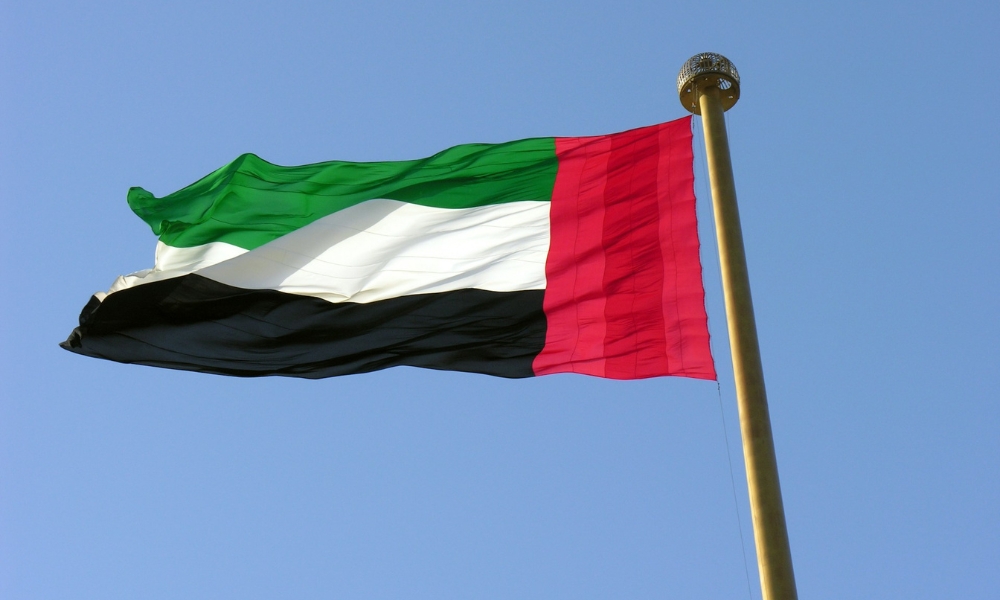
The United Arab Emirates (UAE) on Tuesday (28 April) reportedly said it has quit the Organization of the Petroleum Exporting Countries (OPEC) and OPEC+.

UAE Energy Minister Suhail Mohamed al-Mazrouei told Reuters that the decision followed a thorough review of energy strategies across the region.

“This is a policy decision, it has been done after a careful look at current and future policies related to level of production,” he was quoted saying. 

Jorge Leon, Head of Geopolitical Analysis of Rystad Energy, said: “OPEC and OPEC+ have only ever been as strong as the members’ willingness to hold barrels back from the market, and the UAE was one of those.

“Losing a member with 4.8 million barrels per day of capacity, and the ambition to produce more, takes a real tool out of the group’s hands.

“The timing tells you something about where the oil market is going.

“With demand nearing a peak, the calculation for producers with low-cost barrels is changing fast, and waiting your turn inside a quota system starts to look like leaving money on the table.

“Saudi Arabia is now left doing more of the heavy lifting on price stability, and the market loses one of the few shock absorbers it had left.”

The research company said the UAE’s withdrawal from OPEC and OPEC+, marked a significant shift for the oil-producer group.

Alongside Saudi Arabia, it is one of the few members with meaningful spare capacity, the mechanism through which the group exerts market influence and responds to supply shocks.

Its departure therefore removes one of the core pillars underpinning OPEC’s ability to manage the market.

“While near-term effects may be muted given ongoing disruption in the Strait of Hormuz and broader geopolitical uncertainty, the longer-term implications are more consequential,” it said. 

“A structurally weaker OPEC, with less spare capacity concentrated within the group, will find it increasingly difficult to calibrate supply and stabilise prices.”


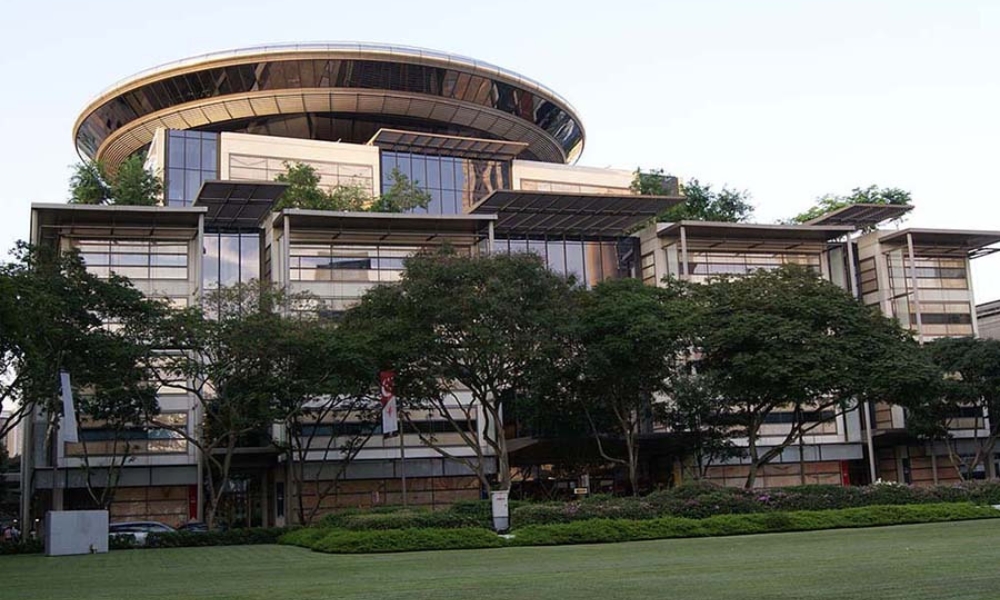
Photo credit: Saj Shafique on Unsplash
Published: 29 April, 2026

Continue Reading

Methanol

China: Zhejiang’s first inland methanol-powered boxship completes trial voyage

The 64-TEU new container vessel, “Ding Li Ji 001”, departed from the Zhebei Shipyard in Guangchen Town, Pinghu City on 22 July for trial operation.

Admin

Published

on

By

China: Zhejiang's first inland methanol-powered boxship completes trial voyage

Haining Communications, a government entity of Haining City, on Monday (27 July) said Zhejiang Province’s first inland methanol-powered container vessel has completed its trial operations, marking a milestone in the province’s adoption of methanol as a clean marine fuel for inland shipping.

The 64-TEU new container vessel, Ding Li Ji 001, departed from the Jiaxing Zhebei Shipbuilding’s shipyard in Guangchen Town, Pinghu City on 22 July for trial operations along the Hangzhou-Pinghu-Shenjia section of the Beijing-Hangzhou Grand Canal.

During the trials, engineers conducted comprehensive testing and verification of the vessel’s propulsion and manoeuvring performance, methanol fuel supply system, and onboard safety systems, validating both the safety of the vessel’s design and its operational suitability for inland waterways.

Jiaxing Zhebei Shipbuilding said the achievement marks a new stage in the application of methanol as a clean energy source for inland shipping and supports Zhejiang’s broader green and low-carbon shipping transition under its “Shipping Zhejiang” initiative.

The vessel measures 64.9 metres in length with a beam of 12.6 metres and a moulded depth of 3.5 metres. It has a designed service speed of 15.62 km/h and is certified to carry 64 TEU with a maximum cargo capacity of 1,883 tonnes, enabling it to serve bulk cargo transport on major inland waterways.

Powered by two dedicated 180-kW methanol engines, the vessel is equipped with a 10-cubic-metre methanol storage tank, providing a cruising range of up to 1,000 kilometres on a full tank. The design aims to address limitations associated with battery-electric vessels, particularly restricted range and charging infrastructure for long-distance inland transport.

Unlike conventional diesel-powered vessels, Ding Li Ji 001 employs direct methanol propulsion, using methanol as the primary fuel rather than traditional marine diesel.


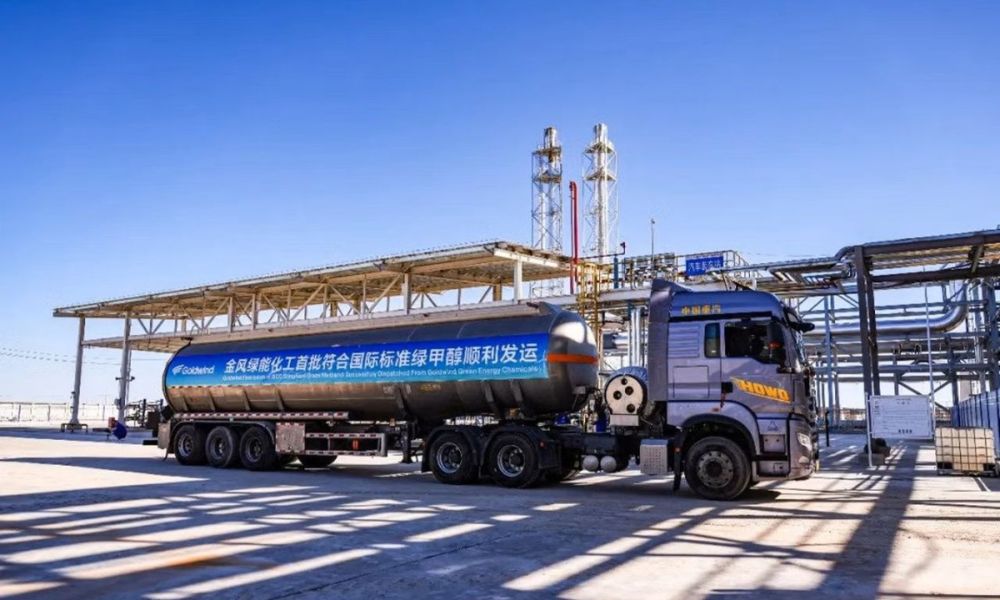
Photo credit: Jiaxing Zhebei Shipbuilding
Published: 29 July, 2026

Continue Reading

Alternative Fuels

Sallaum Lines orders 1+1 LNG dual-fuel, ammonia-ready PCTC

Company signed a new shipbuilding contract with China Merchants Shipyard for the construction of one + one additional 8,600 CEU Pure Car and Truck Carrier, with delivery scheduled for 2029.

Admin

Published

on

By

Sallaum Lines orders 1+1 LNG dual-fuel, ammonia-ready PCTC

Sallaum Lines on Tuesday (28 July) announced the signing of a new shipbuilding contract with China Merchants Shipyard for the construction of one + one additional 8,600 CEU Pure Car and Truck Carrier (PCTC).

The new vessel will be LNG dual-fuel and ammonia-ready, with delivery scheduled for 2029. 

This latest firm order comes weeks after Sallaum Lines announced a separate newbuilding agreement with Xiamen Shipbuilding Industry Co., Ltd. for two firm 8,600 CEU vessels, with options for two additional vessels.

“The China Merchants order adds further momentum to Sallaum Lines’ newbuilding programme and confirms the company’s continued investment in modern, high-capacity RoRo tonnage at a time when the global PCTC market remains structurally important to automotive supply chains,” the company said. 

The newly signed vessel at China Merchants Shipyard brings Sallaum Lines’ total newbuilding programme to nine vessels, representing a total order value of above USD 850 million. The programme includes four vessels already delivered, one vessel scheduled for delivery in August 2026, one vessel scheduled for delivery in December 2026, and three vessels scheduled for delivery in 2029.


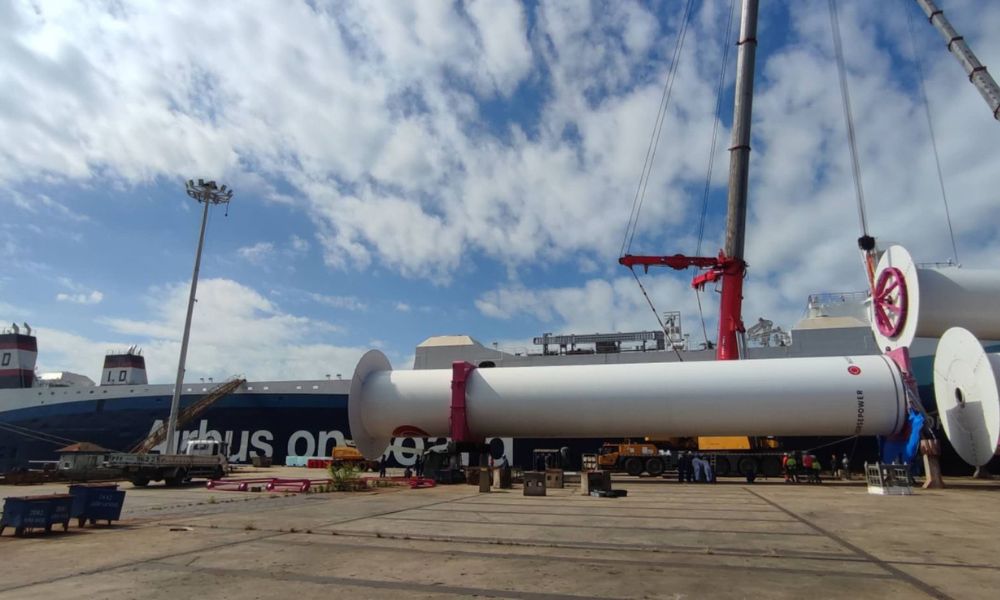
Photo credit: Sallaum Lines
Published: 29 July, 2026

Continue Reading

Bunker Fuel

Port of Rotterdam publishes bunker fuel sales data for Q2 2026

Ethanol as a bunker fuel was reported in Rotterdam for the first time with 1,025 mt delivered in Q2 2026, following an ethanol-methanol blend bunkering operation of container vessel Eco Levant in May.

Admin

Published

on

By

RESIZED port of rotterdam

The Port of Rotterdam Authority recently published bunker fuel sales data for the second quarter (Q2) of 2026.

Deliveries of ultra low sulphur fuel oil, very low sulphur fuel oil, high sulphur fuel oil, marine gas oil and marine diesel oil in Q2 2026 (against on year) recorded respectively 123,190 metric tonnes (mt) (+33%  from 162,142 mt), 354,448 mt (-9.1% from 439,804 mt), 704,637 mt (+10.9% from 619,010 mt), 266,570(+18% from 273,696 mt), 64,777 mt (-8.2% from 86,821 mt). 

Bio-blended variants of ultra low sulphur fuel oil, very low sulphur fuel oil, high sulphur fuel oil, marine gas oil and marine diesel oil in Q2 2026 (against on year) recorded respectively 22,032 mt (-28.3% from  24,573 mt), 144,665 mt (-57% from 68,271 mt), 30,191 mt (+15.3% from 38,490 mt), 34,574 mt (+627.7% from 31,663 mt) and 8,413 mt (-30.2% from 2,223 mt).

Port data showed 273,021 m3 of liquefied natural gas (LNG) being delivered as a marine fuel in Q2 2026, down by 17.4% from 207,658 m3 in Q2 2025. Bio-methanol and bio-blended LNG recorded 2,845 mt and 7,506 m3 respectively in Q2 2026.

Ethanol as a bunker fuel was reported in Rotterdam for the first time with 1,025 mt delivered in Q2 2026,  following an ethanol-methanol blend bunkering operation of container vessel Eco Levant in May.

Manifold Times previously reported Evos Rotterdam holding a ground-breaking ceremony for its methanol and ethanol expansion project at the Port of Rotterdam, formally starting the construction phase of a major investment in additional terminal capacity.

Once operational in early 2028, the expansion will give Evos Rotterdam greater capacity to handle methanol and ethanol for industrial customers, as well as for the developing market in cleaner, low-carbon marine fuels and bunkering.

Shipping giant A.P. Moller – Maersk (Maersk) recently announced a new milestone in its marine fuel trials, with its dual-fuel feeder vessel Laura Maersk successfully operating on 100% ethanol for a second time.

The latest trial marked a significant step forward from earlier tests, as the vessel was supplied through a larger-scale bunkering operation conducted by barge in Rotterdam.

Related: X-Press Feeders, METHANAVE complete first ethanol-methanol bunkering op in Rotterdam
Related: Maersk advances ethanol fuel trials with larger-scale Rotterdam bunkering


Photo credit: Port of Rotterdam
Published: 29 July, 2026

Continue Reading

Trending