Connect with us

LNG Bunkering

Tenerife achieves first truck-to-ship LNG bunkering operation

With the latest operation, the Port of Santa Cruz de Tenerife is now capable of truck-to-ship and multi truck-to-ship bunkering operations, in addition to the ship-to-ship method.

Admin

Published

on

Tenerife achieves first truck-to-ship LNG bunkering operation

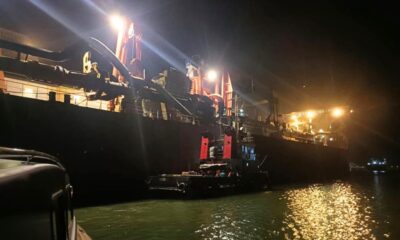
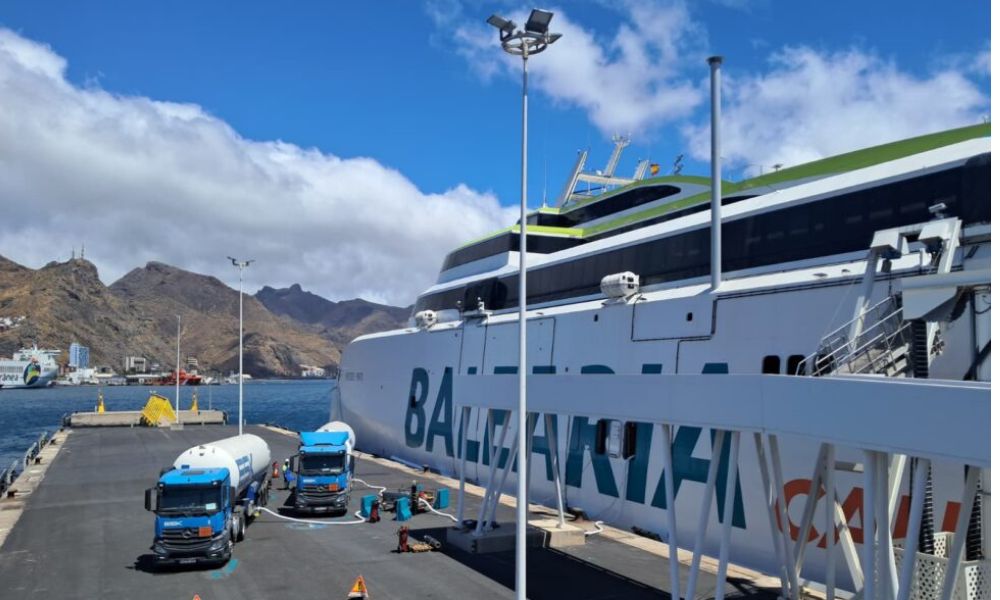
The Port Authority of Santa Cruz de Tenerife on Thursday (10 September) hosted its first LNG bunkering operation using tanker trucks, supplying fuel to a Baleària fast ferry Mercedes Pinto.

The operation began around 12.30pm at the Anaga Dock pier and was carried out by Spanish supplier ESK, the company in charge of providing this service. 

The port authority said a total of 600 MWh of LNG were supplied by two tanker trucks, with a total pumping flow of 700 liters per minute.

The port already supplies LNG using the ship-to-ship (STS) method, which allows fuel to be supplied directly between two ships. 

With the latest operation, the port is now capable of truck-to-ship (TTS) and multi truck-to-ship (MTTS), thus expanding the available options and adapting to the different operational needs of the ships.

“This new modality responds to the need raised by Baleària to have this supply alternative in Tenerife for its eco-efficient vessels and allows the port to advance in a line of work linked to sustainability, innovation and energy transition, facilitating safe and efficient solutions in the face of the evolution of fleets and fuels used by maritime transport,” the port authority added.

The Mercedes Pinto is Baleària’s 12th ship with dual engines prepared to run on natural gas and biogas, a CO₂-neutral fuel, in line with Baleària’s roadmap towards decarbonization.


Photo credit: Port Authority of Santa Cruz de Tenerife
Published: 14 September, 2026

Continue Reading

Events

PIL’s new LNG dual-fuel boxship “Kota Elan” makes maiden call in Singapore

“Kota Elan” is currently operating on PIL’s East Coast Service 1 (ES1) route that connects Asia with South America and is now on its way to Brazil.

Admin

Published

on

By

PIL’s new LNG dual-fuel boxship “Kota Elan” makes maiden call in Singapore

Singapore-based Pacific International Lines Pte Ltd (PIL) on Thursday (10 September) said its newest 13,000 TEU LNG dual-fuel container vessel Kota Elan made its maiden call in Singapore on 4 September. 

In a social media post, PIL said a ceremony was held on board the vessel where representatives from PSA Singapore presented a commemorative plaque to the Master of Kota Elan, Captain Thanabalan Govindaraju, marking its inaugural call at one of the world’s busiest and most connected ports.

The company said Kota Elan is currently operating on PIL’s East Coast Service 1 (ES1) route that connects Asia with South America. 

The vessel is now on its way to Brazil, before calling at Uruguay and Argentina, and then finally returning to Asia.

“As one of the latest additions to our growing fleet of greener vessels, Kota Elan reflects PIL’s commitment to building a more sustainable future for shipping through cleaner and more efficient operations,” the company said.


Photo credit: Pacific International Lines
Published: 11 September, 2026

Continue Reading

Technology

Singapore: MPA working with industry on next phase of digital bunkering, says Deputy CE

‘We are now working with industry on the next phase, trialling capabilities to further strengthen the integrity and quality of bunker data shared between stakeholders and MPA,’ says David Foo.

Admin

Published

on

By

MPA’s Deputy Chief Executive (Ops & Tech), Mr David Foo

Editor’s Note [11 September 2026]: Photo has been updated. 

Secure systems, trusted data and reliable digital services are becoming as important to maritime operations as physical infrastructure, said Mr David Foo, Deputy Chief Executive (Operations & Technology), Maritime and Port Authority of Singapore (MPA), on Thursday (10 September). 

In his opening keynote speech at APPEC 2026 Shipping And Bunker Conference, Foo said OCEANS-X, Digital Bunkering and the Maritime Digital Twin are enabling trusted data sharing, better operational planning and the testing of new digital solutions.

Foo said since 2025, digital bunkering has strengthened the efficiency and transparency of bunker operations. 

“We are now working with industry on the next phase, trialling capabilities to further strengthen the integrity and quality of bunker data shared between stakeholders and MPA.” he said.

He also said MPA is taking a forward-looking approach to the energy transition.

“Over the coming decades, we are likely to see the most diverse marine fuel mix in shipping’s history. There may not be a single fuel of the future.”

“Our role as a global bunkering hub is therefore not to determine which fuel will prevail. Our role is to ensure that whichever fuels the industry adopts, Singapore is ready – with the infrastructure, standards and operational capabilities to support them.”

Foo said MPA is making concrete progress across the major alternative fuel pathways with the issuance of methanol bunkering licences and the commencement of methanol bunkering operations. 

“For ammonia, we are developing the regulatory and operational frameworks needed to support future commercial deployment. We are also facilitating greater use of sustainable biofuels,” he said.

At the same time, MPA continues to expand its LNG bunkering ecosystem, with additional licences issued this year. 

“This will broaden supply options as more LNG-fuelled vessels enter the global fleet. We have also just updated our LNG standards, while maintaining the high standards of safety and reliability that underpin Singapore’s reputation as a trusted bunkering hub,” Foo added.

Related: MPA Chief Executive: Port of Singapore begins digital bunkering initiative today
Related: Singapore: Golden Island, GET, and PetroChina to receive methanol bunkering licences
Related: Singapore: Equatorial Marine Fuel among eight selected for new LNG bunkering licences
Related: Singapore strengthens LNG bunkering framework with new SS 727 standard


Photo credit: Swapnil Bapat on Unsplash
Published: 10 September, 2026

Continue Reading

LNG Bunkering

DNV report: LNG bunker fleet may need to more than double by 2030 to meet demand

Global LNG bunker vessel fleet may need to more than double by 2030 as demand from LNG-fuelled ships grows faster than the infrastructure required to supply them, according to DNV white paper.

Admin

Published

on

By

DNV report: LNG bunker fleet may need to more than double by 2030 to meet demand

The global LNG bunker vessel fleet may need to more than double by 2030 as demand from LNG-fuelled ships grows faster than the infrastructure required to supply them, according to a new DNV white paper published on Wednesday (9 September). 

The report estimated that between 165 and 208 bunker vessels could be needed globally by the end of this decade.

As LNG-powered shipping continues to grow, demand for bunkering capacity is rising rapidly. Although the LNG bunker fleet is expanding steadily, demand from LNG-fuelled vessels is expected to grow even faster, placing increasing pressure on bunker vessels and the wider bunkering ecosystem. 

Without additional investment across this value chain, fuel supply could become a constraint on further LNG adoption in shipping. DNV’s white paper, Gas bunker vessels: facilitating the transition to alternative fuels, highlights how gas bunker vessels are evolving from specialist fuel delivery assets into critical infrastructure supporting shipping’s fuel transition.

Cristina Saenz de Santa Maria, CEO Maritime at DNV, said: “Shipping’s fuel transition depends on more than ships and fuel choices. It also depends on the infrastructure, supply chains, and operational capabilities needed to make alternative fuels available safely and at scale. As the fuel landscape continues to evolve, investment in flexible, reliable, and future-ready bunkering infrastructure will be essential.”

The white paper examined market developments, regulatory requirements, vessel design considerations, gas bunker vessel technical specialities, and operational best practices, while outlining the role gas bunker vessels will play in supporting both current LNG demand and the future adoption of alternative fuels.

The white paper also highlighted opportunities to accelerate market development through the conversion of suitable small-scale LNG carriers into bunker vessels. 

In addition, it examined the growing importance of operational readiness, structured safety management, and competence development as bunkering operations become more frequent and geographically widespread.

Martin Cartwright, Global Business Director, Gas Carriers & FSRUs at DNV, said: “LNG-fuelled shipping is growing faster than the bunkering network needed to support it. Closing this gap will require coordinated investment across the bunkering ecosystem, underpinned by robust safety standards, operational readiness and competence. These elements must advance together if gas bunkering is to scale safely and reliably, while also supporting future pathways, such as biomethane.”

While the white paper focused primarily on LNG, it also considers the emergence of ammonia as a potential marine fuel. The infrastructure, operational experience, and safety frameworks being developed for LNG bunkering today are expected to play an important role in supporting the future deployment of ammonia bunkering solutions.

Note: The report by DNV can be found here


Photo credit: DNV
Published: 10 September, 2026

Continue Reading

Trending