Connect with us

LNG Bunkering

Osaka Gas debuts ship-to-ship LNG bunkering in Japan

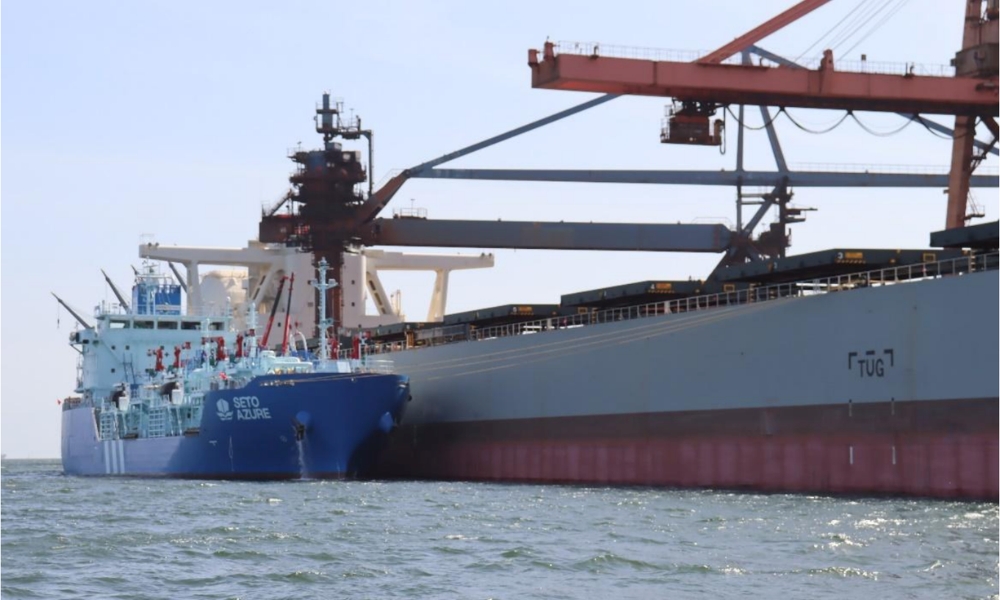
First operation saw LNG bunker fuel being supplied from LNG bunkering vessel “SETO AZURE” to a dual-fuel Capesize bulk carrier in Fukuyama District, Hiroshima.

Admin

Published

on

Osaka Gas debuts ship-to-ship LNG bunkering in Japan

Osaka Gas recently announced that it has commenced ship-to-ship LNG bunkering for vessels in Japan, becoming a supplier for LNG marine fuel with all three primary supply methods—ship-to-ship, truck-to-ship, and port-to-ship.

On 21 April, LNG fuel was supplied from the LNG bunkering vessel SETO AZURE to a dual-fuel Capesize bulk carrier at JFE Steel Corporation’s West Japan Works in Fukuyama District, Hiroshima, marking the first operation under the ship-to-ship method.

This milestone enables Osaka Gas to deliver a flexible and stable LNG bunkering service by offering multiple supply options tailored to vessel location and operational conditions.

“The availability of all three methods enhance supply reliability, operational efficiency, and overall service resilience,” the company said in a statement. 

The company said the ship-to-ship method enhances operational redundancy and supply resilience by enabling LNG loading at Osaka Gas’ Senboku LNG Terminal in Osaka and Himeji LNG Terminal in Hyogo.

The SETO AZURE, owned by an Osaka Bay LNG Shipping Co Ltd, an affiliated company of Osaka Gas, was delivered on 9 April. The vessel will primarily operate in the Osaka Bay and Setouchi areas as part of Osaka Gas’ LNG bunkering operations.

The company added that while LNG-fuelled vessels have been attracting increasing attention as one of the solutions for decarbonising the shipping sector and their numbers have been rising globally, LNG bunkering infrastructure has remained limited in Japan. 


Photo credit: Osaka Gas
Published: 29 April, 2026

Continue Reading

Alternative Fuels

Sallaum Lines orders 1+1 LNG dual-fuel, ammonia-ready PCTC

Company signed a new shipbuilding contract with China Merchants Shipyard for the construction of one + one additional 8,600 CEU Pure Car and Truck Carrier, with delivery scheduled for 2029.
Admin

Published

on

By

Sallaum Lines orders 1+1 LNG dual-fuel, ammonia-ready PCTC

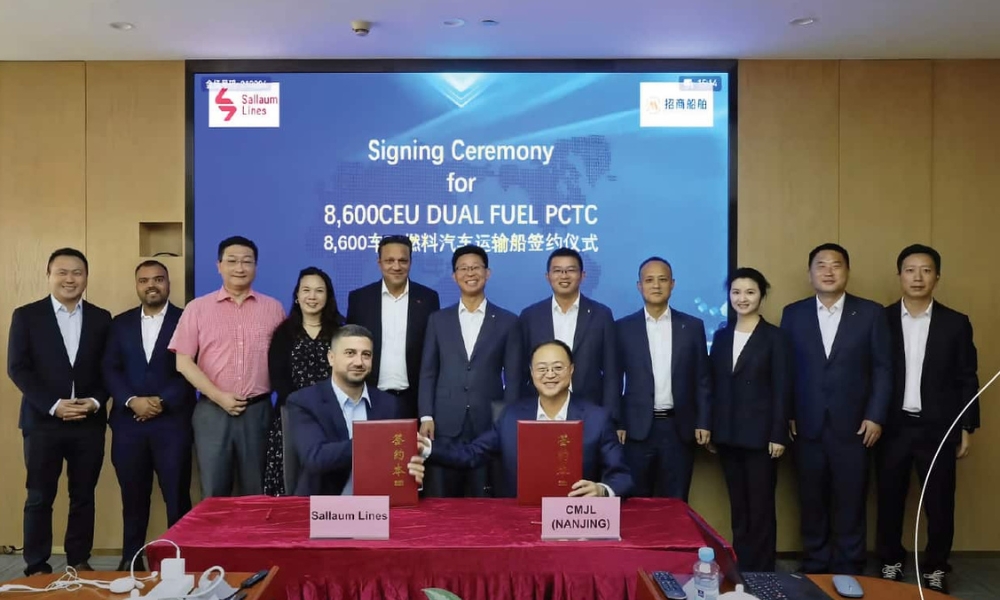
Sallaum Lines on Tuesday (28 July) announced the signing of a new shipbuilding contract with China Merchants Shipyard for the construction of one + one additional 8,600 CEU Pure Car and Truck Carrier (PCTC).

The new vessel will be LNG dual-fuel and ammonia-ready, with delivery scheduled for 2029. 

This latest firm order comes weeks after Sallaum Lines announced a separate newbuilding agreement with Xiamen Shipbuilding Industry Co., Ltd. for two firm 8,600 CEU vessels, with options for two additional vessels.

“The China Merchants order adds further momentum to Sallaum Lines’ newbuilding programme and confirms the company’s continued investment in modern, high-capacity RoRo tonnage at a time when the global PCTC market remains structurally important to automotive supply chains,” the company said. 

The newly signed vessel at China Merchants Shipyard brings Sallaum Lines’ total newbuilding programme to nine vessels, representing a total order value of above USD 850 million. The programme includes four vessels already delivered, one vessel scheduled for delivery in August 2026, one vessel scheduled for delivery in December 2026, and three vessels scheduled for delivery in 2029.


Photo credit: Sallaum Lines
Published: 29 July, 2026

Continue Reading

Bunker Fuel

Port of Rotterdam publishes bunker fuel sales data for Q2 2026

Ethanol as a bunker fuel was reported in Rotterdam for the first time with 1,025 mt delivered in Q2 2026, following an ethanol-methanol blend bunkering operation of container vessel Eco Levant in May.
Admin

Published

on

By

RESIZED port of rotterdam

The Port of Rotterdam Authority recently published bunker fuel sales data for the second quarter (Q2) of 2026.

Deliveries of ultra low sulphur fuel oil, very low sulphur fuel oil, high sulphur fuel oil, marine gas oil and marine diesel oil in Q2 2026 (against on year) recorded respectively 123,190 metric tonnes (mt) (+33%  from 162,142 mt), 354,448 mt (-9.1% from 439,804 mt), 704,637 mt (+10.9% from 619,010 mt), 266,570(+18% from 273,696 mt), 64,777 mt (-8.2% from 86,821 mt). 

Bio-blended variants of ultra low sulphur fuel oil, very low sulphur fuel oil, high sulphur fuel oil, marine gas oil and marine diesel oil in Q2 2026 (against on year) recorded respectively 22,032 mt (-28.3% from  24,573 mt), 144,665 mt (-57% from 68,271 mt), 30,191 mt (+15.3% from 38,490 mt), 34,574 mt (+627.7% from 31,663 mt) and 8,413 mt (-30.2% from 2,223 mt).

Port data showed 273,021 m3 of liquefied natural gas (LNG) being delivered as a marine fuel in Q2 2026, down by 17.4% from 207,658 m3 in Q2 2025. Bio-methanol and bio-blended LNG recorded 2,845 mt and 7,506 m3 respectively in Q2 2026.

Ethanol as a bunker fuel was reported in Rotterdam for the first time with 1,025 mt delivered in Q2 2026,  following an ethanol-methanol blend bunkering operation of container vessel Eco Levant in May.

Manifold Times previously reported Evos Rotterdam holding a ground-breaking ceremony for its methanol and ethanol expansion project at the Port of Rotterdam, formally starting the construction phase of a major investment in additional terminal capacity.

Once operational in early 2028, the expansion will give Evos Rotterdam greater capacity to handle methanol and ethanol for industrial customers, as well as for the developing market in cleaner, low-carbon marine fuels and bunkering.

Shipping giant A.P. Moller – Maersk (Maersk) recently announced a new milestone in its marine fuel trials, with its dual-fuel feeder vessel Laura Maersk successfully operating on 100% ethanol for a second time.

The latest trial marked a significant step forward from earlier tests, as the vessel was supplied through a larger-scale bunkering operation conducted by barge in Rotterdam.

Related: X-Press Feeders, METHANAVE complete first ethanol-methanol bunkering op in Rotterdam
Related: Maersk advances ethanol fuel trials with larger-scale Rotterdam bunkering


Photo credit: Port of Rotterdam
Published: 29 July, 2026

Continue Reading

LNG Bunkering

Conrad Shipyard and SHI secure ABS AiP for LNG bunkering vessel design

Both companies received an AiP from the American Bureau of Shipping for the design of a 12,000-cbm LNG bunkering articulated tug and barge, intended for construction in the United States.
Admin

Published

on

By

Conrad Shipyard and SHI secure ABS AiP for LNG bunkering vessel design

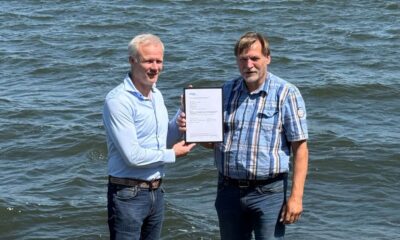
US-based Conrad Shipyard recently announced the joint receipt of an Approval in Principle (AiP) with Samsung Heavy Industries (SHI) from the American Bureau of Shipping (ABS) for the design of a 12,000-cbm LNG bunkering articulated tug and barge (ATB). 

The achievement was announced as part of the Korea-U.S. Shipbuilding Partnership Center (KUSPC) opening event attended by government and industry representatives from both the United States and Korea on 23 July.

Conrad Shipyard said the AiP reflects the successful development of a vessel concept intended for construction in the United States and builds upon the cooperation framework established between Conrad and Samsung Heavy Industries for LNG bunkering vessel development.

“This achievement reflects Conrad’s commitment to combining proven shipbuilding expertise with innovative engineering and strong strategic partnerships,” said Cecil Hernandez, President and CEO of Conrad Shipyard. 

“By collaborating with global technology leaders while building capability here in the United States, we continue to strengthen American shipbuilding and advance practical solutions for the evolving needs of the maritime industry.”


Photo credit: Conrad Shipyard
Published: 28 July, 2026

Continue Reading

Trending