Connect with us

Alternative Fuels

Facing facts: The methane pathway is the only runway that is ready, says SEA-LNG

Steve Esau highlights the growing role of the methane pathway, particularly amid expanding liquefied biomethane bunkering—including in Singapore— and uncertainty around the IMO net-zero framework.

Admin

Published

on

Chief Operating Officer of SEA-LNG Steve Esau

Steve Esau, Chief Operating Officer of multi-sector industry coalition SEA-LNG, highlights the challenges facing shipping decarbonisation. He also points to the growing role of the methane pathway, particularly amid the expansion of liquefied biomethane bunkering and uncertainty around the IMO net-zero framework: 

Shipping’s decarbonisation debate can sometimes feel divorced from commercial reality. Ideologically driven fuel preferences, fragmented regulatory signals, and a tendency to celebrate announcements rather than deliveries have created a great deal of noise. SEA-LNG’s latest View from the Bridge report, published earlier this year to mark our first decade as a coalition, is our attempt to cut through that noise with data, evidence and candour.

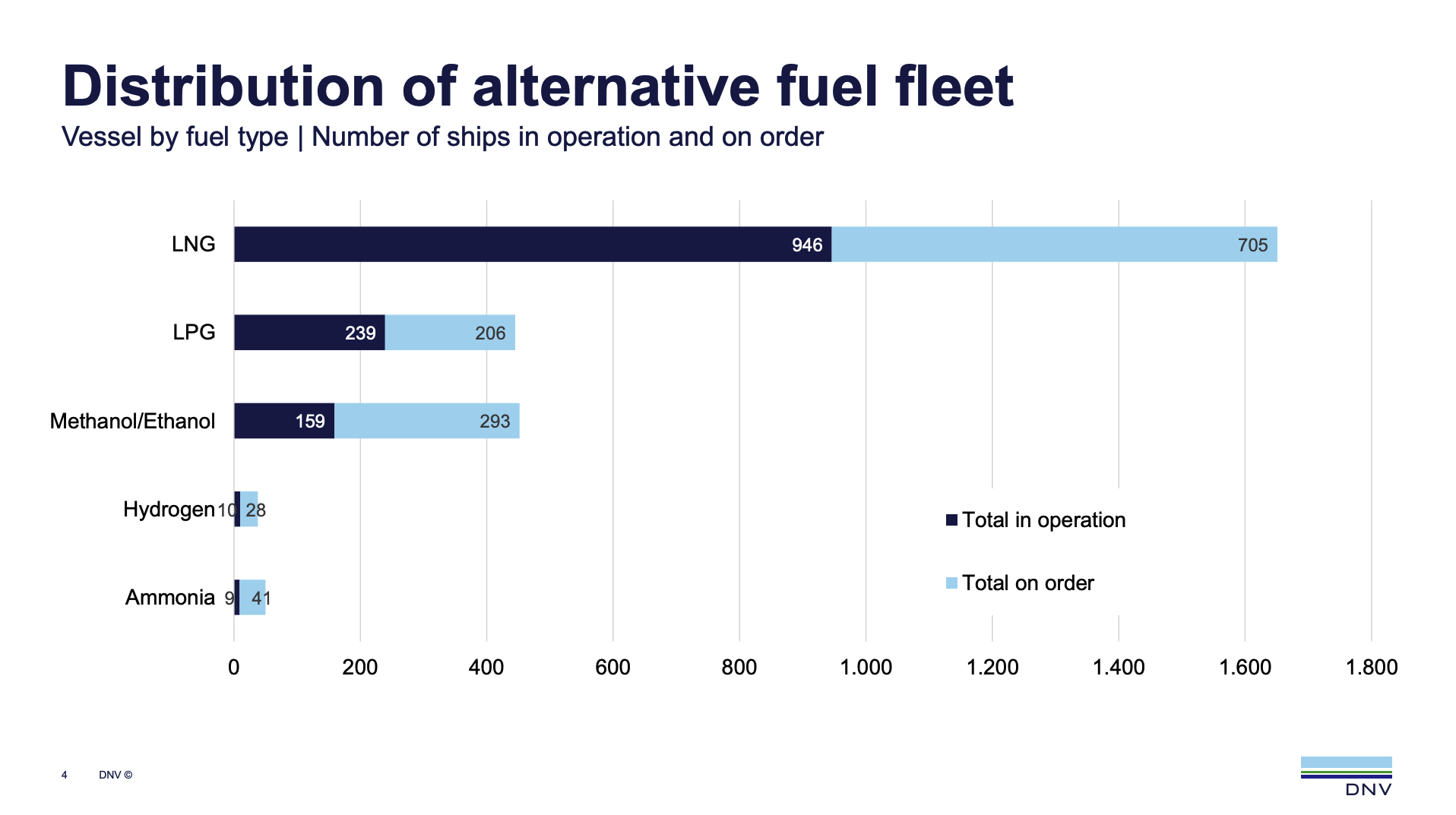
The headline numbers are significant. Since 2016, the number of vessels using LNG as a marine fuel has grown tenfold to 875 in operation today, with a further 653 on order. Investment across the dual-fuel fleet and associated fuel supply chains has exceeded $150 billion over the decade. LNG now represents 79% of all alternatively fuelled tonnage ordered in 2025. Whatever the critics say, the market has spoken clearly about where the practical, scalable solution lies.

But the report also confronts the challenges honestly. The orderbook for alternatively fuelled vessels fell from 551 in 2024 to 275 in 2025. Regulatory uncertainty following the IMO’s decision to delay its Net Zero Framework has chilled investment confidence. Shipyard capacity remains constrained. And the question of methane emissions, both from engines and the supply chain, continues to demand serious answers, not dismissals.

Those answers, as our report makes clear, are increasingly available.

Singapore’s Role Is Pivotal — and Growing

For readers of Manifold Times, the Singapore dimension of this story is particularly important. The Port of Singapore is not just the world’s largest bunkering hub, it is a bellwether for the direction of travel of the entire global marine fuels market.

The scale of LNG bunkering growth in Singapore has been striking. The Maritime and Port Authority of Singapore (MPA) recorded a fourfold increase in LNG bunkering volumes in 2024, reaching nearly 340,000 tonnes. LNG bunker sales continued to grow through 2025, with monthly volumes consistently running 25–30% ahead of the prior year. Singapore now operates three dedicated LNG bunker vessels, with additional capacity being planned as part of MPA’s active programme to scale up LNG bunkering infrastructure.

MPA’s Expression of Interest process in 2025, which drew 14 proposals from 18 companies to expand LNG bunkering services, eight of which included bio-methane and e-methane solutions, signals clearly where Singapore’s ambitions lie. The port is not simply responding to demand. It is actively positioning itself as the regional hub for the full methane decarbonisation pathway: fossil LNG today, liquefied biomethane and e-methane as they scale.

That strategic positioning is well-founded. Asia accounts for the majority of the world’s new LNG dual-fuel vessel orders, driven by the container sector. All ten of the world’s top container lines have now committed to LNG-powered vessels. Yang Ming’s YM Willpower, a 15,500 TEU LNG dual-fuel vessel, completed its first LNG bunkering in Singapore in February this year. The region’s shipbuilding capacity, particularly across Chinese and South Korean yards, means that the vessels to drive this demand are already being built at pace.

Why Methane Remains the Commercial Frontrunner

The commercial logic underpinning the methane pathway is straightforward, but it bears repeating clearly because the debate sometimes loses sight of it.

Energy density matters enormously in commercial shipping. An LNG tank needs to be 1.3 times smaller than a methanol tank for the same energy content, 1.7 times smaller than a liquefied ammonia tank, and three times smaller than a hydrogen tank. On a vessel carrying 20,000-plus TEUs, these are not technical footnotes; they are significant commercial constraints that affect deadweight, cargo capacity and operational economics.

Availability matters equally. LNG is a globally traded commodity with a 2024 market size of approximately 406 million tonnes, roughly 100 times its current consumption as a marine fuel. Singapore sits at the heart of a well-developed LNG supply network. By contrast, the internationally traded markets of methanol and ammonia are a fraction of this size at 5 and 15 million tonnes LNG equivalent, respectively.  And the green versions of ammonia and methanol remain in very limited supply; combined production stands at less than 0.5 million tonnes LNG equivalent globally. The infrastructure to move these fuels from where they are produced to where ships need to bunker simply does not yet exist at any meaningful scale.

Cost of compliance is the third pillar. LNG in its fossil form already delivers greenhouse gas reductions of up to 23% on a well-to-wake basis compared with traditional fuels. Ammonia and methanol produced today, overwhelmingly from fossil methane, carry higher lifecycle emissions. Operators using these fuels need large volumes of expensive green variants to reach emissions parity with LNG. The payback arithmetic does not yet work.

And then there is optionality, the factor that perhaps most clearly separates LNG from its competitors. A dual-fuel LNG vessel can switch between fossil LNG, liquefied biomethane and e-methane as regulations tighten and green fuel supplies grow. No other alternative marine fuel pathway offers that degree of hedge against an uncertain regulatory future.

The Challenge of Getting Regulation Right

The IMO’s delay of its Net Zero Framework in October 2025 was, for many in the industry, deeply frustrating. But it also represents an opportunity to get the regulatory architecture right, and the stakes are high enough that the effort is worth making.

What the maritime industry needs is a single, global decarbonisation framework that is goal-based and technology-neutral. Not a framework that picks preferred fuels, but one that sets clear emissions reduction trajectories and allows the market to find the most cost-effective and practical routes to achieve them. Prescriptive, technology-specific regulations risk locking the industry into pathways that are commercially unviable at scale, or that penalise the first movers who have already committed capital in good faith.

Early adopters must be protected. Ships ordered today will operate for 20 to 25 years. Regulatory frameworks that retrospectively disadvantage LNG investments already made, or that impose double compliance costs by layering regional regimes on top of IMO rules, will destroy the commercial confidence needed to finance the next wave of decarbonisation. That is bad for emissions and bad for the industry.

Compliance pooling mechanisms, flexibility in fleet-level planning, and proportionate non-compliance penalties are all features of a workable framework. So is honest acknowledgement that the alternative fuel supply chains the industry is being asked to pivot towards are not yet commercially ready at scale.

The Pathway Is Clear — The Destination Is Achievable

Across the decade since SEA-LNG was founded, the methane decarbonisation pathway has moved from aspiration to operational reality. Liquefied biomethane is now being bunkered regularly across Europe, with operations spanning at least ten countries and ten major bunker suppliers. The IEA estimates that biomethane could ultimately be produced at one trillion cubic metres annually from organic waste streams alone, representing around 25% of current global natural gas demand. E-methane projects are advancing in Europe, North America, Australia and the Asia Pacific, all fully compatible with existing LNG infrastructure and bunkering systems.

Singapore is well-placed to lead this transition in Asia. The port’s existing LNG bunkering infrastructure, its strong regulatory environment, and MPA’s active development agenda for bio- and e-methane provide a solid foundation. The commercial momentum is building. What is needed now is the regulatory clarity to sustain and accelerate it.

The runway is built. It is time to take off.

Note: SEA-LNG’s 2025-2026 View from the Bridge report is available at sea-lng.org


Photo credit: SEA-LNG
Published: 8 April, 2026

Continue Reading

Biofuel

BHP and GCMD trial multi-feedstock B100 bio bunker fuel on bulk carrier

Bio-blend in the BHP and GCMD pilot is being used on a BHP-chartered bulk carrier “Berge Lyngor”, which was bunkered in Singapore in early May.

Admin

Published

on

By

BHP and GCMD trial multi-feedstock B100 bio bunker fuel on bulk carrier

BHP and the Global Centre for Maritime Decarbonisation (GCMD) on Wednesday (3 June) said they have blended biofuels from two distinct feedstocks—used cooking oil and waste animal fats —and introduced the lower-emissions marine fuel into a BHP-chartered bulk carrier as part of a pilot project.

The bio-blend in the BHP and GCMD pilot is being used on a BHP-chartered bulk carrier Berge Lyngor, owned and operated by Berge Bulk, transporting BHP iron ore from Western Australia to China. When run on bio-blend, the vessel has the potential to reduce well-to-wake greenhouse gas emissions by approximately 79 per cent per voyage compared to sailing on very low sulphur fuel oil (VLSFO).

The vessel bunkered in Singapore in early May with a B100 bio-blend comprising 50 percent tallow-derived biodiesel, sourced and supplied by HAMR Energy, and 50 per cent used cooking oil (UCOME) supplied by Mitsui & Co Energy Trading Singapore (METS).

Mitsui also blended the fuel and Dan-Bunkering coordinated and executed the bunkering operation, which was performed by Global Energy’s barge MT Maple.

The BHP and GCMD pilot will assess how biofuels from multiple feedstocks can be blended, handled, and introduced under real-world operating conditions using existing used cooking oil bunkering infrastructure.

At the same time, insights from this pilot will help identify solutions to challenges related to fuel quality, handling, traceability, and onboard vessel performance.

Biofuels for global shipping today rely heavily on used cooking oil – a feedstock whose availability is approaching its projected limits. Biofuel from waste animal fats presents a promising option to expand the supply of lower-emissions marine fuels.

The outcomes of the pilot are expected to shed light on the practical steps to integrate biofuel blends from different feedstocks into existing supply chains. The diversity of biofuels will provide shipowners and operators with greater flexibility to optimise fuel procurement based on cost, availability, and lifecycle emissions performance.

Biofuels derived from different feedstocks can exhibit varying properties that may impact operations, including potential corrosion from oxidation, fuel system clogging caused by wax formation, which this pilot aims to assess.

The pilot will trace and verify the biofuel blend’s integrity aimed at bolstering confidence in emissions reductions reporting. The pilot will also provide insights into how robust tracing can support future marine fuel supply chains where biofuels from multiple feedstocks with varying lifecycle greenhouse gas emissions footprints are blended together.

This project is co-funded by the Maritime and Port Authority of Singapore under the Maritime Innovation and Technology Fund (MINT).


Photo credit: Global Centre for Maritime Decarbonisation
Published: 3 June, 2026

Continue Reading

Biofuel

NYK starts one-year B100 bio bunker fuel trial on car carrier

In this trial, NYK will operate a car carrier continuously on B100 for one year to evaluate the impact on engines, fuel supply systems, and operational practices.

Admin

Published

on

By

NYK starts one-year B100 bio bunker fuel trial on car carrier

Japanese shipping firm NYK on Tuesday (2 June) said it has commenced a one-year long-term trial involving the continuous use of 100% biofuel (B100) on an NYK-operated car carrier. 

In this trial, NYK will operate a car carrier continuously on B100 for one year to evaluate the impact on engines, fuel supply systems, and operational practices. High-purity biofuels such as B100 are known to be susceptible to degradation from oxygen, light, and heat, raising concerns about the stability of such fuels during long-term use.

In this trial, the biofuel primarily comprises FAME (Fatty Acid Methyl Ester) derived from used cooking oil and similar feedstocks.

The initiative is designed to evaluate the fuel’s effects on the vessel’s equipment and verify operational safety under real-world conditions. 

Through this effort, NYK seeks to accumulate technical expertise that will support the broader use of high-purity biofuels and further accelerate efforts to reduce greenhouse gas (GHG) emissions.

NYK has been advancing the use of biofuels through various initiatives. In 2024, the company conducted a trial using biofuel blend B24 and subsequently expanded practical usage to B30. However, the company said there remains limited global experience with the long-term continuous use of B100.

“By collecting long-term operational data through this trial, NYK aims to accumulate valuable technical insights to support both the safe operation of vessels and the wider adoption of high-purity biofuels,” it said. 


Photo credit: NYK
Published: 3 June, 2026

Continue Reading

Ammonia

AM Green plans to build green ammonia plant at Indian port

Initiative also includes development of green ammonia handling, storage and bunkering infrastructure, pilot bunkering operations, safety procedures and training programmes, says VOC Port Authority.

Admin

Published

on

By

india flag

VO Chidambaranar (VOC) Port Authority on Friday (29 May) said it has signed a Memorandum of Understanding (MoU) with India’s ammonia producer AM Green Ammonia to collaborate in the development of a green ammonia production plant.

The plant will have a capacity of one million tonnes per annum (MTPA) at Tuticorin.

The initiative also includes development of green ammonia handling, storage and bunkering infrastructure, pilot bunkering operations, safety procedures and training programmes. 

The project is expected to support the development of green fuel corridors connecting VOC Port with major ports in Europe and Asia, thereby strengthening India’s position in the global green fuels value chain.

VOC Port also signed a Memorandum of Understanding (MoU) with Bureau Veritas (India) Pvt. Ltd., to collaborate on Green Port certification, emissions accounting, ESG reporting, safety validation, development of green bunkering practices, and establishment of a Centre of Excellence for green fuels and sustainability.

The port also plans for an upcoming 750 m³ green methanol bunkering facility.


Photo credit: Naveed Ahmed on Unsplash
Published: 3 June, 2026

Continue Reading

Trending