Connect with us

LNG Bunkering

Pacific International Lines names LNG dual-fuel container vessel in Singapore

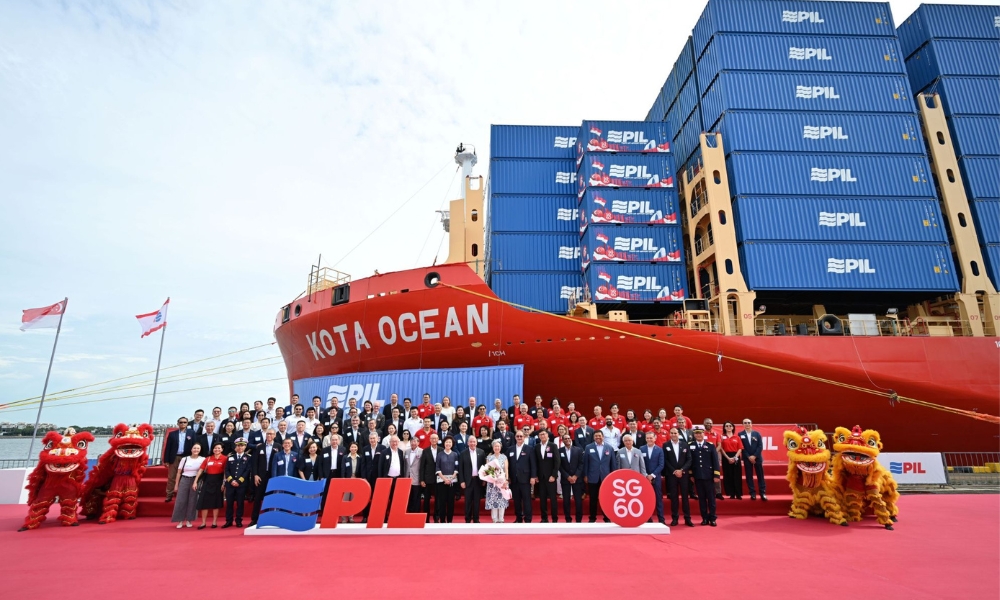
PIL announces naming ceremony of its latest 8,200 TEU LNG dual-fuel container vessel “Kota Ocean” at the PSA Terminal, held in conjunction with Singapore’s 60th anniversary of nation-building.

Admin

Published

on

Pacific International Lines names LNG dual-fuel container vessel in Singapore

Pacific International Lines (PIL) on Friday (6 June) announced the naming ceremony of its latest 8,200 TEU LNG dual-fuel container vessel, Kota Ocean, at the PSA Terminal in Singapore. 

The event, held in conjunction with Singapore’s 60th anniversary of nation-building, underscores PIL’s commitment to sustainability, efficiency and innovation in the maritime industry.

The vessel was named by Ms Ho Ching, Chairman of Temasek Trust, and is the sixth LNG dual-fuel vessel in PIL’s fleet. Kota Ocean is also the second in a series of four 8,200 TEU LNG dual-fuel container vessels, designated as “O” Class, that PIL is building. 

Mr Lars Kastrup, CEO of PIL, added: “We are grateful to Ms Ho Ching for honouring our company and our crew by naming our vessel, Kota Ocean.

“This naming of Kota Ocean represents a significant milestone in our fleet renewal programme, which further enhances our network deployment and operational capabilities to better serve customers. We are delighted to hold the ceremony in Singapore to commemorate SG60, which highlights our ongoing commitment to contributing to Singapore’s maritime industry and future.

Kota Ocean is our sixth newbuild LNG dual-fuel vessel delivered and demonstrates our dedication to sustainable shipping. PIL was the first Asian container shipping line to invest in LNG dual-fuel ships in 2022, and we have since ordered 18 new vessels, bringing us closer to our net zero emissions target by 2050, in alignment with Singapore’s net zero goal.”

Operating on PIL’s South West Africa service (SWS), the vessel’s trade route will connect the Far East, from China to Singapore to Ghana, Togo, Nigeria and Ivory Coast, strengthening trade links between Asia and Africa and supporting economic development in these regions.

Kota Ocean joins sister vessel, Kota Oasis, which was delivered in April 2025 and four 14,000 TEU LNG vessels in operation. PIL has another 12 vessels on order, including two 8,200, five 13,000 and five 9,000 TEU vessels to be delivered over the next few years.

PIL’s newbuild vessels can utilise greener bio-methane fuels and are equipped with engines fitted with the latest exhaust recycling technology which significantly reduce methane emissions. These vessels also feature full-spade type rudder with twisted leading edge, rudder bulb, pre-swirl stator as well as an optimised hydrodynamic hull form with superior anti-fouling coatings to improve fuel efficiency.

The state-of-the-art vessels incorporate digitalisation such as Artificial Intelligence (AI) and Internet of Things (IoT) to increase the automation of tasks as well as operational efficiency and safety. It also enables better monitoring and planning of the vessels’ operations and routes through PIL’s Centre for Maritime Efficiency.

These newbuild vessels are part of PIL’s strategy to grow its network and renew its fleet to deliver efficient and sustainable solutions that create lasting value for customers, partners and stakeholders.

Related: Singapore-based PIL names first 8,200 TEU LNG dual-fuel boxship in China


Photo credit: Pacific International Lines
Published: 9 June, 2025

Continue Reading

LNG Bunkering

PIL’s LNG dual-fuel boxship “Kota Elok” arrives in Singapore on maiden call

As the first of 13 new 13,000 TEU vessels joining its fleet, Kota Elok is equipped to operate on LNG and low-sulphur fuel oil that helps reduce our greenhouse gas emissions.
Admin

Published

on

By

PIL's LNG dual-fuel boxship “Kota Elok” arrives in Singapore on maiden call

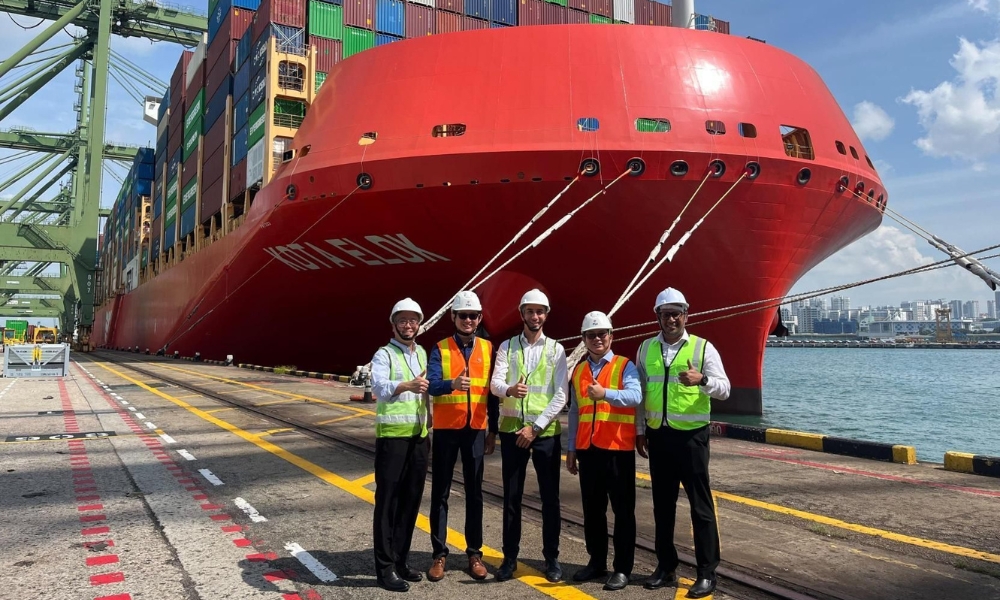
Singapore-based Pacific International Lines Pte Ltd on Monday (20 July) said its first 13,000 TEU LNG dual-fuel container vessel, Kota Elok, recently made her maiden call to Singapore on 15 July.

As the first of 13 new 13,000 TEU vessels joining its fleet, Kota Elok is equipped to operate on liquefied natural gas (LNG) and low-sulphur fuel oil that helps reduce our greenhouse gas emissions. 

The vessel also incorporated energy-saving features and digital technologies to reduce fuel consumption and enhance operational performance, as well as a bow windshield to improve aerodynamics, contributing to improved fuel efficiency and lower emissions over the course of long-haul voyages.

“Following Singapore, Kota Elok will continue her voyage on our East Coast Service 1 (ES1) route to South America, calling at ports in Brazil, Uruguay, and Argentina before returning to Asia,” the company said in a social media post. 

Kota Elok also became PIL’s first vessel to receive Lloyd’s Register certification for compliance with the IACS UR E26 and UR E27 cyber security requirements.

Developed by the International Association of Classification Societies (IACS), UR E26 and UR E27 are mandatory cyber resilience requirements for newbuild vessels contracted from 1 July 2024. 


Photo credit: Pacific International Lines
Published: 21 July, 2026

Continue Reading

LNG Bunkering

CIMC SOE secures order for 12,000-cbm LNG bunkering vessel from Sinopec Clean Energy

Once operational, the vessel is expected to strengthen Sinopec’s domestic coastal LNG bunkering network and help address gaps in China’s alternative fuel bunkering infrastructure.
Admin

Published

on

By

CIMC SOE secures order for 12,000-cbm LNG bunkering vessel from Sinopec Clean Energy

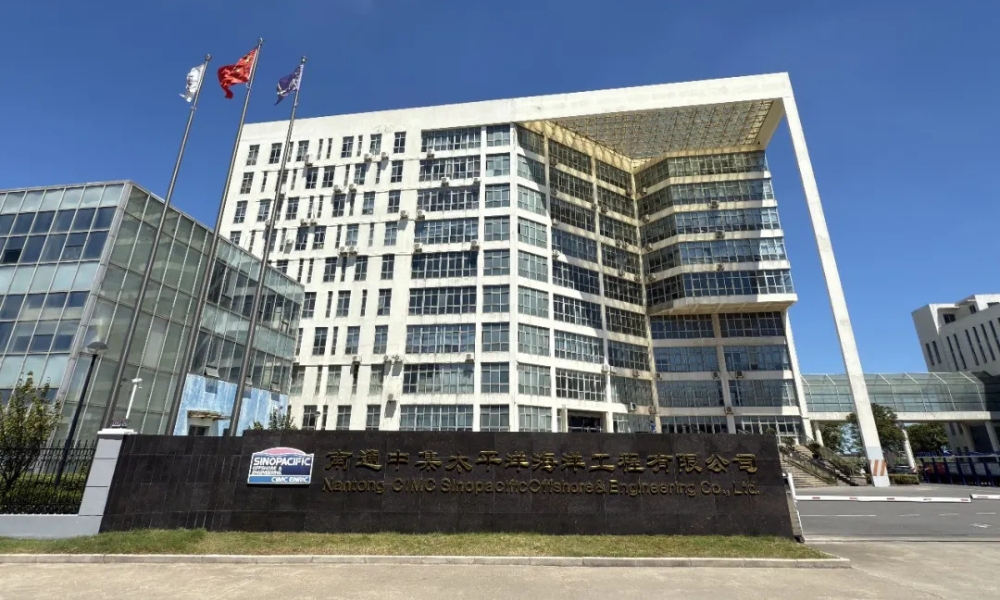
China’s Nantong CIMC Sinopacific Offshore & Engineering Co., Ltd. (CIMC SOE) recently signed a contract with Sinopec (Beijing) Clean Energy Co., Ltd. to build a 12,000-cubic metre (m3) LNG bunkering vessel, according to Chinese maritime media.

The vessel is scheduled for delivery in 2028 and will support Sinopec’s efforts to expand its presence in the marine clean energy sector.

Once operational, the vessel is expected to strengthen Sinopec’s domestic coastal LNG bunkering network and help address gaps in China’s LNG bunkering infrastructure.

With this signing , CIMC Pacific Offshore Engineering’s LNG bunkering vessel orderbook is further strengthened, maintaining its leading position in the global market for small and medium-sized LNG bunkering vessels.

The contract also marked another milestone for CIMC SOE, which has seen a sharp increase in orders and business performance this year amid a surge in domestic LNG vessel demand.


Photo credit: Nantong CIMC Sinopacific Offshore & Engineering
Published: 21 July, 2026

Continue Reading

Alternative Fuels

ENGINE on Fuel Switch Snapshot: LSMGO surges to greater premium over biofuel

B100 discount to LSMGO widens to $541/mt in Rotterdam; Singapore’s B100 drops to $106/mt below LSMGO; Rotterdam LBM at $639-833/mt discounts to LSMGO.

Admin

Published

on

By

ENGINE on Fuel Switch Snapshot: LSMGO surges to greater premium over biofuel

Once a week, bunker intelligence platform ENGINE will publish a snapshot of alternative and conventional bunker fuel prices in the world’s two biggest bunkering hubs. The following is the latest snapshot:

20 July 2026

  • B100 discount to LSMGO widens to $541/mt in Rotterdam
  • Singapore’s B100 drops to $106/mt below LSMGO
  • Rotterdam LBM at $639-833/mt discounts to LSMGO

B100’s premium over HSFO in Rotterdam has narrowed by $50/mt over the past week to $64/mt, while its discount to VLSFO has widened by $83/mt to $105/mt.

B100 has become far more competitive against LSMGO in Rotterdam, with its discount widening by $180/mt over the past week to $541/mt, as a surge in conventional fuel prices left B100 broadly unchanged by comparison.

B100’s price has risen by $109/mt in Singapore, but its discount to LSMGO has still widened by $102/mt to $106/mt, as LSMGO surged by an even greater $211/mt.

Rotterdam’s LNG premium over VLSFO has widened by $35/mt to $201/mt for vessels with Otto medium speed (Otto MS) engines. For vessels with diesel slow speed (diesel SS) engines, LNG has flipped to a $15/mt premium over VLSFO, from a $22/mt discount the prior week.

Liquefied biomethane (LBM) discounts to VLSFO in Rotterdam have narrowed by $50-52/mt to $203-396/mt over the past week. Against LSMGO, LBM discounts have widened by $45-47/mt to $639-833/mt, depending on engine type.

In Singapore, LNG is now $42/mt cheaper than LSMGO for vessels with Otto MS engines, and $134/mt cheaper for vessels with diesel SS engines.

ENGINE on Fuel Switch Snapshot: LSMGO surges to greater premium over biofuel

Liquid fuels

HSFO and VLSFO prices in Rotterdam have jumped by $66/mt and $99/mt respectively over the past week, while LSMGO has surged by an even steeper $196/mt. A $9.69/bbl ($71/mt) rise in front-month ICE Brent futures, to $87.94/bbl ($645/mt), drove bunker prices sharply higher across the board.

Bunker fuel availability is tight for prompt delivery dates in the ARA ports, with buyers advised to enquire about stems between 5-7 days ahead to get good coverage, a trader said.

Rotterdam’s B100 price has risen by $16/mt over the past week. Dutch ZRE A ticket prices were unchanged at €107.50/mtCO2e.

Singapore’s HSFO and VLSFO prices have risen by $130/mt and $132/mt respectively, while its LSMGO price has gained an even steeper $211/mt over the past week.

VLSFO availability in Singapore has been tight, with several suppliers reporting low stock levels. Recommended lead times have widened from 13–17 days last week to 14–19 days now.

Liquid gases

Rotterdam’s LNG prices have surged by $134-136/mt over the past week, while its LBM prices have climbed by $149-151/mt.

LBM discounts to LNG in Rotterdam have narrowed by $15/mt to $404-411/mt.

Singapore’s LNG bunker benchmarks have surged by $196-197/mt over the past week.

By Erik Hoffmann


Photo credit and source: ENGINE
Published: 21 July, 2026

Continue Reading

Trending