Connect with us

Methanol

Methanol Institute: Decarbonization milestones and green methanol advancements (Week 50, 9 to 15 Dec 2024)

Work is continuing to enhance both availability of methanol and its ease of consumption in main engines, illustrated by the launch of a new class of product tankers constructed in joint venture.

Admin

Published

on

Methanol Institute: Progress and milestones in methanol adoption (Week 49, 2 to 8 Dec 2024)

The Methanol Institute, provides an exclusive weekly commentary on developments related to the adoption of methanol as a bunker fuel, including significant related events recorded during the week, for the readers of bunkering publication Manifold Times:

The expertise required to power the energy transition in maritime is considerable, ranging from increasing the capacity of fuel production, its transport and storage and the innovations in dual fuel ship design that align with global net zero targets. 

Securing additional tonnage of green methanol continues to a focus for leading container line Maersk, while work is continuing to enhance both availability of methanol and its ease of consumption in main engines, illustrated by the launch of a new class of product tankers constructed in joint venture.

Methanol marine fuel related developments for Week 50 of 2024:

Methanol Institute Welcomes HIF Global as Newest Member

Date: December 9, 2024

Key Points:

The Methanol Institute (MI) has announced the addition of HIF Global to its membership roster. HIF Global specializes in producing e-Fuels, offering sustainable alternatives to fossil fuels compatible with existing transportation and industrial infrastructure.

Its approach combines renewable energy with technology to produce green hydrogen through electrolysis and captured CO₂ from various sources. These components are synthesized to create e-Fuels, including e-Methanol for ships, e-sustainable aviation fuels and e-Gasoline for cars, which are crucial for decarbonizing global transportation and reducing greenhouse gas emissions.

HIF Global’s operations include the HIF Haru Oni facility in Magallanes, Chile — the world’s first operating e-Fuels facility inaugurated in December 2022 — and the HIF Matagorda e-Fuels Facility in Texas, designed to produce 1.4 million metric tons of e-Methanol annually once fully operational. As part of MI, HIF Global will collaborate with industry leaders, policymakers, and stakeholders to promote methanol-based solutions and e-Fuels in the transition to a low-carbon future.

Hafnia to Take Delivery of First Dual-Fuel Methanol MR Tanker in January 2025

Date: December 10, 2024

Key Points:

Product tanker owner and operator Hafnia has announced the upcoming delivery of the first in a series of four 49,800 deadweight dual-fuel Methanol Chemical IMO II Medium-Range (MR) newbuilds ordered with French shipowner Socatra, under its Ecomar joint venture.

Constructed at Guangzhou Shipyard International (GSI) in China, this vessel has successfully completed construction and sea trials, with delivery scheduled for January 2025.

These vessels represent a significant advancement in the partners’ decarbonization strategy, offering the flexibility to operate on both conventional fuel and methanol. This dual-fuel capability facilitates a transition to more sustainable fuel options as green methanol becomes increasingly accessible.

In addition to the dual-fuel system, Hafnia is evaluating further innovations to enhance fuel efficiency and minimize environmental impact. This includes exploring the integration of shaft generators and Wind Assisted Propulsion Systems (WAPS) with provision made for the future installation of rotor sails. The vessels are also designed to accommodate future shore power connections, with designated areas in the engine room allocated for transformer sections compatible with high-voltage shore power, contingent upon port infrastructure capabilities.

The quartet of newbuilds will be time-chartered from Ecomar to TotalEnergies for multi-year periods, reinforcing the longstanding partnership between Ecomar and the energy company. Following the initial delivery in January 2025, the subsequent two vessels are slated for delivery within the same year, with the fourth vessel expected in 2026.

Maersk and NTPC Green Energy Explore Green Methanol Supply Partnership

Date: December 11, 2024

Key Points:

A.P. Moller-Maersk is in preliminary discussions with NTPC Green Energy, a subsidiary of India’s leading energy conglomerate NTPC, to establish a green methanol supply agreement. NTPC Green Energy plans to develop a green fuels production hub in Andhra Pradesh, targeting an annual output of 2 million metric tonnes of fuel for export. This initiative aligns with Maersk’s strategy to secure alternative fuel sources for its expanding fleet of methanol-powered vessels, supporting the company’s commitment to achieving net-zero emissions by 2040.

Yingkou Port Achieves ISCC EU Certification for Green Methanol Storage

Date: December 12, 2024

Key Points:

Yingkou Port, a subsidiary of Liaoning Port Group under China Merchants Group, has secured the International Sustainability & Carbon Certification (ISCC) EU certification for green methanol storage as of December 5, 2024. Specializing in the storage and handling of refined oil and liquid chemicals, Yingkou Port is strategically positioning itself to support the use of green methanol as a bunker fuel, particularly within Northeast Asia.

In anticipation of future customer demands and to align with sustainable development goals, the port has proactively established a green methanol corridor. Currently, it offers up to 225,000 cubic meters of storage capacity for green methanol transshipment, with individual tank sizes ranging from 2,500 to 10,000 cubic meters, catering to producers and distributors of green methanol.

The certification process was facilitated by Shanghai Wenji Biotechnology Co., Ltd., which assisted Yingkou Port in developing a comprehensive ISCC quality management system. Following an on-site audit conducted by international certification body SGS on November 8, the certification was granted in less than a month, underscoring the port’s commitment to sustainable fuel infrastructure.

Infineum Develops Lubrication Solutions for Methanol as Marine Fuel

Date: December 12, 2024

Key Points:

Infineum, a global fuel additives company, is actively addressing technical challenges associated with using methanol as a marine fuel, aligning with the International Maritime Organization’s (IMO) decarbonization goals toward net-zero emissions by 2050.

In an article published on December 10, 2024, Infineum’s Fuels Technologist, Frank Simpson, discussed the company’s efforts to enhance methanol’s viability as a marine fuel. A significant development is Infineum’s new lubricity additive for alcoholic fuels, such as methanol and ethanol, which is expected to be ready for deployment in 2025. This additive aims to improve the lubricating properties of methanol, addressing one of the key technical challenges in its adoption as a marine fuel.

Infineum’s initiatives are part of a broader industry effort to explore sustainable transportation solutions that reduce greenhouse gas emissions. The company’s work contributes to a multi-fuel, multi-technology approach to meet the pressing challenges of climate change while ensuring reliable and affordable mobility solutions.


Photo credit: The Methanol Institute
Published: 19 December, 2024

Continue Reading

Alternative Fuels

LR, China’s MARIC unveil tanker concept ready for three future bunker fuels

Both secured AiP for a new 114,000 DWT product and crude oil tanker designed to accommodate future conversion to LNG, methanol or ammonia.
Admin

Published

on

By

LR, China’s MARIC unveil tanker concept ready for three future bunker fuels

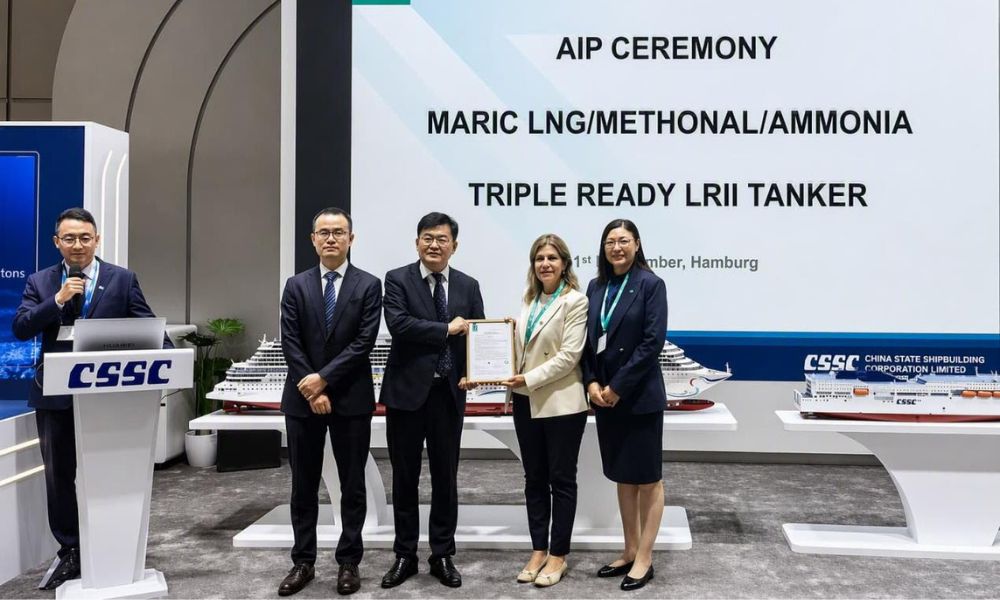
Lloyd’s Register (LR) and the Marine Design and Research Institute of China (MARIC) on Thursday (3 September) have secured Approval in Principle (AiP) for a new 114,000 DWT product and crude oil tanker designed to accommodate future conversion to LNG, methanol or ammonia.

Announced at SMM 2026, the concept addresses one of the biggest investment challenges facing shipping today: the need to develop vessels and capabilities that can support a range of alternative fuel options and pathways as technologies, infrastructure and regulations evolve.

While LNG is already a mature fuel pathway, methanol and ammonia remain at an earlier stage of development, with questions around global fuel availability, infrastructure development, economics and long-term adoption.

The 114,000 DWT tanker concept has been designed as a product and crude oil carrier that can accommodate future conversion to LNG, methanol or ammonia as technologies, regulations and fuel supply chains mature. By incorporating conversion readiness at the design stage, the concept aims to reduce future retrofit complexity and provide owners with greater confidence when planning long-term fleet investments.

The design concept was reviewed against LR’s July 2026 class rules and regulations, including requirements relating to ships using gases and other low-flashpoint fuels, alongside relevant IACS Common Structural Rules for oil tankers. Final classification and statutory approval remain subject to full compliance with all applicable rules and regulations.

Theo Kourmpelis, Global Business Director for Tankers, Lloyd’s Register, said: “Shipowners are being asked to make major investment decisions today despite continued uncertainty around which fuels will dominate in the decades ahead. Alternative fuel solutions each offer potential pathways to compliance, but fuel infrastructure, regulation and economics continue to evolve at different speeds around the world.

“Designs that preserve flexibility will be critical in helping owners manage risk while preparing for multiple future scenarios.”

Si Nan, Marine & Offshore Marketing Department Vice Director, MARIC, said: “As the industry explores different decarbonisation pathways, shipowners need vessel designs that can adapt alongside technological and regulatory developments. This concept was developed specifically to provide greater fuel flexibility and long-term resilience, allowing owners to respond to changing market requirements without being locked into a single fuel strategy.

“Receiving Approval in Principle from Lloyd’s Register is an important milestone that validates the design concept and supports its future development.”


Photo credit: Lloyd’s Register
Published: 4 September, 2026

Continue Reading

Alternative Fuels

DNV: Alternative-fuelled vessel orders hit highest monthly level since October 2024

LNG-fuelled vessels accounted for the vast majority of August activity while the strong summer performance marked a significant acceleration in ordering activity after a relatively slow start to the year.
Admin

Published

on

By

DNV: Alternative-fuelled vessel orders hit highest monthly level since October 2024

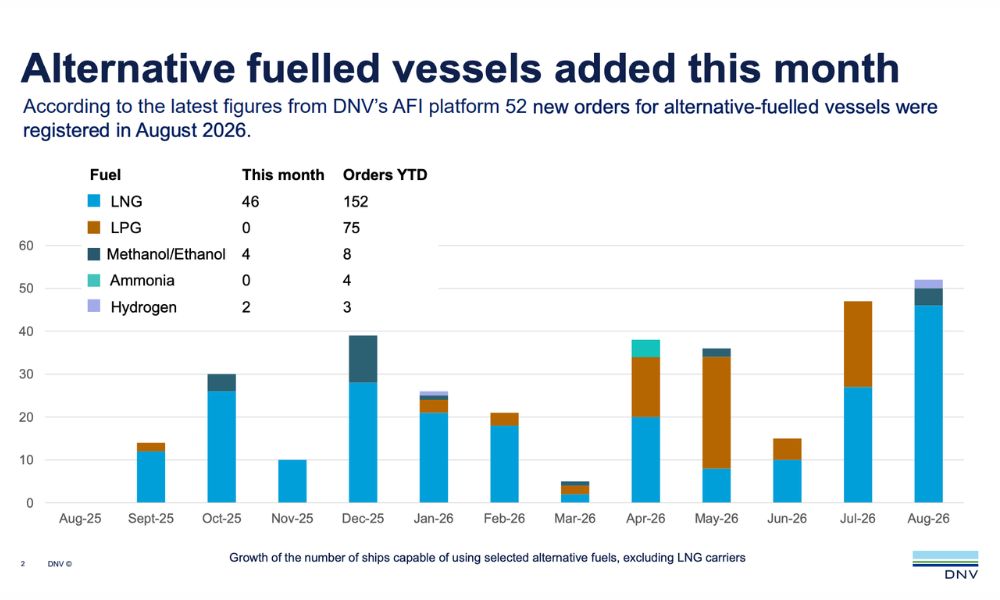
Latest data from classification society DNV’s Alternative Fuels Insight (AFI) platform alternative-fuelled vessel ordering was strong in August, with 52 new vessels added to the platform.

This is the highest monthly total since October 2024 and follows another active month in July, when 47 vessels were added to the database.

LNG-fuelled vessels accounted for the vast majority of August activity, with 46 orders recorded. The container segment led the way with 30 orders, while the car carrier segment contributed a further 12 LNG-fuelled vessels. In addition, four ethanol-fuelled bulk carriers and two hydrogen-powered bulk carriers were added during the month, as well as one LNG bunker vessel.

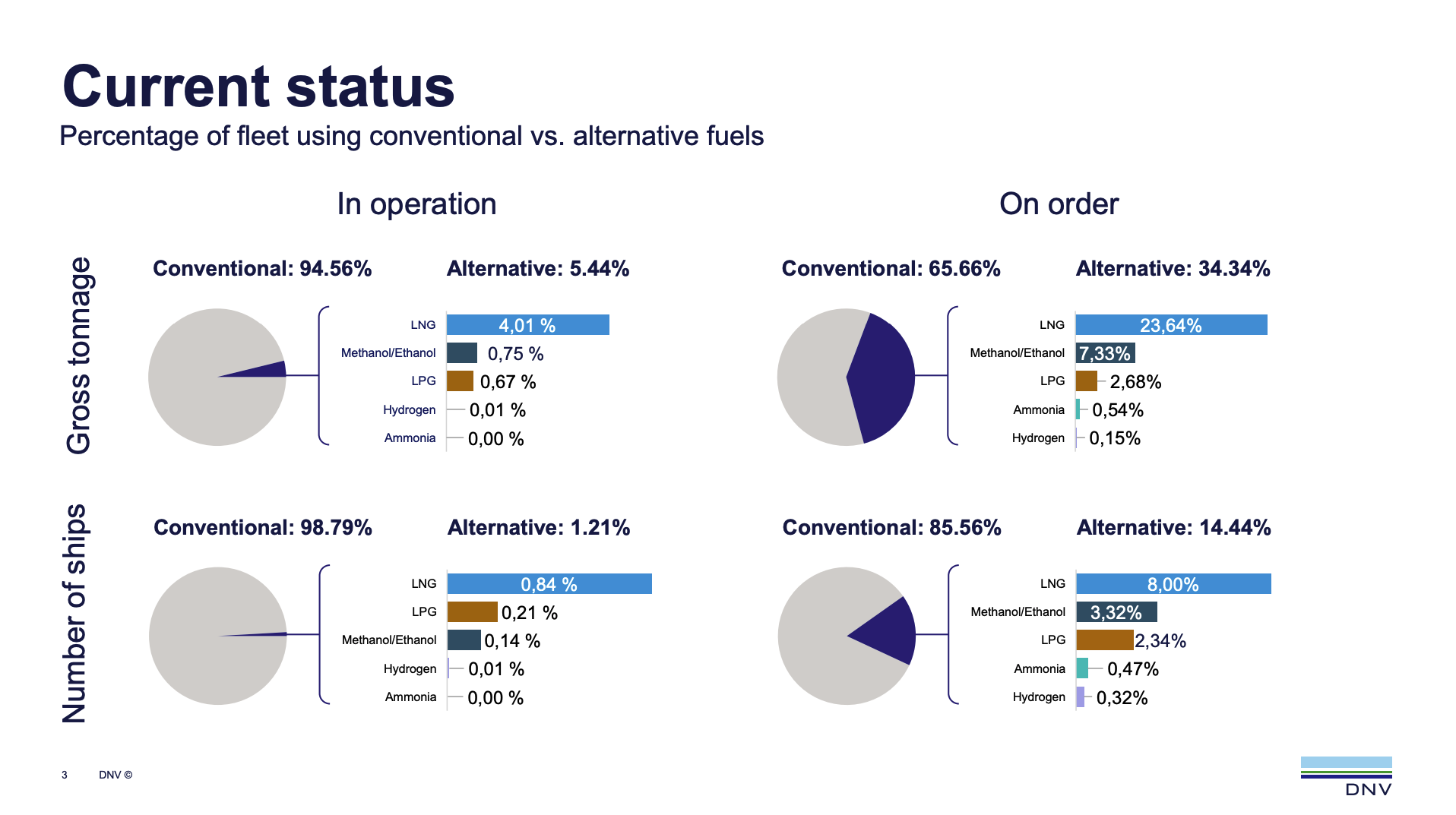
The strong summer performance marked a significant acceleration in ordering activity after a relatively slow start to the year. In total, 242 alternative-fuelled vessel orders have been placed in the first eight months of 2026, representing a 27% increase compared with the same period in 2025.

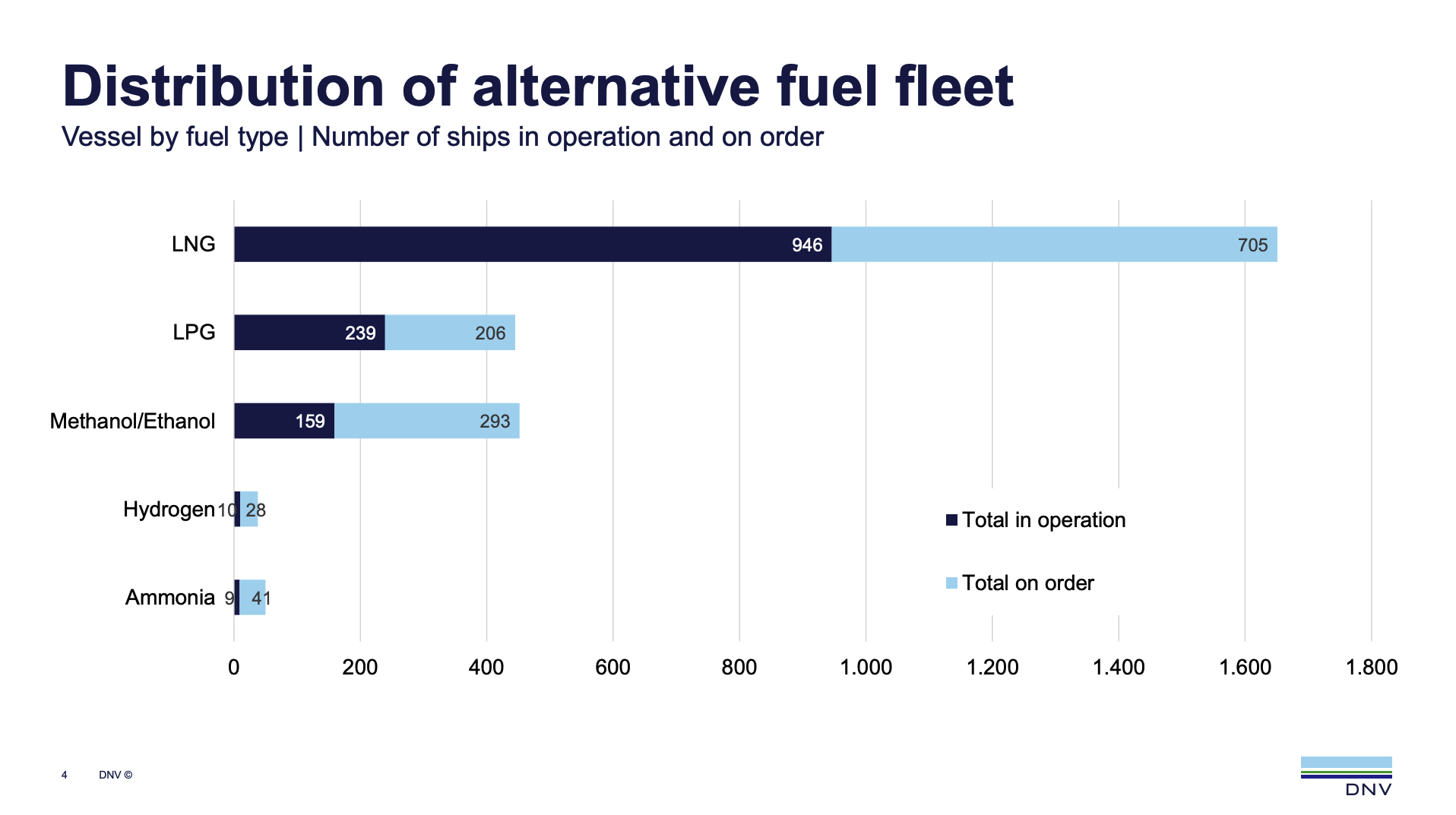
LNG remains the dominant fuel choice, accounting for 63% of all alternative-fuelled vessel orders registered so far this year. Container vessels represent the largest share of these LNG orders (59%), followed by car carriers (30%).

Jason Stefanatos, Global Decarbonization Director at DNV Maritime, said: “The past two months have been particularly strong for alternative-fuelled vessel ordering, with August recording the highest monthly total we’ve seen since October 2024. This has helped lift year-to-date orders to a level well above the same period last year.

“LNG remains the leading fuel choice, driven largely by activity in the container and car carrier segments. These sectors have been among the earliest adopters of alternative fuels, supported by predictable liner operations and increasing demand from cargo owners to reduce emissions across supply chains. 

“For many owners, LNG offers a combination of emissions reductions, fuel availability and future flexibility while the longer-term fuel landscape continues to evolve. 

“At the same time, the latest figures include orders for ethanol- and hydrogen-fuelled vessels, highlighting that owners continue to explore a range of decarbonization pathways. Different segments are making different fuel choices, but the overall level of activity demonstrates continued investment in lower-emission shipping.”
Screenshot 2026 09 04 at 12.29.26 PM Screenshot 2026 09 04 at 12.29.36 PM


Photo credit: DNV
Published: 4 September, 2026

Continue Reading

Methanol

GENA Solutions: Total renewable and low-carbon methanol project pipeline increases from 61.8 to 62.2 Mt by 2032

Information shared by MI – the Global Methanol Alliance meant to assist the maritime industry in the adoption of methanol as a mainstream marine fuel heading into IMO 2030/2050.
Admin

Published

on

By

28 1

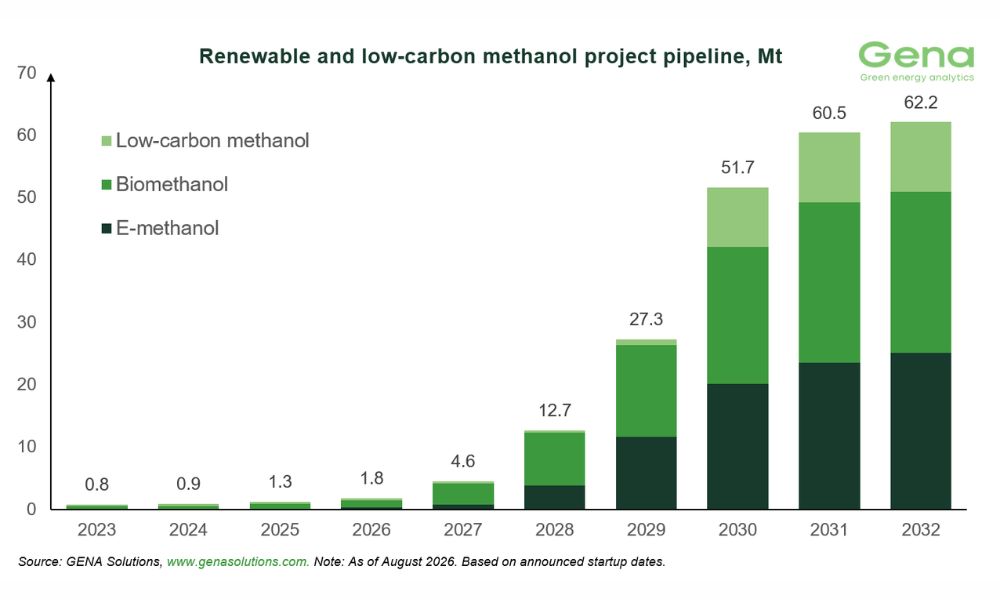
MI – the Global Methanol Alliance recently shared with Manifold Times the renewable and low-carbon methanol project pipeline August 2026 release produced by GENA Solutions Oy.

Information from the release is meant to provide the bunkering publication’s readers with insight on renewable methanol availability, and to assist the maritime industry in the adoption of methanol as a mainstream marine fuel heading into IMO 2030/2050.

Key takeaways from GENA’s August 2026 Methanol release are as follows:

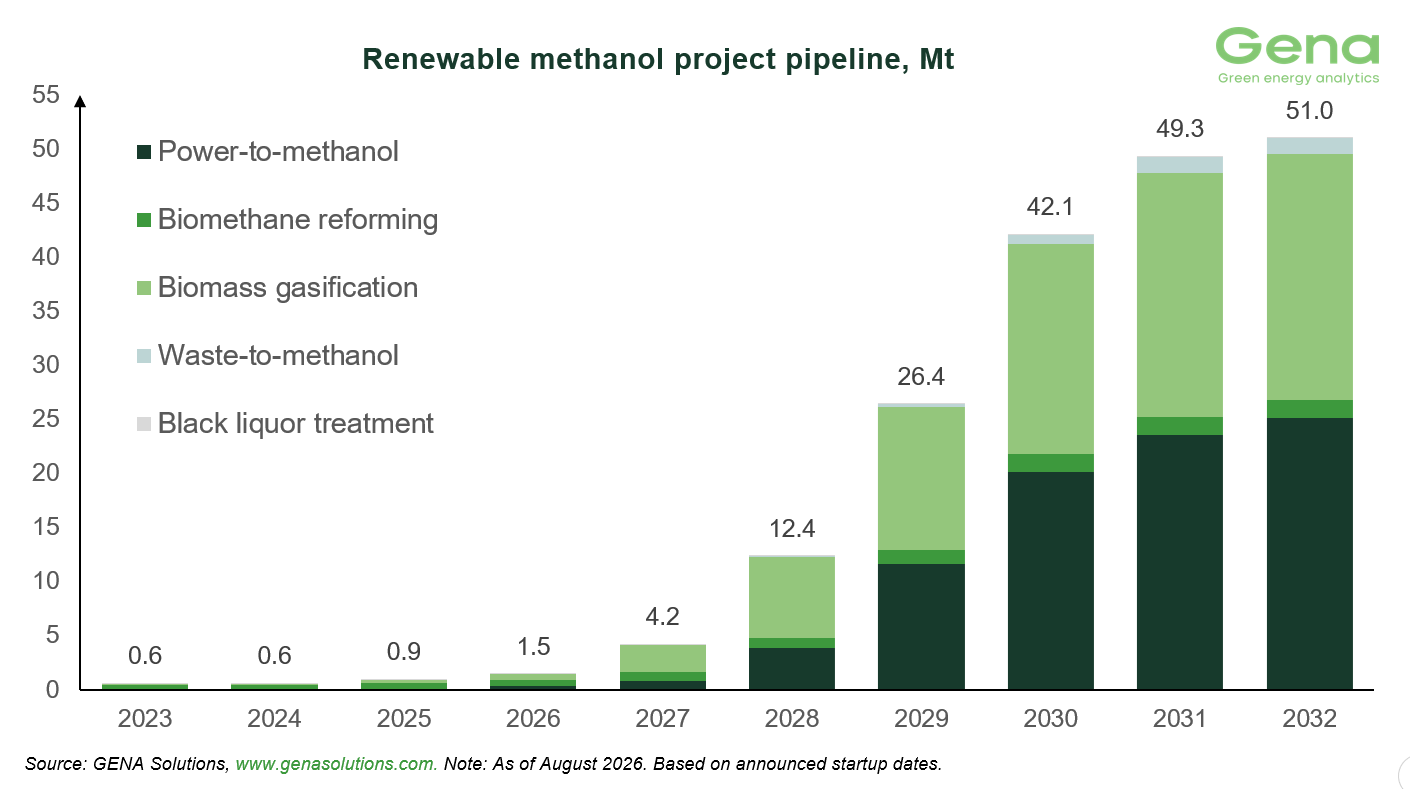
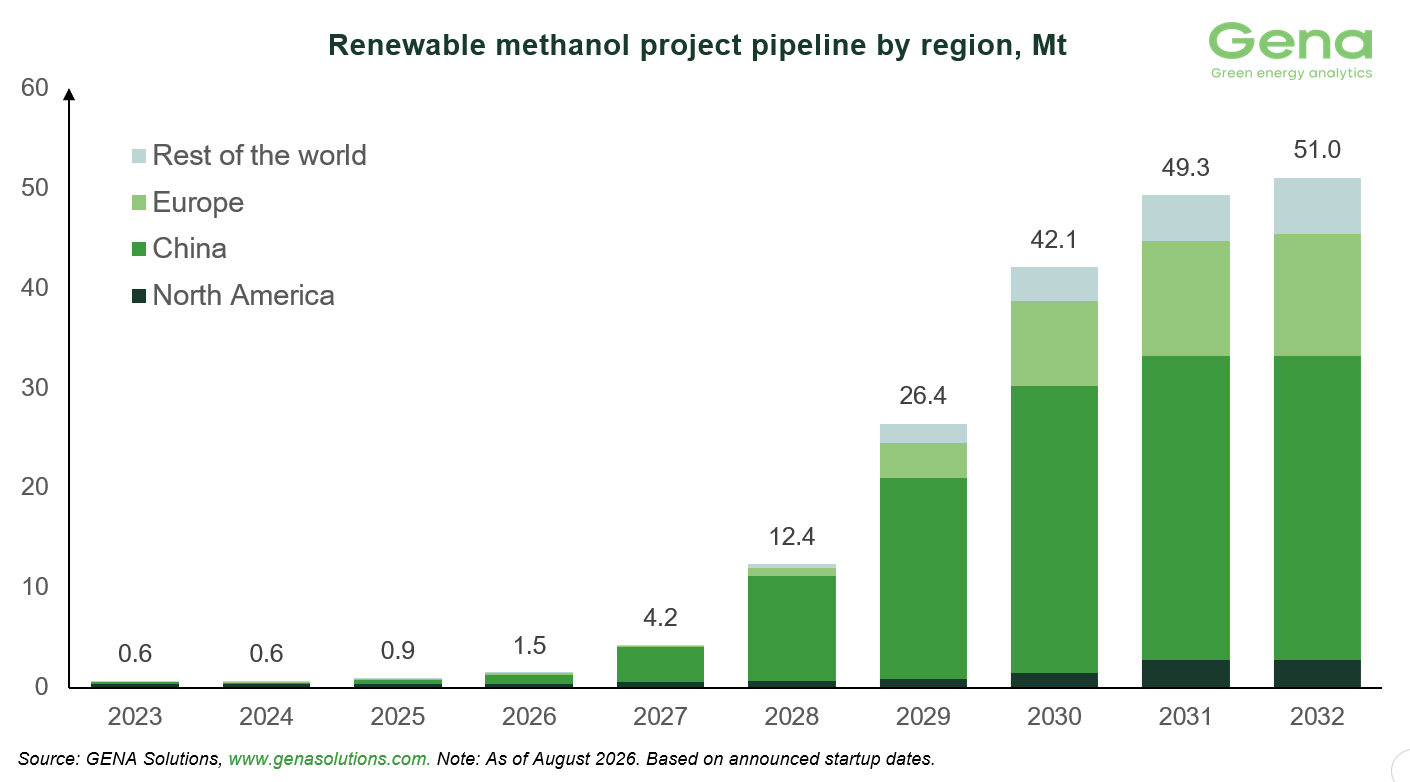
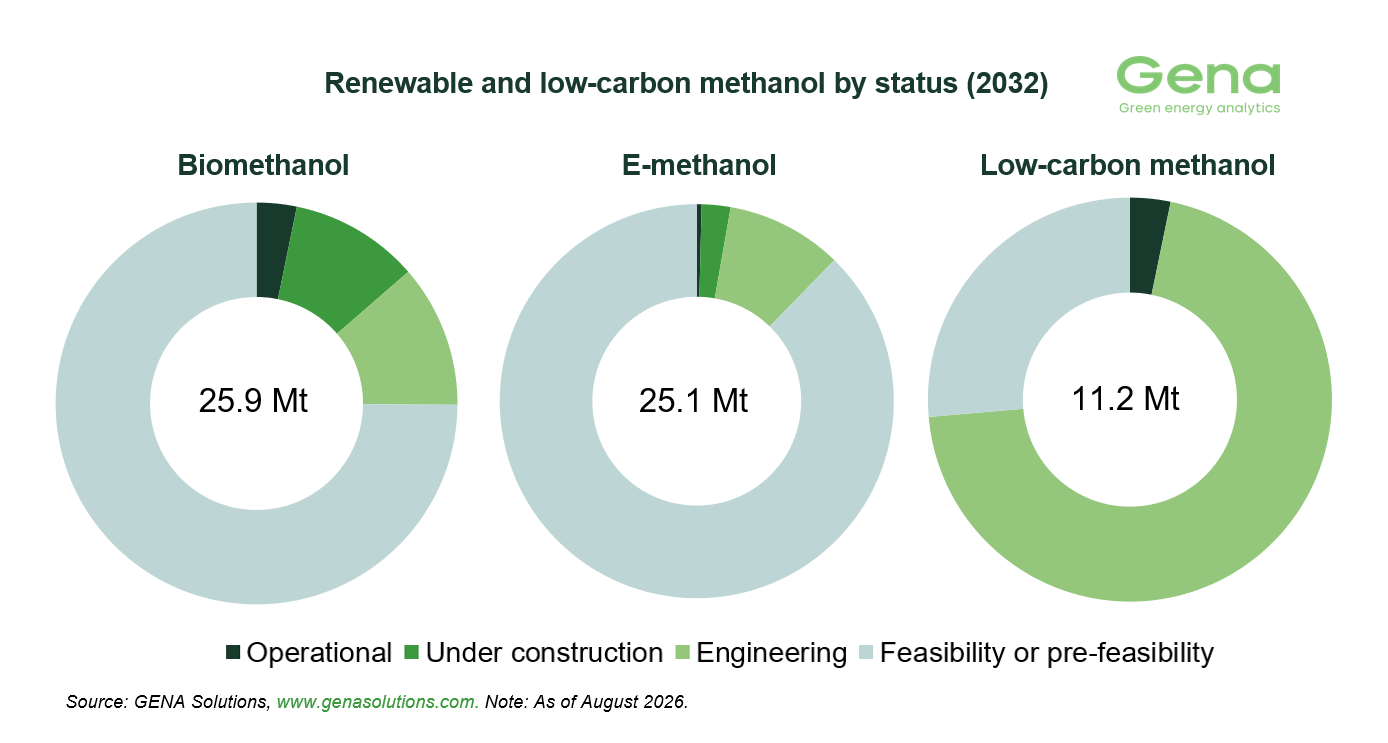
  • As of the end of August 2026, GENA tracks 286 renewable and low carbon methanol projects, representing 62.2 Mt of capacity by 2032. This includes 25.1 Mt of e-methanol, 25.9 Mt of biomethanol, and 11.2 Mt of low carbon methanol capacity.
  • Two new projects were added to Project Navigator last month, while one frozen project was excluded. The project pipeline increased by 0.4 Mt month on month.
  • Four new offtake agreements were registered during August, including two biomethanol and two e-methanol agreements.
  • About 8% of the cumulative renewable methanol project pipeline capacity has reached FID so far, with another 11% at the FEED stage.
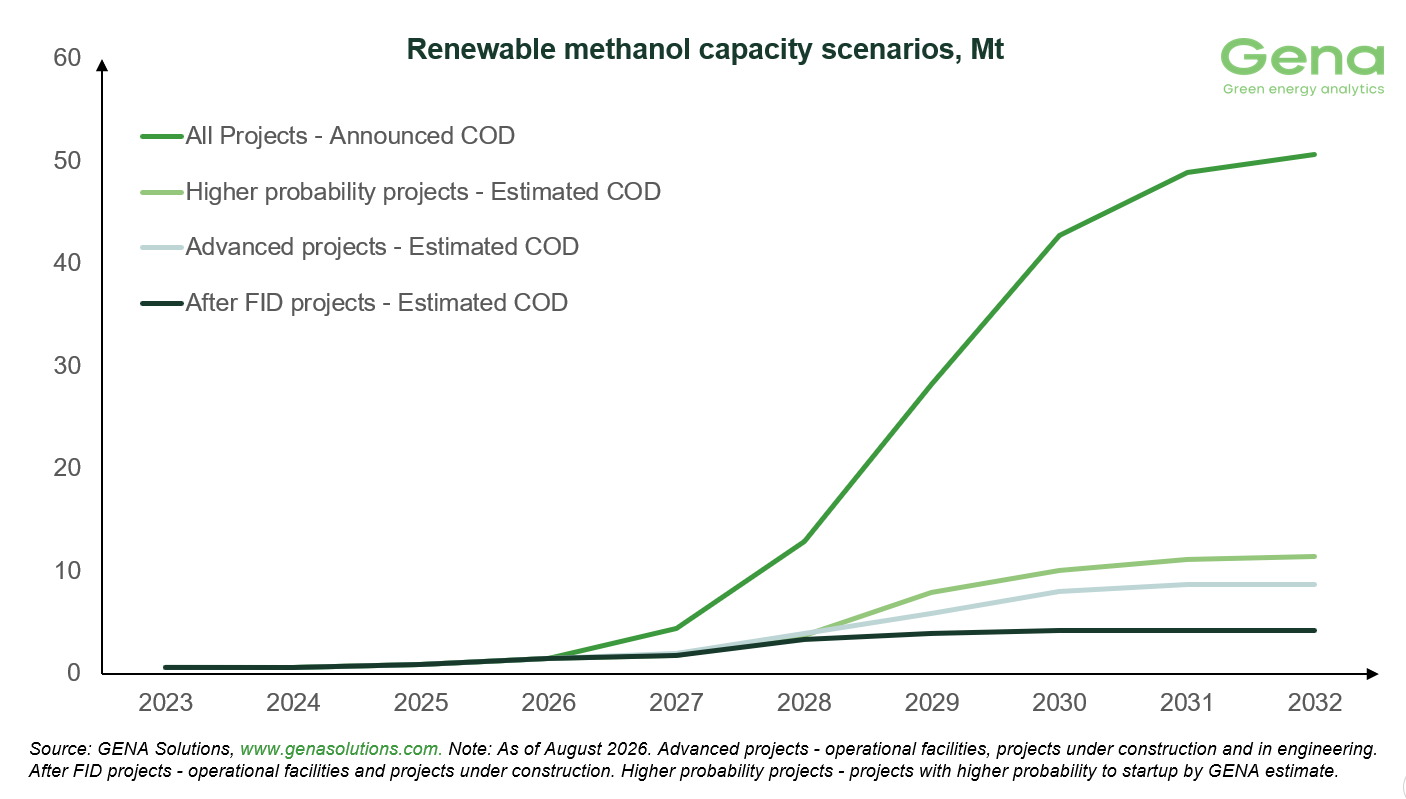
  • Considering the current uncertainty around regulatory developments and demand growth, GENA projects that renewable methanol capacity could reach 6 Mt to 12 Mt by 2031.

Note: The full article can be viewed here.
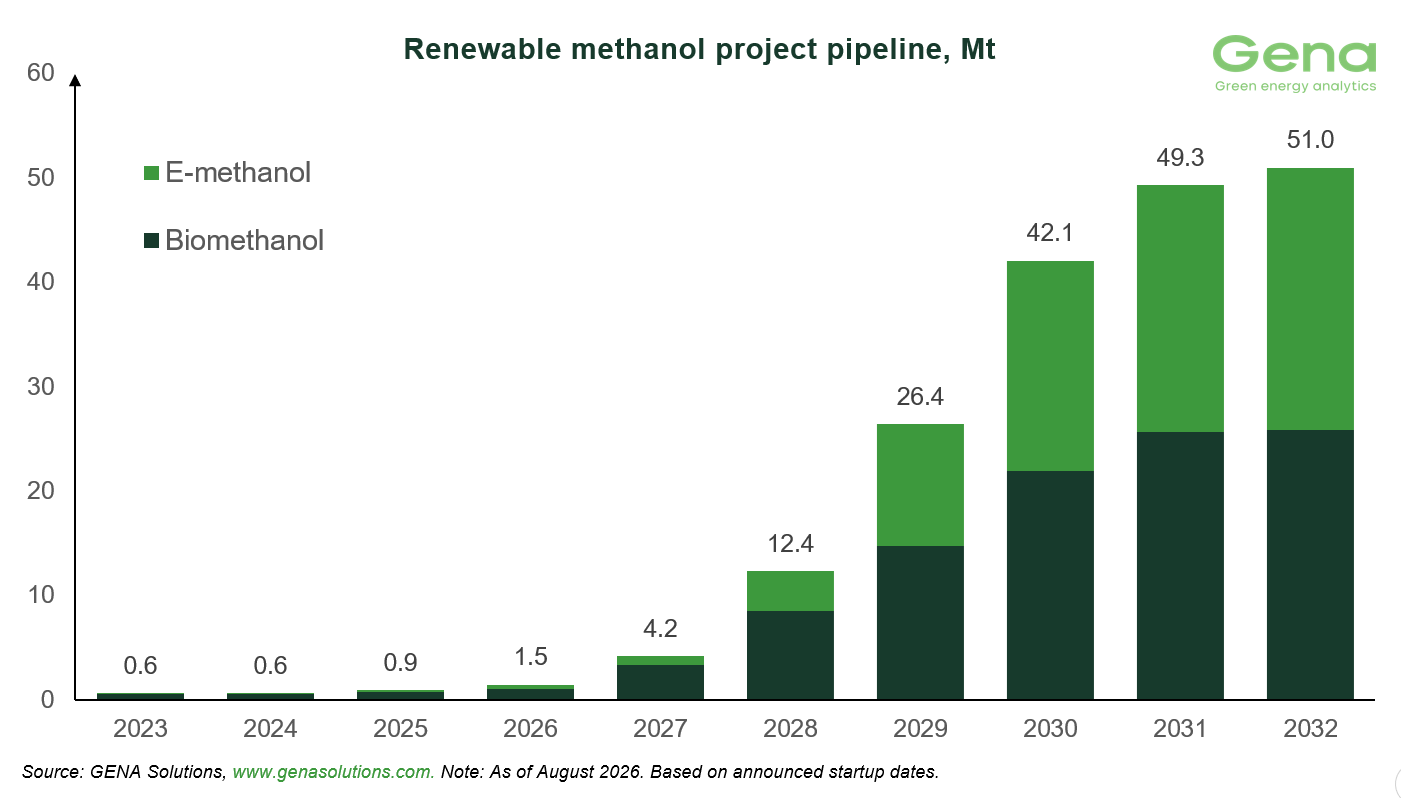
Renewable methanol project pipeline 4 Renewable methanol by feedstock 8 Renewable methanol by region 7 Project pipeline by status Methanol capacity scenarios


Photo credit: GENA Solutions
Published: 4 September, 2026

Continue Reading
Advertisement

OUR INDUSTRY PARTNERS


Trending