Connect with us

LNG Bunkering

CMA CGM receives first ship in series of 10 LNG-fuelled container ships

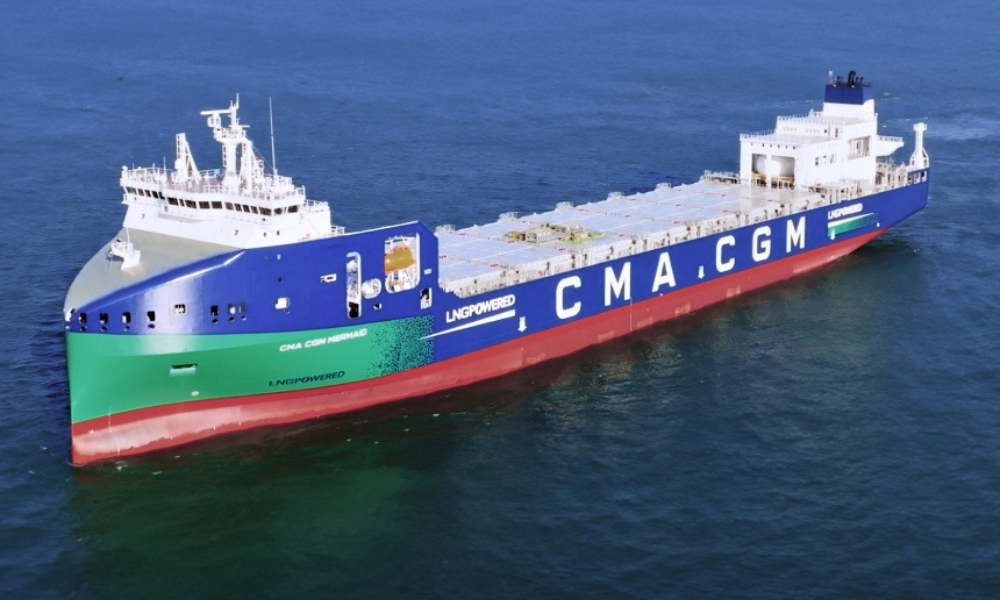
Firm has taken delivery of “CMA CGM MERMAID”, the first ship in a series of 10 new 2,000 TEU container ships powered by LNG, which will be progressively deployed in Mediterranean and Northern Europe.

Admin

Published

on

CMA CGM receives first ship in series of 10 LNG-fuelled container ships

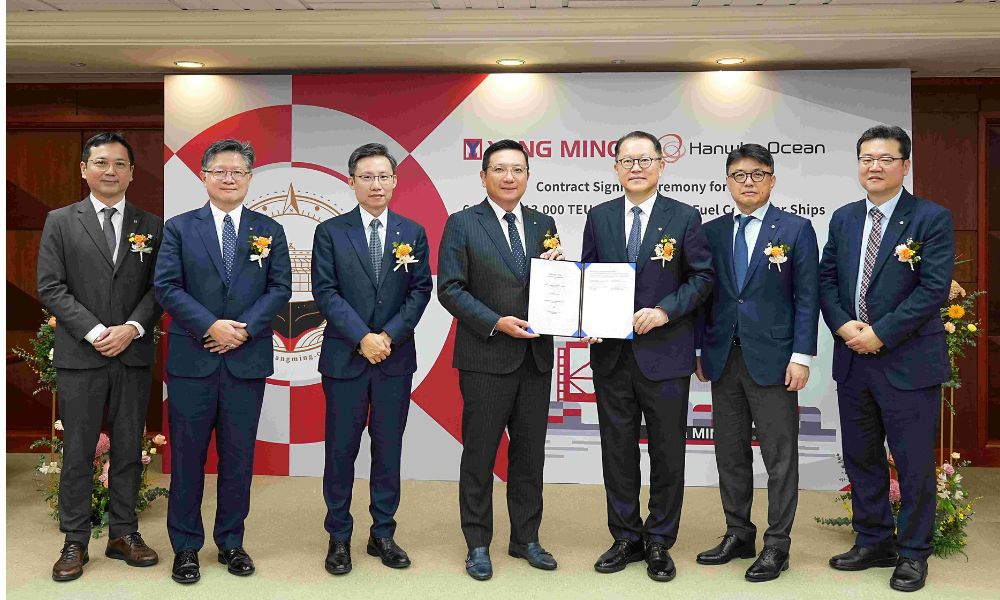
French shipping giant CMA CGM on Thursday (15 February) said it has taken delivery of CMA CGM MERMAID, the first ship in a series of 10 new 2,000 TEU container ships powered by liquefied natural gas (LNG), which will be progressively deployed in the Mediterranean and Northern Europe.

These new container ships, with an original design aimed at improving their energy efficiency and environmental performance, will join the CMA CGM fleet of around 620 vessels, including more than 30 already powered by alternative energies. These ships will emit up to -20% CO2 compared to a similar-sized ship with a conventional maritime fuel design (very low sulphur oil).

When cooled to -161°C, LNG bunker fuel powers a 12-megawatt MAN engine. These dual-fuel ships can also carry biogas (-67% eq. CO2) produced from bio-waste and are convertible to e-methane (-85% eq. CO2) produced from decarbonised hydrogen.

The latest innovation in this new generation of container ships is one of the most powerful fuel cells aboard a ship. It is on track to be mounted on the last of the series which is scheduled for delivery in January 2025. As the fuel cell is powered by hydrogen with an energy capacity of 1MW, this ship will have zero emissions when berthed.

The latest delivery is part of CMA CGM’s fleet renewal program, in which the Group has invested more than USD 15 billion. It brings the Group one step closer to meeting its objective of Net Zero Carbon by 2050. By 2028, nearly 120 ships will be powered by low-carbon energies.

A new generation of container ships, the result of cooperation between industry players. These ships, with a different line and architecture from conventional container ships, were designed in close collaboration with Chantiers de l’Atlantique, a French company located in Saint-Nazaire and globally recognized for its ship design and construction expertise.

The Danish engineering firm Odense Marine Technique (OMT) further converted the concept into an industrial prototype. CMA CGM entrusted the construction of the ships to Hyundai Mipo Dockyard (HMD), located in South Korea. 

Finally, GTT, a French company and expert in technologies for the maritime transport and storage of liquefied natural gas, worked closely on the project for the design and conception of the gas chain and storage tank with total capacity of 1,053 m3.

“This close collaboration between the shipowner, engineering firm, equipment supplier, and world-renowned manufacturer has provided a concrete response to the need for innovation in naval architecture and has given rise to a new model of container ship, with profoundly renewed profile and technical characteristics,” CMA CGM added.

Delivered progressively between February 2024 and January 2025, the ten new vessels will transport goods over short distances, mainly in Northern Europe and the Mediterranean.

Between April and July, six of the series will join the Intra-Northern-Europe line to serve the Baltic and Scandinavian ports from the hubs of Hamburg and Bremerhaven. Four other ships will join the Intra-Mediterranean line between the end of September and the end of November.

The CMA CGM MERMAID will embark on its voyage to Northern Europe from Busan in South Korea.


Photo credit: CMA CGM
Published: 16 February, 2024

Continue Reading

Alternative Fuels

MPA and MSC ink MoU to support adoption of alternative bunker fuels

MPA and MSC will explore new routes and services to strengthen connectivity, support the adoption of alternative marine fuels such as bio-LNG, and advance technologies to improve vessel energy efficiency.

Admin

Published

on

By

MPA and MSC ink MoU to support adoption of alternative bunker fuels

The Maritime and Port Authority of Singapore (MPA) on Wednesday (3 June) said it signed a Memorandum of Understanding (MoU) with MSC Mediterranean Shipping Company to strengthen collaboration in maritime decarbonisation, digitalisation, innovation, and manpower development. 

The MoU was signed on 25 May 2026 by Mr Ang Wee Keong, Chief Executive of MPA, and Mr Soren Toft, Chief Executive Officer of MSC.

The MoU underscores the shared commitment of MPA and MSC to foster a sustainable, digital, and future-ready maritime sector, while enhancing MSC’s operational and business activities in Singapore. This year also marks the 30th anniversary of MSC establishing its Asia Regional Office and local office in Singapore.

Under the MoU, MPA and MSC will explore new routes and services to strengthen connectivity, support the adoption of alternative marine fuels such as bio-LNG, and advance technologies to improve vessel energy efficiency and operational performance.

MPA and MSC will also collaborate on maritime digitalisation initiatives to improve operational efficiency, including streamlining vessel arrivals and port operations. 

On manpower development, MSC will support internship and scholarship opportunities through Singapore Maritime Foundation’s Maritime Outreach Network (MaritimeONE) platform, an industry-led tripartite partnership comprising industry, government and institutes of higher learning that aims to raise awareness of the maritime industry and attract quality talent into the maritime sector.

Mr Ang Wee Keong, Chief Executive of MPA, said: “This partnership reflects the strong collaboration between MPA and MSC in driving sustainability and digitalisation in the maritime sector. By working together on decarbonisation, operational efficiency and talent development, we aim to strengthen Maritime Singapore’s position as a trusted and future-ready global maritime hub.”

Mr Soren Toft, Chief Executive Officer of MSC, said: “Singapore is a strategically important hub for MSC and a key gateway to the broader Asia region. As we mark 30 years in Singapore, this MOU reinforces our long-term commitment to strengthening our presence here. MSC and Singapore are closely aligned on the priorities shaping the future of global shipping, and we look forward to deepening this partnership to drive the continued growth and resilience of the maritime industry.”


Photo credit: Maritime and Port Authority of Singapore
Published: 4 June, 2026

Continue Reading

Alternative Fuels

Shipfinex: The green fleet transition has a financing problem

Capt. Vikas Pandey, Founder & CEO, Shipfinex argues green shipping progress is uneven: major carriers can finance alternative-fuel vessels, while smaller owners face capital constraints.

Admin

Published

on

By

Shipfinex: The green fleet transition has a financing problem

By Capt. Vikas Pandey, Founder & CEO, Shipfinex

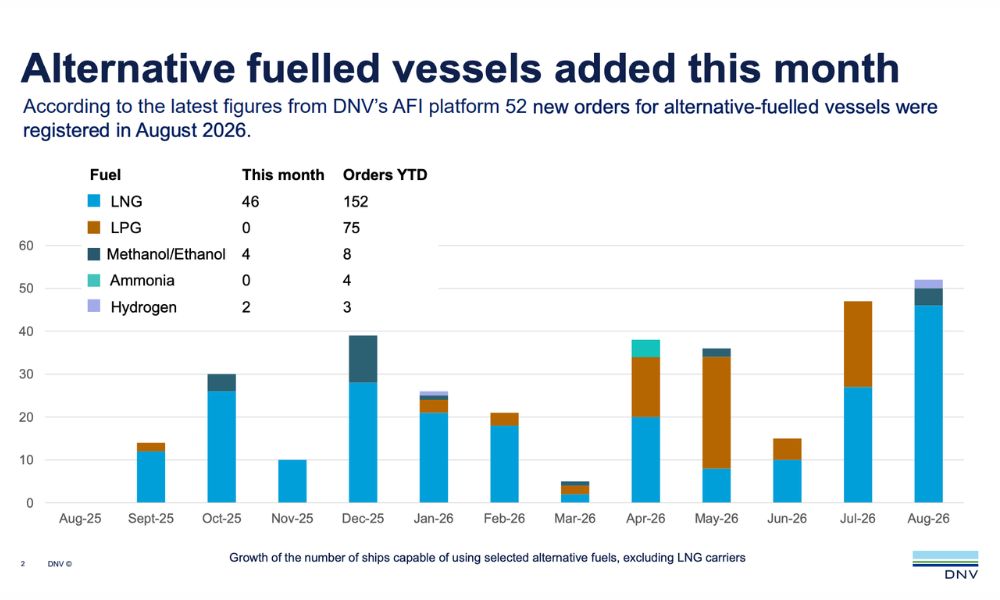
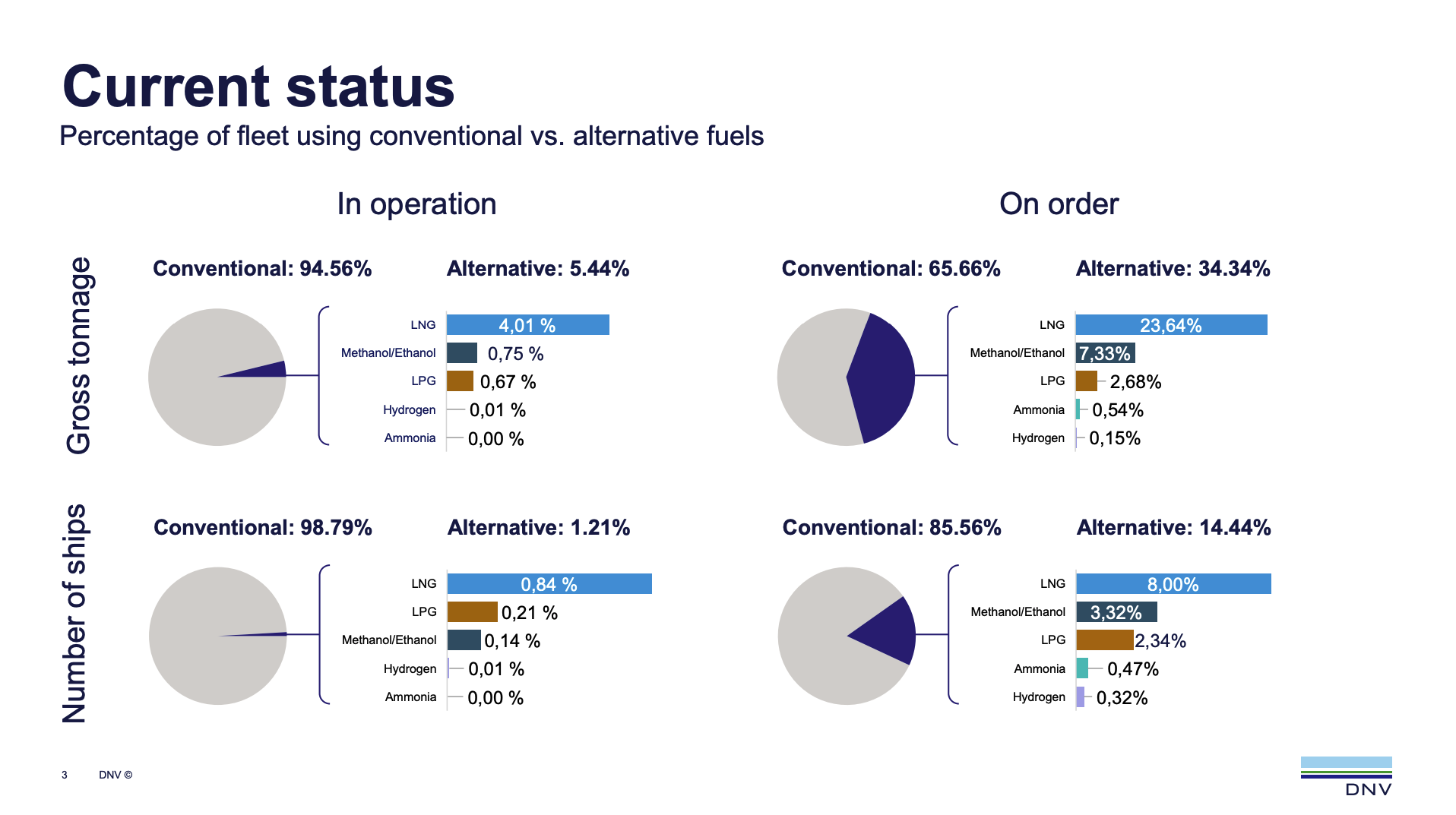
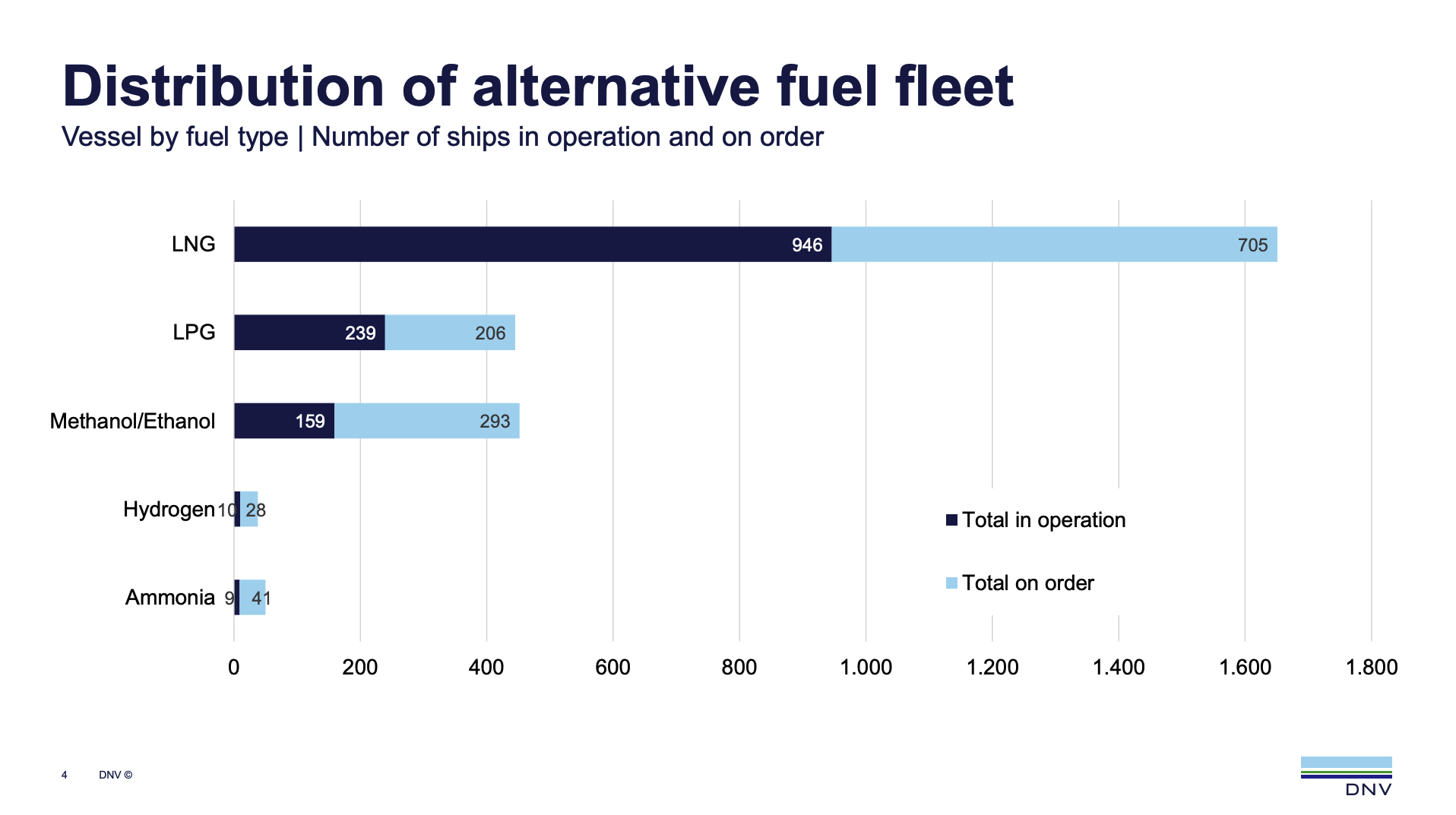
The numbers on alternative-fuel orders look encouraging. Seventy-two percent of newbuild capacity ordered in the first ten months of 2025 was for alternative-fuel vessels, with LNG dual-fuel accounting for 60% of that figure. More than 1,369 LNG dual-fuel vessels are now in operation or on order globally. By most measures, the transition appears to be happening.

Look at who is actually placing those orders. MSC. Hapag-Lloyd. CMA CGM. Carriers with balance sheets large enough to absorb the cost premium of alternative-fuel newbuilds and relationships with Chinese leasing companies that extend leverage ratios unavailable to most of the industry. The Strait of Hormuz disruption this March accelerated that activity further: LNG tanker charter rates spiked above $200,000 per day and carriers with deep pockets moved to lock in fuel flexibility. Meanwhile, for vessels under 6,000 TEU, orders for conventionally fuelled tonnage rose to 28% of capacity ordered in 2025, up from 19% the year before. That is not a story of broad commitment to green fuels. It is a story about who has access to capital.

An alternative-fuel newbuild costs materially more than a conventional equivalent. Methanol-ready designs, ammonia-ready structures, LNG dual-fuel systems, each carries a cost premium above the base vessel price. For an independent shipowner financing through a traditional bank, that gap is increasingly difficult to bridge. Top-40 bank lending to shipping fell from $454.9 billion in 2011 to $284.3 billion by end-2023. The Chinese leasing companies that absorbed part of that contraction are structurally oriented toward Chinese-built vessels under long-term contracts with tier-one counterparties. Independent bulk owners, mid-tier tanker operators, feeder container companies: they are working with a materially shrunken pool of willing lenders at precisely the moment they are being asked to upgrade their fleets.

This bifurcation deserves more attention from the marine fuels industry than it currently receives. Bunkering infrastructure investment follows demand signals. Alternative-fuel bunkering at secondary ports, methanol at regional hubs, LNG outside the major transhipment centres, requires a broader fleet base of alternative-fuel vessels to justify the investment. If green fuel adoption stays concentrated among a handful of majors rather than spreading across the independent owner fleet, the economics of scaling bunkering supply infrastructure outside the primary corridors remain thin.

Capital market structure and marine fuel adoption are connected, and pretending otherwise slows both. Digital instruments representing economic exposure to vessel-owning Special Purpose Vehicles, structured within regulated frameworks like VARA in Dubai, can extend the base of capital available to shipowners below the tier-one threshold. That capital base does not replace bank lending. It reaches operators that bank lending currently does not.

The Hormuz disruption reminded the industry that fuel supply chains carry geopolitical risk. The financing gap raises a quieter but equally structural point: the demand side of the green fuel equation depends on shipowners being able to afford the vessels that create that demand. Alternative-fuel bunkering infrastructure will scale when the fleet ordering those vessels does. Right now, that fleet is smaller than the order book numbers suggest.

About the Author

Vikas Pandey is a Master Mariner with decades at sea across various vessel categories. He is Founder and CEO of Shipfinex FZCO, a maritime asset tokenization platform operating under VARA In-Principle Approval (IPA/26/01/002) in Dubai and registered as a Virtual Asset Service Provider in Poland.

Disclaimer: This article is for informational purposes only and does not constitute financial advice or a solicitation to buy or sell any financial instrument or virtual asset. Maritime Asset Tokens are virtual assets; values may decline materially below purchase price. VARA In-Principle Approval does not constitute a final licence.

Linkedin: https://ae.linkedin.com/in/capt-vikaspandey
Website: https://www.shipfinex.com/


Photo credit: Shipfinex
Published: 4 June, 2026

Continue Reading

Alternative Fuels

Report: MSC Cruises ships operated on over 9,800 mt of bio-LNG and biofuels in 2025

MSC Group’s Cruise Division used 9,839 mt of renewable marine fuels in 2025 across its fleet, according to its 2025 Sustainability Report published last week.

Admin

Published

on

By

Report: MSC Cruises ships operated on over 9,800 mt of bio-LNG and biofuels in 2025

MSC Group’s Cruise Division used 9,839 metric tonnes (mt) of renewable fuels in 2025 across its fleet, according to its 2025 Sustainability Report published last week. 

The company used a combination of bio-LNG and biofuels across its fleet, resulting in emissions reduction of 48,714 mtCO2e compared to equivalent fossil fuels. 

Based on the Energy Transition Plan, the report showed that MSC Cruises and Explora Journeys remain on track to achieve net-zero greenhouse gas (GHG) emissions for marine operations by 2050. In 2025, MSC Group’s Cruise Division achieved the International Maritime Organization’s (IMO) 2030 carbon intensity reduction target five years ahead of schedule. 

The report said the MSC Cruises demonstrated a net-zero voyage using biomethane was possible with the launch of MSC Euribia in 2023. 

Since then it has actively engaged with fuel producers and suppliers to secure affordable high quality renewable fuels and in 2026, it began blending them into its operations at scale. 

The bio-LNG it sourced in 2025 was produced from a variety of different sustainable feedstocks, including food waste, sewage sludge, organic municipal waste and, most notably, manure. 

As most of its fleet remains conventionally powered, biodiesel represents the only drop-in solution available for these vessels today. 

In 2025, MSC Europa ran on a total of 6,856 mt of bio-LNG while MSC Opera used 1,727 mt of hydrotreated vegetable oil (HVO). MSC Seaview sailed using 572 mt of HVO and 684 mt of a B24-VLSFO blend. 


Photo credit: MSC Cruises
Published: 3 June, 2026

Continue Reading

Trending