Connect with us

Retrofit

LR report: Lack of yard capacity and capability could compromise marine retrofit ambitions

LR’s new Engine Retrofit Report highlights a shortage of repair yards with experience in conversions may hinder the take up of alternative bunker fuel technology by existing fleet.

Admin

Published

on

278

Classification society Lloyd’s Register (LR) on Tuesday (10 October) said its report on the state of technology, integration and compliance, alongside the business case for retrofitting vessels, has found that repair yard capability and capacity concerns could thwart the uptake of alternative marine fuel technology onboard existing ships.

The Engine Retrofit Report, has identified that retrofitting a significant number of the 9,000 and 12,900 large merchant vessels estimated to be part of the global fleet in 2030, could rapidly accelerate the maritime energy transition. However, it warns that these ambitions could be jeopardised by the limited number of repair yards currently capable of performing such conversions. 

Key factors influencing the size of the market and the timing of retrofits, include the date by which shipping begins building only zero-emission vessels, as well as the age at which owners or operators decide to retrofit their vessels and the suitable engine types and bore sizes.

The study, which analyses the state of engine retrofit demand, capacity, and uptake, also points to the new skills in naval architecture, electrical engineering, and fuel handling which will be required if the industry is to use retrofitting as an effective tool to accelerate decarbonisation. 

One of the key challenges with retrofits identified in the report is system integration, with significant issues such as accommodation for larger fuel tanks, space for fuel preparation equipment and ensuring safety measures are in place, all providing obstacles to rapidly retrofitting the existing fossil fuel fleet. 

Techno-economic modelling data revealed in the study shows that the use of renewable methanol or ammonia would significantly increase fuel costs, in some cases more than doubling for vessels in all segments, however, a low-cost scenario, where alternative fuels decrease in price and carbon pricing rises, could tip the balance in favour of alternative fuels. 

The study also highlights the importance of human factor considerations, underlining how the critical aspect of impact on crew members can often be overlooked during retrofitting. Assessing ergonomics, roles and responsibilities, competency and training, procedures processes, and occupational health will play a crucial role in ensuring retrofitting is safe and effective for ship operators. 

The report includes updates on the latest technology from Original Equipment Manufacturers (OEMs) including Wärtsilä, MAN Energy Solutions and WinGD.

Claudene Sharpe-Patel, Lloyd’s Register Technology Director, said: “Decarbonising the existing fleet is crucial for reducing the maritime industry’s greenhouse gas emissions. Without significant progress in this area, there could be as many as 20,000 commercial vessels relying on fossil fuels by 2050. We must, therefore, focus industry efforts on addressing the issues that LR’s Engine Retrofit Report raises such as yard capacity, conversion capability and system integration, helping stakeholders from the maritime value chain navigate the obstacles to installing future fuels technology on the existing global fleet.”

Photo credit: Lloyd’s Register
Published: 11 October, 2023

Continue Reading

Alternative Fuels

APM 2026: Emissions transparency and verification key to building trust in green marine fuels, says GCMD

Without transparency, emissions reductions risk being overstated or double-counted. GCMD is addressing this through a comprehensive assurance framework for biofuels informed by real-world supply chain trials.

Admin

Published

on

By

Lau Wei Jie_MT

Wei Jie Lau, Director, Partnerships, Global Centre for Maritime Decarbonisation (GCMD), recently shared with Manifold Times his thoughts on GCMD’s perspective on green fuel assurance frameworks, near‑term opportunities in biofuels and energy efficiency technologies, the emerging ammonia ecosystem, and what shipowners and the bunkering sector can do today to meet IMO 2030 and 2050 goals with confidence:

MT: As green fuels scale up, how important is transparency in emissions verification across the value chain, and what frameworks are needed to ensure that “green fuel” truly delivers climate impact?

Transparency in emissions verification is fundamental to the integrity of green marine fuel supply chains.

Without transparency, there is a material risk of double-counting emissions reductions, or overstating GHG emissions savings.

This risk is further amplified as green fuels span the full value chain—from fuel production, transport, storage, bunkering, and final consumption—where reporting standards, certification schemes, and lifecycle boundaries can differ, potentially creating inconsistencies in how emissions are accounted for overall.

Recognising these risks within the green fuel marine supply chain, GCMD is developing a comprehensive assurance framework to safeguard green fuel use. This framework is grounded in empirical data from our end-to-end biofuel supply chain trials conducted under commercial operating conditions, and it focuses on three key aspects:

  • Quantity – accurately measuring the amount of green fuel blended and delivered
  • Quality – ensuring the use of green fuels is reliable, stable, and compatible with existing operations
  • GHG abatement – verifying that green fuels deliver genuine emissions reductions through robust traceability and authentication, followed by accurate GHG emissions accounting.

These pillars will help enable transparency in emissions verification and ensure that the use of “green fuels” truly deliver climate impact, strengthening user confidence and enabling their scalable adoption.

MT: Where does GCMD see the biggest opportunity for cross-industry collaboration over the next 1–2 years to accelerate maritime decarbonisation?

Creating a new supply chain for zero-carbon fuels requires an ecosystem-wide approach, as the maritime industry cannot decarbonise in isolation. This transition depends on close coordination with adjacent sectors, including fuel and energy producers, traders, logistic players such as port operators, and storage terminal owners.

In the next one to two years, GCMD sees the greatest opportunities for cross-industry collaboration in three areas: ammonia, biofuels, and energy efficiency technologies.

Ammonia

As ammonia engines enter the market, the immediate priority is to help build the enabling ecosystem to support safe adoption by frontrunners. This includes understanding bunkering requirements and sharing this know-how globally to develop a network of ammonia-ready ports.

Delivering this will require collaboration across the value chain. For example, GCMD is working with shipowners, charterers, fuel suppliers, operations and service providers, regulators, standards bodies, and ports to close technical and operational gaps in safety procedures, operational protocols, and emergency response measures.

With the first ammonia-fuelled bulk carrier expected to enter service by the end of this year, bunkering capabilities will be essential. GCMD’s step-by-step approach to closing critical gaps will help build ecosystem confidence and accelerates the adoption of ammonia as a marine fuel.

Biofuels

Biofuels is a critical near-term pathway because they can be deployed using existing vessels and infrastructure.

Biofuels derived from alternative feedstocks, such as cashew nut shell liquid and tallow, can help augment the limited supply of UCO. However, these newer feedstocks are not yet well understood in marine applications and require different testing regimes to verify their compatibility with marine engines. Against this backdrop, GCMD is collaborating closely with shipowners, fuel testing laboratories, and fuel suppliers to assess the properties and attributes of these new fuels for their compatibility as a drop-in alternative with existing fossil fuels and UCO-derived biofuels and their use under real-world conditions.

Energy efficiency technologies (EETs)

EETs are another critical near-term lever. They can deliver immediate emissions reductions by lowering fuel consumption for vessels today and for ships transitioning to alternative fuels, which are expected to be more costly and have lower energy density.

However, adoption has been constrained by uncertainty around their real-world performance, as fuel savings vary significantly with operating conditions. In addition, performance is difficult to measure due to the lack of standardised methodologies.

In parallel, commercial and financial considerations further affect uptake: split incentives between shipowners and charterers weaken the business case, while the upfront capital required for retrofits is often too small for traditional ship mortgages yet too large for unsecured financing.

Addressing these challenges requires cross-industry collaboration.

On the technical front, GCMD is working with shipowners and technical partners—including classification societies, equipment manufacturers, and maritime analytics providers—to support performance assessment and provide third-party verification of fuel savings.

To address commercial barriers, GCMD is working with the finance sector to launch the Fund for Energy Efficiency Technologies (FEET), which combines high-resolution operational data from EET pilots with a blended investment fund structure. By pooling projects into a portfolio, risks can be diversified and fuel savings statistically verified.

MT: How is GCMD forging partnerships to accelerate maritime decarbonisation globally (including examples of successful joint projects or innovations enabled by GCMD partnerships)?

As an international independent action tank, GCMD brings together stakeholders across the maritime value chain to trial and de-risk decarbonisation solutions in real-world operational and commercial settings, tackling barriers that no single actor can solve alone.

A good example is Project CAPTURED. GCMD brought together partners across the value chain—including shipowners, stakeholders involved in Ship-to-Ship (STS) offloading, receiving and storage, regulators and an industrial end user—to demonstrate a complete carbon value chain for onboard captured CO2. This project yielded real-world insights into the climate benefits of OCCS, from capture to utilisation, and has helped inform IMO OCCS guidelines and LCA methodologies.

Another example is the Fund for Energy Efficiency Technologies (FEET), which we launched last year. The launch of this $35 million fund comprising blended finance from institutional lenders brought together maritime technical, industrial, and financial partners to address barriers that has impeded the large-scale adoption of energy efficiency technologies (EETs).  For the first time, this approach aligns the interests of shipowners, manufacturers, investors and lenders, enabling them to share performance risks and rewards.

As the fund’s decarbonisation advisor and a catalytic equity provider, GCMD helps quantify fuel savings from vessel retrofits with statistical confidence. With payments linked directly to these savings, GCMD and AIM Horizon Investments, as fund manager, were able to bring in financiers such as DBJ, DBS, and ING, as well as legal partners, to establish a viable financing platform.

MT: What is the best route a shipowner (one with a new fleet, other with an aging fleet) can take to save cost while ensuring his floating assets meet IMO2030/2050 goals?

For newer fleets and newbuilds, the priority is to build in optionality. This includes investing in vessels with dual-fuel capability, enabling owners to adapt as fuel availability, regulations, and charter requirements evolve. Operationally, these vessels can also incorporate lower-carbon fuels such as biofuels to reduce emissions in the near term while maintaining flexibility for future transitions.

For ageing fleets, the approach is more pragmatic. According to the GCMD-BCG Global Maritime Decarbonisation Survey, vessels older than 10 years are unlikely to justify major engine retrofits for alternative fuels. Instead, the focus should be on “drop-in” solutions and incremental upgrades. Biofuels offer an immediate pathway to reduce emissions without significant capital investment, while EET retrofits—such as hull, propeller, and engine efficiency improvements—can be implemented during scheduled five-year dry-dock cycles to deliver measurable fuel savings.

At the same time, onboard carbon capture and storage (OCCS) is gaining traction. As regulatory clarity on OCCS improves, retrofits may become an increasingly viable option, particularly for ships already installed with scrubber systems

Ultimately, there is no single “best route” for the entire industry. The most effective pathway will depend on vessel type and age, trading patterns, and access to alternative fuels and infrastructure at ports of call. This complexity underscores the importance of industry-wide collaboration—bringing together shipowners, technology providers, fuel suppliers, and financiers—which is why GCMD is working across multiple fronts to help de-risk and scale practical decarbonisation solutions.

MT: What steps can the bunkering sector take to ensure plans to integrate new green marine fuels in their product portfolio are commercially successful? 

A primary hurdle for the bunkering sector is the “chicken-and-egg” dilemma: fuel producers are hesitant to scale alternative fuel production without long-term offtake agreements, while shipowners are reluctant to commit to new fuels without assured supply. This lack of clear demand visibility makes it difficult for the bunkering sector to justify the capital investments required for supply infrastructure, such as storage tanks and specialised bunker vessels.

Enhancing greater collaboration between adjacent industries and the shipping sector can provide stronger demand signals for the bunkering sector. Singapore’s ammonia power generation and bunkering project on Jurong Island is a good example. By linking zero-carbon ammonia power generation with marine bunkering, it creates a larger and more stable demand base that supports investment in import, storage, and distribution infrastructure. This, in turn makes green marine fuel offerings more commercially viable.


Photo credit: Global Centre for Maritime Decarbonisation
Published: 7 April 2026

Continue Reading

Retrofit

LR: Regulatory direction on clean marine fuels to shape engine retrofit market

LR says the trajectory of the retrofit market will depend heavily on regulatory developments, particularly any progress on a global framework to incentivise zero- and near-zero emission fuels.

Admin

Published

on

By

LR: Regulatory direction on clean marine fuels to shape engine retrofit market

Classification society Lloyd’s Register (LR), in its latest engine retrofit report published on Thursday (26 March), said the longer conventionally fuelled vessels remain in service, the greater the pressure will be to retrofit them later to meet emissions targets, potentially compressing demand into a narrower and more costly timeframe.

In its latest Engine Retrofit Report: Applying alternative fuels to existing ships (2026 update), LR’s analysis shows that 2025 delivered limited growth in announced retrofit projects, but significant progress in capability. 

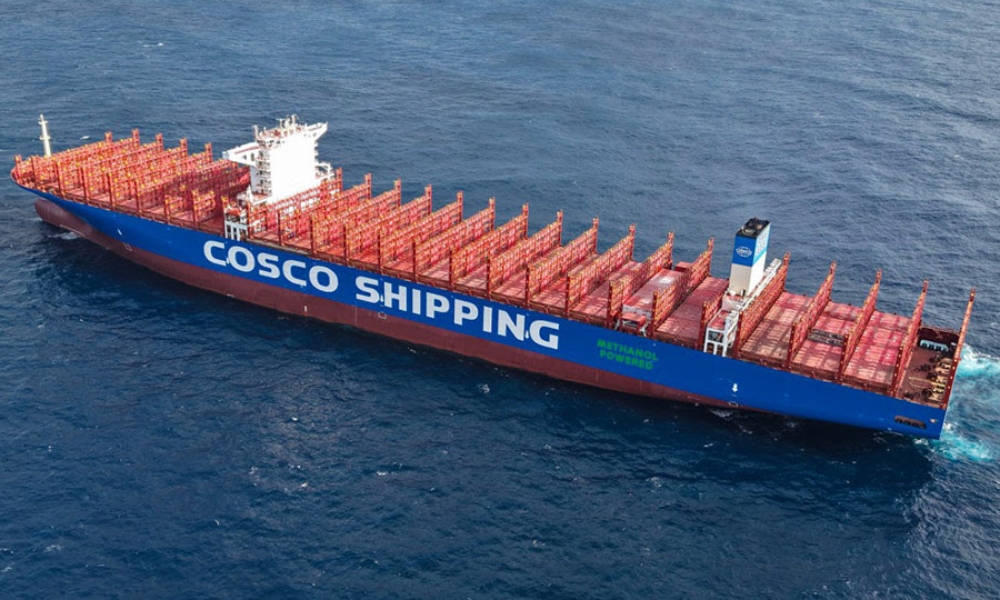
A small number of high-profile conversions, including a successful methanol retrofit of a large two-stroke engine on the container vessel COSCO Shipping Libra, demonstrate that methanol conversions are technically viable at the deep-sea end of the market and moving towards repeatable solutions.

Alongside methanol, the report highlights expanded retrofit offerings from major engine technology providers, including Everllence, Wärtsilä and WinGD, for LNG and ethanol during the year. LNG continues to attract interest as a lower-cost, transitional option, while ethanol is gaining traction as a credible candidate for marine fuel development, supported by both operator pilots and OEM announcements.

Maersk’s operator trials showed that Brazilian ethanol can be blended with methanol and marine diesel without affecting engine performance, allowing for higher ethanol mixes. OEM announcements throughout the year further strengthened the case for ethanol. Everllence reported success on all load points with both two-stroke and four-stroke engines, and WinGD announced an ethanol-fuelled two-stroke engine roadmap with retrofit applicability.

The similarity between methanol and ethanol means that future methanol engines should be capable of using ethanol, while existing methanol engines could be converted relatively easily.

The report adds that LNG retrofits remain under discussion with shipowners, supported by existing fuel infrastructure and the potential transition to bioLNG or synthetic methane. Upgrades targeting methane slip on dual fuel engines are also gaining attention.

Despite limited headline conversion announcements, the report showed continued uptake of ‘bridge’ retrofits, including engine upgrades, propulsion optimisation and control system improvements. These projects reduce emissions in the near term and prepare vessels for future fuel conversion, but also compete for yard capacity and engineering resources.

Looking ahead, LR said the trajectory of the retrofit market will depend heavily on regulatory developments, particularly any progress on a global framework to incentivise zero- and near-zero emission fuels.

Mark Penfold, Global Head of Technology – Engineering, Lloyd’s Register, said: “A clear and consistent regulatory signal is the single biggest factor that will unlock investment at scale. Without that, the industry will continue to prepare—but not fully commit.

“Regardless of the timing of regulation, a substantial retrofit market is inevitable. As the existing fleet remains central to global trade, the ability to convert vessels efficiently will be critical to meeting decarbonisation targets.”

The report forms part of LR’s Retrofit Research programme, which serves as a comprehensive hub for ship retrofitting insights, providing annual reports, publications and tools that monitor retrofitting demand, capabilities, and adoption trends. 

As the industry progresses towards a more sustainable future, retrofitting may not only be a way to meet environmental objectives but also deliver economic advantages through fuel savings and regulatory compliance. 

Note: The Engine Retrofit Report: Applying alternative fuels to existing ships (2026 update) report is available here


Photo credit: Lloyd’s Register
Published: 26 March, 2026

Continue Reading

Wind-assisted

Singapore-based EPS completes second bound4blue eSAIL® installation in fleet

Project marked Eastern Pacific Shipping’ first newbuild installation following a successful retrofit project on “Pacific Sentinel”, which a study confirmed average 8% net power reduction, 5.5% net fuel savings.

Admin

Published

on

By

Singapore-based EPS completes second bound4blue eSAIL® installation in fleet

bound4blue on Thursday (19 March) said the second installation of eSAILs® in Eastern Pacific Shipping’s (EPS) fleet has been completed with the fitting of three 22-metre-high units on MR tanker Pacific Sunstone at New Times Shipbuilding in Jiangsu Province, China. 

The project marked EPS’ first newbuild installation following a successful retrofit project on Pacific Sentinel. 

eSAILs® have surged in popularity within the tanker segment due to their simplicity, easing adoption for vessels with complex, ATEX-regulated environments. 

With smaller footprints than other solutions – eSAILs® generate lift up to seven times greater than conventional rigid sails of the same size – there’s no need for tilting systems and no impact on a vessel’s operational airdraft. The units are also non-ATEX, helping optimise costs.

José Miguel Bermúdez, CEO and Co-founder of bound4blue, describes it as “a winning combination” for a crucial segment.

“Tankers are integral to world trade, but, due to their complexity, can pose headaches in terms of decarbonisation. At bound4blue we’re committed to helping owners voyage towards sustainability, with mechanically simple, easy to install solutions that deliver both double digit fuel, and emissions, savings and easier regulatory compliance,” said Bermúdez. 

“A newbuild such as this is an exciting project, as it allows the vessel to set sail with the benefits of wind power woven into the ship’s DNA from day one. We’d like to thank EPS, and the yard, for their excellent cooperation in a fast, efficient and seamless process.”

Pacific Sunstone’s installation process was tailored to enable straightforward integration without major structural modification, or delays. 

The project also builds on the proven results from the Pacific Sentinel, where a six-month study by EPS and the Global Centre for Maritime Decarbonisation confirmed average 8% net power reduction, 5.5% net fuel savings, and peaks above 20% in favourable wind conditions. Notably, these results were achieved despite predominantly unfavourable winds, underscoring the robustness of the eSAIL® system and its potential for even greater savings on more favourable routes.

The installation also highlighted how wind-assisted propulsion systems can be integrated effectively across both retrofit and newbuild programmes.

All eSAIL® foundations and electrical connections were incorporated into the newbuilding programme, before the sails – manufactured in Spain – were shipped to China for a streamlined ‘plug and play’ connection process.

Now operational, the three units will provide reliable power to reduce main engine loads, saving OPEX (typical payback on eSAIL® installations is less than five years) and empowering regulatory compliance, with benefits across a broad range of frameworks such as CII, EU ETS, EEDI/EEXI and FuelEU Maritime, via the Wind Reward Factor.

Mirtcho Spassov, Decarbonisation Manager of EPS, said: “At EPS, we continue to explore and deploy new technologies that support the decarbonisation of our fleet. Our experience with Pacific Sentinel demonstrated the operational performance and practicality of the eSAIL® system, making the integration of the technology from the outset on Pacific Sunstone a natural step. 

“Working closely with bound4blue and New Times Shipbuilding, the system was incorporated seamlessly into this newbuild’s schedule, enabling efficient delivery while strengthening the vessel’s operational efficiency.”


Photo credit: Eastern Pacific Shipping
Published: 23 March, 2026

Continue Reading

Trending