
Alternative Fuels
Shipping eyes biofuels on route to decarbonisation, shares Infineum expert
Supply constraints aside, Infineum envisages increased use of bio-blends as a viable short-term option until new suite of alternative bunker fuels come online.

The International Maritime Organization (IMO) has adopted mandatory measures to reduce greenhouse gas emissions from international shipping under its pollution prevention treaty (MARPOL).
Rob Ashton, Infineum Marine Fuel Additive Market Manager, explores the actions IMO has taken, the challenges these create and assesses the role that biofuels could play as a first step towards reducing carbon emissions from shipping:
The marine industry is ramping up activities to decarbonise in a concerted effort to slow down the harmful effects of greenhouse gas (GHG) emissions with respect to climate change. The IMO has set out a very clear GHG reduction strategy, which aims to reduce carbon dioxide (CO2) emissions per transport work, as an average across international shipping, compared to 2008:
- By at least 40% by 2030
- Pursuing efforts towards 70% by 2050
A raft of measures have been introduced to ensure that the hardware from newbuilds through to the existing fleet are aligned with a continuous improvement strategy to keep on track. Energy-efficiency requirements were adopted as amendments to MARPOL Annex VI and entered into force in 2013. The regulations made the Energy Efficiency Design Index (EEDI) mandatory for new ships, and the Ship Energy Efficiency Management Plan (SEEMP) a requirement for all ships.
EEDI and SEEMP and new initiatives
EEDI is an energy efficiency calculation for each individual newbuild ship, expressed in grams of CO2 per ship’s capacity-mile. A lower EEDI points towards a more energy efficient ship design. A continuous improvement energy efficiency drive is incorporated into the programme to encourage the adoption of the latest energy saving technologies.
SEEMP, introduced for all ships, is a measure aimed at improving operational energy efficiency through enhanced vessel operation, be that by route planning or hardware upgrades/maintenance.
The latest phase comes into effect this year where carbon intensity reductions of up to 50% are sought.
Significant new initiatives come into force this year with the Efficiency Existing Ship Index (EEXI) for existing vessels and the Carbon Intensity Indicator (CII). Both come into force on 1 November 2022 and will be effective from 1 January 2023. The schematic below shows how it all fits together, with EEDI and SEEMP governing operation for new builds and EEXI and CII looking into existing ships.

EEXI is similar in scope to EEDI but targets all existing vessels over 400 gross tonnage and references the CO2 emissions per cargo ton and mile in relation to the engine output, load and speed.
CII for ships of 5,000 gross tonnage and above, is a calculation based on a specific vessel type’s fuel consumption, coupled with the vessel’s capacity and the distance it has travelled (capacity for cargo ships represented by deadweight tonnage and passenger vessels by gross tonnage). The CII can be positively influenced in several ways:
- Reducing drag – e.g. hull coatings and design, supported with a regular cleaning regime
- Optimising power generation with supplementary battery hybridisation and waste heat recovery
- Slow steaming and route selection
The first annual reporting on carbon intensity will be completed in 2023 and the first rating given in 2024 – with a target of each ship reaching a ‘C’ rating or better.
If rated ‘D’ for three consecutive years, or rated ‘E’, approved corrective actions must be developed and implemented to achieve a ‘C’ or better rating.
Fuel choice can reduce CO2 emissions
The largest impact can be made through the fuel contribution as this will not only affect fuel consumption but also influence the CO2 factor, which features in the equation. Clearly one of the most effective ways to improve CII and remove GHG from the industry is to move to carbon free fuels. However, the challenges associated with this approach are huge.
The much talked about future fuels (bio-LNG, methanol, ammonia and hydrogen) are not drop in alternatives and all have significant challenges.
Future fuel challenges include:
- Robust biotechnology to make the fuels
- Scale up to manufacture the fuels in adequate quantity
- Infrastructure to supply the fuels at port
- On-land and onboard storage
- Effective combustion of the fuel to deliver comparable performance to existing fuels
One fuel type that could be a considered a drop in fuel to the existing marine fuel pool (either as an extender or a standalone fuel) is biofuel. Fatty acid methyl ester (FAME) or materials derived from renewable vegetable oils (e.g. hydrotreated vegetable oil or HVO) have established bio-credentials. FAME has been widely used in land transportation for many years and typically features as a fuel extender at around 7% volume. Used cooking oil (UCO) can lead to a significant reduction of up to about 90% CO2 emissions when used as a B100 (this reduces to around 50% when converted to FAME). But this biofuel, along with other more traditional FAME feedstocks, derived from rapeseed and soy, are already supply constrained.

Several significant trial studies have demonstrated that biodiesel can contribute towards a reduction in total hydrocarbons, particulates and carbon monoxide. However, nitrogen oxides (NOx) are generally worse and consequently a balanced approach needs to be adopted. A consideration here is that the CII equation currently does not factor in any potential biodiesel benefits or improvements made to the existing fuel pool with additives. As a result a carbon trading scheme is required to facilitate the use of these fuel types until a revision to the CII is made. Various submissions have been made to the IMO to discuss the future use of biofuel blends as well as to consider increased provision in the next ISO 8217 standard.
Supply constraints aside, Infineum envisages an increased use of bio-blends as a viable short-term option to contribute towards GHG reduction for the marine industry until the new suite of alternative fuels come online. Consequently, we have carried out an initial evaluation to assess where Infineum fuel additives can provide benefits for the marine fleet using bio blends of very-low and ultra-low sulphur fuel oil (VLSFO/ULSFO).
Stability concerns
One of the main concerns associated with VLSFO has been in relation to fuel stability. In the early days, FAME also had its fair share of problems as a blending component with regard to oxidative stability. However, judicious use of antioxidant additives and utilising high quality feedstock, such as rapeseed oil, has largely overcome this issue. Clearly, a key driver for marine is cost and product availability, consequently these high-quality blend components may not be readily available and in addition to this are not as attractive from a renewable standpoint. It is likely that material sourced from waste oils will be used, which are likely to be more variable in quality. Infineum has looked at blending a variety of bio-components into VLSFO as a B30 extender i.e. 30% biofuel blended with 70% of a severe VLSFO. The impact of the various biofuels on stability performance relative to the VLSFO has been assessed along with the additive impact on potential total sediment (TSP).

Testing was conducted over an extended ageing period for one week at 50°C, with the following results.
- The severe VLSFO worsened over time, however the additive was able to arrest the deterioration.
- Incorporation of FAME improved the TSP to a point where it was nearly on specification. Addition of additive boosted the performance to being well within specification and this was maintained over time.
- Addition of isomerised HVO made little difference to the VLSFO base case, however the additive impact was greatly enhanced and this was maintained over time.
- Addition of standard HVO (non-isomerised) represented a more sever case and was similar to the base VLSFO. Once again additive was able to stop further deterioration over time.
Cold flow
A similar study was conducted to assess the effect on cold flow properties when blending various bio-components in VLSFO – the suite of bio components was extended to encompass unconverted bio-oils where these B30 blends have high pour points.

As anticipated the FAME and HVO samples improve the base cold flow performance, especially the isomerised HVO sample. The unconverted oils alone are very viscous despite having relatively low pour points and when blended into the B30 blends, they have pour points of ~25°C, which is higher than the individual component pour points and quite close to the ISO 8217 pour point specification (30°C max). Given the B30 fuels made with FAME and HVO had improved cold flow performance they were not part of the additive evaluation project.

Infineum pour point depressants perform well in the VLSFO and the B30 blends using the unconverted oils. The additives also demonstrate some performance in the neat bio-components which could free up the potential to target biofuel feedstocks, which would otherwise be inaccessible to ship operators and fuel blenders due to apparent poor cold flow characteristics.
Combustion concerns and engine cleanliness
As mentioned previously, several of the major shipping companies have already conducted ship trials with Bx blends and have determined that biodiesel can contribute towards a reduction in total hydrocarbons, particulates and carbon monoxide. However, NOx emissions are generally worse. In our view, lowering the peak combustion temperature is essential to help control NOx emissions and the use of Infineum combustion improver technology can be used as an effective way to reduce the NOx contribution from biofuels that are incorporated into the marine pool.
Engine cleanliness assessment is still in progress. Initial results on a B30 FAME fuel using rig simulators have highlighted that FAME appears to be a bad actor, laying down dense, carbonaceous deposits on the metal surfaces. However, these deposits can be effectively managed with Infineum asphaltene management chemistry.
Challenges ahead
The marine industry is committed to reducing CO2 emissions from the international fleet and action is needed now. As work continues on the development and commercialisation of carbon-free fuels, alternative solutions are needed on the route towards decarbonisation. Biodiesel is one option to consider as a drop in fuel.
While the challenges associated with incorporating biodiesel into the marine fuel pool are sizeable, the industry is committed to change.
Infineum is assessing the ways fuel additive solutions can contribute to optimising current and future fuels to reach IMO targets.
Sustainability and CO2 emissions reduction will continue to drive innovation throughout the marine and associated industries. And, as engine designs and fuels evolve, they will present new challenges. Infineum is working to ensure its fuel additive technologies can be used to meet the demands of this changing market
Photo credit and source: Infineum International Limited
Published: 31 March, 2022
Alternative Fuels
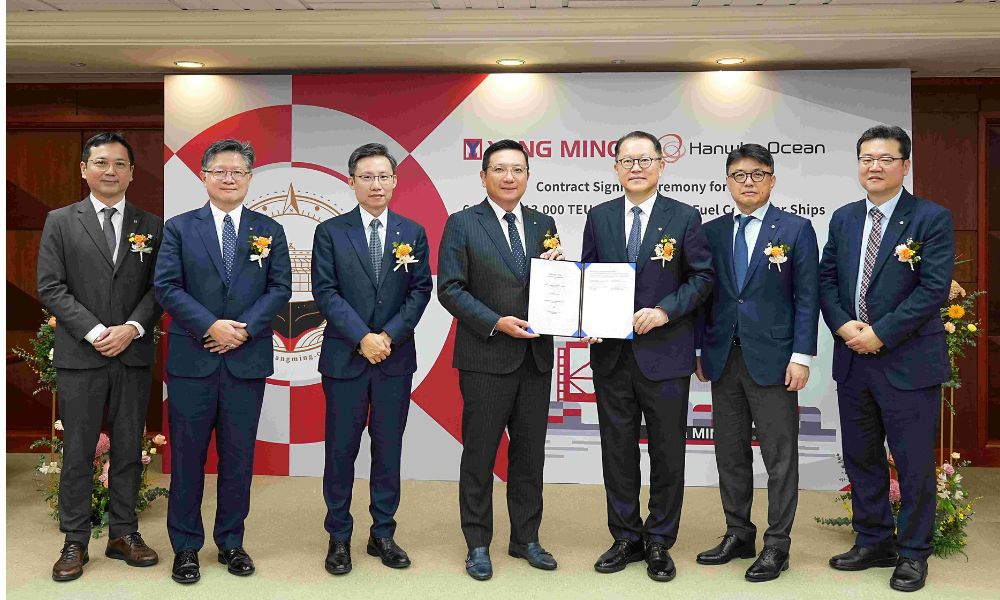
Yang Ming orders six LNG dual-fuel, ammonia-ready containerships from Hanwha Ocean
Each of the six new vessels will have a capacity of up to 13,650 TEU and feature LNG dual-fuel propulsion and Ammonia Fuel Ready specifications.
Alternative Fuels
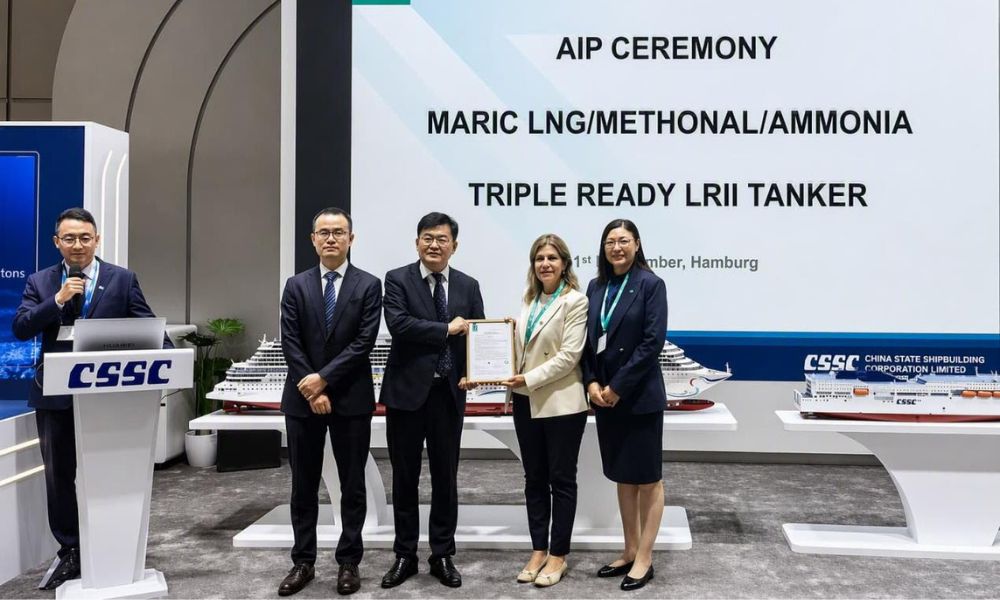
LR, China’s MARIC unveil tanker concept ready for three future bunker fuels
Both secured AiP for a new 114,000 DWT product and crude oil tanker designed to accommodate future conversion to LNG, methanol or ammonia.
Alternative Fuels
DNV: Alternative-fuelled vessel orders hit highest monthly level since October 2024
LNG-fuelled vessels accounted for the vast majority of August activity while the strong summer performance marked a significant acceleration in ordering activity after a relatively slow start to the year.
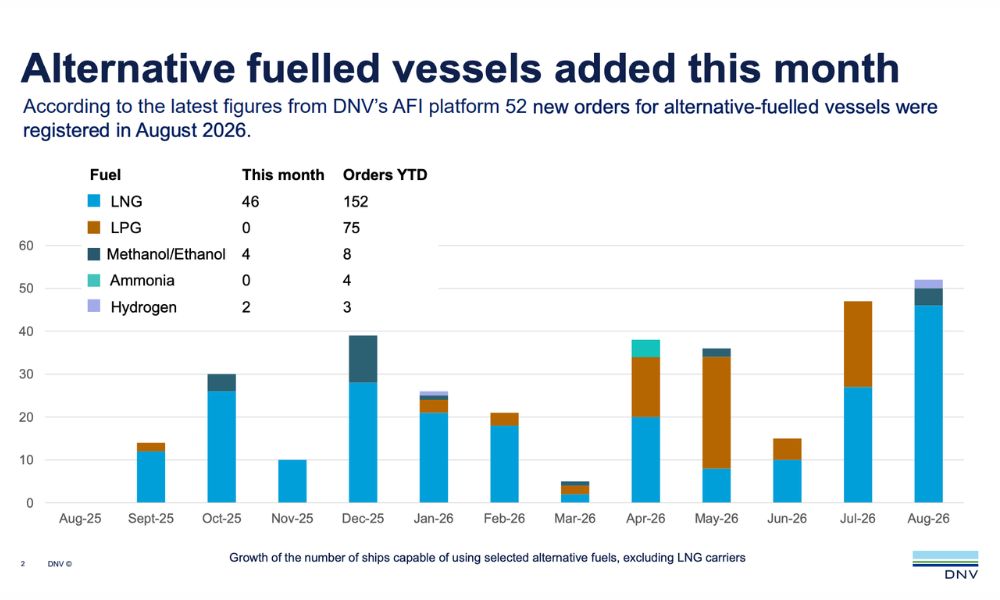
Latest data from classification society DNV’s Alternative Fuels Insight (AFI) platform alternative-fuelled vessel ordering was strong in August, with 52 new vessels added to the platform.
This is the highest monthly total since October 2024 and follows another active month in July, when 47 vessels were added to the database.
LNG-fuelled vessels accounted for the vast majority of August activity, with 46 orders recorded. The container segment led the way with 30 orders, while the car carrier segment contributed a further 12 LNG-fuelled vessels. In addition, four ethanol-fuelled bulk carriers and two hydrogen-powered bulk carriers were added during the month, as well as one LNG bunker vessel.
The strong summer performance marked a significant acceleration in ordering activity after a relatively slow start to the year. In total, 242 alternative-fuelled vessel orders have been placed in the first eight months of 2026, representing a 27% increase compared with the same period in 2025.
LNG remains the dominant fuel choice, accounting for 63% of all alternative-fuelled vessel orders registered so far this year. Container vessels represent the largest share of these LNG orders (59%), followed by car carriers (30%).
Jason Stefanatos, Global Decarbonization Director at DNV Maritime, said: “The past two months have been particularly strong for alternative-fuelled vessel ordering, with August recording the highest monthly total we’ve seen since October 2024. This has helped lift year-to-date orders to a level well above the same period last year.
“LNG remains the leading fuel choice, driven largely by activity in the container and car carrier segments. These sectors have been among the earliest adopters of alternative fuels, supported by predictable liner operations and increasing demand from cargo owners to reduce emissions across supply chains.
“For many owners, LNG offers a combination of emissions reductions, fuel availability and future flexibility while the longer-term fuel landscape continues to evolve.
“At the same time, the latest figures include orders for ethanol- and hydrogen-fuelled vessels, highlighting that owners continue to explore a range of decarbonization pathways. Different segments are making different fuel choices, but the overall level of activity demonstrates continued investment in lower-emission shipping.”
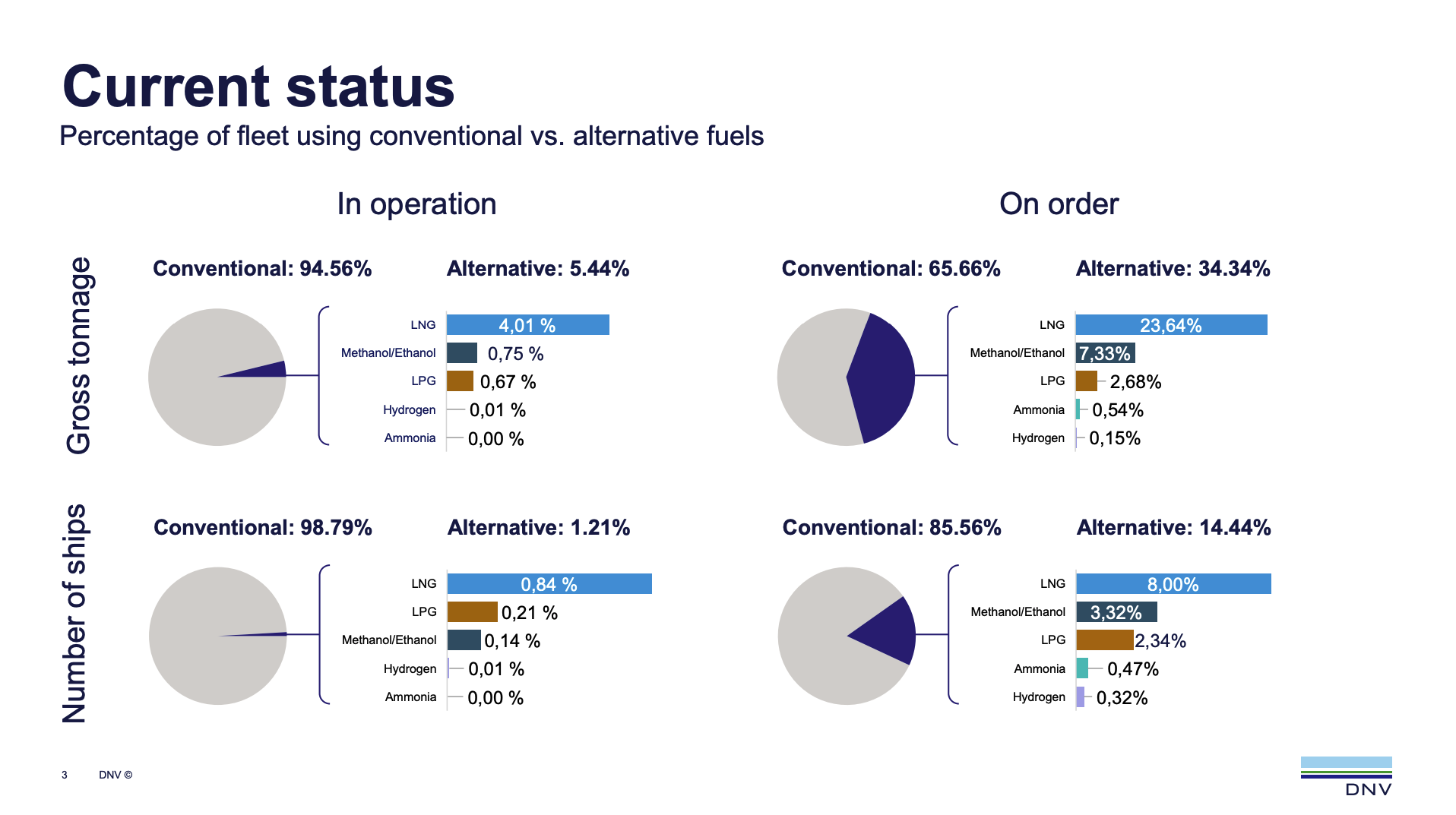
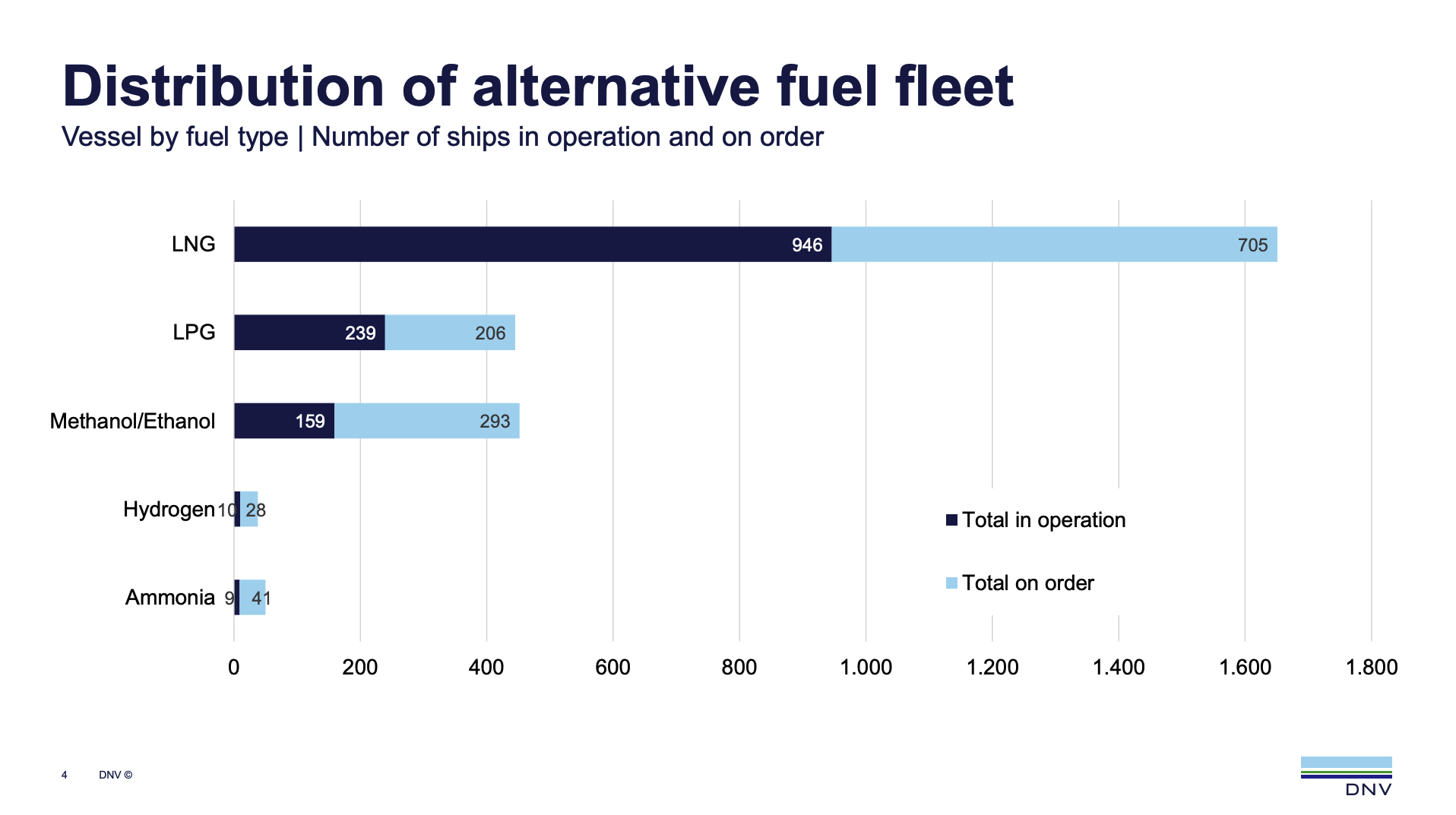
Photo credit: DNV
Published: 4 September, 2026

OUR INDUSTRY PARTNERS

Yang Ming orders six LNG dual-fuel, ammonia-ready containerships from Hanwha Ocean

LR, China’s MARIC unveil tanker concept ready for three future bunker fuels

DNV: Alternative-fuelled vessel orders hit highest monthly level since October 2024

TFG Marine advances global MFM rollout with two US Gulf bunker barges

GENA Solutions: Total renewable and low-carbon methanol project pipeline increases from 61.8 to 62.2 Mt by 2032

Baltic Exchange: Bunker Report (3 September 2026)

ENGINE: Americas Fuel Availability Outlook (3 September 2026)

Singapore-flagged tugboat “Kim Heng 3203” placed under Sheriff’s arrest

US targets five bunker companies in latest sanctions campaign against Iran

Singapore bunkering community supports Living Hope Evangelism’s 7th anniversary outreach for residents in need

China’s bunker market reshaped by tax rebates, trade flows and refining changes, says economist

Hengli Petrochemical’s ex-Singapore trading arm faces winding up application

Rajah & Tann: Bunker disputes are won in the first 48 hours

Report: GCMD outlines practical approach to quantity assurance in marine biofuel supply chains
-
 Vessel Arrest2 weeks ago
Singapore-flagged tugboat “Kim Heng 3203” placed under Sheriff’s arrest
-
 Sanctions2 weeks ago
US targets five bunker companies in latest sanctions campaign against Iran
-
 Events2 weeks ago
Singapore bunkering community supports Living Hope Evangelism’s 7th anniversary outreach for residents in need
-
 Interview1 week ago
China’s bunker market reshaped by tax rebates, trade flows and refining changes, says economist
-
 Winding up2 weeks ago
Hengli Petrochemical’s ex-Singapore trading arm faces winding up application
-
 Bunker Claim5 days ago
Rajah & Tann: Bunker disputes are won in the first 48 hours
-
 Biofuel2 weeks ago
Report: GCMD outlines practical approach to quantity assurance in marine biofuel supply chains
-

 Winding up1 week ago
Singapore: Notices of annual meeting issued for Vroon Shipping Asia and related firms