Connect with us

Environment

The most effective route to meet shipping’s new energy efficiency requirements

NAPA Fleet Intelligence’s easy-to-use tools for monitoring technical performance allows ship operators to gain true insight into GHG reduction measures taken, it says.

Admin

Published

on

Weather Routing NAPA

The following article was contributed by NAPA Shipping Solutions for sharing on Singapore bunkering publication Manifold Times:

Written by Ossi Mettälä, Sales Manager, NAPA Shipping Solutions

Two new measures will enter into effect at the start of 2023 – the energy efficiency index for existing ships (EEXI) and the Carbon Intensity Indicator (CII). While EEXI is concerned with how ships are equipped and designed, CII is an indicator of how they operate. It is based on the Annual Efficiency Ratio which sums all the carbon emissions from ballast and laden voyages to port stays, and divides the result by the deadweight and distance sailed in a year (to give grams of CO2 per DWT mile).

Slow steaming is an obvious candidate for boosting CII for ship owners and operators. However, its effectiveness is limited without the potential for dynamic decision-making on a range of external operating considerations, such as weather. Owners and operators using slow steaming as the sole route to maintain a vessel’s CII rating are also at risk by operating in a way that threatens the commercial longevity of their fleet or vessel. CII requirements include a required reduction factor, which is set to become 11% more stringent by 2026 (relative to 2019), thereby constraining operational flexibility. Failing to optimise every element of operations could lead to a low CII rating; a rating that is unattractive, to charterers, shippers, institutions and consumers seeking to be more sustainable.

As CII is measured by the grams of CO2 emitted per cargo-carrying capacity and nautical mile, increasing fuel efficiency through intelligent voyage optimization is an easy and effective route to supporting true operational efficiency. NAPA’s voyage optimization and ship performance monitoring platform – NAPA Fleet Intelligence – enables all stakeholders to view real-time weather updates and is combined with accurate vessel-specific performance models to calculate how much fuel the vessel would consume on different route alternatives and at different speeds. This helps predict arrival time accurately and enables the ship’s crew to take advantage of a more balanced speed profile without risking their ETA.

Likewise, the preliminary results of a recent study conducted by our in-house experts found that limiting engine power would only impact speed in limited circumstances – further demonstrating why reducing engine power alone would be insufficient to achieve greenhouse gas emissions (GHG) reductions at scale. The retro-optimization study explored the potential effect of EEXI on the transportation capacity, total emissions and carbon intensity of the global bulker fleet with NAPA Fleet Intelligence. We used real voyage data from 1500 bulkers over 12 months in 2019 and found for most of the year, if EEXI had been in effect, vessel operations would have remained largely unaffected.

In the same study, we found that the implementation of EEXI would reduce CO2 emissions by an estimated 6.6%. This not only demonstrates the scale of challenge for shipping to meet the IMO’s emerging environmental regulation, but the importance of data-driven technologies in measuring the actual impact of efficiency measures and tactics.

Lost efficiency gains

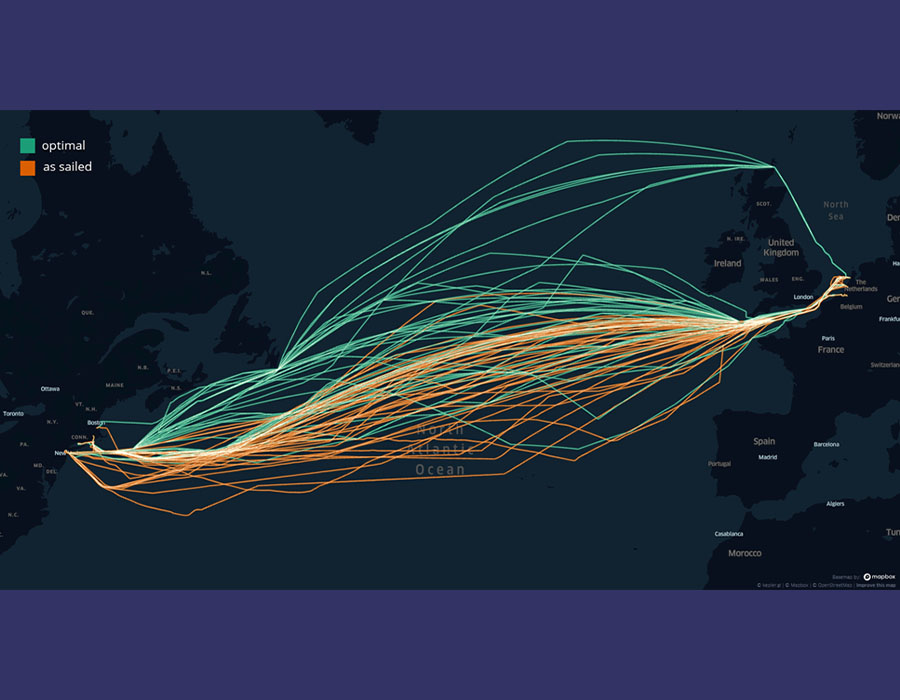
To further demonstrate the potential benefit of voyage optimization in helping drive the decarbonization of the shipping industry, NAPA also analysed over a year of past transatlantic voyage data for MR tankers (47 voyages) to see how they performed compared to how they could have if they used weather routing. We found that vessels would have saved an average of 15.9% emissions with better routing and a steadier speed-profile.

The potential fuel savings that these vessels demonstrate the dynamic nature of long voyages, but equally, that there are weather and sea current conditions, on coastal areas for example, that can impact performance. As just one example: Neste, a charterer that takes an active collaborative role in voyage planning, engages in a constant dialogue with crews using NAPA Voyage Optimization. In planning a voyage from Houston to South Africa, they were able to save 37.3 tons of fuel compared to the Master’s original plan by using weather routing. Most of the savings were due to avoiding sailing against the currents off the coast of Brazil.

Measured gains

Adding new abatement technologies, applying timely maintenance and hull cleaning are further important way of keeping CII ratings on track. However, confirming the impact of these measures is not as simple as looking at fuel consumption reports day to day. Consumption will rise and fall depending on ship speed, draft, and weather conditions. Only by correcting for those factors will a ship operator gain true insight into the measures taken. NAPA Fleet Intelligence’s easy-to-use tools for monitoring technical performance suit this purpose.

Expanding from this, shipping companies can use the insights they gain to look to the longer-term tightening of regulations and collaborate further with their partners by creating a feedback loop that incorporates performance data into timely vessel maintenance, or even energy efficiency retrofit projects.

With access to the right data and the ability to turn it into actionable insights, we can start optimising voyages as the dynamic and complex processes that they really are – and unlock the GHG savings that our customers and planet demand.


Photo credit: © Kepler, © Mapbox, © OpenStreetMap
Published: 16 February, 2022

Continue Reading

Methanol

World Fuel and partners complete first green methanol bunkering of car carrier in Shanghai

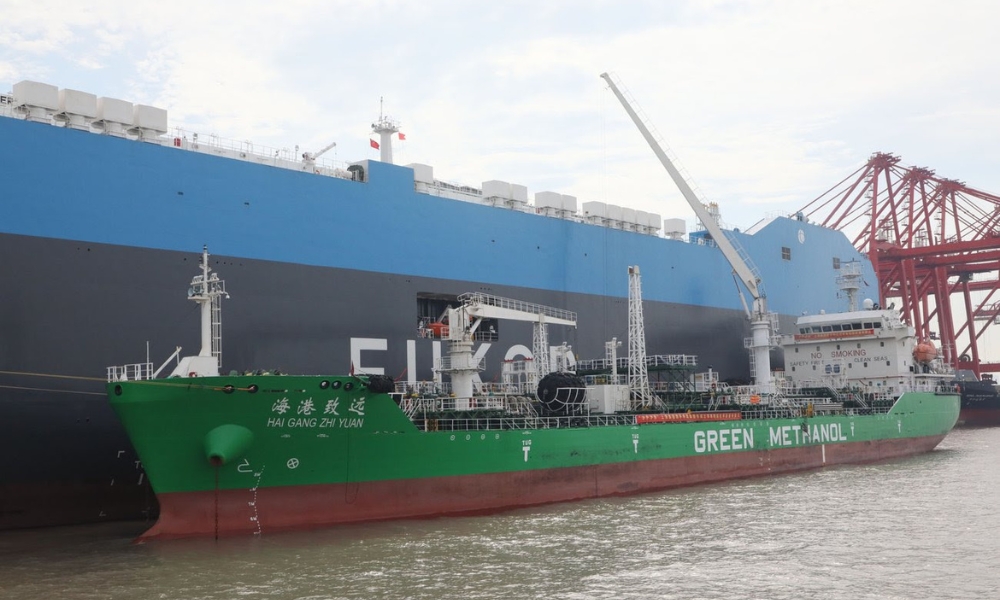
Operation involved the delivery of approximately 2,800 MT of green methanol to “Arctic Tern” via a ship-to-ship transfer using SIPG Energy’s dedicated methanol bunkering vessel “M/V Hai Gang Zhi Yuan”.
Admin

Published

on

By

World Fuel and partners complete first green methanol bunkering of car carrier in Shanghai

Marine fuel provider World Fuel on Tuesday (21 July) said it successfully completed the first green methanol bunkering of M/V Arctic Tern, with EUKOR Car Carriers and SIPG Energy at the Port of Shanghai. 

Arctic Tern is the first vessel in the new Shaper Class series of car carriers. 

The operation involved the delivery of approximately 2,800 MT of green methanol to Arctic Tern via a ship-to-ship transfer using SIPG Energy’s dedicated methanol bunkering vessel M/V Hai Gang Zhi Yuan, the largest vessel of its kind in operation. 

The bunkering operation was carried out at Haitong Terminal, Waigaoqiao Port Area, Shanghai Port, with cargo handling operations conducted simultaneously during bunkering.

This marks EUKOR Car Carriers’ first green methanol operation and the first time Arctic Tern has bunkered methanol since its delivery on 9 July. The operation marked the first bunkering at Shanghai Port of green methanol produced locally in Shanghai for an international PCTC operator. 

It also demonstrated the city’s integrated green methanol value chain, spanning local production, storage and bunkering, and established a replicable “Shanghai Model” for green methanol supply.

World Fuel arranged the supply and delivery of the fuel on behalf of EUKOR Car Carriers, working with SIPG Energy as the physical supplier at the Port of Shanghai.

The green methanol supplied was produced from municipal solid waste, ISCC-EU certified, and had a carbon intensity value below 25 gCO₂e/MJ.

Arctic Tern is the first of fourteen Shaper Class vessels ordered by Wallenius Wilhelmsen. With a capacity of 9,300 car equivalent units and methanol dual-fuel capability, the vessel will be operated by EUKOR Car Carriers, jointly owned by Wallenius Wilhelmsen and Hyundai Motor Group. Following her first green methanol bunkering, Arctic Tern will continue her maiden voyage from Asia to Europe.

Xavier Leroi, COO Shipping Services at Wallenius Wilhelmsen and CEO of EUKOR Car Carriers, said: “Completing Arctic Tern’s first green methanol bunkering shortly after delivery is a significant milestone towards our decarbonisation ambition for both EUKOR Car Carriers and Wallenius Wilhelmsen. It demonstrates how investments in next-generation vessel technology and fuel flexibility are being translated into real-world operations. 

“This achievement reflects the strong collaboration between all parties involved. Together, we have shown how partnerships across the maritime value chain can help make lower-emission fuels available and operationally viable at scale.”

Mark Tamsitt, SVP Global Marine Sales at World Fuel, said, “The first bunkering event with a new fuel is a significant moment for any shipowner, and our role is to make it as seamless as possible. By connecting EUKOR Car Carriers with SIPG Energy’s proven green methanol capability at the Port of Shanghai, we were able to deliver on reliable supply, fuel quality, and safe processes. As more of our customers bring methanol dual-fuel tonnage into service, we are committed to being the partner that makes these kinds of operations routine.”

Mr. Zhang Da, General Manager of SIPG Energy, said, “Welcoming Arctic Tern to the Port of Shanghai for her first green methanol bunkering demonstrates the strength and maturity of our supply capability. Building on our well-established methanol ship-to-ship bunkering services for container vessels, we have already extended such services to pure car and truck carriers (PCTCs). This bunkering sets a new record for the largest single SIMOPs green methanol bunkering for PCTCs in China, marking another step in building Shanghai’s position as a global green energy hub for international shipping.”

This operation follows Wallenius Wilhelmsen’s announcement on 9 July that Arctic Tern would complete her first methanol bunkering shortly after delivery. The vessel entered service on routes between Asia and Europe immediately following handover from China Merchants Jinling Shipyard in Nanjing.


Photo credit: World Fuel
Published: 22 July, 2026

Continue Reading

Ammonia

HPA and MB Energy develop safety concept for STS ammonia bunkering

HPA says the Port of Hamburg will become “bunker ready” for ammonia, laying the groundwork for safe and reliable ammonia bunkering in the future.
Admin

Published

on

By

HPA and MB Energy develop safety concept for STS ammonia bunkering

The Hamburg Port Authority (HPA) and integrated energy company MB Energy on Tuesday (21 July) said they have completed a comprehensive risk analysis and developed a dedicated safety concept for ship-to-ship ammonia bunkering.

MB Energy said the analysis lays the groundwork for the safe introduction of ammonia as a future marine fuel.

“With our planned ammonia import terminal in Hamburg-Blumensand, MB Energy intends to provide the reliable land side supply infrastructure needed to support this transition across northern German ports,” it said in a social media post. 

Mabanaft Group was renamed to MB Energy last year and merged over 50 existing brands under one identity. 

Separately, HPA said the Port of Hamburg will become “bunker ready” for ammonia, laying the groundwork for safe and reliable ammonia bunkering in the future.

“The focus is in particular on container ships, cruise ships as well as RoRo and ConRo (Container/RoRo) ships,” it said. 

“We expect ammonia to establish itself as an alternative marine marine fuel in the coming years. With our preparatory work, we are already creating the conditions to welcome the first ammonia-powered ships in Hamburg and to bunker them safely.:

HPA added that the import terminal for ammonia planned by MB Energy from 2029 will make a decisive contribution to ensuring the reliable availability of ammonia as a bunker fuel in northern German ports in the long term. 

“The use of an ammonia bunker barge is considered a possible addition to the landside infrastructure to enable ship bunkering in the port and beyond in the future,” it said.

Related: Mabanaft Group renames as MB Energy, merging over 50 brands under one identity


Photo credit: Hamburg Port Authority
Published: 22 July, 2026

Continue Reading

Environment

Indonesia to expedite removal of sunken Malaysia-flagged tanker “Silver Sincere”

Vessel sank while carrying about 1,000 mt of waste oil on 12 January 2025; the wreck was discovered in March 2025 and was found to have drifted about 13 nautical miles from its original sinking site.
Admin

Published

on

By

Indonesia to expedite removal of sunken Malaysia-flagged tanker “Silver Sincere”

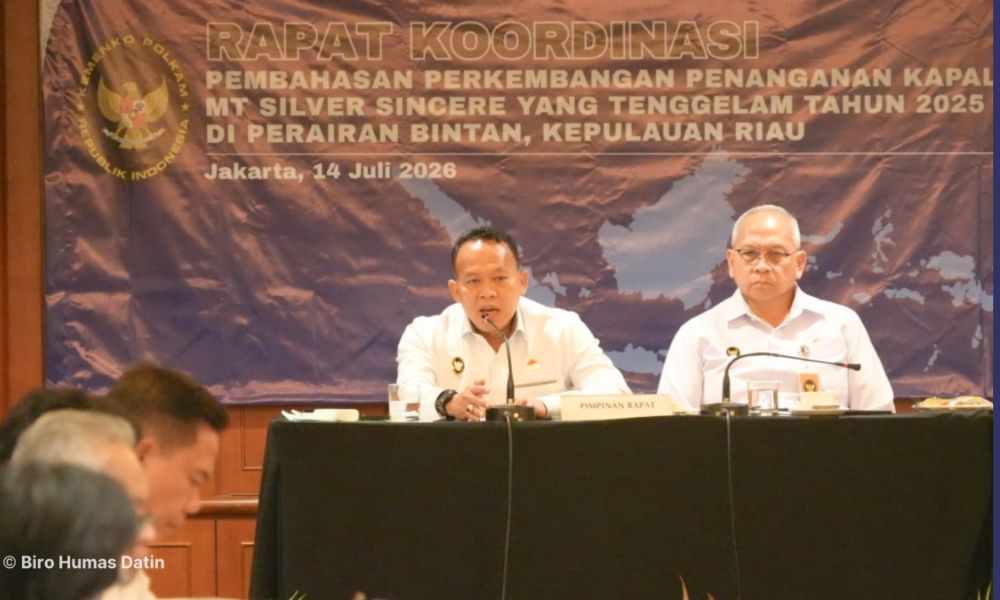
Indonesia’s Coordinating Ministry for Political and Security Affairs on Tuesday (14 July) held a cross-agency coordination meeting to expedite efforts in handling the Malaysian-flagged tanker Silver Sincere that sank off Bintan Regency, Riau Islands.

The vessel sank while carrying about 1,000 metric tonnes (mt) of waste oil on 12 January 2025. 

According to authorities, the ship sank within Indonesian waters. After several surveys, the wreck was finally discovered in March 2025 and it was found to have shifted approximately 13 nautical miles from the initial sinking location.

The meeting was aimed to align cross-ministerial and institutional measures to expedite the handling of the Silver Sincere wreck while minimising risks to shipping safety, the marine environment, and national interests.

Deputy for Coordination of State Defense and National Unity Purwito Hadi Wardhono emphasised that the handling of the impact of the Silver Sincere sinking was the first case to be comprehensively coordinated, serving as a model for handling foreign vessels sinking within Indonesian jurisdiction.

Through this cross-sectoral coordination, the government will establish a clear and measurable framework that can serve as a reference for resolving similar cases in the future, while minimising state losses due to environmental pollution, damage to underwater ecosystems and infrastructure, and disruption to shipping lanes.

“The most important thing is to immediately stop and prevent the negative impacts of this ship sinking,” Purwito said.

“Therefore, a coordinating role is crucial, as maritime security governance involves various ministries and institutions with varying authorities, allowing for faster, more integrated, and more effective response,” he said. 

He added that the Silver Sincere was a Malaysian-flagged vessel that sank within Indonesian jurisdiction, and therefore, all handling processes must comply with the provisions of Indonesian laws and regulations.

In the meeting, Prof. Eko Ganis Sukoharsono, representing the SAE Energy Consulting Team, presented the results of an analysis based on 14 observation periods using Sentinel-1 Synthetic Aperture Radar (SAR) satellite imagery. 

The analysis results showed strong indications of a waste oil spill that has resulted in marine pollution, damage to the seabed due to shifting shipwrecks, disruption of coastal ecosystems and fishing grounds, and potentially threatening the livelihoods of fishing communities around the Riau Islands. 

Purwito added these findings further emphasise the importance of accelerating the removal of the shipwrecks to prevent widespread environmental impacts, maintain shipping safety, and avoid the potential for greater state losses.

The meeting brought together representatives of related ministries and institutions including the Ministry of Foreign Affairs, Ministry of Defense, Ministry of Transportation, Ministry of Maritime Affairs and Fisheries, Ministry of Environment, Attorney General’s Office.  

Related: MPA: Malaysia-registered tanker “Silver Sincere” sinks off Pedra Branca


Photo credit: MarineTraffic / Julian T
Published: 20 July, 2026

Continue Reading

Trending