
Business
Argus Media: East China’s Zhoushan October bunker sales fall
VLSFO and HSFO premium between Zhoushan to Singapore bunker price assessments widened, which could have driven some of the spot deals to Singapore, it said.

Global energy and commodity price reporting agency Argus Media on Wednesday (11 November) published an article summarising the reasons behind the fall in bunker fuel sales in October at Zhoushan port, including higher prices and a fall in domestic production:
Bonded bunker sales in east China’s Zhoushan fall by 6.5pc to 420,100t in October from 449,300t in September, according to the port’s bunker suppliers, as higher prices in October undermined demand.
The October average of very-low sulphur fuel oil (VLSFO) in the Argus Zhoushan Bunker Index (ZBI), which is a delivered-to-ship bunker index, rose by $13/t from September to $333/t.
ZBI’s high-sulphur fuel oil (HSFO) assessment also rose to $302/t from $283.50/t over the same period, reacting to Asia and China’s overall tight supplies. Marine gasoil was up slightly to $382/t from $379.50/t.
ZBI’s VLSFO and HSFO assessments’ premium to the Singapore Argus Bunker Index widened, which could have driven away some of the spot deals to Singapore from Zhoushan. The premium for VLSFO rose to $4.30/t in October from $0.65/t in September, with HSFO rising to $29.60/t from $24/t over the same period.
Some bunker suppliers’ unwillingness to sell in the spot market in October also undermined Zhoushan’s bunker sales because the price was near breakeven or a small loss, according to a domestic bunker supplier. Some bunker suppliers prefer doing spot trades in nearby Shanghai when the Zhoushan price is unsatisfactory, Argus’ daily market coverage shows.
China’s overall fuel oil supplies probably fell in October, in line with domestic production, which pushed up its bunker prices. September fuel oil output fell by nearly 170,000t to 2.53mn t from 2.7mn t in August, according to China’s national bureau of statistics. October data have yet to be released but are estimated to have fallen further.
Bunker suppliers had to increase fuel oil imports in October to make up for the reduced production. Bunker suppliers estimated China increased fuel oil imports by at least 400,000t in October to 1.6mn t with 300,000t heading to Zhoushan.
The October bunker supply shortage was reflected in the ex-wharf market in Zhoushan. November-loading cargoes in Zhoushan were offered at a zero differential to the average of November 10ppm (0.001pc) gasoil physical price in Singapore. The differential was about minus $10/t for October loading.
China fuel oil output (‘000t)

Zhoushan-Singapore bunker differential ($/t)

Photo credit and source: Argus Media
Published: 12 November, 2020
Biofuel
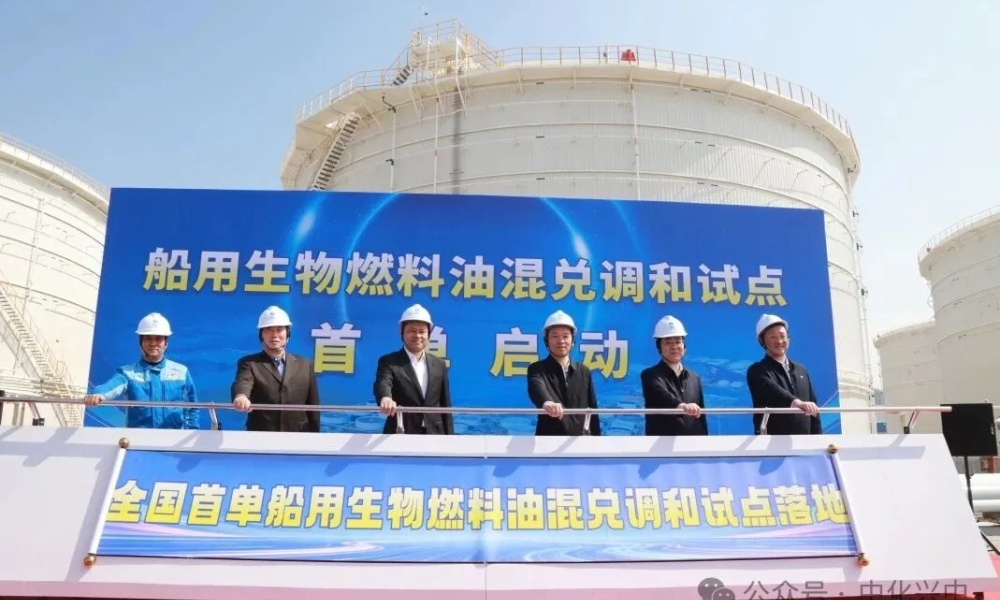
Petrochina International blends over 30,000 mt of marine biofuel since March
Company has been developing marine biofuel blending operations at China (Zhejiang) Pilot Free Trade Zone, leveraging storage and logistics facilities at its Aoshan base.
Winding up
Singapore: Final general meetings scheduled for Dromond Shipping, related firms
A member is entitled to attend the meetings and should notify the liquidators’ team office via email no later than 48 hours prior to the meeting.

Ammonia
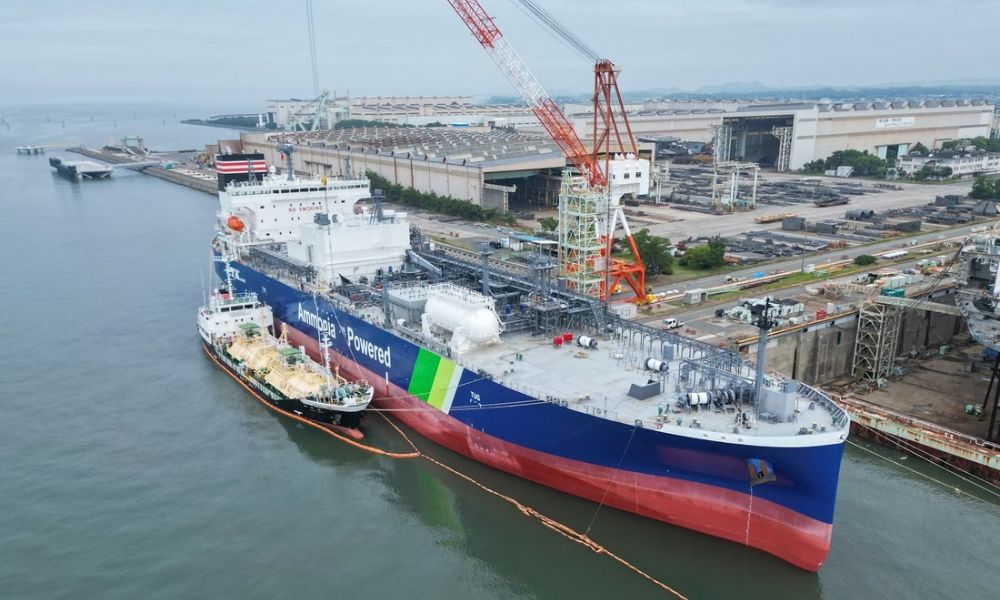
NYK wraps up first STS ammonia bunkering operation in Japan
Ammonia fuel was transferred from the ammonia carrier “Shoei Maru” via the STS method to an ammonia-fuelled medium gas carrier, scheduled for delivery in November 2026.

OUR INDUSTRY PARTNERS

Petrochina International blends over 30,000 mt of marine biofuel since March

Singapore: Final general meetings scheduled for Dromond Shipping, related firms

NYK wraps up first STS ammonia bunkering operation in Japan

Azane secures ammonia bunker fuel supply from Yara

Moeve launches construction of green hydrogen project to support marine fuels

DNV: How ethanol is expanding shipping’s fuel choices

World Fuel founder Michael J. Kasbar to step down as Executive Chairman

Singapore: Marine fuel testing firm CCIC Singapore faces winding up application

Peninsula confirms one fatality, crew member missing from bunker tanker “Hercules Star”

Singapore: MPA working with industry on next phase of digital bunkering, says Deputy CE

Amogy and LOTTE Fine Chemical to explore ammonia bunkering in South Korea

High Court of Singapore issues winding up order against Hengli Petrochemical International

China: Guangzhou completes first bio-methanol STS bunkering operation

Polaris Shipping orders WinGD engines capable of running on methanol, ethanol
-
 Winding up7 days ago
Singapore: Marine fuel testing firm CCIC Singapore faces winding up application
-
 Incident2 weeks ago
Peninsula confirms one fatality, crew member missing from bunker tanker “Hercules Star”
-
 Technology2 weeks ago
Singapore: MPA working with industry on next phase of digital bunkering, says Deputy CE
-
 Ammonia2 weeks ago
Amogy and LOTTE Fine Chemical to explore ammonia bunkering in South Korea
-
 Winding up1 week ago
High Court of Singapore issues winding up order against Hengli Petrochemical International
-
 Alternative Fuels2 weeks ago
China: Guangzhou completes first bio-methanol STS bunkering operation
-
 Engine2 weeks ago
Polaris Shipping orders WinGD engines capable of running on methanol, ethanol
-
 Technology1 week ago
APPEC 2026: Digitalisation in bunkering not merely a ‘paper-to-screen’ swap, states panellists