Connect with us

Business

Buriskey: Hong Kong and China bunkering sectors on road to recovery from COVID-19

The bunker player at Hong Kong and Chinese ports shares with Manifold Times what local shipping sectors went through during the early days of COVID-19 and how business is resuming.

Admin

Published

on

post 46721

Hong Kong and mainland China’s bunkering industries have largely crossed the peak of their respective COVID-19 (Coronavirus Disease 2019) dramas and are on the road to recovery, believes the Director of Hong Kong-based Buriskey Supply & Services Co Ltd (Buriskey).

Kenny Luk, whose company operates as a physical supplier of marine fuel at Hong Kong port while functioning as a broking house for bunkers at Chinese maritime facilities, shared with Manifold Times what the local sectors went through during the early days of COVID-19.

Hong Kong

“Since the breakout of COVID-19 earlier this year, Hong Kong’s bunker volume to date had decreased by a total of about 20-30% especially during February and March,” he shared.

“It was particularly serious when operations at certain international ports started being affected, especially after the COVID-19 related lockdown decisions by various governments across the globe.”

Charter hire rates of vessels in the Hong Kong and Chinese shipping sectors dropped as much as 50% between February to March, according to Luk.

“Both oil majors and physical suppliers [in Hong Kong] were concerned about supply chain related uncertainties between February to March,” he said.

“The same period also saw certain bunkering hubs being treated as high-risk; vessels which went to such locations for bunkering had to be subjected to increased checks before entering Hong Kong or Chinese ports for safety reasons.”

Sudden COVID-19 related changes in the shipping industry further caught several client vessels of Buriskey by surprise, prompting the bunkering firm to provide humanitarian aid to the best of its ability during marine refuelling operations.

“Our crew tried its best to provide what we could when customers’ vessels were short of goods, especially those for cleaning and protection,” said Luk.

“During this period, we also prepared an extra team [crew] to be available to take over bunkering operations on board anytime, and made sure there were replacements for most positions in order not to affect our customers’ schedules.”

Moving forward, Luk notes the bunkering volume at Hong Kong port rising a total of between 10 to 15% since April to May.

“It [bunker sales] has been better in recent weeks, especially in East Asia and China where a lot of the cities have recorded zero numbers of positive COVID-19 cases. For example, there was a 21 day-record where no new local cases were discovered in Hong Kong until 10 May; business is resuming, and people are getting back to work.”

Mainland China

COVID-19, meanwhile, has caused some Chinese bunker suppliers to take caution on the receiving vessel’s last ports of call before deciding if the ship had to be quarantined for 14 days prior to any bunkering operation, notes Luk.

“To date, there has been no firm regulation or announcements made by bunker suppliers nor port authorities about it, but this was happening to some of the vessels we have been involved with; especially in the Zhoushan market,” he revealed.

The Chinese industrial markets have meanwhile resumed operations since a month back and Luk expects domestic bunker demand from locally operated vessels to slowly return in the near future.

On the other hand, he is more optimistic about bunker demand from the international shipping sector and expects an increase in vessel arrivals to China.

“From early May, especially last week [ended 17 May], the chartering market has started to become more active with prices rising from the doldrums of COVID-19,” he notes.

“We believe this is due to the reopening of most international ports where many cargoes earlier planned for transportation have now been made available in the market again; for example, clinker from Vietnam, steel to Southeast Asia from Korea and Japan etc.

“In summary, apart from the lower sales volume at Hong Kong and China, we believe COVID-19 itself wasn’t really affecting the bunkering markets seriously.

“This is especially true when compared to the over 30% collapse of oil prices on 8 March; the biggest fall since the 1991 Gulf War. Now, that’s a bunker buster.”

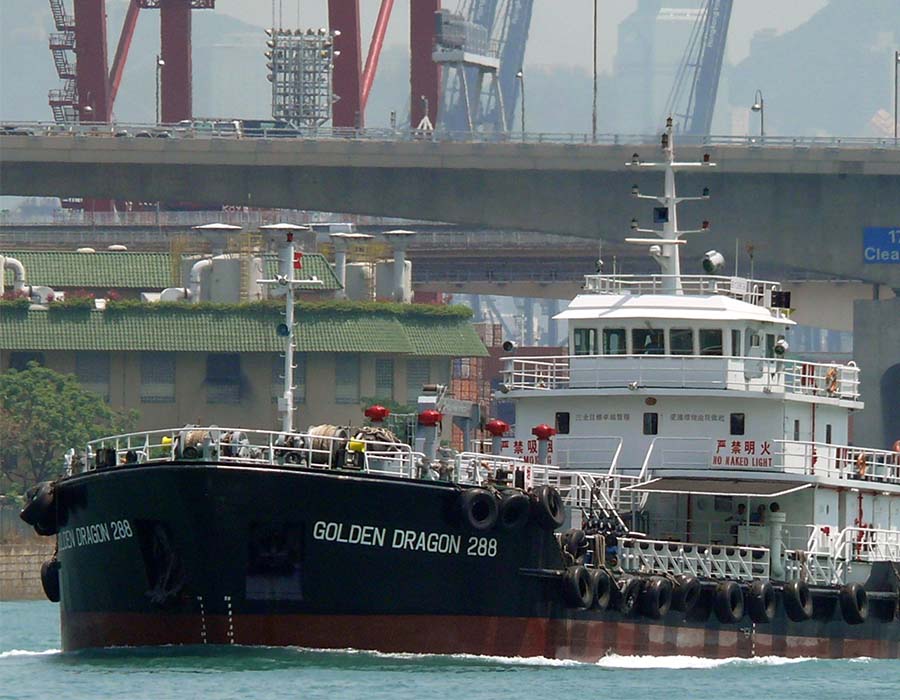
Buriskey started the physical supply of bunkers at Hong Kong port in March 2019 through the spot charter of bunker tankers.

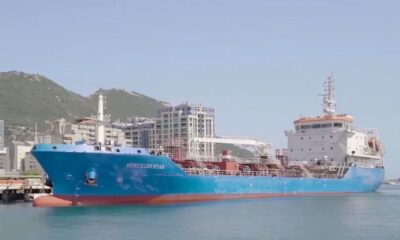
The firm started time charter of the 1,800 dwt Hong Kong-flagged bunker tanker Golden Dragon 288 (pictured) at Hong Kong port in October 2019.

Related: Buriskey adds bunker tanker to support Hong Kong marine refuelling operations


Photo credit: Buriskey Supply & Services
Published: 19 May, 2020

Continue Reading

Biofuel

Petrochina International blends over 30,000 mt of marine biofuel since March

Company has been developing marine biofuel blending operations at China (Zhejiang) Pilot Free Trade Zone, leveraging storage and logistics facilities at its Aoshan base.
Admin

Published

on

By

Zhoushan completes China’s first batch of marine biofuel blending under pilot programme

Petrochina International Co Ltd recently said it has blended more than 30,000 metric tonnes (mt) mt of biofuel since completing the country’s first biofuel marine fuel blending operation on 13 March.

The company said the milestone demonstrates its ability to conduct continuous and large-scale biofuel marine fuel blending operations.

The company has been developing marine biofuel blending operations at China (Zhejiang) Pilot Free Trade Zone, leveraging storage and logistics facilities at its Aoshan base.

Its latest product, B24 marine fuel containing 24% biofuel component, meets relevant International Maritime Organization (IMO) requirements and marine fuel standards, according to the company. It said the product can be supplied for bunkering vessels operating on international routes.

It has used its global trading network to secure feedstock supplies and support cost control and supply security for the blending operations, it added.

The company said the large-scale blending of its marine biofuel products marks a development in China’s marine biofuel blending market.

It plans to work with upstream and downstream businesses within its group to support the development of Zhoushan Port as a major bonded marine fuel bunkering hub and contribute to its parent group’s transition towards lower-carbon energy.

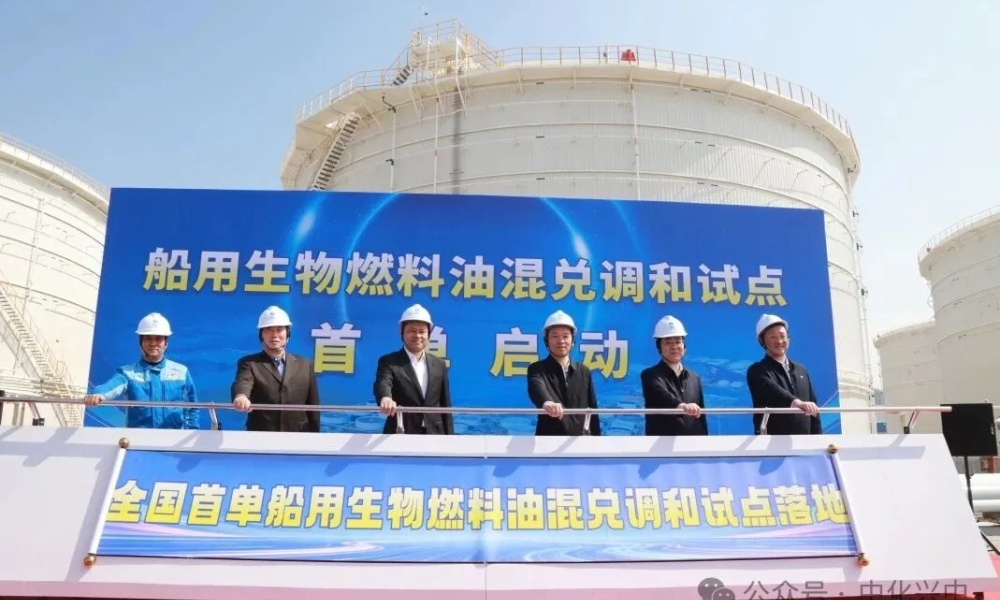
Manifold Times previously reported China (Zhejiang) Pilot Free Trade Zone launching the first pilot programme for marine biofuel blending in China with the completion of the first batch of B24-HSFO. 

The launch was marked with the blending of 2,000 mt of biodiesel and 6,300 mt of high sulphur fuel oil (HSFO) in storage tank F-02 of Sinochem-Xingzhong Oil Staging (Zhoushan), producing 8,300 mt of B24-HSFO. 

Manifold Times also reported the first cross-regional bonded bunkering operation of blended biofuel in East China was successfully completed at the Meishan Port Area of ​​Ningbo-Zhoushan Port. 

The B24-HSFO used in the bunkering operation was supplied by the Aoshan Petroleum Base in Zhoushan from the first pilot programme for marine biofuel blending in China. 

Related: Zhoushan completes China’s first batch of marine biofuel blending under pilot programme
Related: Ningbo wraps up East China’s first cross-regional biofuel blending and bunkering
Related: China debuts first marine biofuel blending pilot programme in Zhoushan
Related: China’s first batch of domestically blended marine biofuel delivered to Qingdao for bunkering


Photo credit: Sinochem-Xingzhong Oil Staging (Zhoushan)
Published: 21 September, 2026

Continue Reading

Winding up

Singapore: Final general meetings scheduled for Dromond Shipping, related firms

A member is entitled to attend the meetings and should notify the liquidators’ team office via email no later than 48 hours prior to the meeting.

Admin

Published

on

By

steve pb from Pixabay

The final general meetings of Dromond Shipping Pte Ltd  and related companies have been scheduled to take place on 19 October, according to the company’s liquidator on a notice posted on Friday (18 September) on the Government Gazette.

The other companies are Tidewater Emergency Response Services Pte Ltd, Tidewater Production Solutions Pte Ltd and Tidewater Salvage Pte Ltd. 

The final general meetings of the members of the companies will be held via electronic means on 19 October 2026 at 2.00 pm, 2.30 pm, 3.00 pm and 3.30 pm (Singapore time), respectively.

The meetings are being held for the purpose of having accounts laid before the members showing the manner in which the winding up of the respective companies has been conducted and how the property of the respective companies has been disposed of and to hear any explanation that may be given by the liquidators. 

The details of the liquidator is as follows:

Tan Kim Han
Joint and Several Liquidators
137 Amoy Street, #02-03, Far East Square
Singapore 049965

Note: A member is entitled to attend the above meeting and should notify the Liquidators’ team office via email to [email protected] or [email protected] no later than 48 hours prior to the meeting.


Photo credit: steve pb from Pixabay
Published: 21 September, 2026

Continue Reading

Ammonia

NYK wraps up first STS ammonia bunkering operation in Japan

Ammonia fuel was transferred from the ammonia carrier “Shoei Maru” via the STS method to an ammonia-fuelled medium gas carrier, scheduled for delivery in November 2026.
Admin

Published

on

By

NYK wraps up first STS ammonia bunkering operation in Japan

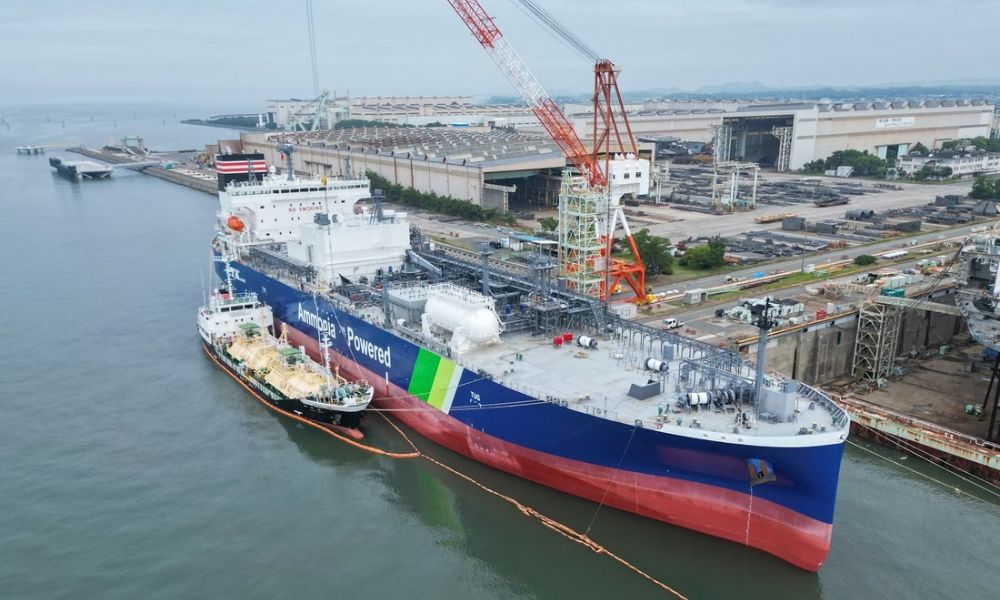
NYK Line, on Thursday (17 September) with Japan Marine United Corporation, Nihon Shipyard Co Ltd, Mitsubishi Gas Chemical Company, and Kokuka Sangyo Co Ltd, has completed the world’s first ship-to-ship (STS) ammonia bunkering operation to an ammonia-fuelled vessel. 

At a quay within Japan Marine United Corporation’s Ariake Shipyard, ammonia fuel was transferred from the ammonia carrier Shoei Maru via the STS method to an ammonia-fuelled medium gas carrier (AFMGC) scheduled for delivery in November 2026. 

The operation was conducted in preparation for sea trials of the AFMGC using fuel ammonia.

“This achievement represents an important initiative that has put into practice an operation essential for the future practical deployment of ammonia-fuelled vessels,” the company said. 

The bunkering operation was conducted following extensive discussions among the companies involved. Safe operating procedures and work processes were established prior to the operation, enabling the transfer to be completed safely. Through this initiative, we have accumulated practical insights regarding safe fuel supply operations.

This operation serves as a pioneering example of the fuel-supply framework that will be required for the widespread adoption of ammonia-fuelled vessels. 

The AFMGC is currently in the final stage of construction and is scheduled for delivery in November 2026. 

“The successful completion of this operation marks a significant milestone toward the broader commercial use of fuel ammonia and the practical deployment of ammonia-fuelled vessels. It also represents an important step forward in establishing an ammonia supply chain,” the company added. 


Photo credit: NYK
Published: 21 September, 2026

Continue Reading

Trending